Category: Processes

  • BEAM Vs COLUMN

    BEAM Vs COLUMN

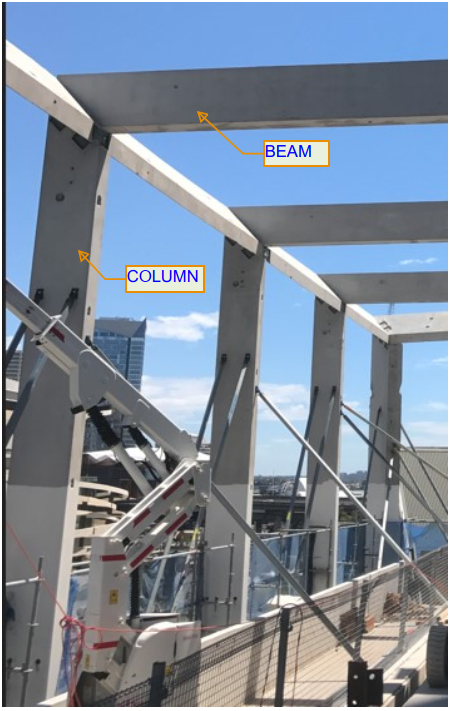
    BEAM: A beam is a horizontal structural component that resists vertical loads. Its mode of deflection is primarily bending. It transfers loads imposed along its length to its endpoints to walls, column and foundations.

    The beam is structural element that stands against the bending. Mainly beam carries vertical gravitational forces, but also pull the horizontal loads on it.

    (If structural member transfers any load whichever is acting on it through bending, then that element will be refer as a beam.)

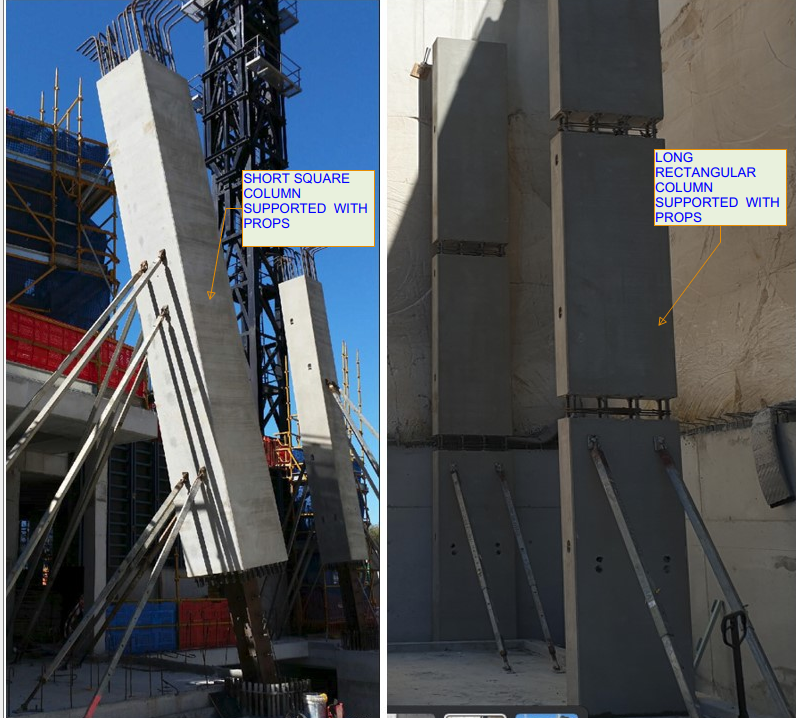
    COLUMN: A column is a vertical structural compression element that bears loads mainly in compression. It might transfer loads from a ceiling, floor slab, roof slab to a floor or foundation, it usually transfers loads from superstructure to foundation.

    Column plays an essential role in the entire load transfer system, though many columns are embedded forming part of a wall.

    Columns are commonly used to support beams or slabs or arches on which the upper parts of walls or ceilings rest. Sometimes a column is a decorative element as well as for structural purpose.

    (If structural element transfers the load through compression, it will be called as column.)

    DIFFERENCE BETWEEN BEAM AND COLUMN

    SL.NO

    DESCRIPTION

    BEAM

    COLUMN

    1

    Built

    Without a beam, a structure can be constructed.

    Without a column, a structure can’t be built.

    2

    Support

    They are supported by the column one end or both ends.

    They are directly built from the foundation.

    3

    Weight transfer

    It carries weight of slabs, ceiling. Floor, Roof of a building and transfer it to columns.

    It carries load transferred by beam and ultimately transfer it to footing and ground.

    4

    Classification

    Beams are classified based on their support end condition.

    Columns are classified based on their cross-section shape, material for construction and types of loading.

    5

    Shape

    A beam may be square, rectangular, T-shape, I-shape and H-shape.

    A column may be rectangular, circular, square, t-shape, L-shape and C-shape.

    6

    Simple Terms

    Beam is structural member carrying transverse loads.

    Column is also structural member carrying axial loads.

    IMAGES FOR BEAM AND COLUMN

    EXAMPLE:
    we have a rod of length 5 meter made out of steel and a load “P” to support
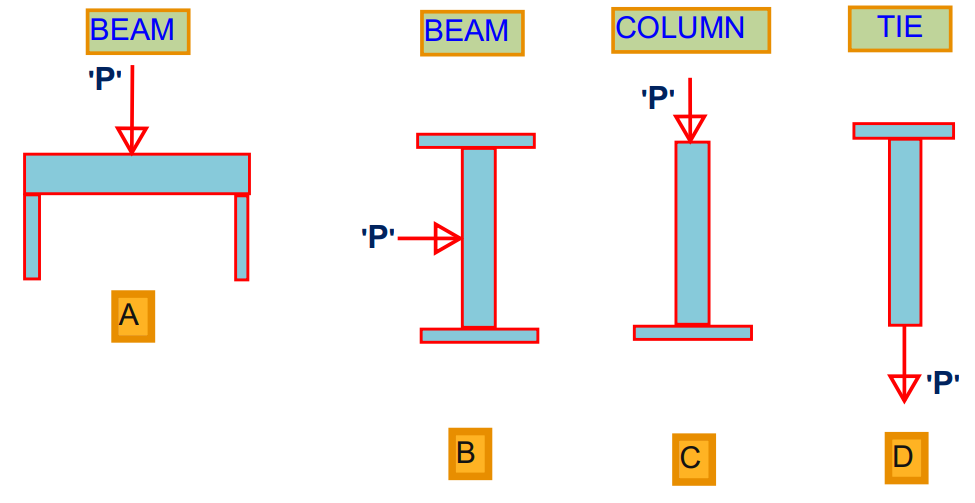
    1. We keep the rod on two supports and then place load on top of it. This time the primary mode of load transfer is by bending and thus we call it a Beam.
    2. We keep the rod vertical and apply load Horizontally to it. This time the primary mode of load transfer is also be bending and thus we call it a Beam.
    3. In this case the rod is kept vertically on the floor and the load is placed on top of it. Now the load is being transferred by compression and thus we call it a Column.
    4. We decide to hand the rod from ceiling and hook the load to the other end of the rod. The load in this case being transferred primarily by tension and thus we call it a Tie.
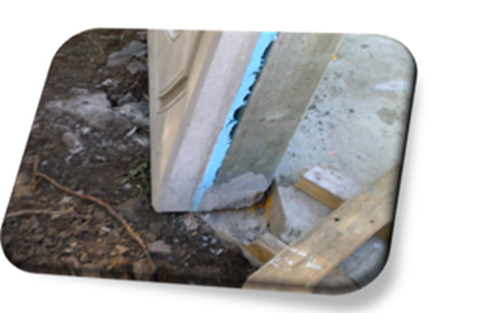
  • Cracking of panels at opening Corners


    Cause
    * During lifting
    * During Transportation
    * During Erection
    * After erection & slab pouring
    Problem
    * where the cracking of panel further affected the waterproofing by damaging the internal stud walls of the building.
    * Reinforcement getting Weak
    * If any interior work will damage due to the weather proof issue.
    Remedies
    * Get concentrate those location & intimate to reinforce team for additional reinforcement
    * Insist to follow the Guidelines from the engineering team
    * Insist Factory to concern the reinforcement for the specific openings
    * Insist Factory & Erection Crew to Follow the standards & guide line when the lifting from the store, during transport & installation the panel
    * During transportation take care all panels sitting on ‘A’ frame to be vertically supported on 2 points & if any additional support should only be for lateral purposes. Insist to follow the transportation guidelines
    * The Grouting must be taken care on time for the panel with openings Coordinators to advise if any special cases if needed.

  • How to Quote For Jobs

    The Golden Rule: Be very clear and specific about what you are quoting for. e.g. I am only going to work on the following (insert specific details), and everything else is excluded.

    Why is this important?

    • Clarity: Your client will know exactly what you are quoting for. Use diagrams, and present documentation to improve clarity. The last thing you want is your client to call you and say: “what about the stairs?”. It will not do for you to turn around and say: “oops, I meant I was only quoting for structural steel”. Clarity eliminates these types of problems.
    • Limited Liability: Do not write a blank cheque for clients. If you return a quote to: “build a house” then this quote is essentially open ended. They might get the wrong ideas in your their head: how large is the house? How much material? How long will it take? How will it be built? What if the client keeps changing the design? How much time are you willing to devote to keep making those changes? Even worse, what if you are forced to keep redesigning a house according to the caprice of a third party – whom you have no control? i.e if an engineer and architect keep changing their designs, then you may be destroying your margins and taking a steep loss, as well as massively increasing the risks something goes wrong. Always limit your costs, in some way. Make this clear to clients.

    Variations:

    • Watch out for design and build jobs: As alluded to above, the design process is fraught with difficulties. Too much back and forth with engineers. Limit this liability in some way: e.g. perhaps by hours worked on a project.
    • How we quote: we quote to a specific set of drawings. Invariable, these drawings change due to the discovery of problems as the building/structure progresses. Whenever something changes: that adds considerable risk to the project, cost, and delays. These costs need to be recorded and passed up the chain. No longer can engineers, architects and builders make changes, willy-nilly, and pass on risk, expenses to sub-contractors with equanimity.

    Specific Examples of Quoting:

    1. Limit scope to a drawing number.
    2. Limit scope to a particular drawing revision.
    3. Limit scope to the number of beams etc.
    4. Limit scope to grid lines.
    5. Limit scope to quantities.
    6. Limit scope by listing exactly what you are building.
    7. And exclude everything else.
    8. Show diagrams so that your quotes are crystal clear. This gives confidence to the quotee – they will know that your quote is well considered, and probably accurate.

    Here are some examples, of how we quote.

    Northern Retaining Wall

    Detailing structural beams, connections details, according to the following scope:

    Drawing 1: Type – T1 250UC90 HDG QTY: 299

    Drawing 2: Type – T2-L 250PFC HDG QTY: 1

    Drawing 4: Type – T2-R 250PFC HDG QTY: 1

    Drawing 5: Type – T7 250PFC HDG QTY: 26

    Drawing 6: Type – T8 250PFC HDG QTY: 1

    EPH – Station Platform Northern Retaining Wall

    Drawing 7: UC 150 x 37.2 post with base plate. QTY: 58

    Drawing 8: PFC 200 with Base Plate. QTY: 4

    Everything else is explicitly excluded. Changes might incur charges via variations. Fully documentation will be provided.


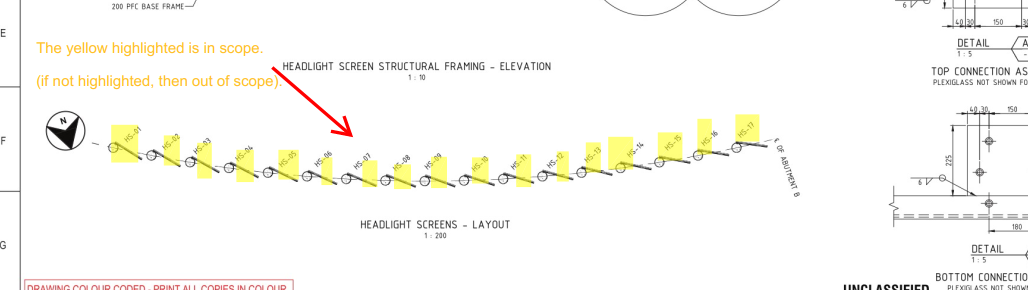
    Highlight Items on a Drawing

    • highlight scoped items in a drawing.
    • Add a note showing what is in scope. Why? Sometimes it is not immediately apparent what is being scoped in and out – especially if we are using a drawing with someone else’s markup. Do not simply highlight – we need the note as well. The note should say:
      • “The highlighted elements are in scope. If it is not highlighted, then it is OUT of scope”.

    Here is an example:


    Highlight Scopes + include a note
    Highlight Scopes + include a note


  • HOB AND ITS TYPES

    HOB
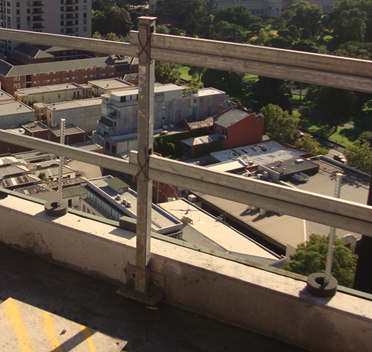
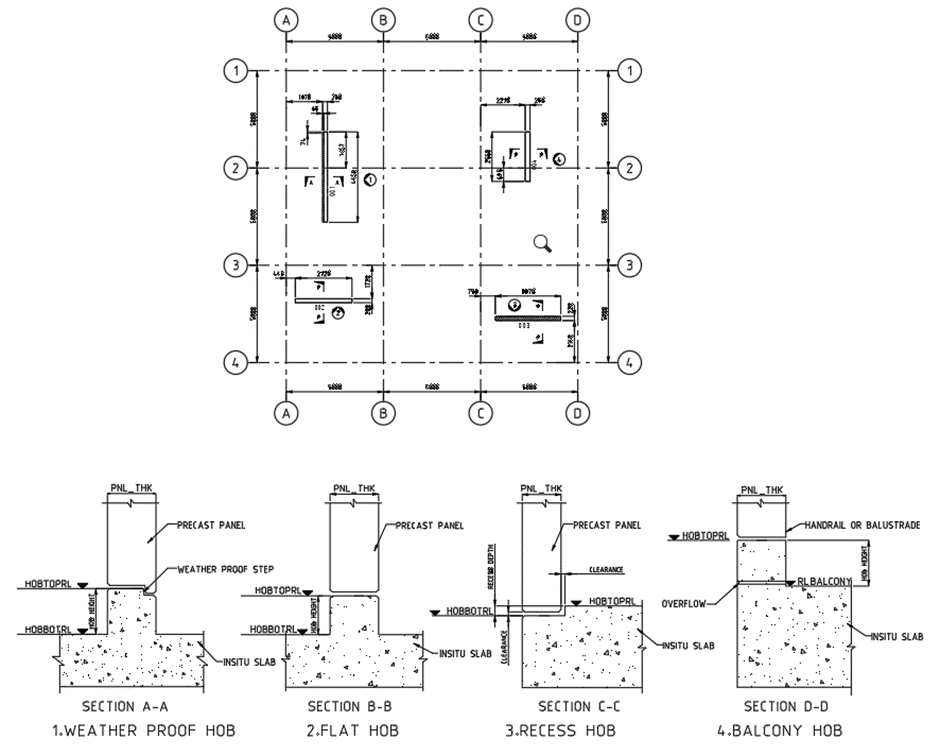
    Hob is projection or recess on the top of slab, which is made up of concreate or sometimes precast. It will act as a base or foot for the precast panels and balustrade which are to be placed above the actual SSL (Structural surface level) and a locating guide sometimes with weather proof.

    HOB TYPES

    1. Weather proof Or Stepped Hob:
          This type of hob has projection from slab SSL, which is used to separate inside (living spaces) and outside (balconies and wet areas) of the building to resist water to enter the building. It has recess at the outside of the building on top of the hob, which means top face has step along the outside of building. Refer Section A-A for weather proof hob.

    2. Flat hob:
         It is also projection type hob, but top face is in full width flat without step. Usually, it will locate between either inside-inside or outside-outside area. Refer Section B-B for flat hob.

    3. Recess hob:
      
      It is further back from SSL or ditch or recess on slab. It will also act as weather proof. This hob needs some gap clearance on the higher side to make easily sit precast on it. Refer Section C-C for recess hob.

    4. Balcony hob:
         
    Balcony hob also be the projection type; it is used to outside of the building in outermost wall to resist spill of water or use as balustrade. Balustrade purpose hob have considerably higher than the all-other hobs. Refer Section D-D Balcony hob.

    5. Model hob plan drawing:

  • The Beauty of Status Updates

    The Beauty of Status Updates

    At scale, efficient systems of communication and coordination are required in order to efficiently prosecute projects. These systems will likely be of immense value to yourself, and your clients. Consider the following example:

    Our critical path sits within the ABCD building, I have run a target date commencing 29/6/22.

    Is this possible for the ABCD given the attached review?

    What further do you need from us to mitigate any time frames lost?

    Can we get ahead on the procurement of the Steel while we look to focus on getting the SD’s to IFC this week with Tek1?

    Email received for the ABCD Building.

    The critical question: what are the hold-ups for the project?

    Likely our client, has no idea, let alone the builder/developer (a large one). Projects are held up in the weeds. The folks at the top of the supply chain need to make resource allocation decisions. Right now, they’re doing so, effectively blind. Or they have to send out emails like this one.

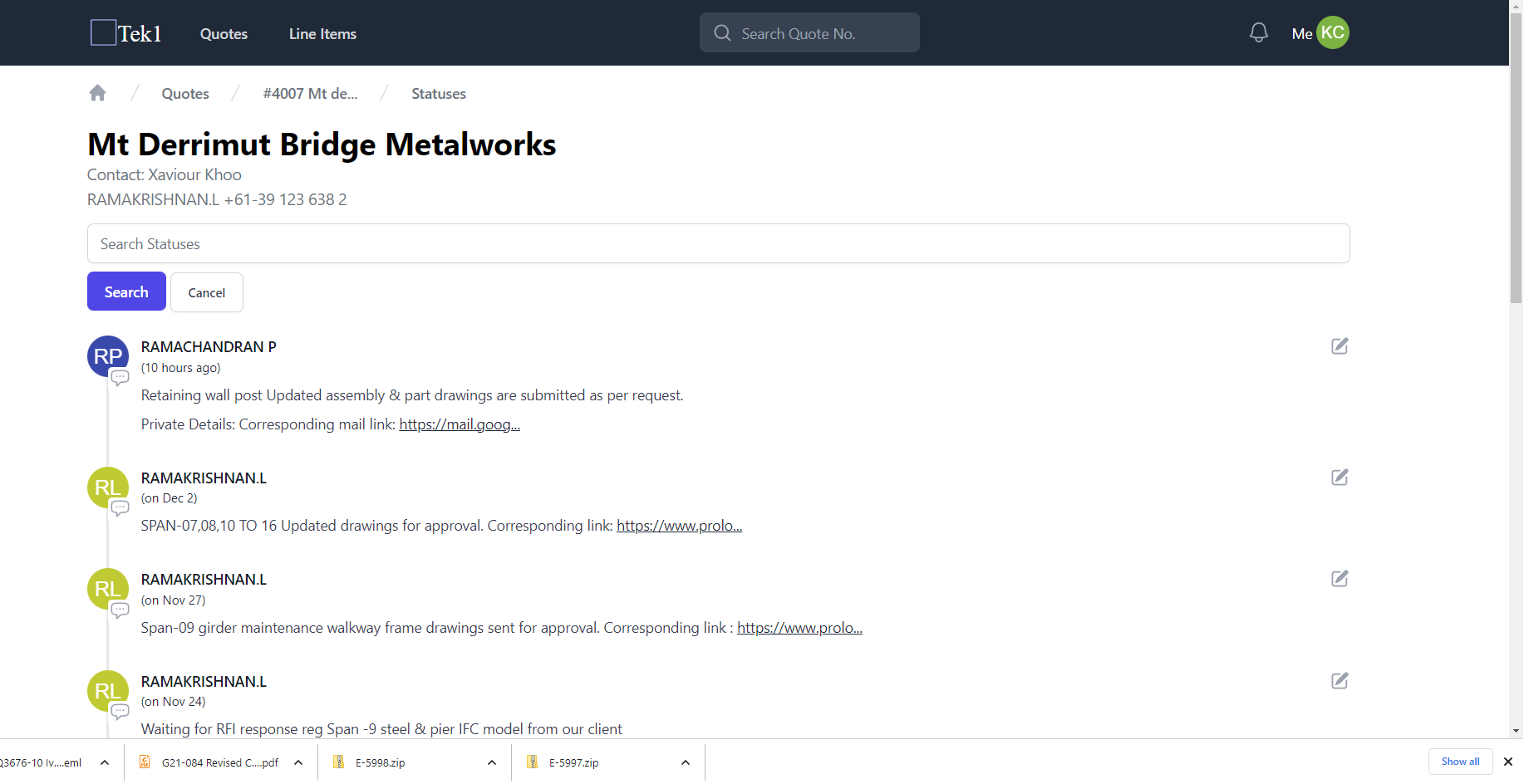
    Would anyone remember, what the specific hold up for the project was a few months ago? It’s very hard to remember. And it’s hard to dig it out of the 100s of emails you would have received over that time period. But if you have built up a timeline, it is relatively easy to see what’s happened. All I had to do was to check out our status reports:

    Status reports for this project. Details redacted.

    As you can see: the project has been in limbo since the 20th of April. It’s self evident. If you didn’t have a timeline, you’d have to bury your head in 100s of emails to retrace your footsteps. We’ve been waiting for this review for three weeks. That’s roughly three weeks ago.

    As usual, the reviewers are holding up the show. Except now, given everything is tracked, it’s very hard for them to conceal their inefficacy. Then there were the delays due to: (i) asking RFIs, and (ii) waiting on those answers. (The RFIs are usually asked in the first place, due to the poor quality drawings that are received). The price of inefficient designers (architects / engineers) is monumental. Add poor coordination into the mix, as well as ballooning material / labour costs, and that spells a perfect storm for builders.

    Building up a simple status timeline massively improves transparency, improves communication with your client – and all this for very little cost.

  • Memo 11 – Avoid using AWS VPN Client while in the Office

    • When accessing our Tekla servers, we have traditionally been using the AWS VPN client to access our licenses. All of this results in high costs for the firm, just to access our licenses.
    • But now we can access our licenses, from the office, without doing anything. You don’t need to log into Azure, or use the AWS VPN Client. Simple Open Tekla at the following IP address: 1237@172.31.42.153

    Summary: Until further notice, only use the VPN Client when at home. Do not use the VPN Client in the office. Because it is expensive.


    VPN To The Office


  • Purlin Bundle Report.

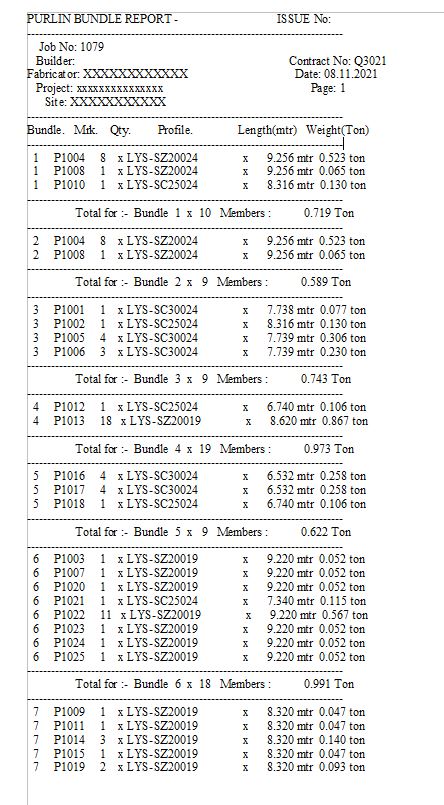
    What is Purlin bundle report & why its required?
    A report which lists Bundles numbers and purlin numbers under it. When the purlins are delivered to site, they come in packs & located exactly in the areas as noted in the Marking plan.

    A set of purlins are grouped together as bundle & are delivered to site. While purlin erection, the erector refers only the Bundle mark in the marking plan & erects the corresponding bundle. Otherwise they have to segregate all the purlins & it would demand some extra efforts to erect.

    If we provide this bundle report it would be easier for the erector to bundle the purlins & erect. Also it would give some additional value to our work.

    For Report & Marking plan details. Please refer below snaps.

    Please refer Below snap which shows the Purlin Bundle details in our Purlin Marking plan

  • Memo #9 – Justify Variation Hours to Clients

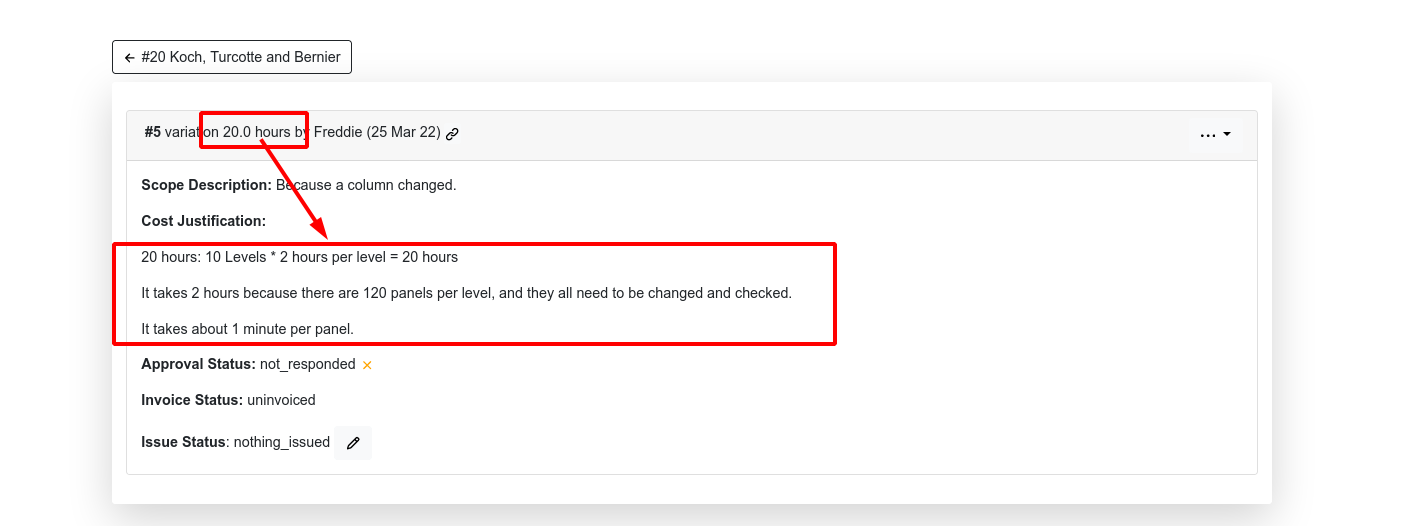
    If you have 20 hours worth of variations: do you think your client will rejoice? Typically, no!

    Clients demand transparency! They have every right to know: (i) why you are charging them, and (ii) what they will get in return. It will not do to simply say: variation: 20 hours. Why not? Clients will assume you are pulling the wool over their eyes. If you wanna get paid, you need to justify your pricing and proposed scope of works to them.

    Justify variations - and break them down.

    Break your costs / hours down!

    Where are these 20 hours going? Well, that’s 2 hours per level. And there are 120 panels per level. Which equates to a change of about 1 minute a panel. That seems extraordinarily efficient, now that you state it in those terms.

    Your clients will thank you. Remember, they’re going to use your justifications so they can in turn claim costs from their clients. And best of all, it means you’re more likely to get paid for your labour.

  • Memo #8 – Don’t use private emails/channels etc for firm correspondence

    This will probably apply wherever you work: don’t send project and firm related correspondence on your private whatsapp chats, or on your private emails etc.

    Why not? It’s very hard to track. We have no record. Nothing can be verified.

    Protect yourself, your careers, your firm, and your clients: it’s pretty simple: avoid using private channels for firm correspondence.