Tag: connection

  • TEMPORARY CONNECTION WITH DETAILS

    Precast erection procedure having the set of sequences. When the panel is installed on the slab, props are fixed to stable the panel, then panel was unhooked from crane then the temporary stich plate or stich angles are connected to the next panel through cast in ferrule, which is casted on the precast panel.

    The temporary connection is additional support for the precast panel for until grouting the grout tube & slab were connected to the particular panel. The panels are easily leveled up with respect to the connected panel. Minimize the no of brace connections. Easy to maintain the panel gap.

    Based on the position of panels & face of the connection it is classified as below,

    1. In-line stich plate connection.
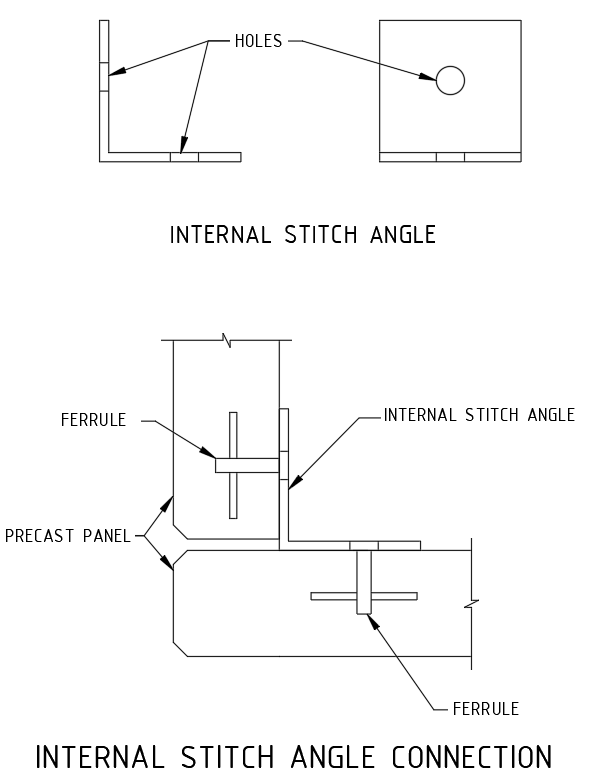
    2. Internal Stich angle connection.
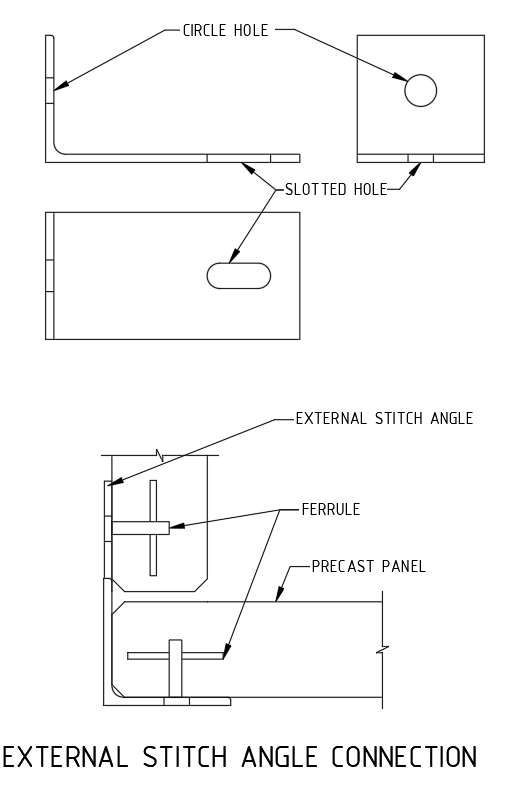
    3. External stich angle connection.
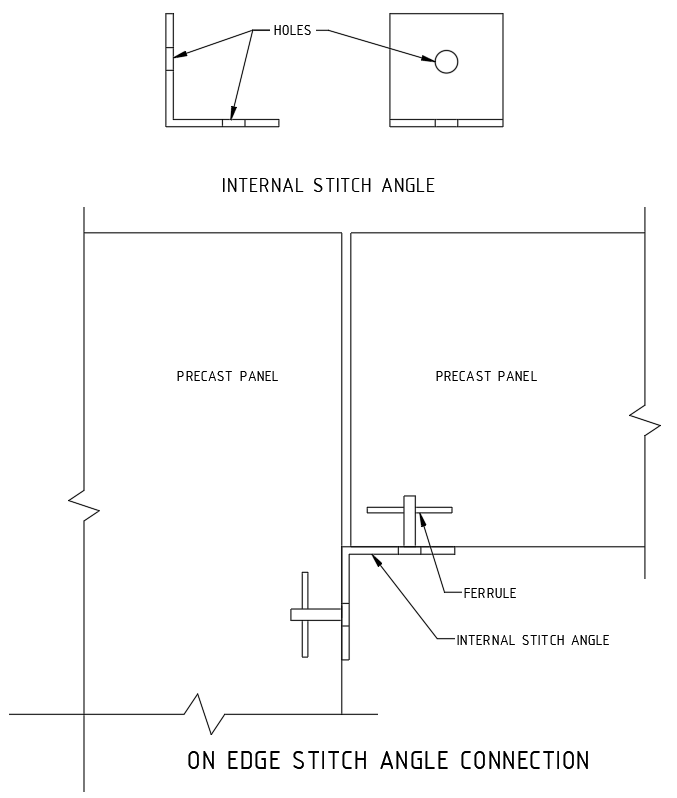
    4. On edge stich angle connection.

    1. In-line stich plate:

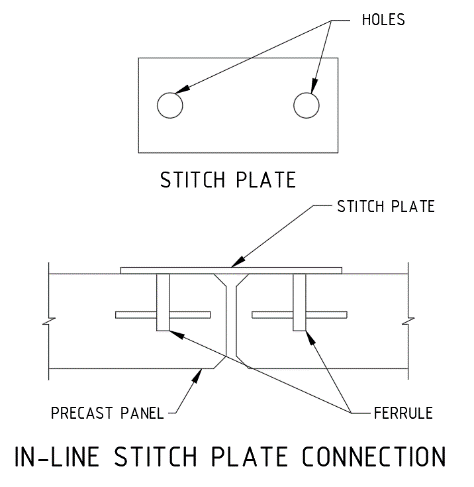
    When the panel are next to each other the temporary connections are made by the straight stich plate with ferrule as mentioned below picture.
    2.Internal Stich angle:

    When the panel is perpendicular each other and inside corner is access to perform the connection, the internal angle stich angle is being used.
    3. External stich angle:

    When the panel is perpendicular each other and outside corner alone is access to perform the connection, the external angle stich angle is being used.
    4.On edge stich angle connection.

    Some cases, same level panels one is erected on top of slab and another one is located on ceiling level is supported by on-edge ferrule mentioned as below picture.
  • POST FIXED PRECAST PANEL

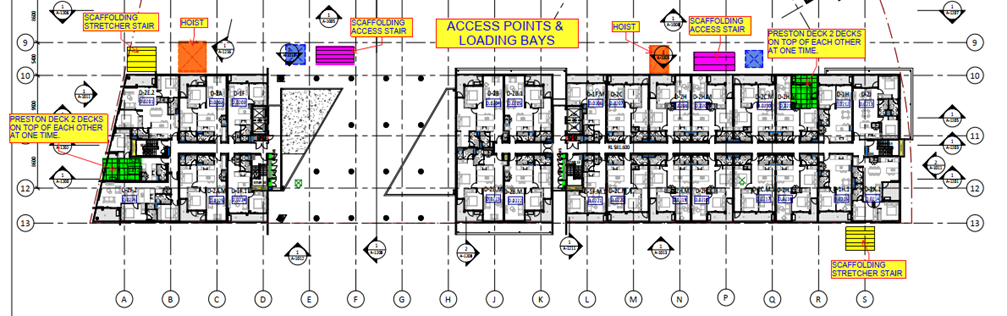
    Every multi story buildings typically need the loading bay or hoist for each and every level during construction. A loading bay or loading dock is an area of a building where goods are loaded and unloaded to it from vehicle or site. On hoist or loading area of façade walls is being unbuilt up to end of construction. Final stage of construction only it needs to be built. Refer below picture for different types of loading bays are highlighted.

    If the rest of the building is constructed by the precast, the hoist area also needs to be covered or fixed by precast panel. This type of covering panels are named post fix panel. Which means the panel will fix on the existing structure after completion of required task.

    These post fix panels have different type of erection procedure, connection details compared to the all-other precast panels.

    Propping Method for Post Fix Precast:

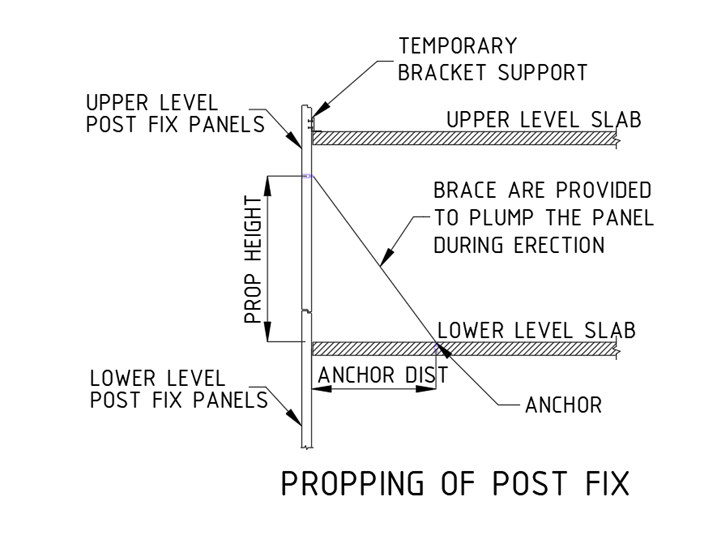
                The temporary bracket connection between panel and to the slab need to be done at the top of the panel. The rest of the panel hanging below slab where braces are connected to plumb the panel as well as support. That the brace is anchored below level slab. The bottom of post fix panels is connected with dowel & grout tube arrangement to the below level precast panel. Refer the propping snap.

    Permanent Connection of post fix panel:

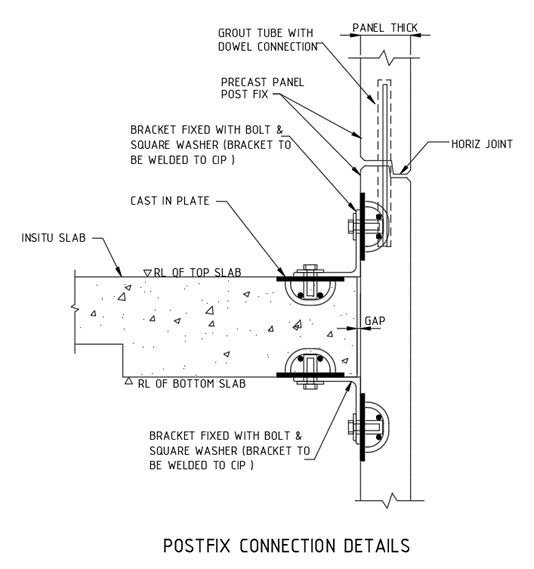
                The grout tube with dowel connection between the panels are only resist the horizontal movement, the additional permanent connection is made between panel and the slab through cast in plate and weld on site at both top and bottom the slab. The structural connections details are need structural engineer approvals. Refer below picture for typical connection details.

  • Detailing cleats to connect to beams

    Detailing cleats to connect to beams.

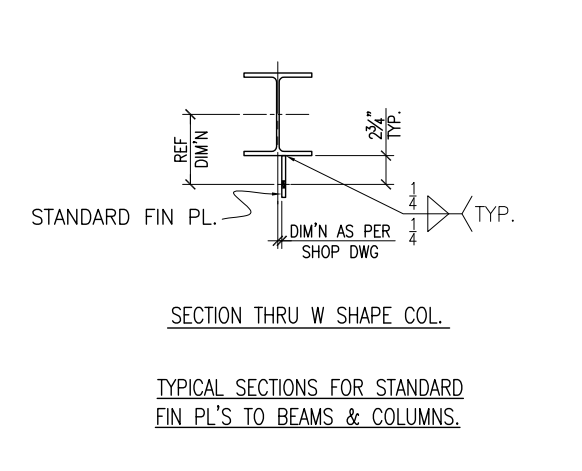
    The main principle is the work points of the beam to the column must intersect. To achieve this the cleat should be offset to onside by half the Beam web thickness. This is usually done when you layout the main members. Make sure the layout is good

    Here is a drawing to a shop detail which shows offsetting of the cleat to beam or column center line. Please note that the beam centerline and column center line should be matching. For US Fin plate the bolt distance is 2-3/4″ from the face of Beam/Column. For Australian situation, it will 55mm