Tag: #LGS

  • Berrigan Street Residence: Strength and Stability in Every Detail

    Berrigan Street Residence: Strength and Stability in Every Detail

    Smart & Strong: LGS Framing for a Compact Two-Storey Residence in Southport, QLD

    Project Highlight: Berrigan Street Residence, Southport QLD

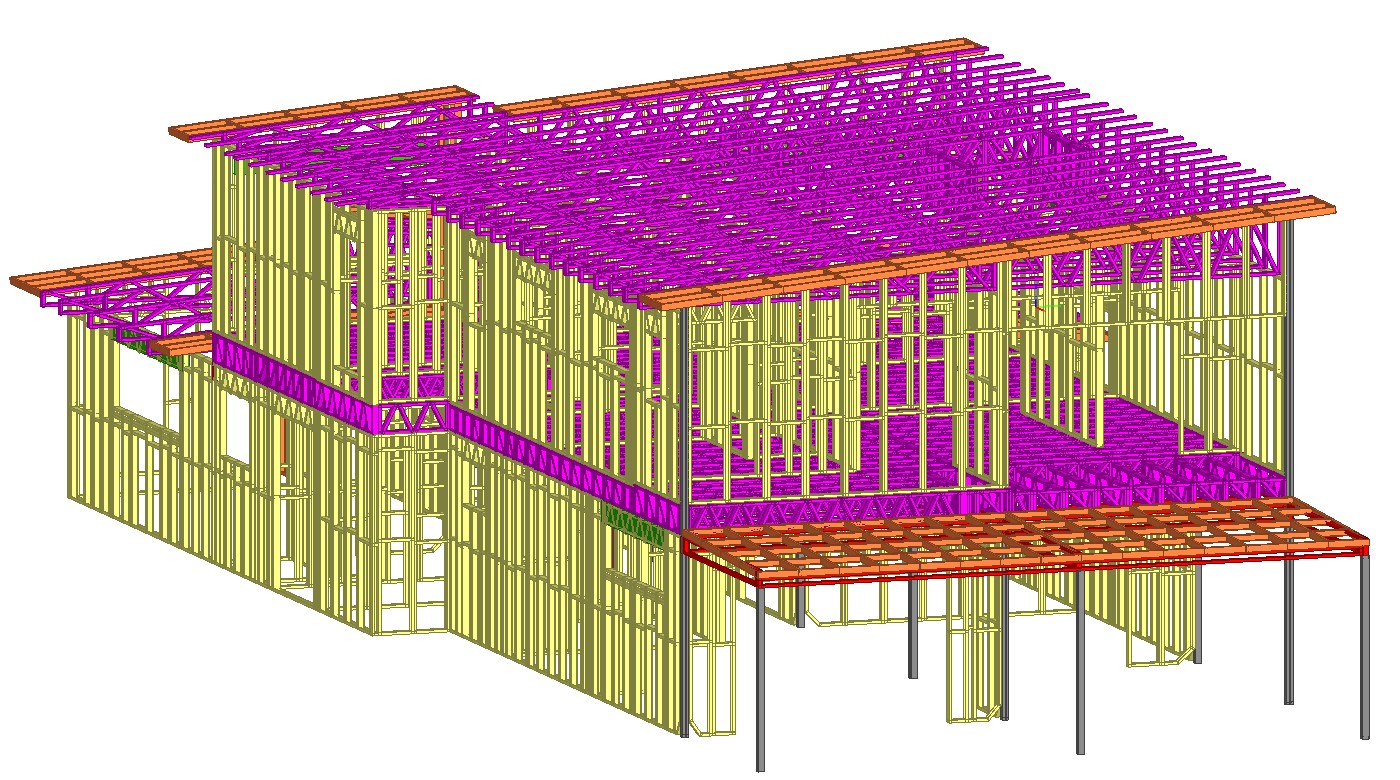
    I’m excited to share one of my recent Light Gauge Steel (LGS) detailing projects: a modern two-level residence located at Lot 124 (No. 11), Berrigan Street, Southport, QLD. This project was executed for Brisbane Steel Frames, who entrusted me with the complete LGS framework.

    Project Overview:

    • Client: Brisbane Steel Frames
    • Location: Southport, QLD
    • Total Area: 135 sq.m
    • Levels: Ground + First
    • LGS Tonnage: 7.1T
    • Roof Type: Gable
    • Scope: Full LGS package including floor joists and roof trusses

  • Smart Framing Decisions in LGS: My Experience at Mickleham Child Care

    Smart Framing Decisions in LGS: My Experience at Mickleham Child Care

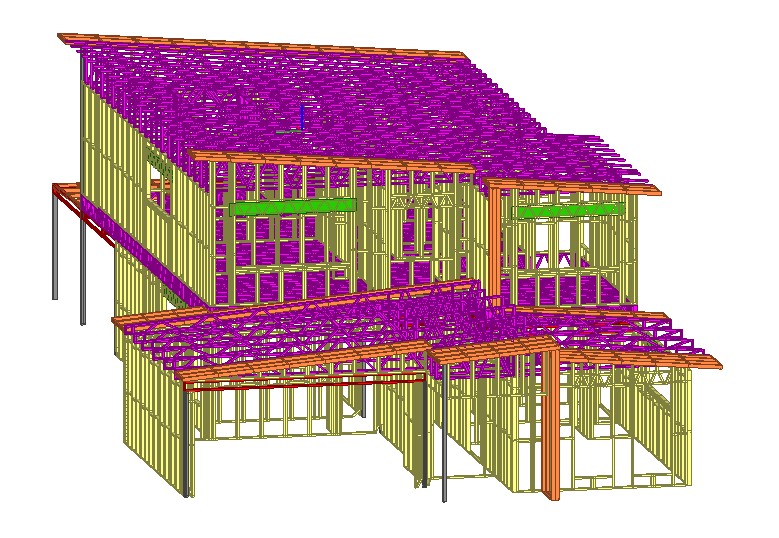
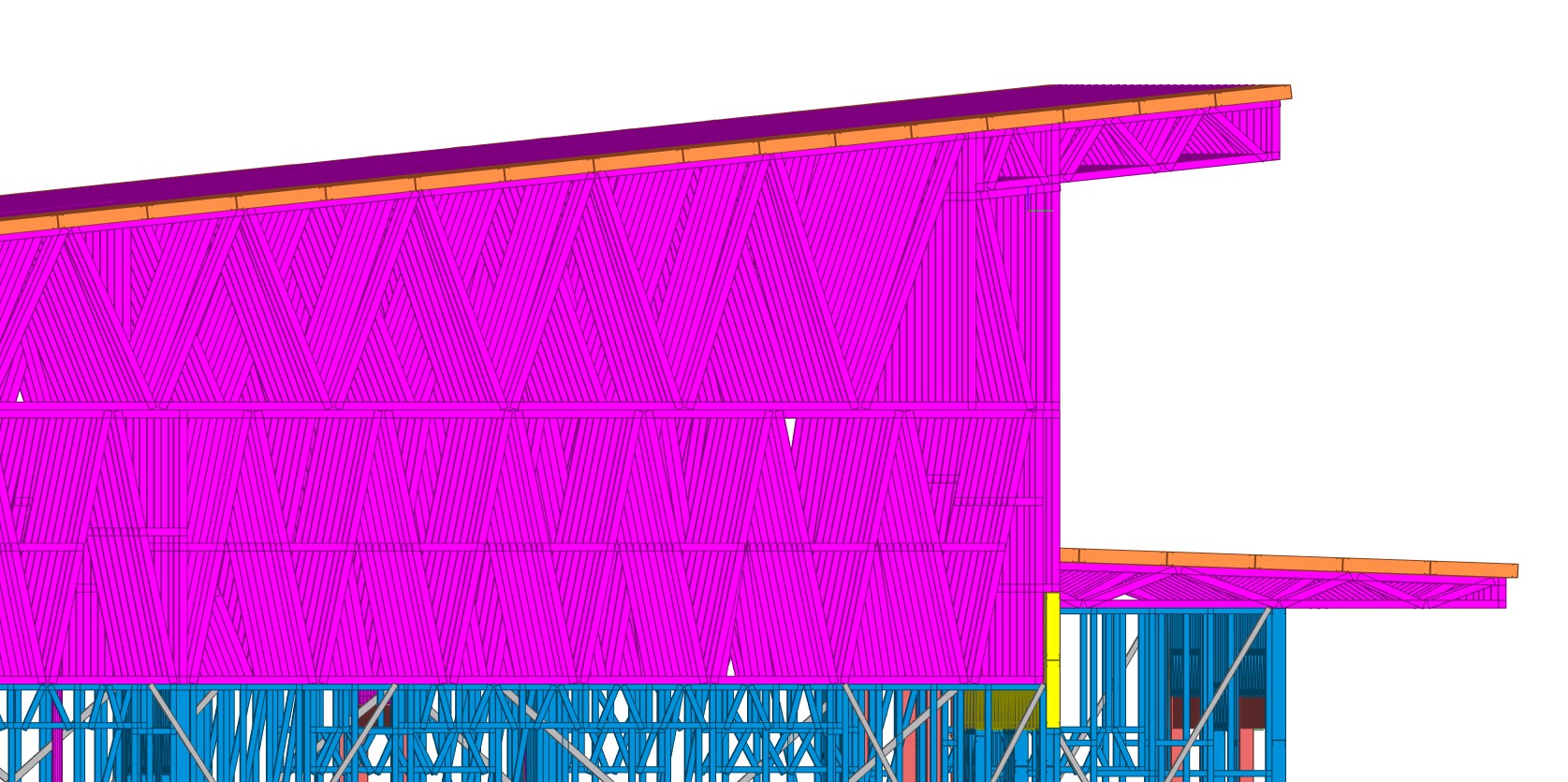
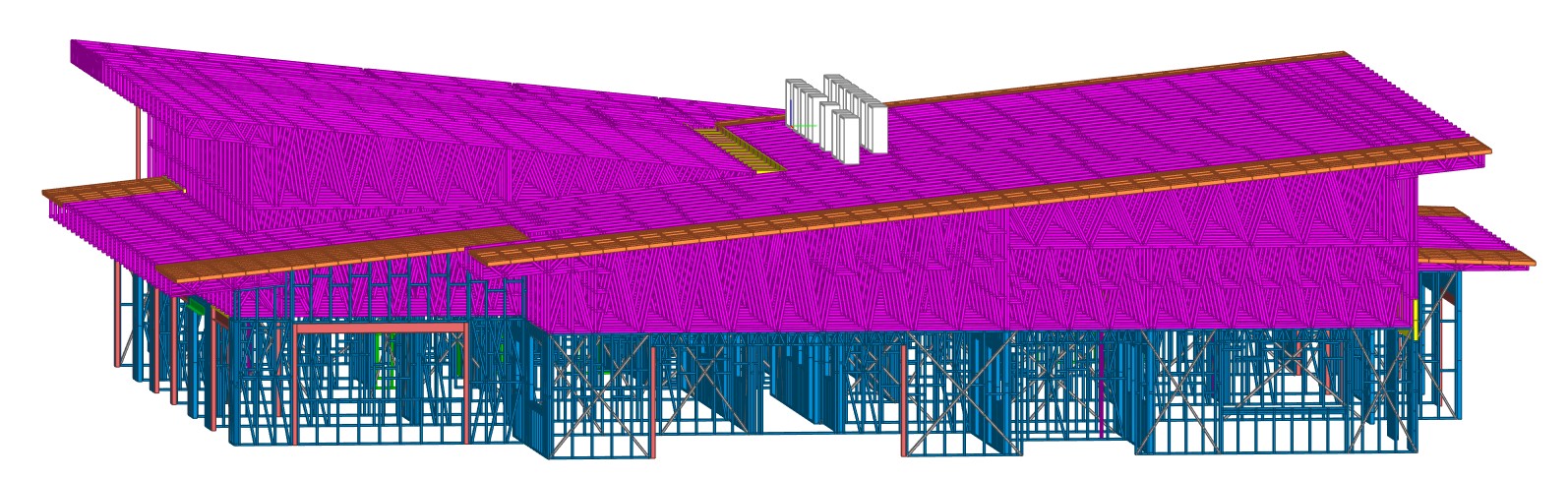
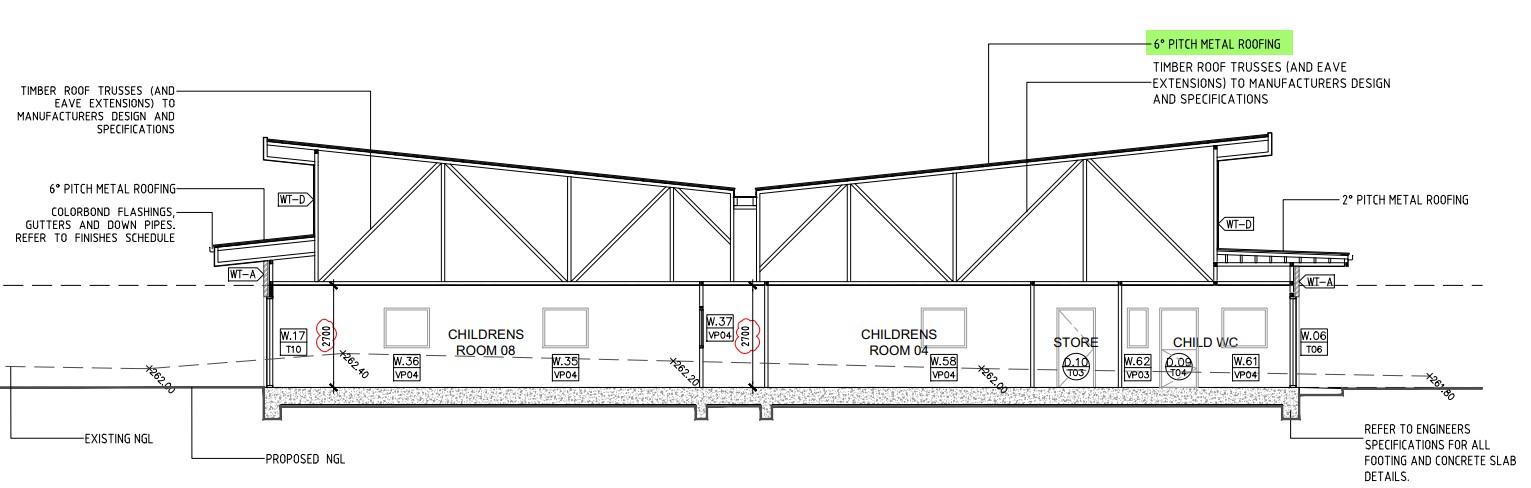
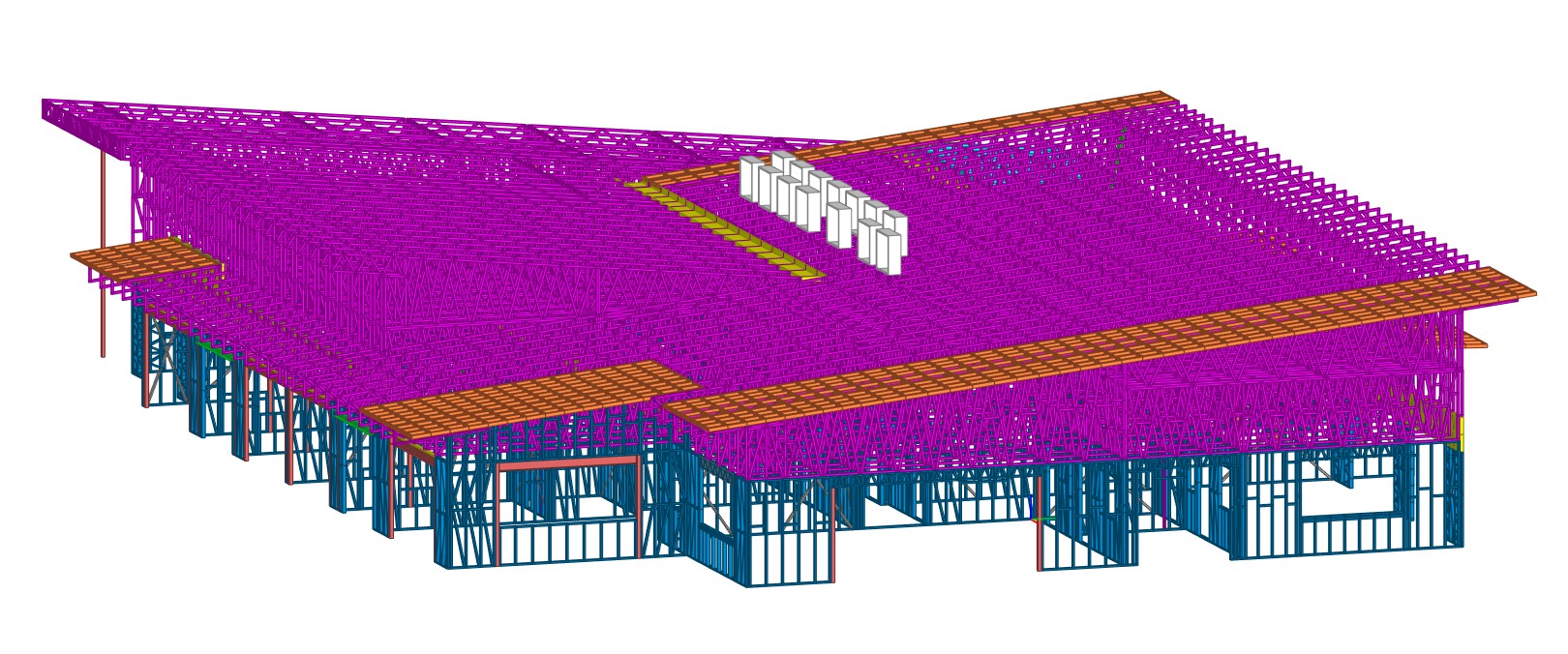
    I recently worked on a Light Gauge Steel (LGS) detailing project for a single-story building. Mickleham Child Care. The project involved a 6° sloped metal roof, supported by 2-inch top-hat trusses.

    Refer the below image:

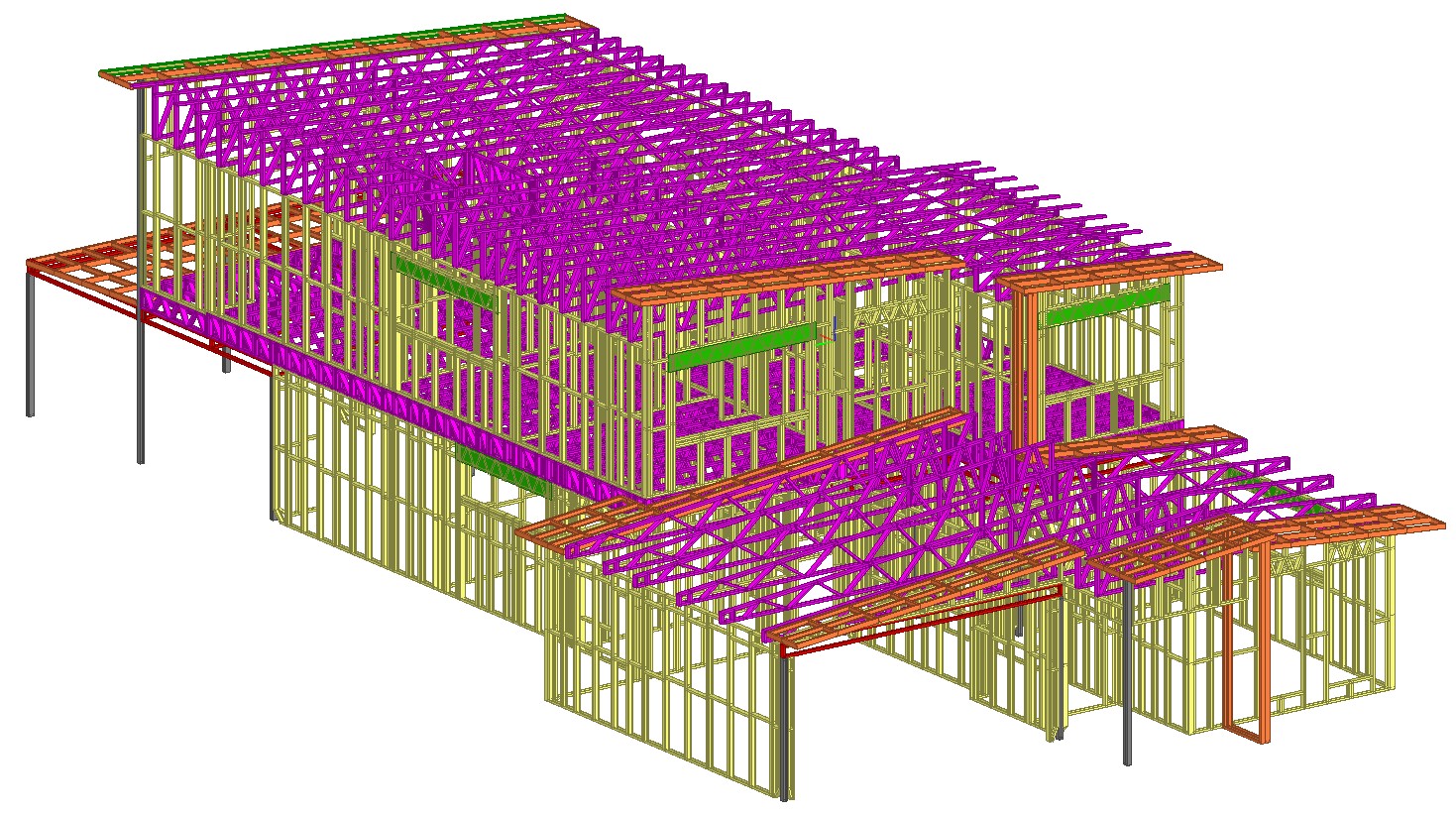
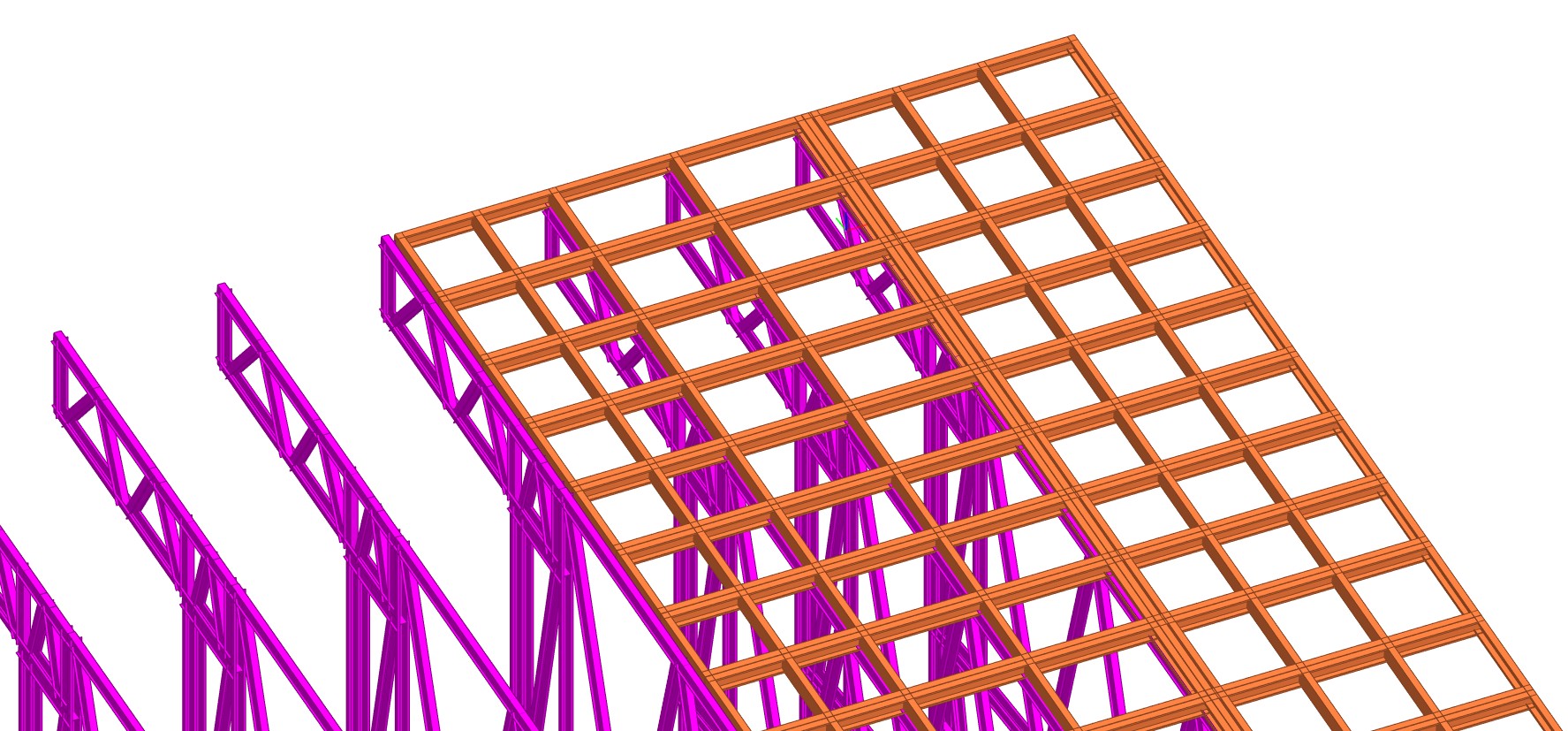
    The building also had a roof overhang on both the top and bottom eaves, which needed proper support framing.

    Refer the below image:

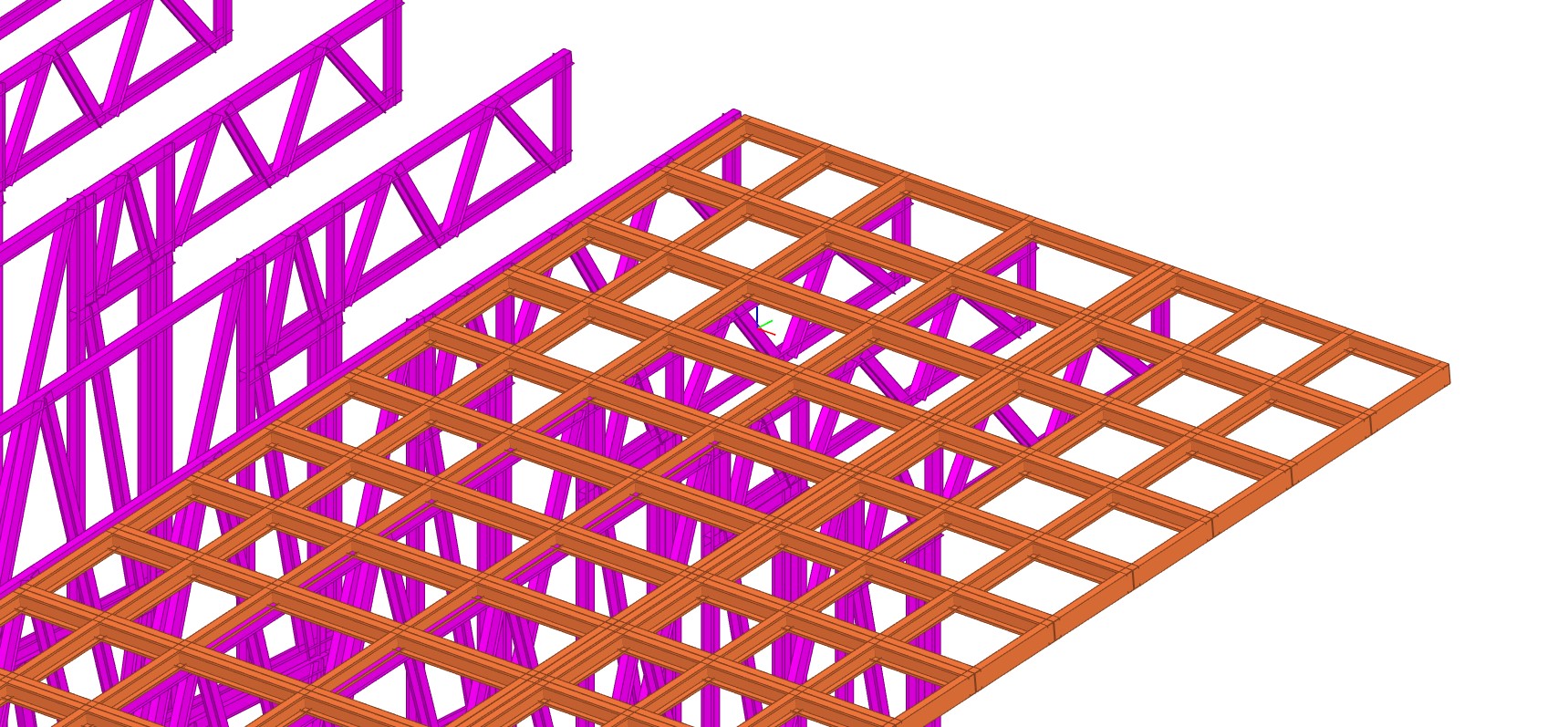
    To cover the overhangs efficiently, I proposed a hybrid roof concept, combining roof trusses with a roof frame. The client reviewed and approved this concept, and I prepared the framing layout accordingly.

    Challenges Faced During Detailing

    As a designer and detailer, I always try to provide practical solutions based on the information available, keeping in mind both structural logic and constructability. However, as I’m not a licensed structural engineer, I work within the limits of what’s acceptable from a detailing standpoint.

    After submitting the overhang frame design, we had a Teams meeting with the client and their team. They shared a few valuable suggestions to improve stability:

    • Use double noggings for better bracing:
      The initial design had single noggings, but the client pointed out that double noggings improve lateral stability, especially in wind-prone regions or when the overhang is long. Doubling up helps reduce flex and provides better load distribution.

    Refer the below image:

    • Use triple studs at key points:
      At certain locations, studs were positioned directly above supporting members or points bearing higher loads. The client recommended triple studs to prevent buckling and improve vertical load transfer in those critical areas.

    Refer the below image:

    • Re-orient the overhang frame layout:
      Initially, I had vertical members as studs and horizontal members as noggings. The client suggested a reversal — horizontal members as studs and vertical members as noggings — so that the framing better supported the roof sheeting direction and provided more consistent strength along the overhang.

    These insights from the client were genuinely helpful and added value to the final outcome.

    Practical Constraints and Adaptation

    Initially, I had created the frame using the Scottsdale software, which by default builds vertical studs and horizontal noggings. To meet the client’s updated request, I had to manually revise the layout in the Scot simulator, which took some additional time and effort. I explained this to the client, and they understood that software limitations sometimes require a manual approach.

    While making these changes, I also adjusted the truss height to match the roof RL ensuring that the roof frame sitting above the truss aligned perfectly with the original design elevation. The final result was a stable, clean solution that maintained the intended levels and supported the overhang well.

    Reflecting on a Similar Experience

    After this session, I revisited an earlier job I worked on – Lot 202 Mount Keira Rd, Mount Keira – where I had used a similar overhang framing concept. That job was successfully completed on site without any issues, and the detailing approach was almost the same as my original proposal in this current project.

    This comparison helped me realize that different clients can have different expectations, even for similar framing problems. It’s not always about what’s right or wrong – it’s about understanding the specific needs of each project and adapting to them.

    What I Learned

    This experience was a strong reminder of a few key things:

    • Client feedback is essential — it helps enhance and refine design decisions.
    • Software is just a tool — manual adjustments are sometimes necessary to suit real-world conditions.
    • Every project is a learning opportunity, even when the problems feel familiar.

    I’m glad this task helped me explore more about overhang framing logic, client coordination, and working beyond default software configurations. I’m sharing this in the hope that it helps someone working on similar LGS roof detailing situations.

  • 🚧 Lessons Learned from the Site: Smarter LGS Detailing for Better Builds!

    🚧 Lessons Learned from the Site: Smarter LGS Detailing for Better Builds!

    🧠 1. Frame Size Matters – Don’t Overlook Transport Constraints 

    • Truss heights hit up to 3m and lengths extended to 10m – something that could change based on client and transport feasibility. 
    • Wall frames also touched 3m in height and 5m in length – be sure to check if it fits the truck before detailing. 
    • Roof overhangs? Review them early to ensure they’re compatible with transport or you’ll risk on-site chaos. 

    ✅ Tip: Always check transport feasibility during quoting and in RFI#1

    ✂️ 2. Splitting Tall Walls – Think Before You Frame

    • External walls taller than 3m should be split during design. 
    • Confirm site handling options – are cranes available, or will it be lifted manually?

    ⚠️ Don’t assume! Discuss early to avoid rework and surprises on-site. 

    🧩 3. Design Features for Roof Panels & Coordination with MEP for Wall Cutouts 🛁

    • Before locking in the wall layout, always confirm plumbing cutouts and vent pipe locations with the client, especially in WET areas.
    • If these aren’t aligned early, it can cause major trouble onsite — including last-minute frame cutting.

    For Roof Frame like overhangs:

    • Rafters should be designed as doublers (to add strength).
    • Rafters must be perpendicular to the wall.
    • Noggings should run parallel to maintain overhang stability and simplify installation.

    🔍 These small details make a big difference for smooth execution.

    🚛 4. Confirm Transport & Lifting Method Early

    • Every frame size should be checked for transport in RFI#1.
    • Clarify lifting access – Is there a crane or only manpower?

    🏗️ 5. Large Trusses – Assess or Be Stressed 

    For long trusses that might need splitting: 

    • Evaluate engineering requirements early – if a truss fails, it’s not on us, it’s an engineering issue.
    • Consider onsite assembly time, weight, and transport limitations in your quote.
    • Flag “suspect trusses” during quoting with buffer for iterations.

    🧠 Smart Detailing = Fewer Site Surprises

    📄 6. Quote Smart – Define Scope Clearly

    • Don’t quote blind. Wait for all necessary drawings and details.
    • Add buffer for unknowns and clarifications.
    • Clearly state we follow the provided architectural and structural drawings. If things change later — that’s a variation.

    🔄 7. Variation Handling – Get it in Writing

    • Raise a variation immediately for any change that occurs after quoting.
    • Pause all work on the affected section until written client approval is received (or the variation is rejected).
    • If there’s a delay — pick up the phone and speak directly with the client. Clear communication is key to minimizing disruptions.
    • To alert the client that a change has happened, and that there is a delay in the program.

    💡 8. Our Design Suggestions – Add Value and Help Your Client Cut Costs

    If we propose design improvements (e.g., optimizing the LGS frame layout), they should be quoted as added value.

    When working off client-supplied drawings, and we identify missing details or unclear sections:

    • We can submit proposals for improvement.
    • If this was clarified in the quote, it is already within our scope — no need to raise it as a variation.

    Smart detailing isn’t just about execution — it’s also about helping our clients save time and money.

    🧱 9. Client-Driven Design Changes – That’s a Variation Too 

    Any change the client makes for ease of installation or cost saving must be quoted as a variation

    📋 LGS Project Checklist (for Detailers & PMs)  

    ✔️ Confirm frame size limits (wall/truss) with client 
    ✔️ Review transport feasibility and crane availability 
    ✔️ Request complete architectural, structural, and MEP drawings 
    ✔️ Identify special features (cutouts, splits, overhangs) early 
    ✔️ Define scope clearly – design vs. detailing only 
    ✔️ Include buffer time for potential RFI clarifications 
    ✔️ Document all design and client-driven changes 
    ✔️ Conduct internal reviews before client submission 
    ✔️ Flag and assess suspect trusses during quoting

    💬 Final Thoughts 

    Whether you’re a detailer, project manager, or fabricator, I hope this blog helps you:

    • Spot issues early
    • Avoid costly site changes
    • Deliver smoother, smarter LGS solutions

    📢 More Coming Soon 

    We’ll continue sharing more real-world LGS insights, including: 

    • 🧠 “Can You Spot the Problem?” detailer challenges 
    • 🛠️ Cost-saving ideas we’ve implemented 

    Stay tuned — and let us know if there’s a specific LGS topic you’d like us to cover!