Tag: Precast Estimation

  • Our process of Precast Estimation

    Our process of Precast Estimation

    Are you finding precast estimation a demanding task?

    Imagine offloading the time-consuming aspects of this process, freeing you to focus on more critical activities. At Tek1 Pty Ltd, we excel in providing fast and accurate takeoffs for precast projects, often at a fraction of the cost you might expect. You can rely on our expertise and extensive experience to deliver exceptional results.

    Our process begins with your structural and architectural PDFs. Utilizing the panel spliting details from the structural precast elevations, we proceed with a detailed analysis.

    We meticulously number all panels, assigning crucial data such as thickness, material, and panel type. This intelligent data within our takeoff model allows for comprehensive report generation later in the process.

    The panel type information also captures reinforcement details, including rebar weights, perimeter bars, and any additional mesh. For panels requiring patterned or special moulds, including brick snap panels, we identify and mark them accordingly, even specifying the number of special moulds needed.

    Our summary report provides a comprehensive overview, including:

    • Number of panels
    • Thickness summary
    • Gross and net area calculations
    • Concrete volume
    • Panel weight (concrete + reo)
    • Number of meshes and reo weight (excluding ligatures)
    • Perimeter bar weight
    • Caulking and grout lengths
    • Panel types and strengths
    • Concrete mix and any colored concrete specifications
    • Quantities of Bricsnap, Reckli, and Feature panels
    • Number of moulds required
    • Maximum panel size and its corresponding number
    • IFC model compatibility with Trimble or Autodesk
    • A QR code linking directly to the model for easy viewing
    • Thickness summary

    Furthermore, we proactively identify any potential for optimization or issues related to buildability and transportation, providing comments along with the relevant panel mark numbers.

    If you believe our services can bring significant value and allow you to concentrate on higher-priority tasks, please don’t hesitate to call or email us.

    You will be surprised how economically we can do the take off for you
  • Changes in Consultant drawings between Quotation stage to the Project stage? You must check: here’s why…

           It is essential to cross-check the revised consultant drawings we receive against the original drawings from the Quotation stage before commencing the project because this may affect prices.

    For example, the panel break up, or the panel specs might have changed. If they have changed, this might have a material impact on price such as concrete and reinforcement cost.

    What should we do when they make changes?

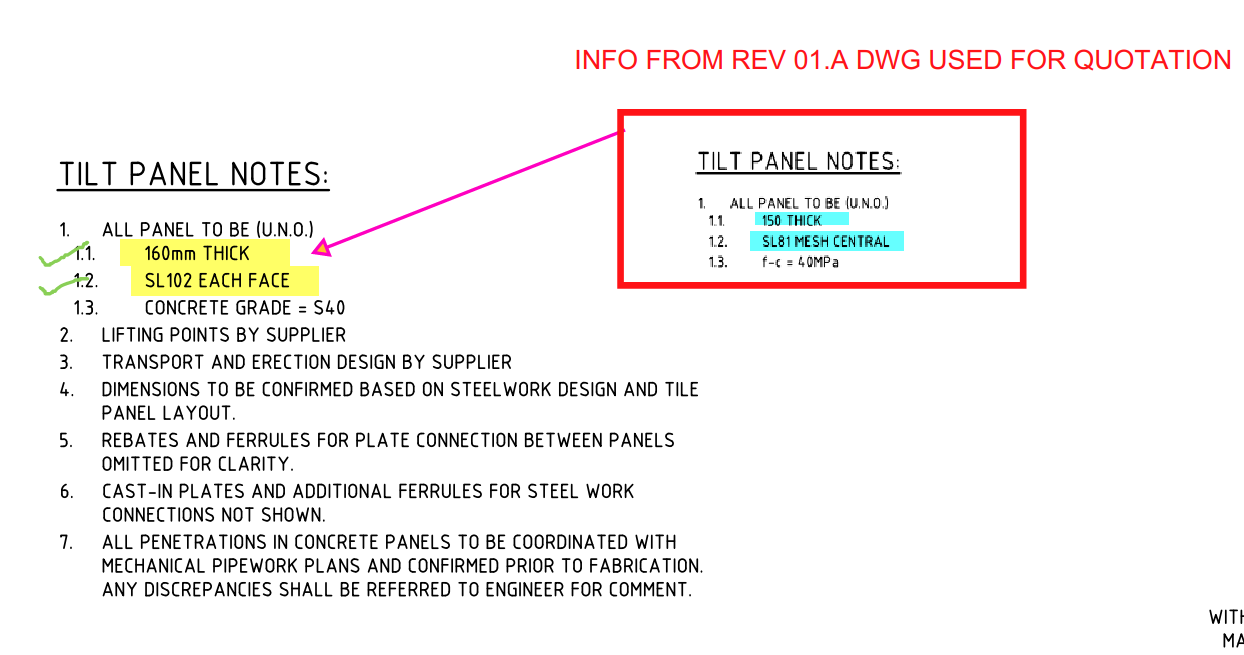
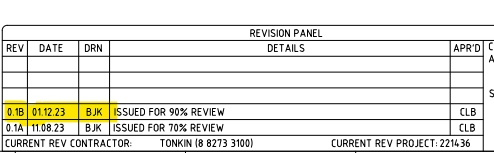
    1. Check the consultant drawing revisions and their date (between the quotation and the current stage).

    For example:

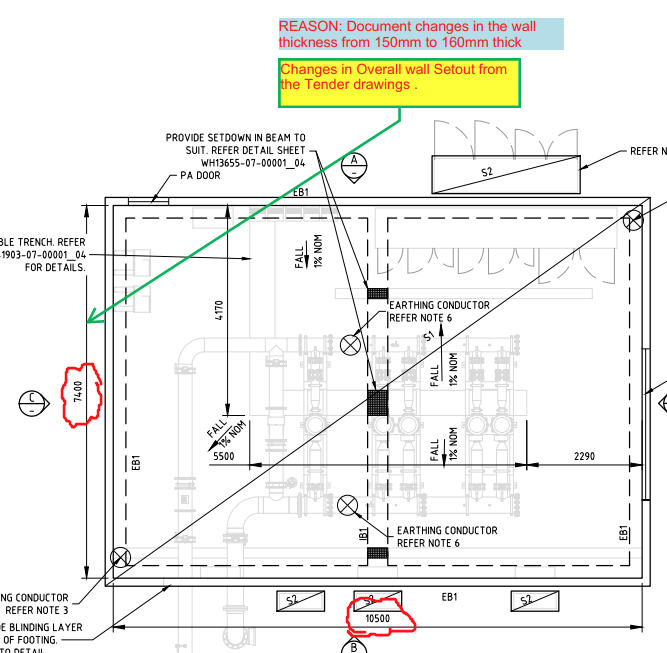
    2. Highlight the changes that occurred and mark them down in the latest structural PDF.

    For Example:

    3. Prepare a summary document report outlining the modifications.

    For Example:

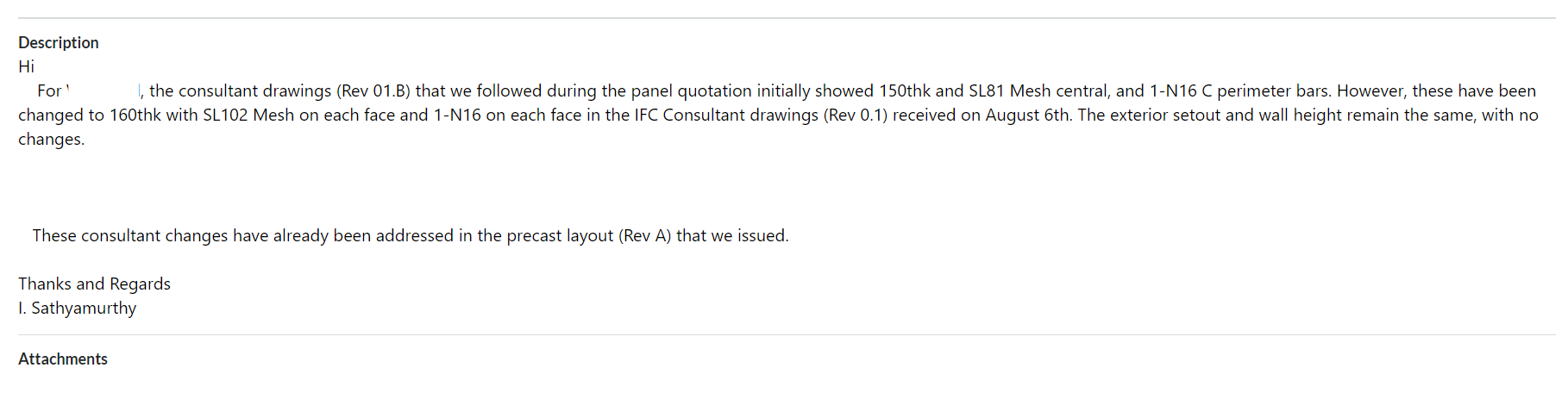
    4. Inform the precast manufacturer and builder about these changes by sending the relevant information via email.

    For Example:

    Why do we need to check the consultant drawings?

         This verification process will enable the precast manufacturer and builder to re-evaluate the timeline based on the information that was previously quoted. This allows potential Cost issues that could cause confusion or delays in the project timeline to be identified and resolved early on such as

    • Cost estimation of individual precast panels, including their respective panel areas and concrete volumes, for manufacture.
    • Cost estimation of approximate reinforcement and mesh weight requirements.
    • List of cast-in items and loose items required, approximate quantities.

    What are the key factors that need to be verified in the consultant drawings from a precast perspective?

    1. Panel Thickness and Types: Verify the panel thickness and types used, as specified in the Structural Drawings.

    2. Panel Count: Confirm the panel count based on the panel split, as detailed in the Structural Drawings.

    3. Panel Transportability and Tonnage: Conduct a transportability check and verify the tonnage of the panels from our end.

    4. Panel Reinforcement:

    • Perimeter bar diameter
    • Mesh type used and its placement
    • Additional reinforcement provided in the panel typical detail
    • Reinforcement on central or either side ( specify location)
      (Refer to Structural Drawings for details)

    5. Precast Wall Pattern and Special Moulds: Verify the precast wall pattern and special moulds required, as specified in the Architectural Drawings.

    6. Panel Finish: Confirm the panel finish, as specified in the Architectural Drawings.

    7. Panel Connection Details: Verify the panel connection details, if applicable, as specified in the Structural Drawings