Category: Projects

  • NEW MULTI DWELLING RESIDENTIAL  DEVELOPMENT

    NEW MULTI DWELLING RESIDENTIAL DEVELOPMENT

    Location : 31 VALLEY FAIR DRIVE, NARRE WARREN

    TEK1 Completed this multi-dwelling residential project with out any hitch.

  • HEADER WITH DETAILS

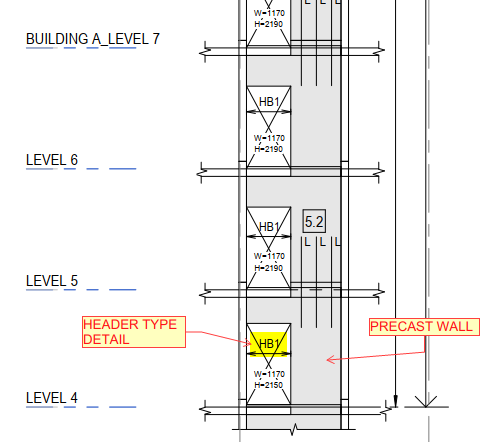
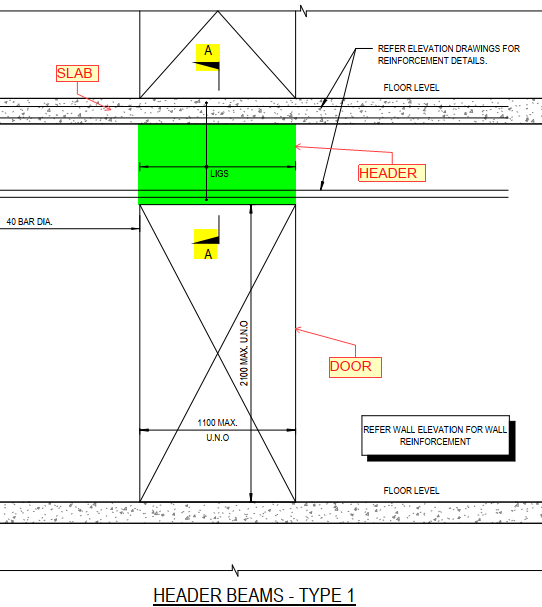
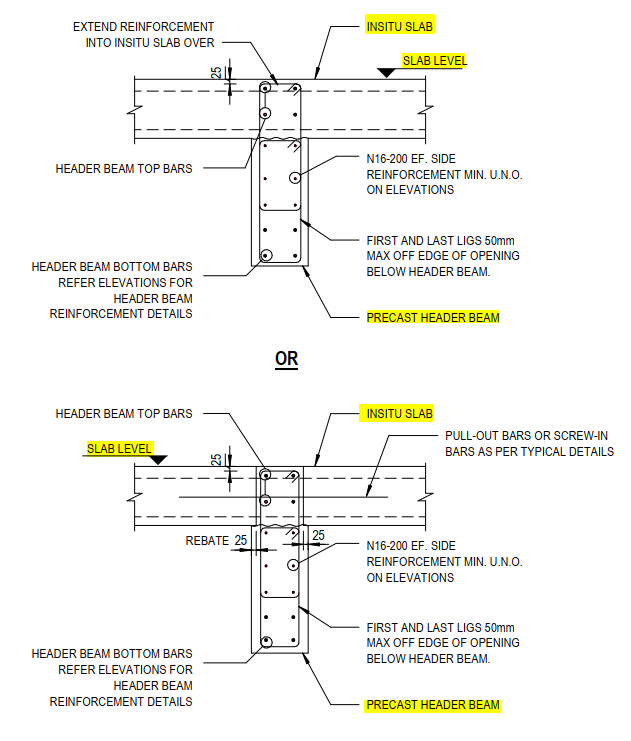
    1. In-situ or Precast element present above the door or window opening is called header. (Ref.Fig.01&02)
    2. Usually, the height of header will be small, and it will have more load impact for the smaller load distribution area.
    3. For structural stability that header needs to have high strength. If structural engineer didn’t specify more strength means it won’t have higher load distribution impact. So, that area requires more reinforcements. (Ref.Fig.03)
    4. Structure engineer drawings specifies that detail in separate header beam detail or in core elevation drawing or even in nominal elevation or as a separate document as per the need and availability.
    5. While providing reinforcement arrangement for header, we need to consider room space on header beam. So, for header reinforcement arrangement we need to the arrangement in 1:1 scale to ensure that no complication & difficulty will arise in factory as well as site.
    6. If any penetration comes at header which is larger in size than for ties spacing, we need to add two ties at both sides of penetrations.
    7. We need to raise RFI (Request for information), if header reinforcement details not provided by structural engineers.

    Fig.01 (Ref. Precast elevation)

    Fig.02 (Ref. Header detail)

    Fig.03 (Ref. Header reinforcement detail)

  • GROUT TUBE WITH DETAILS

    GROUT TUBES:

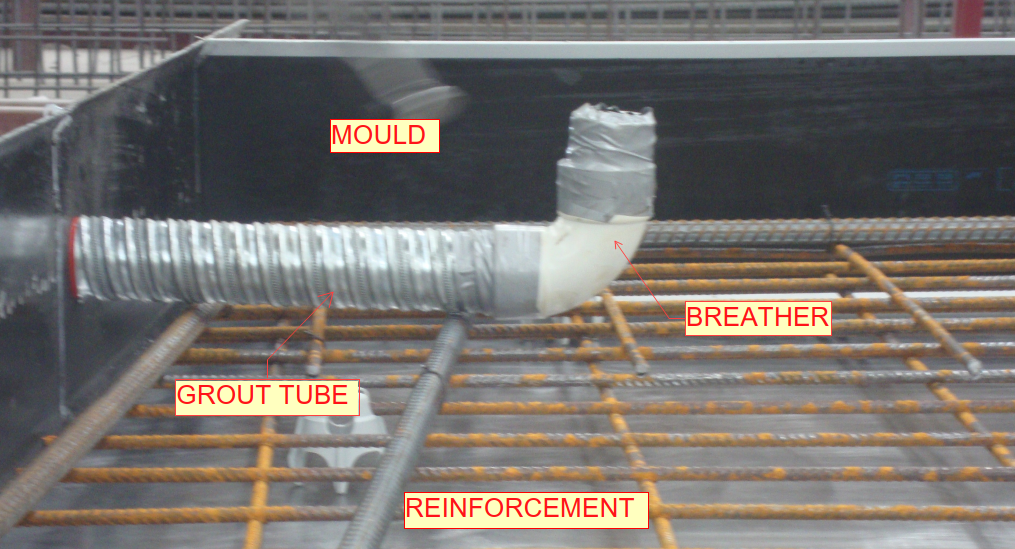
    • Grout Tubes are hollow components and are made of plastic or thin sheet metals.
      (Refer Fig.01)
    • Grout tubes are cast into precast elements which create a void to locate and connect the elements (between two precast elements or in-situ to precast elements) together using starter bars or dowel bars.
    • Once the elements are in position, the grout tubes are filled with grouting material and locking the elements in position.

    Fig.01 (Sample bottom Grout tube with breather)

    Purpose of Grout tubes:

    • Grout tubes are used in the construction of precast concrete buildings for connecting elements like walls, tilt-up panels, beams, columns, etc.
    • It will help to increase the strength and durability of the precast or in-situ elements.

    General details for Grout tubes

    1. Hollow components with spiral designs or key ways in its walls
    2. Selection of grout tubes based on dowel size
    3. Alternatively, NMB splice sleeves or penetrations can be used or dowel bars can be directly casted if having rebar’s arrangement congestion
    4. Grouting materials must be filled for Load bearing areas and voids will be present for NLB (Non load bearing) portions.
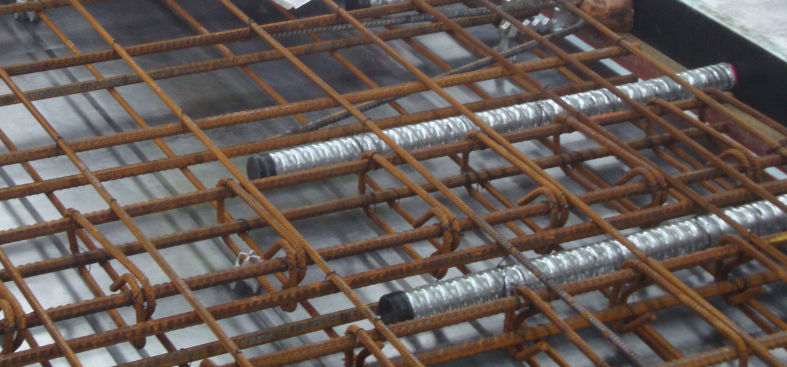
    5. Must not clash with other components in precast (Cast in plate, Lifter, Lig-cage, lig-cage hooks, Prop, Grooves, Ferrules and etc.) – Refer Fig.02
    6. Face of breather must be inside of building and must have access, must not be placed where sequential grooves or architect patterns present.
    7. If breather has no access must provide breather extent to where the access is possible (not required when it is NLB)
    8. Must have a minimum gap of 200mm with other components especially lifters & block-outs (this value can be modified, if having difficulties to maintain that gap)
    9. Avoid the Grout tube placement near to window & major openings (wherever possible)
    10. Grout tube must be placed within 300mm from panel edge. (But can be modified if having any difficulties.)

    Fig.02 (Sample Top Grout tubes)

    Advantages:

    • Lightweight and easy to process
    • Available in a range of sizes
    • It will help to reduce the construction time on site
    • Easy to connect with precast or in-situ elements

    Disadvantages:

    • The huge amount of grout tubes needed to fill up the duct in order to secure the connection between the precast wall or in-situ.
  • DOWEL BAR WITH DETAILS

    Dowel bars:

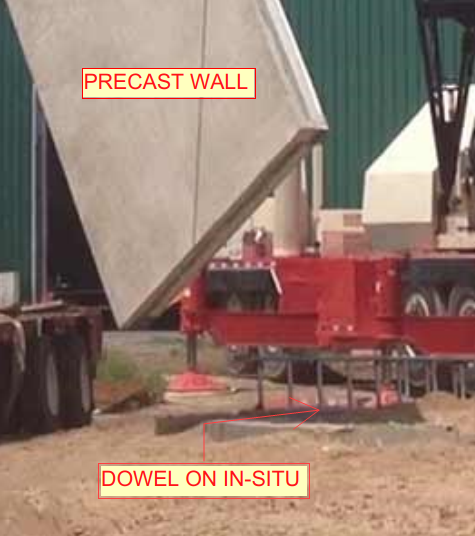
    • Dowels are short straight steel bars and also cogged bars, used to provide mechanical or structural connection between two precast elements or in-situ to precast elements.
      (Refer Fig.01)
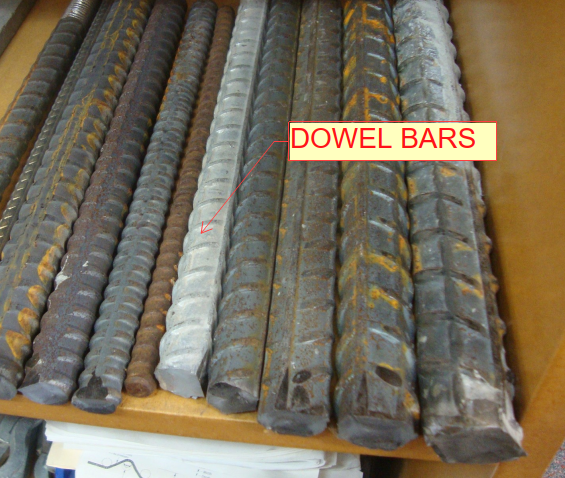
    (Fig.01) Dowel bars

    Purpose of Dowel bars:

    • Dowel bars used to maintain the horizontal and vertical alignments of slab and precast panel. (Ref Fig.02)
    • Dowel bar connection used to transfer the loads between two concrete elements or two precast elements or precast to in-situ elements. (Refer Fig.03&04)
    • Dowel bar is used to extend the structure easily with small drilling to insert the steel for the extension of the structure.

    General details for Dowels:

    • Dowel bar is a steel rods with spiral outer design. (Refer Fig.01)
    • Used in all the locations where Grout tubes are required.
    • Selection of Dowel based on Engineer requirement.
    • Dowel can either be black finish or galvanized finish.
    • Black finish for load bearing dowels and galvanized finish for NLB (non-load bearing) dowel. (It may be varied).
    • Alternatively, bars connected into NMB splice sleeves can be used. Also, starter bars can be casted into panel.
    • Plastic tube will be placed over upper half of dowel. And 20mm compressible cap will be placed over the top of the dowel bar for NLB (non-load bearing) portions whereas grouting material will cover the entire dowels for LB (Load bearing) conditions.
    • Dowels must be positioned within Grout Tubes with minimum amount of clearance on precast walls or slabs.

    Advantages:

    • It is reducing the corner cracking.
    • It will reduce joint faulting.
    • Dowel bar is also used to reduce the deflection and stress.
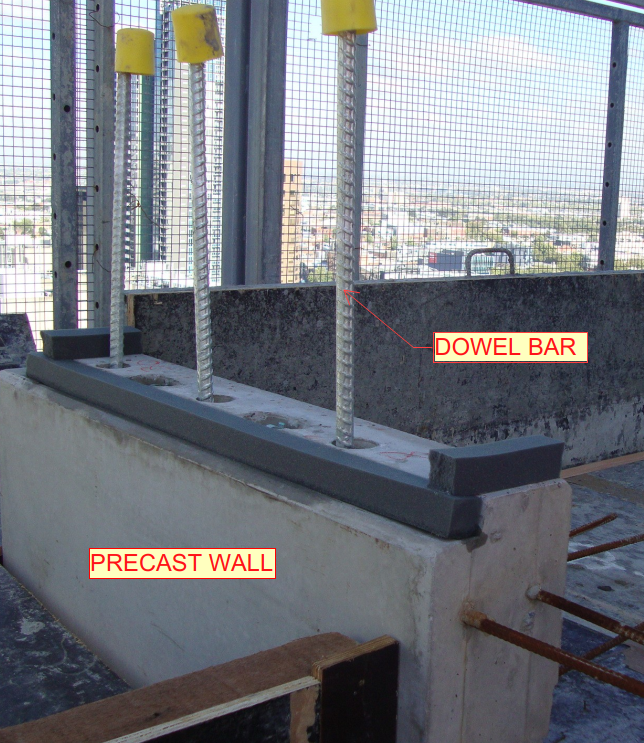
    (Fig.02) Precast wall connection

    (Fig.03) – Precast to in-situ connection
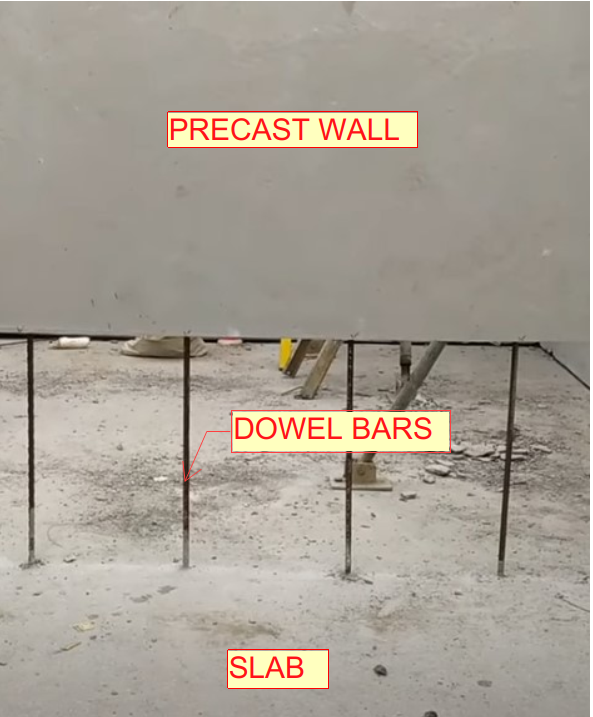
    (Fig.04) – Precast to slab connection

  • STRUCTURAL CORE PLAN AND ELEVATION DRAWINGS STUDY

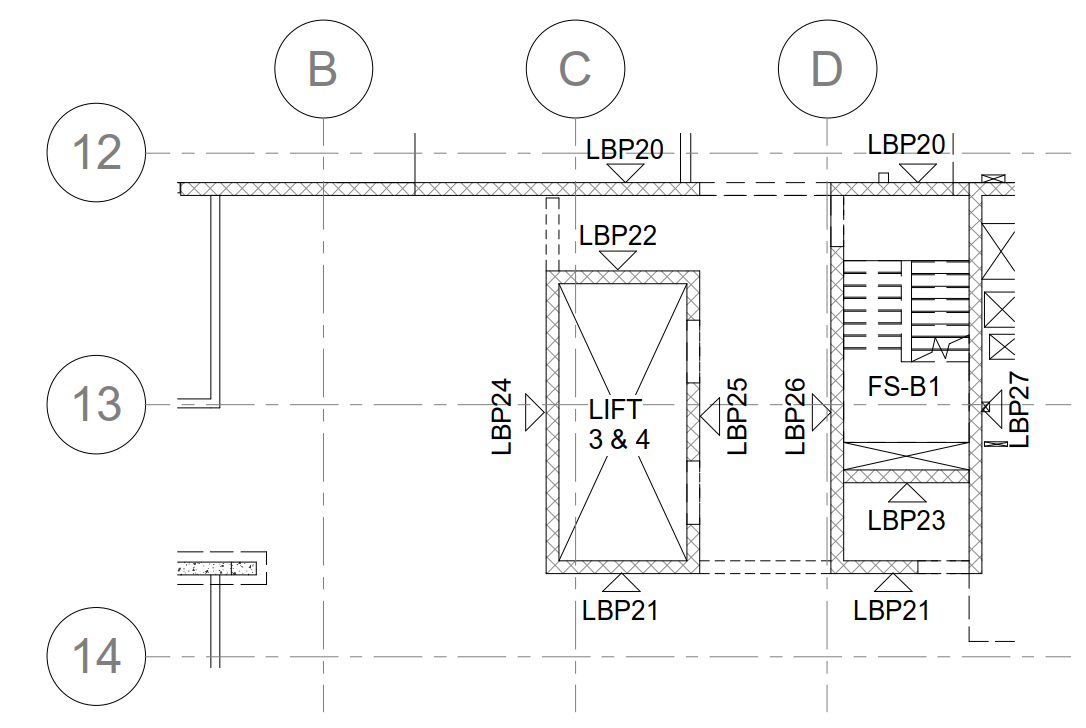
    1. Core plan shows the core wall, shear wall and overall slab boundary. (Only if it is provided by separate structural engineer specifically working for cores & shear walls).
    2. Also, it’s shown the elevation number and viewing direction. (Only if it is provided by separate structural engineer specifically working for cores & shear walls) – Refer Fig 01.
    3. Precast legends will be provided at title sheet.
    4. If too many building means, they highlighted the site key plan with current building.
    5. For single building area of working, they provided the key plan with elevation numbers and views. (Only if it is provided by separate structural engineer specifically working for cores & shear walls).
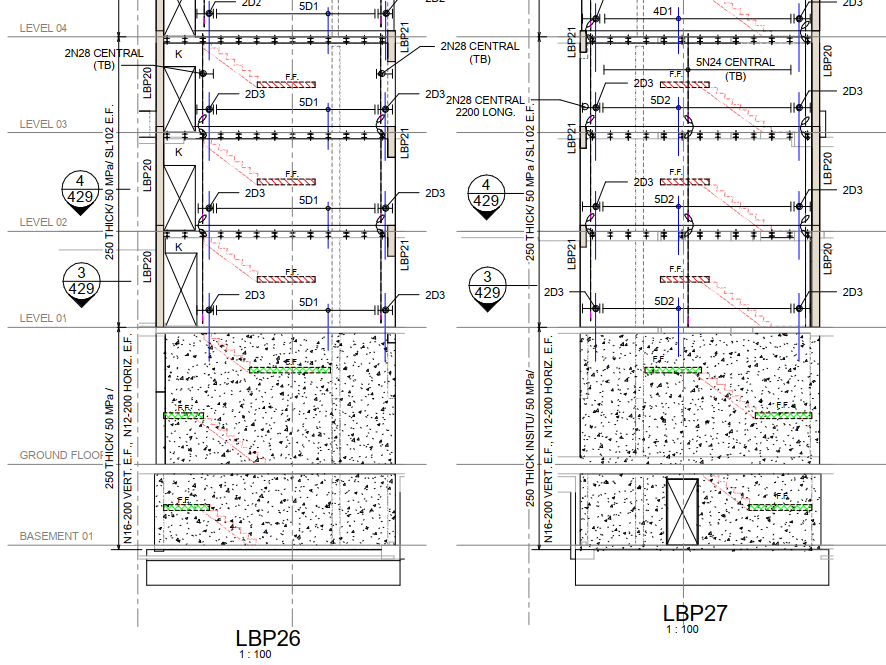
    6. In Core/Shear walls elevation, concerned engineer will provide below details – Refer Fig 02
      • Dowel bar requirement
      • Tension bar requirement
      • Thickness of panel
      • Grade of panel
      • Reinforcement requirement (in some cases it will be given in a separate sheet)
      • CIP requirement
      • Wet-joint details (usually wet joint only specified. Brief details will be given in separate sheet)
      • Header detail schedule type (in some cases header type only given, and will be defined in another sheet)
    7. In core elevation and plan, we prefer to give more importance to elevation than plan, if any issue in it we can raise RFI (Before raising RFI we have to completely analyses the discrepancy, and make a call inward and finalize the deviation. If it is not finalized then only, we can raise RFI (Request for information).

    (Fig.01) SAMPLE CORE KEY PLAN

    (Fig.02) SAMPLE CORE ELEVATION