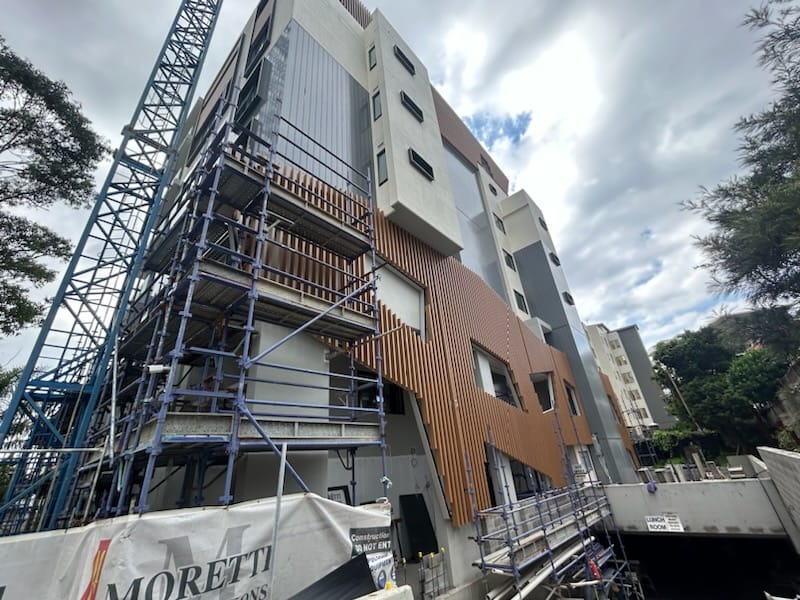
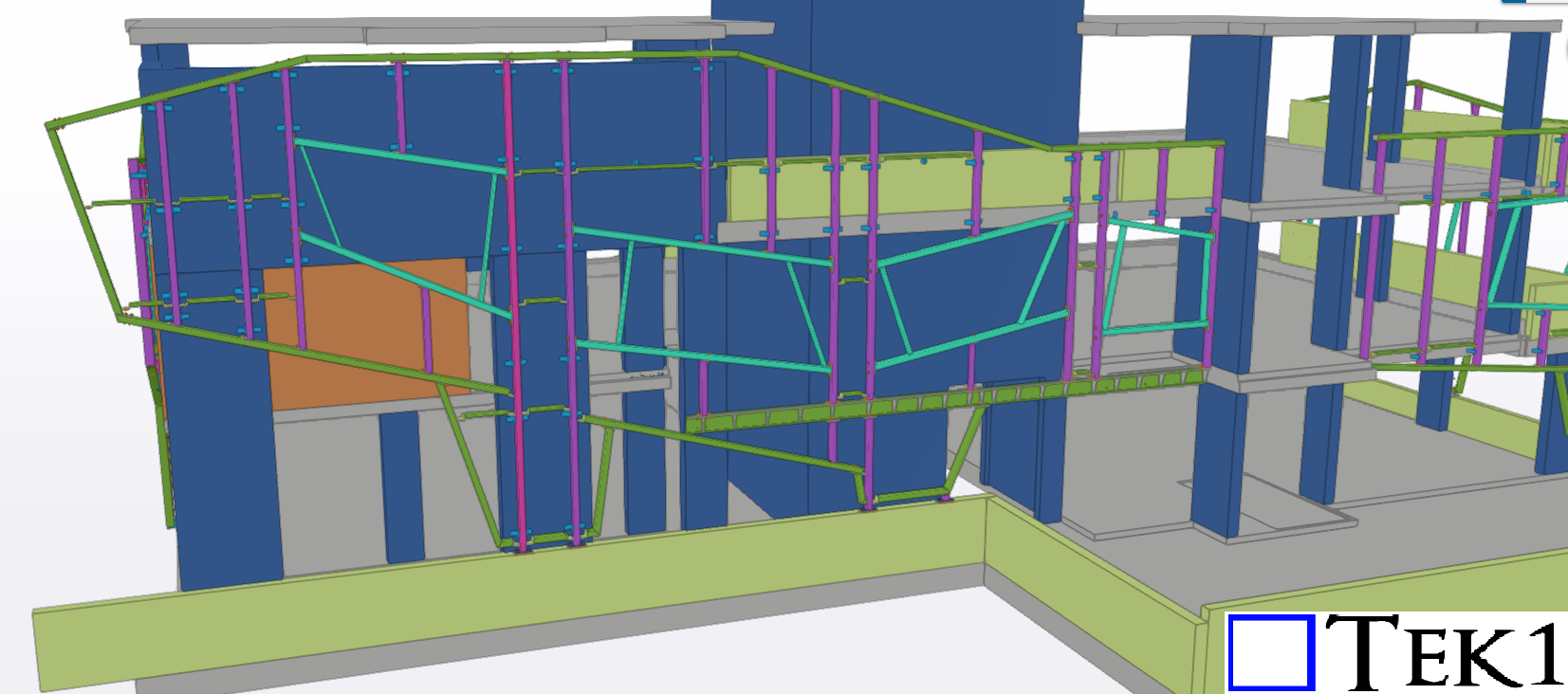
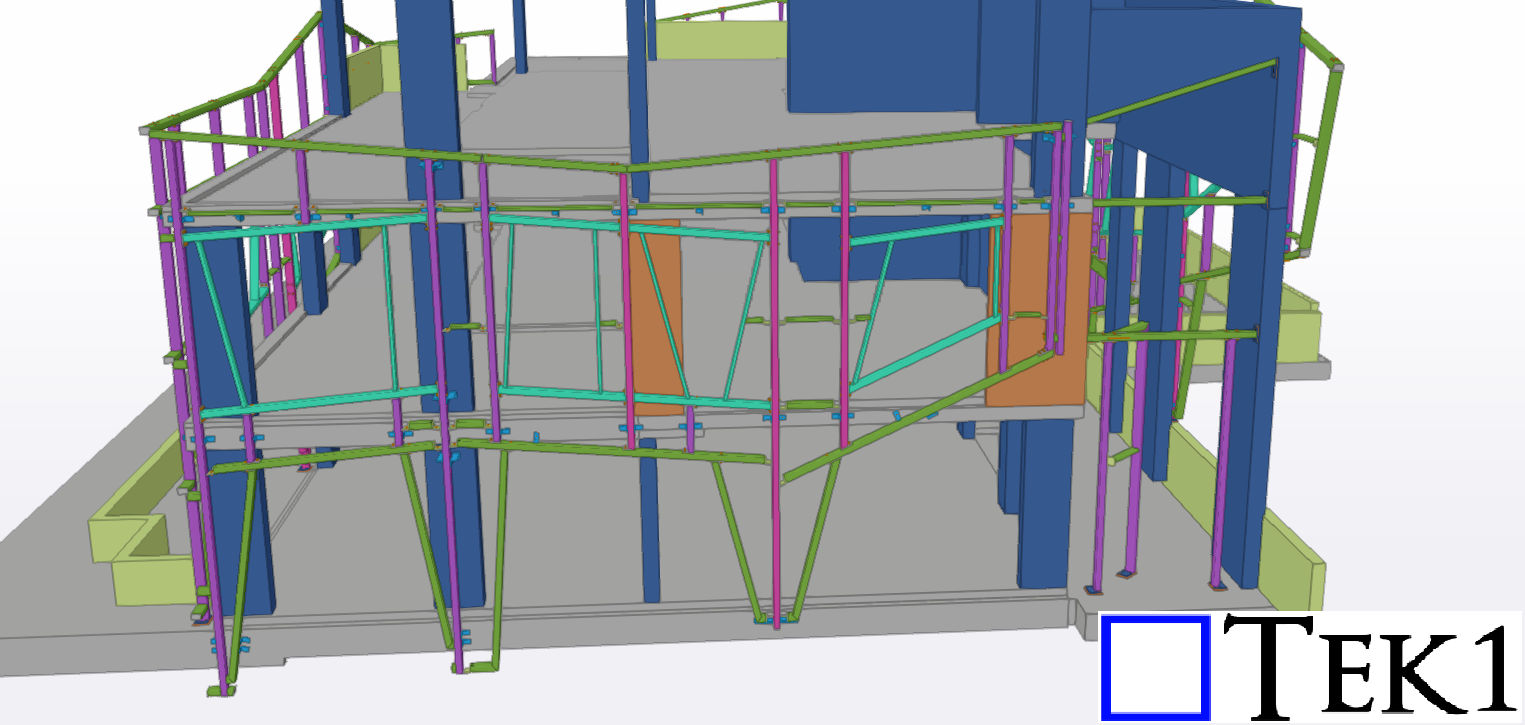
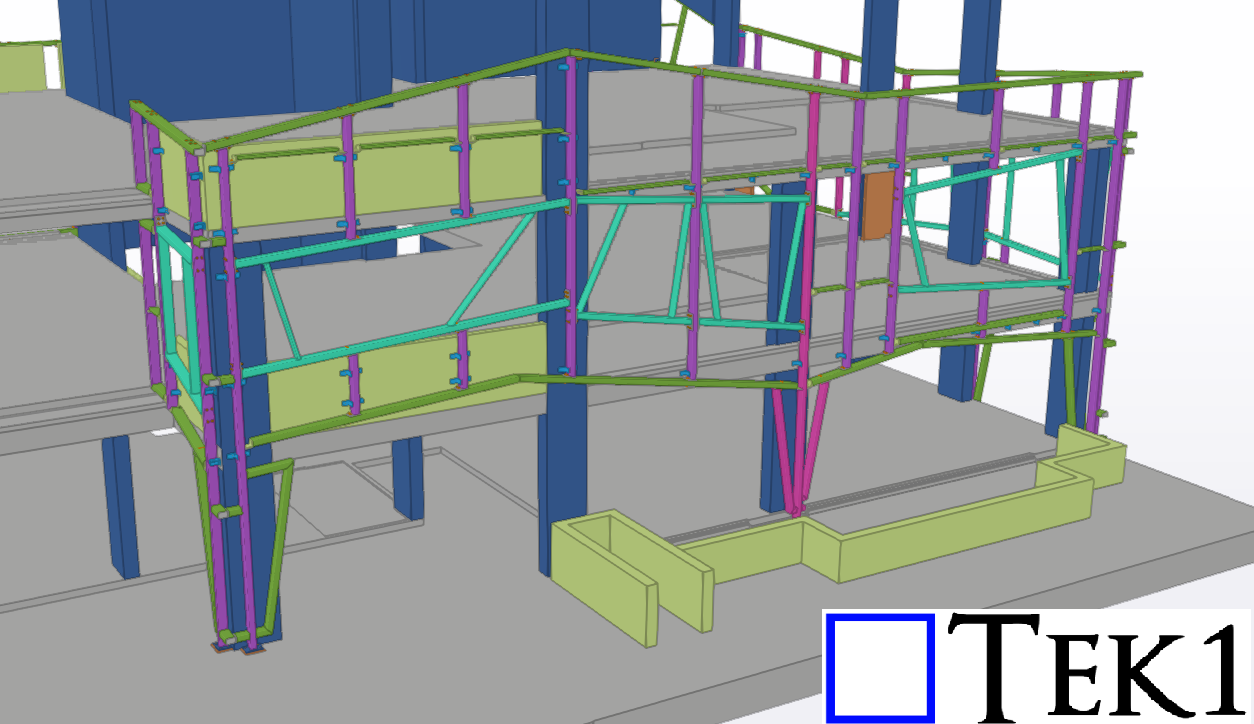
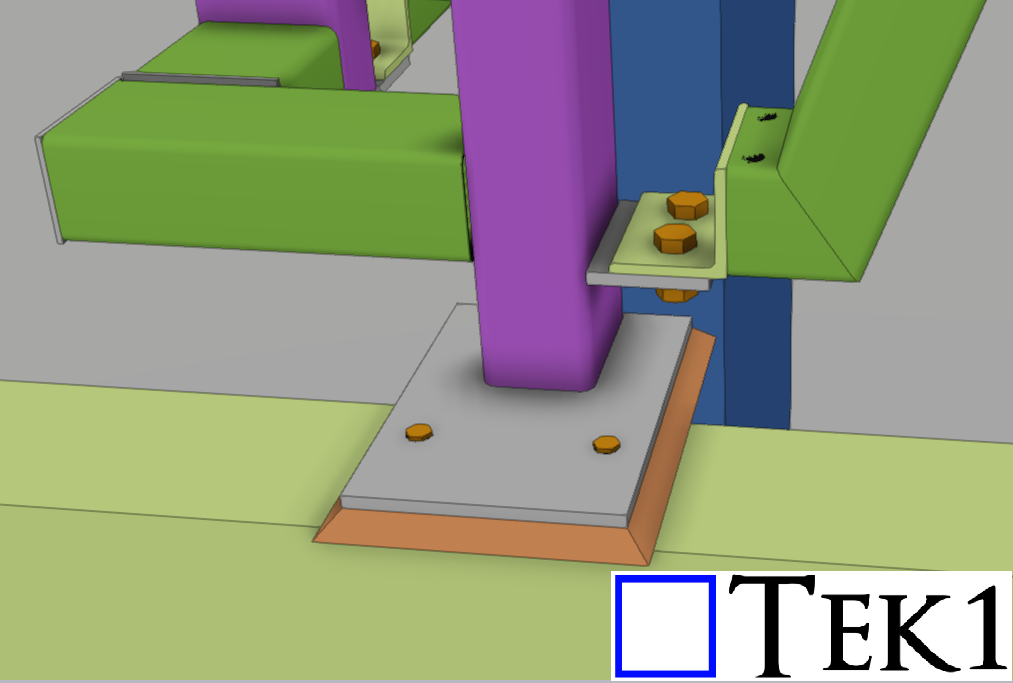
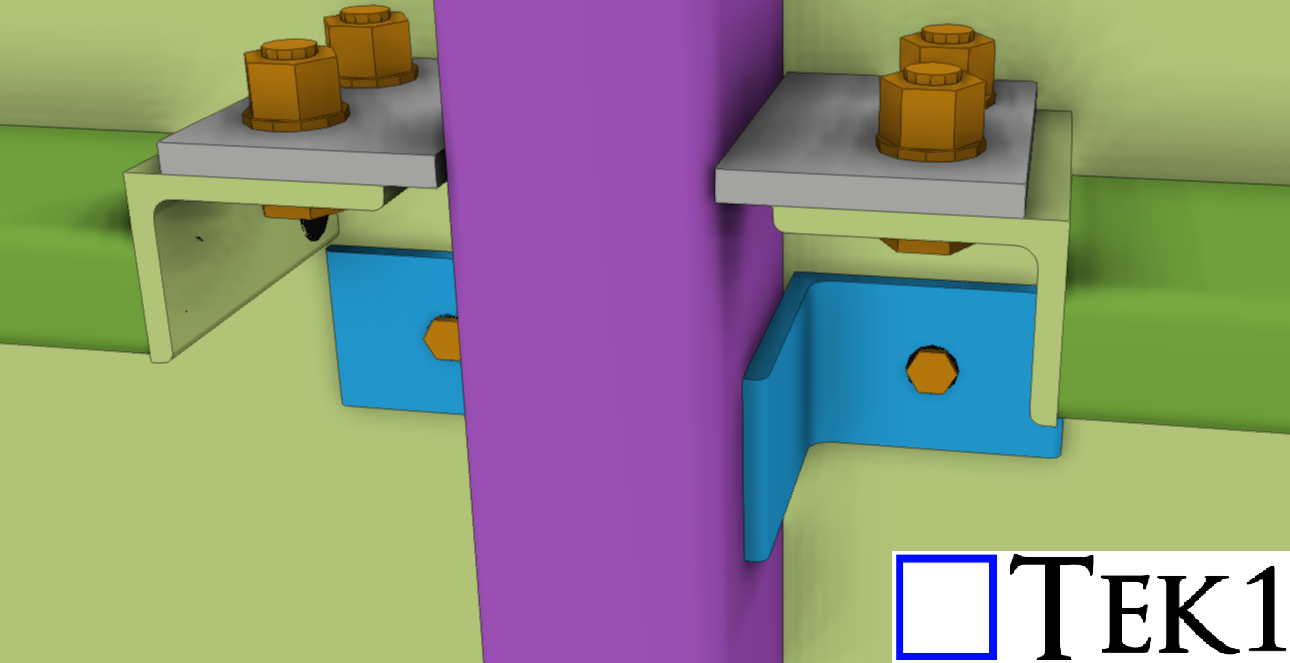
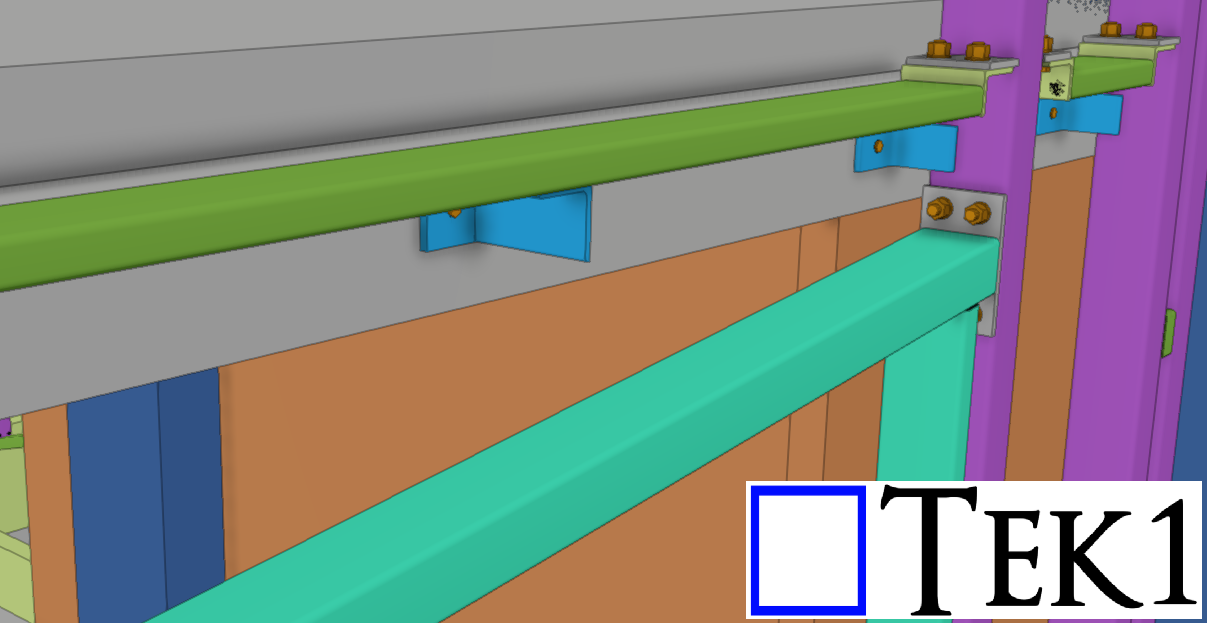
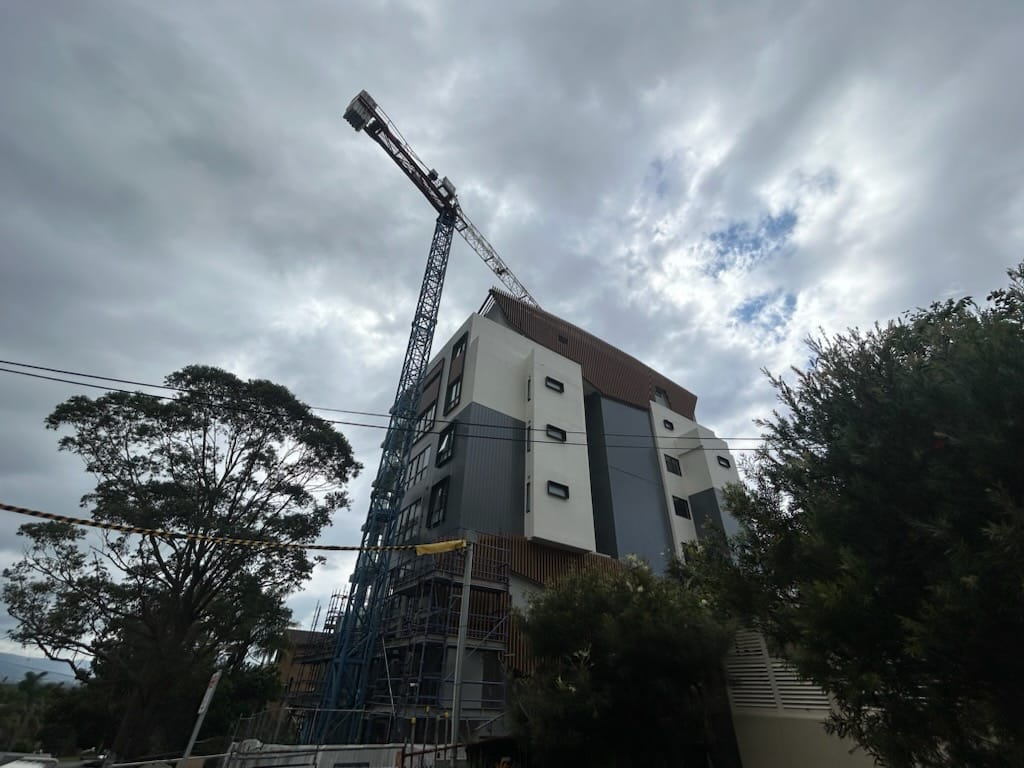
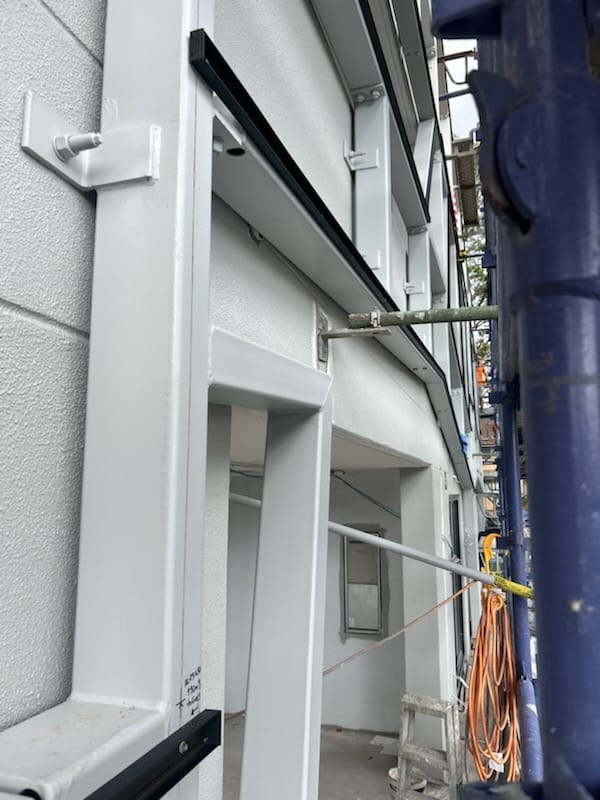
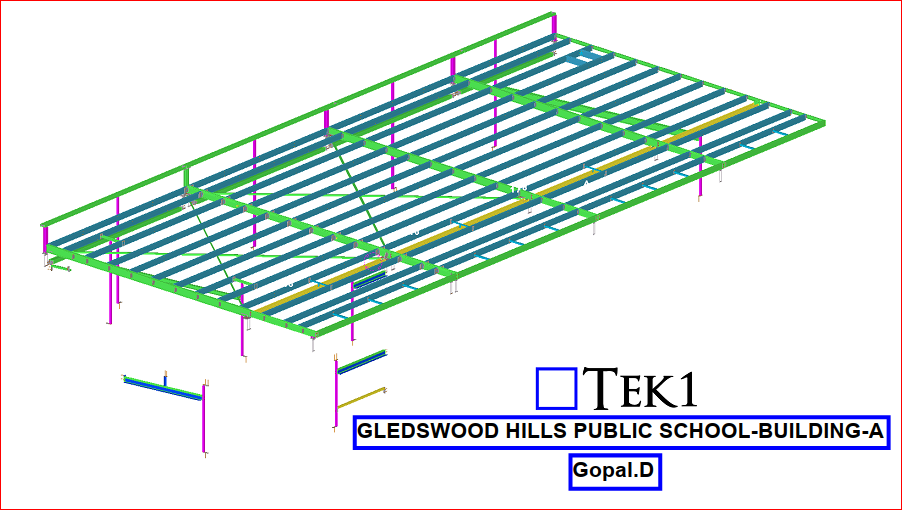
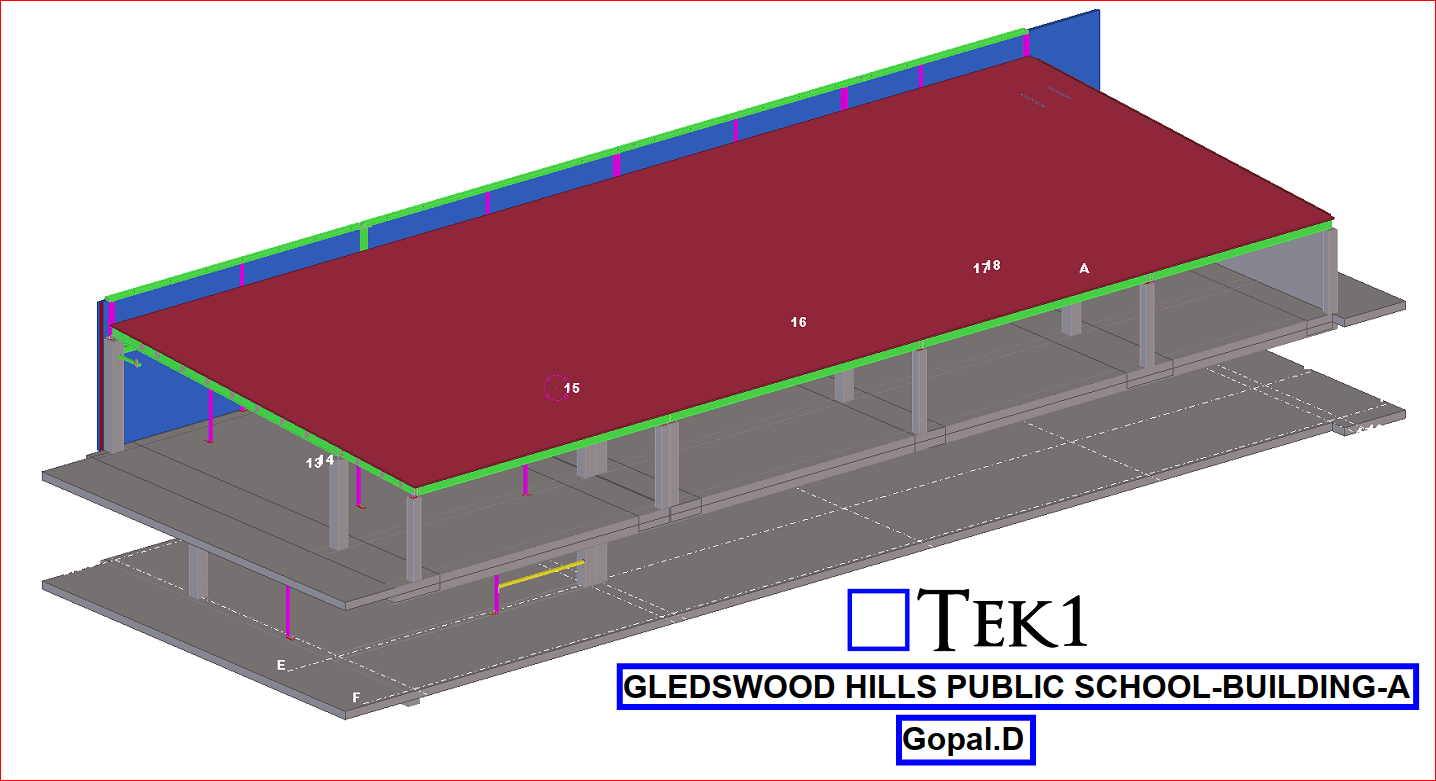
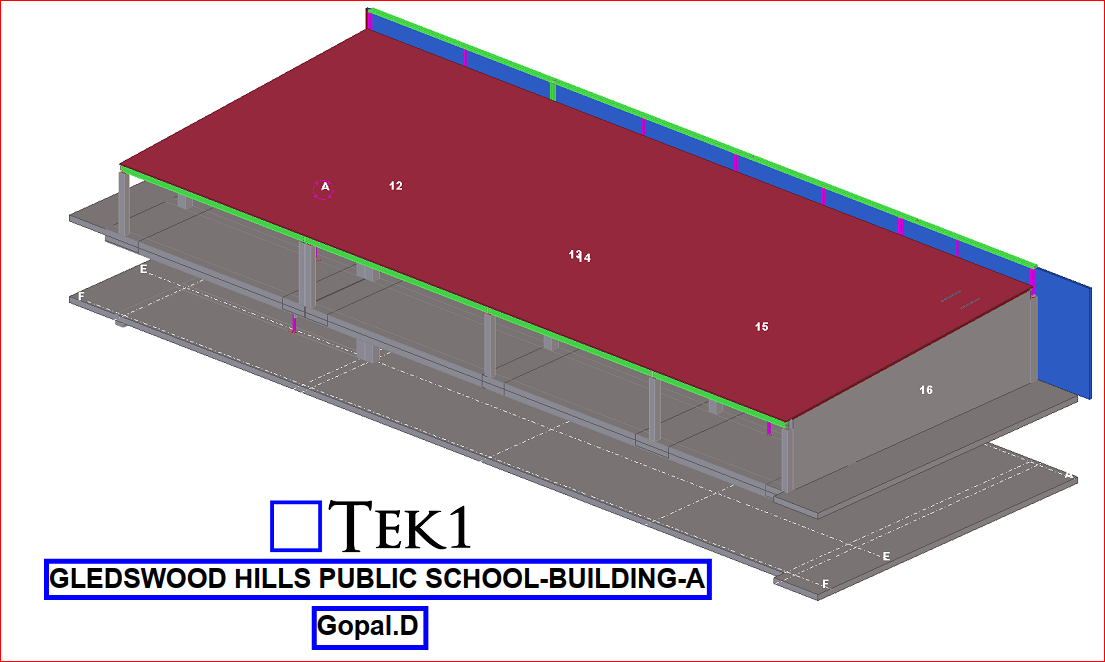
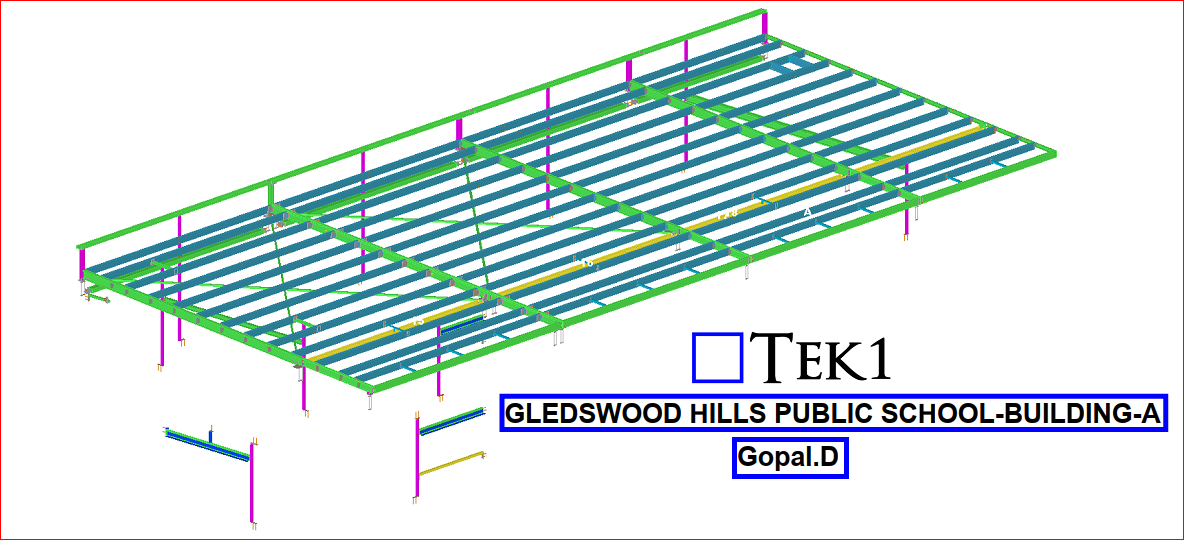
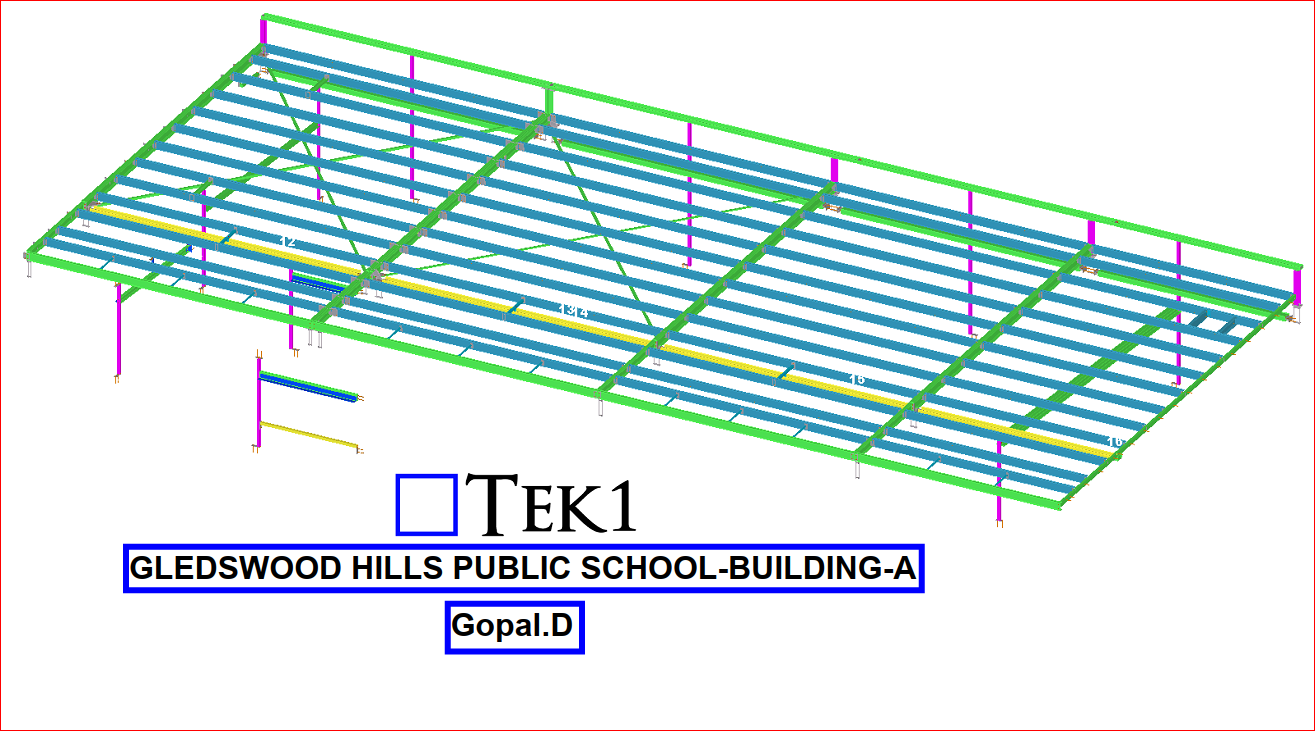
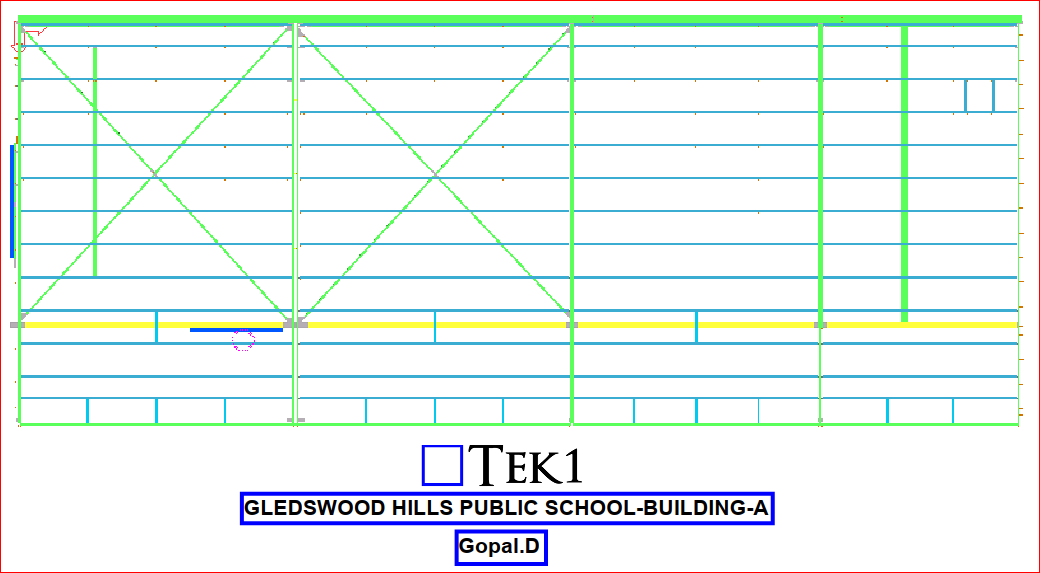
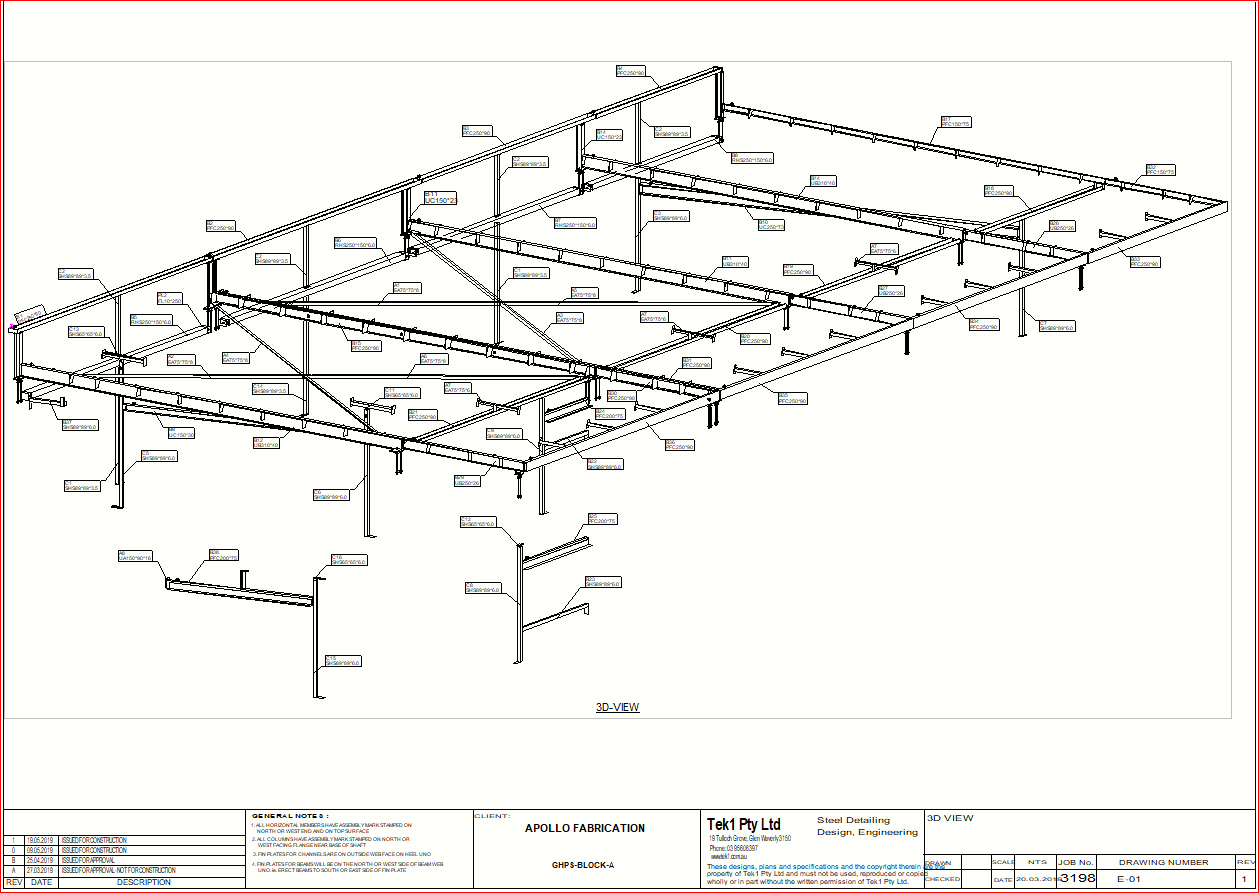
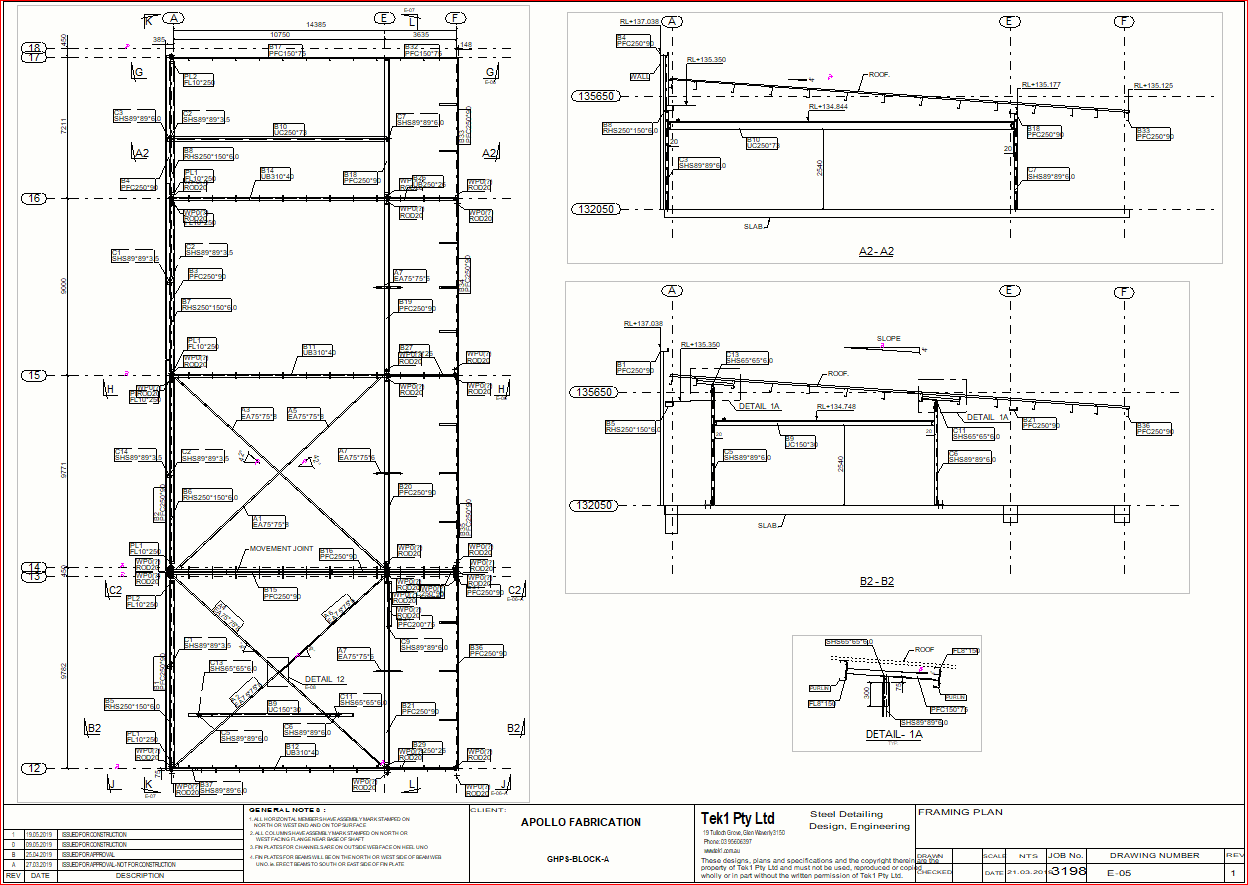
Tek1 recently achieved success in completing a residential project for a prestigious Australian organization. Our scope included providing crucial facade support as per the architect’s specifications.
Despite encountering challenges with concrete connections, including incomplete details from the structural engineer, Tek1 rose to the occasion. We proposed additional connection details, which were promptly approved after collaboration with the engineer.
Despite the initial setbacks, Tek1’s commitment to excellence and proactive problem-solving approach prevailed, earning the satisfaction of our client.
This project underscores Tek1’s commitment to excellence and ability to overcome obstacles for successful project delivery.
I found the regulations kafkaesque. Wanting to spare you all the trouble so you know exactly what you need to comply with, in order to build a facility, here is a short precis of the regulations you need to cover:
the environment is welcoming and easy to understand
the environment is safe, clean, well maintained and enables senior Australians to move freely, both indoors and outdoors, and
furniture, fittings and equipment are safe, clean and well maintained.
NCC Classes:
The NCC groups buildings by their function and use. These groups are assigned a classification which is then how buildings are referred to throughout the NCC. Some relevant classes for aged care include:
Class 9c – aged care building or a residential care building (institutional)
Class 3, 9a – residential aged care building and residential care building
Class 1a and 2 – private residencies (arrangements of care outside the scope of NCC)
Class 1b and 3 – boarding house providing accommodation for the aged. Class 1b buildings are smaller and don’t require sprinkler protection (more of a residential set-up vs institutional).
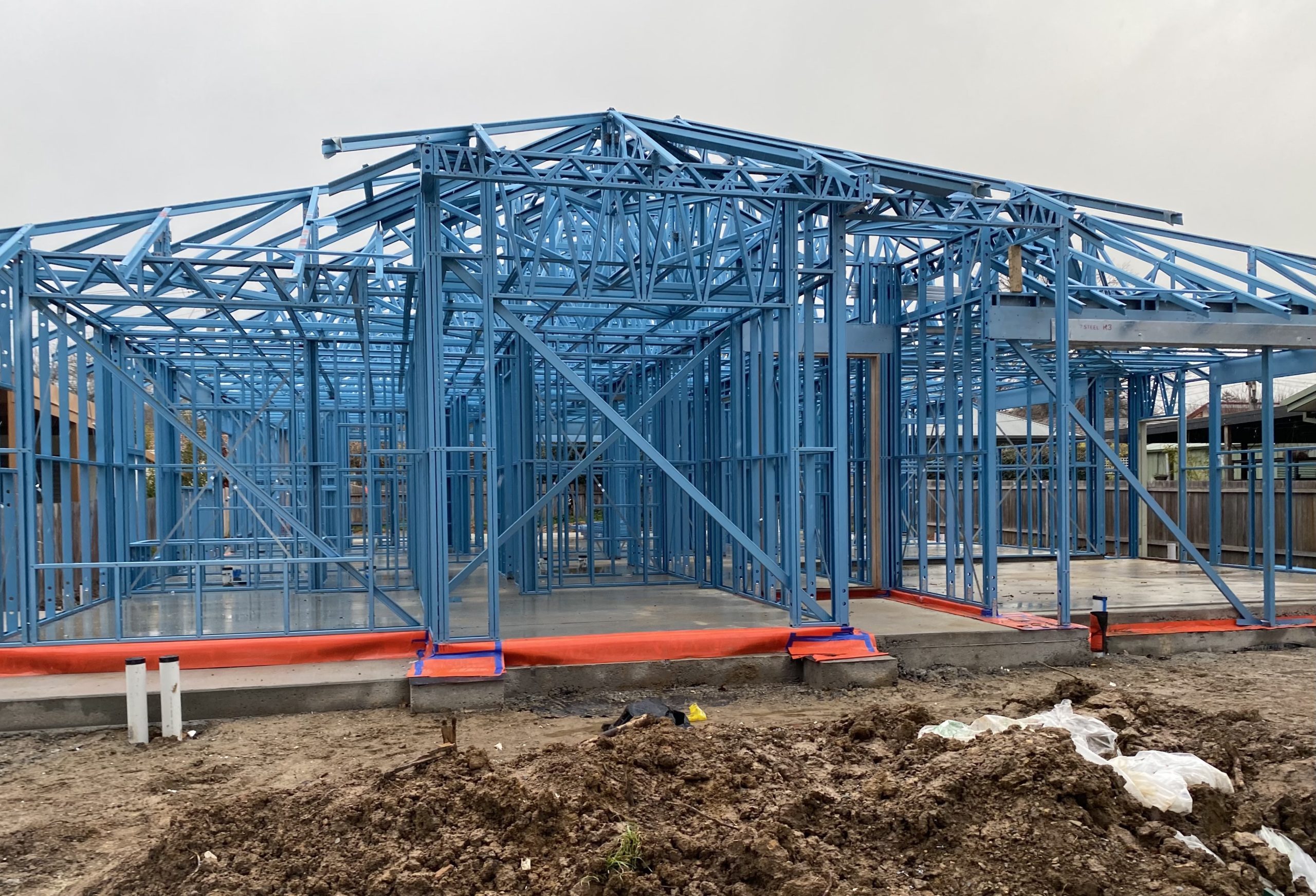
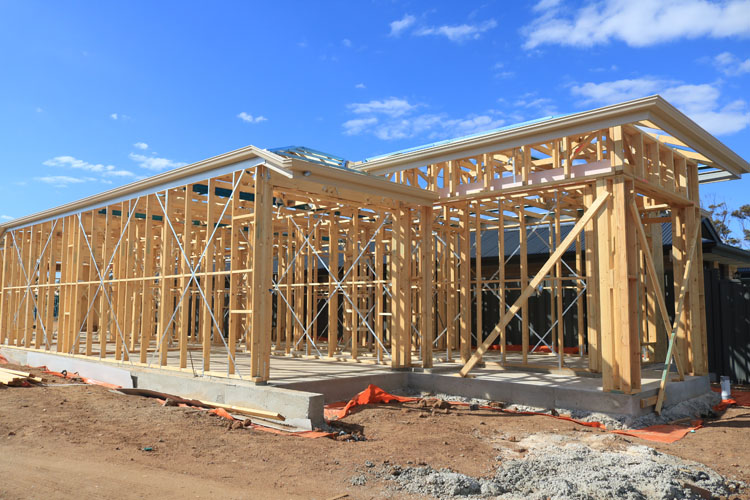
Lightweight framing is a construction technique that utilizes lightweight materials, such as timber or metal studs which are lighter than traditional construction materials like bricks and concrete to create a structural framework for a building. Lightweight framed construction is the most common construction system used in Australia.
Construction framed timber in Adelaide, Australia
How does lightweight framing work:
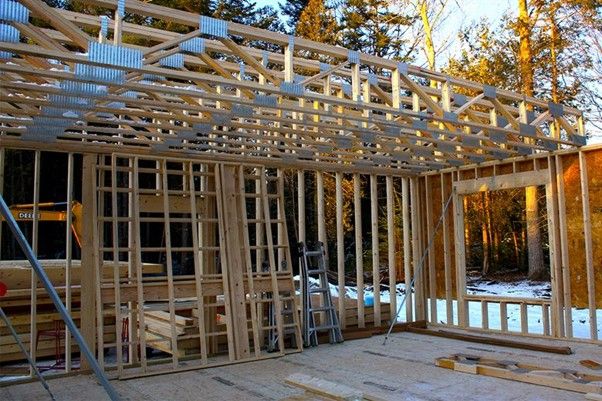
Lightweight framing is a construction method where a building’s structural framework is built using materials like timber or light gauge steel, which are both strong and light. The process involves assembling closely spaced vertical studs, horizontal joists, and sloping rafters, which are then fastened together using specialized fasteners, such as screws or self-tapping rivets to form the skeleton of the building. This frame holds up exterior wall claddings, internal linings, flooring, roofing, windows and doors.
Studs: vertical framing members that form the primary structural support for walls in buildings.
Joists: horizontal framing members that support the floors and ceilings of buildings.
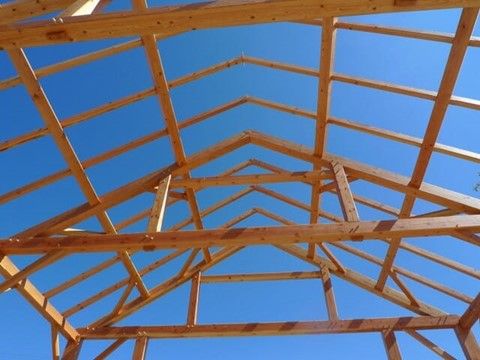
Rafters: Rafters are sloped framing members that support the roof covering of a building.
Advantages of Lightweight framing:
Lightweight and easy to handle: Lightweight framing is not heavy, making it simpler for workers to move and work with, which can help speed up building projects.
Resistant to pests and decay: Steel and termite proofed timber frames doesn’t attract bugs like termites and won’t rot over time, which helps keep buildings in good shape for longer.
Faster construction process: Building with lightweight steel frames can be done more quickly than with traditional wood framing, allowing for faster completion of structures.
Recyclable and sustainable: This type of framing can be melted down and made into new products, which is good for the planet because it means less waste.
Reduces foundation load: Since it’s not as heavy as other building materials, it puts less stress on the building’s base, which can mean a lighter and less costly foundation is needed.
Disadvantages of Lightweight framing:
Less noise insulation than wood: Lightweight frames don’t block sound as well as wood does, which means you might hear more noise from outside or other rooms.
Can corrode over time: If the metal isn’t treated properly, it can rust or wear away, especially in places where there’s a lot of moisture or salt in the air.
Not as strong for heavy loads: These frames might not hold up as well under very heavy weights, like big furniture or multiple floors, compared to other building materials.
Difficult to modify once installed: Once you put up a metal frame, it’s harder to change things around, like adding a door or window, because the metal is tough to cut through.
Conducts heat, poor insulator: Lightweight framing have poorer thermal insulation properties compared to heavier materials. It fails to effectively retain warmth during winter or keep cool air in during summer, which can lead to higher energy bills.
Common structures where lightweight framing is used are:
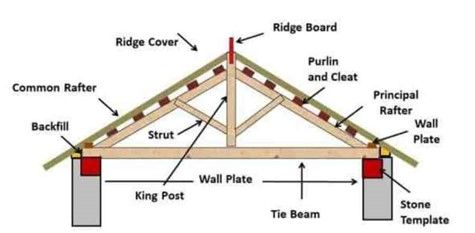
While working on a project, I noticed the structural design showing a truss structure on a roof.
What are Roof Trusses:
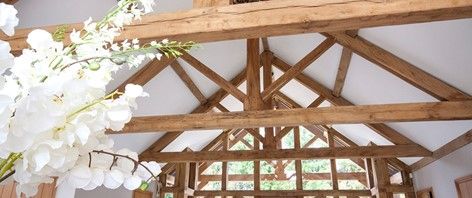
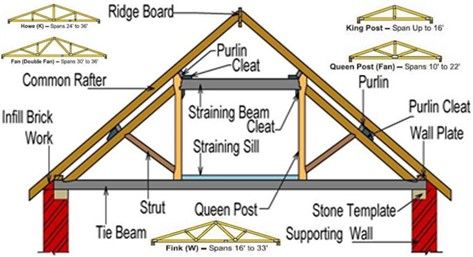
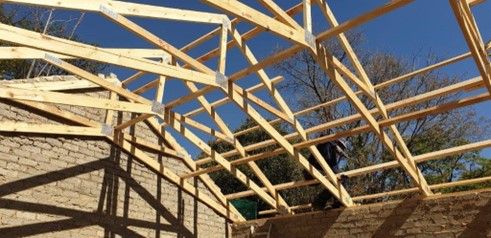
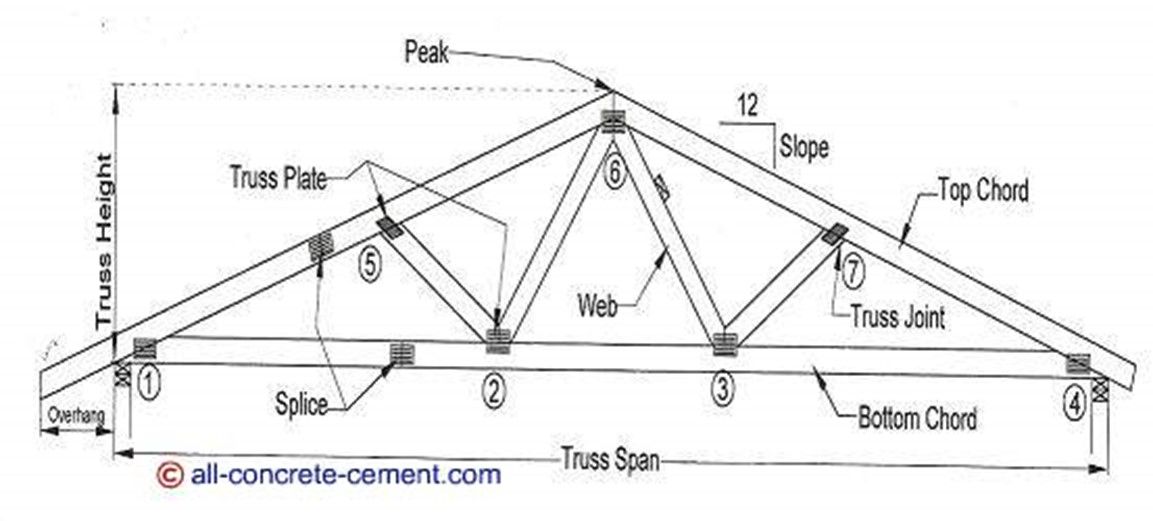
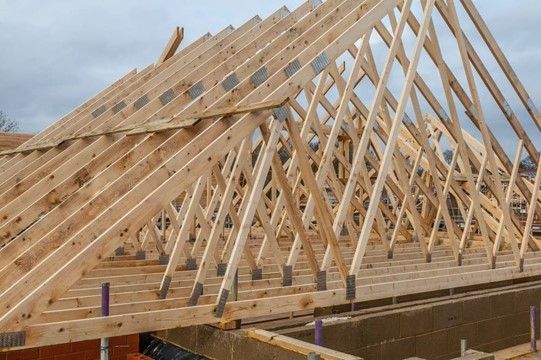
Roof trusses are engineered timber or metal frameworks that provide support for the roof covering materials and often the ceiling materials below. They are designed to span large distances without the need for internal load-bearing walls, allowing for more open and flexible floor plans.
Advantages of Roof Trusses
Strength and Stability: Roof trusses are engineered to withstand heavy loads, ensuring the structural integrity of a building even under adverse conditions such as strong winds or heavy snowfall.
Versatility: With various designs available, roof trusses can accommodate a wide range of architectural styles and building requirements, from residential homes to commercial complexes.
Cost Efficiency: Prefabricated roof trusses are manufactured off-site to precise specifications, reducing construction time and labor costs compared to traditional stick-built roof framing methods.
Space Optimization: Certain truss designs, such as scissor trusses and attic roof trusses, allow for increased ceiling height and attic space, enhancing the functionality and aesthetic appeal of a building’s interior.
Disadvantages of Roof Trusses:
Repair Difficulty: If damaged, trusses can be more difficult to repair compared to conventional framing because of their integrated design.
Customization Limitations: Because trusses are mass-produced in factories, finding a truss that perfectly matches the unique dimensions of a specific project can be challenging
Long Lead Times: The manufacturing process for trusses can lead to longer lead times, which may delay construction schedules.
Aesthetic Considerations: Some may find trusses less aesthetically pleasing than traditional roofs because they tend to be made out of large, bulky pieces of wood.
Types of Roof Trusses:
King Post Truss: Among the simplest truss designs, the king post truss features a central vertical post (the king post) supporting horizontal beams extending outward to either side, forming a triangular shape. This type is commonly used in smaller structures or for decorative purposes.
Queen Post Truss: Similar to the king post truss but with two vertical posts (queen posts) instead of one, this design offers increased stability and is often used in larger roof spans.
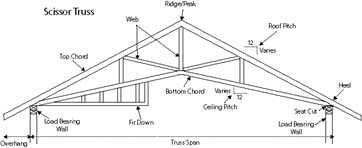
Scissor Truss: Scissor Trusses are designed with sloping bottom chords that intersect at a central point, creating a scissor-like shape. This design provides additional height and openness to the space below, allowing for open planned living or commercial spaces with a vaulted or cathedral ceiling.
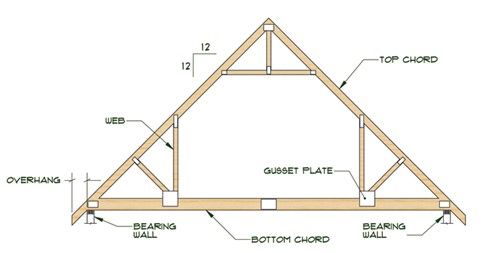
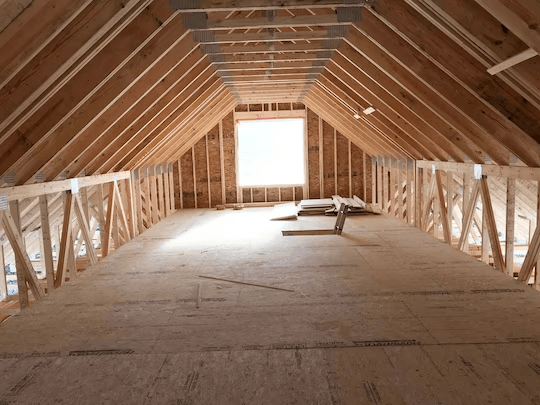
Attic Roof Truss: Attic Roof Trusses are a modified version of the king post truss design that includes a room-like space within the roof. This type of truss is ideal for creating additional living space or storage within a roof without needing an additional level or more land space.
Fink Roof Trusses: Fink Roof Trusses consist of a network of triangles that distribute the load evenly across the structure, providing maximum strength and stability allowing for long spans that are often utilized in commercial buildings.
Flat truss: Flat Trusses are used in flat or low-pitched roofs often where there are building height limitations due to council regulations, overhanging trees or architectural requirements.
Where are roof trusses used:
Roof trusses are used in a wide variety of construction projects, ranging from residential homes to commercial buildings and industrial structures. Here are some common places where roof trusses are employed:
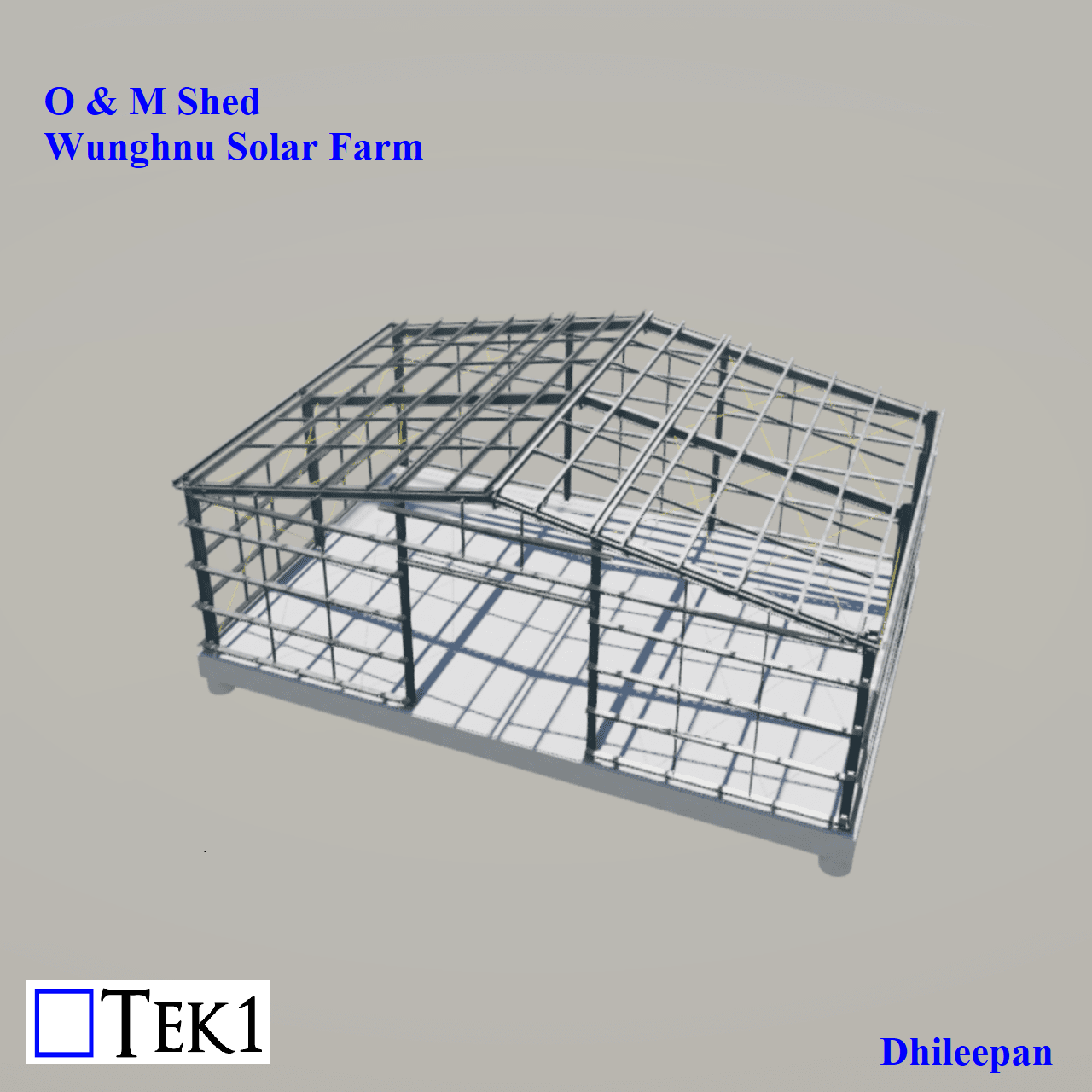
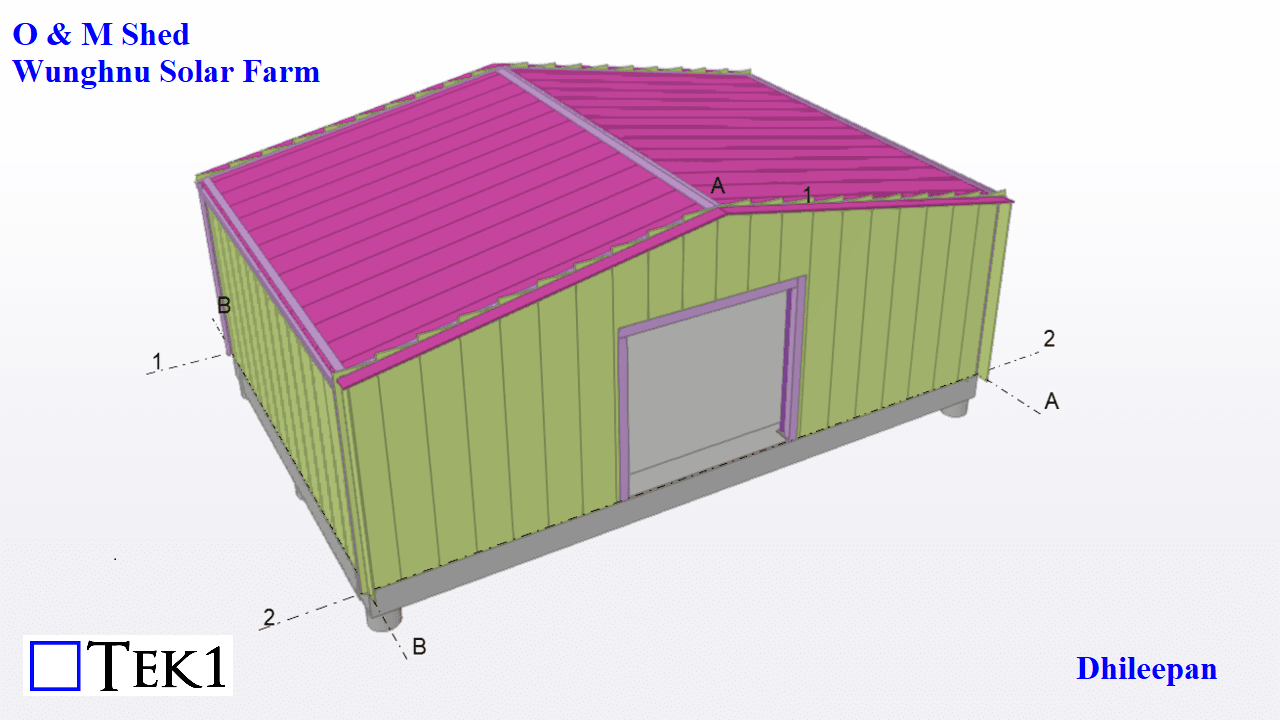
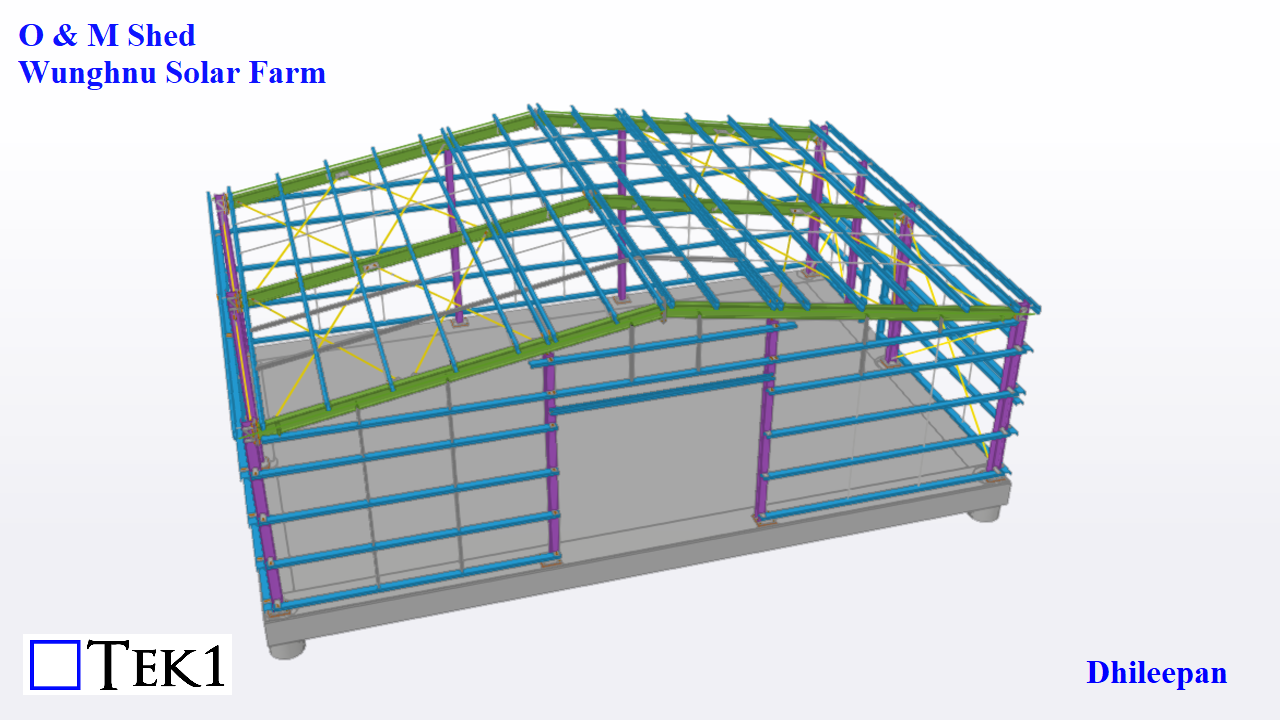
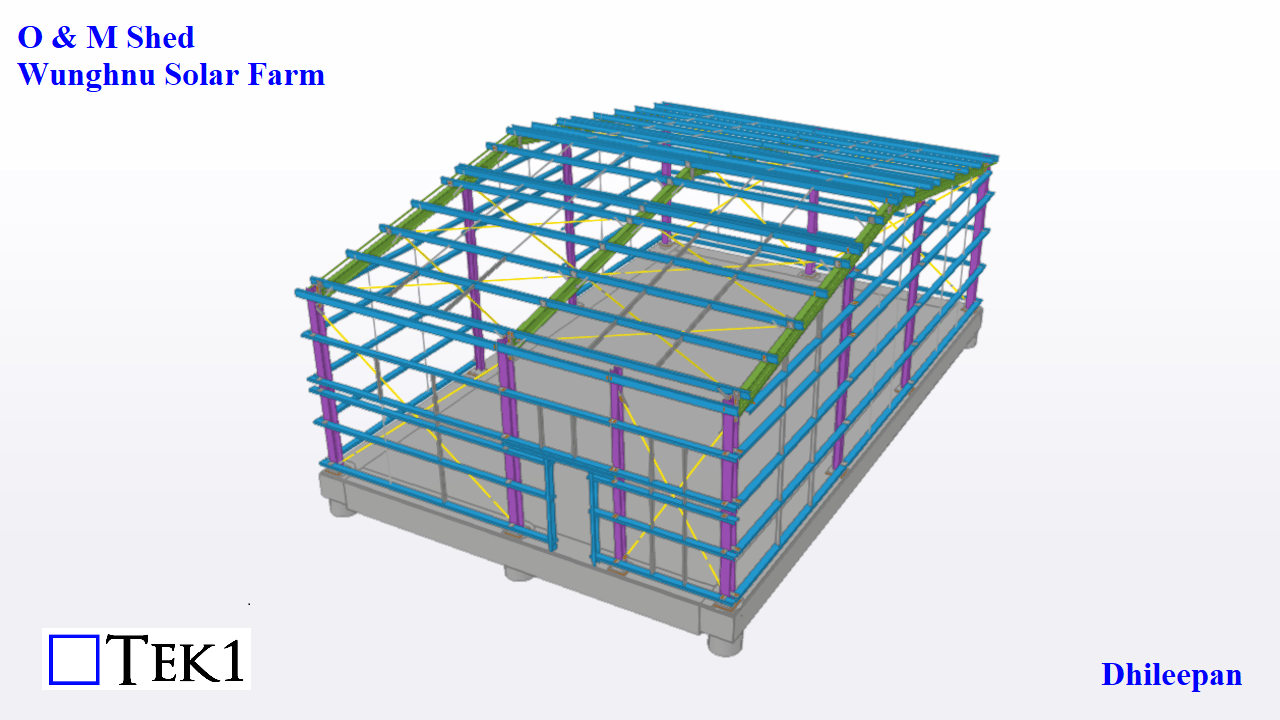
Our latest project entails a straightforward shed design featuring standard steel frames with purlins and girts encircling the structure.
While our standard practice involves providing steel drawings and reports exclusively, this project warranted a more comprehensive approach. In addition to the customary steel documentation, we supplied detailed erection drawings and material reports for various components, including wall cladding, roof cladding, door flashing, barge flashing, ridge flashing, gutters, and downpipes.
While discussing steel-to-concrete connections with the team leader, he mentioned shear studs during the conversation.
What is a shear stud :
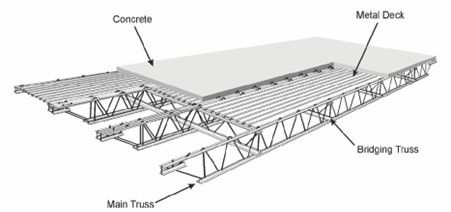
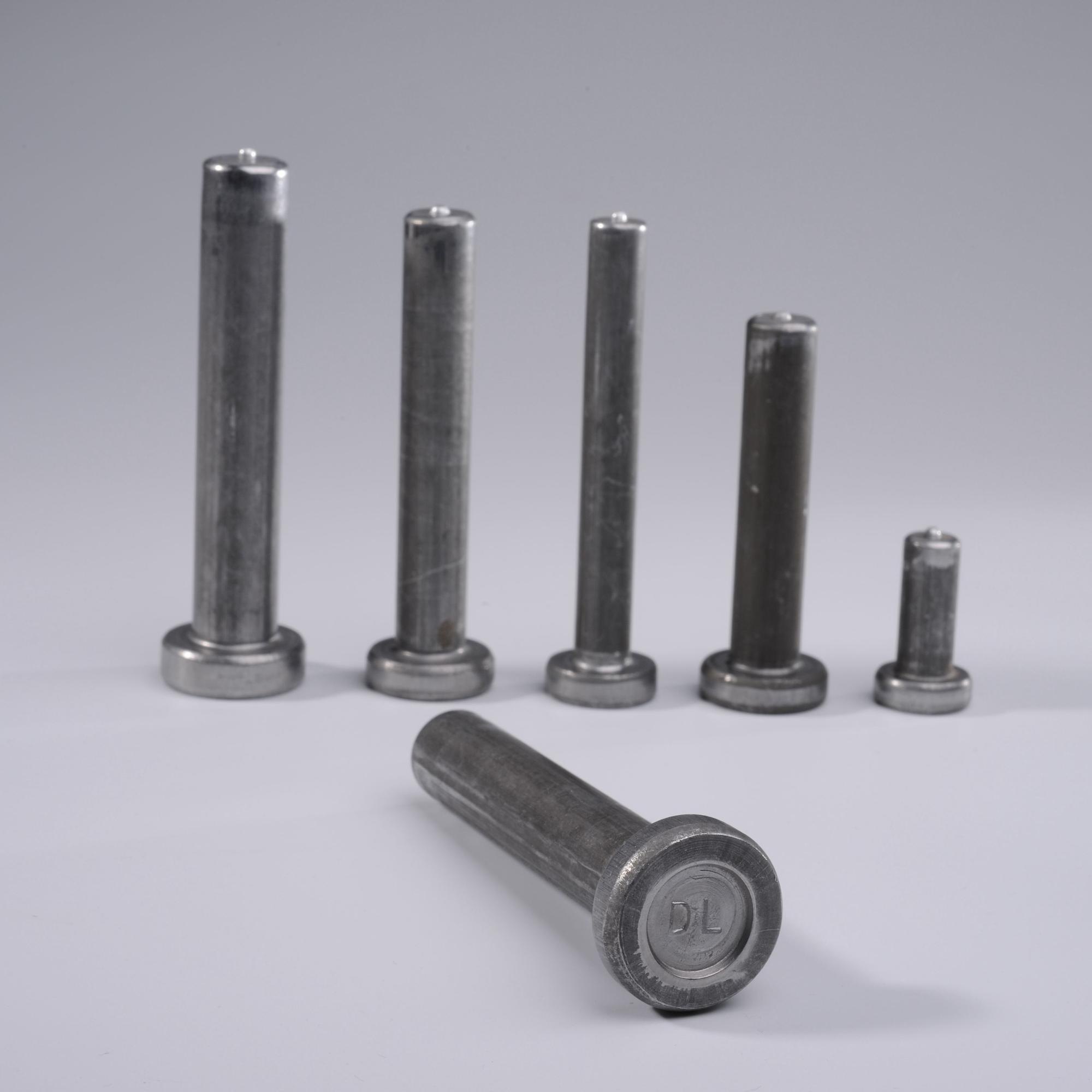
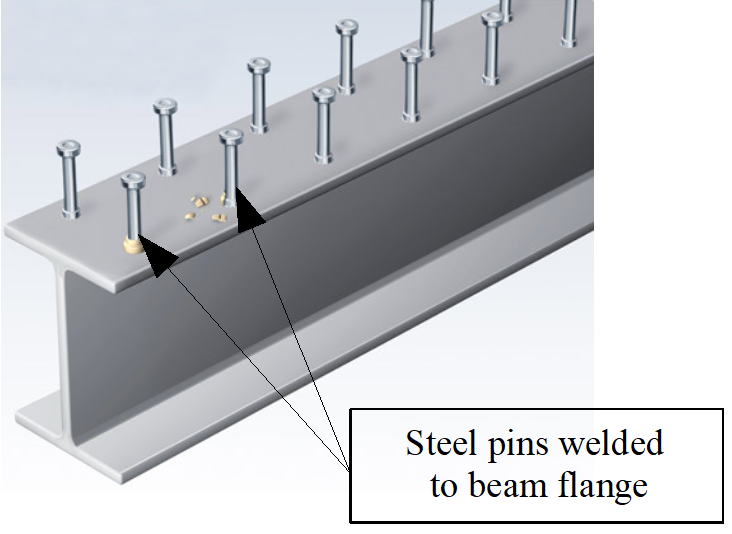
A shear stud is a fastener which provides structural connection between concrete slabs and steel support beams. It is typically a steel pin or grommet that extends out of the top flange of a steel beam. They are typically made of steel.
How does it work :
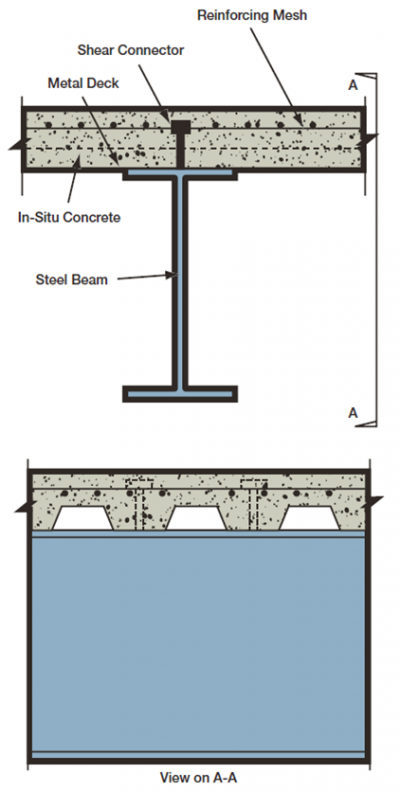
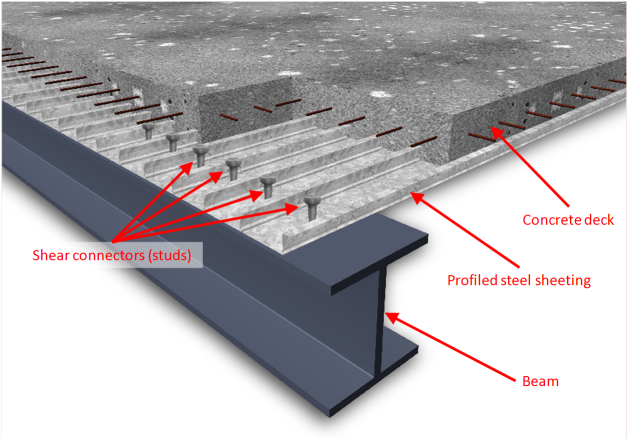
After the metal decking is installed over the structural steel, a spot welder is used to weld the shear studs onto the steel beam. These studs are typically evenly spaced along the beam.
Once the shear studs are in place, a concrete slab is poured onto the steel beam. The concrete flows over the metal decking and surrounds the shear studs, covering them.
As the concrete hardens, it adheres to the shear studs. But it’s not just the concrete holding onto the studs; the studs also grip the concrete. This grip is due to friction. They ensure that the steel beam and the concrete slab act together as one robust unit. The rough surface of the shear studs creates friction with the concrete, making it difficult for the concrete to slide off the studs.
When a force, such as wind pushing on the building or people walking on the floor, exerts pressure on the steel beam, the studs transfer this force back to the concrete slab through frictional resistance.
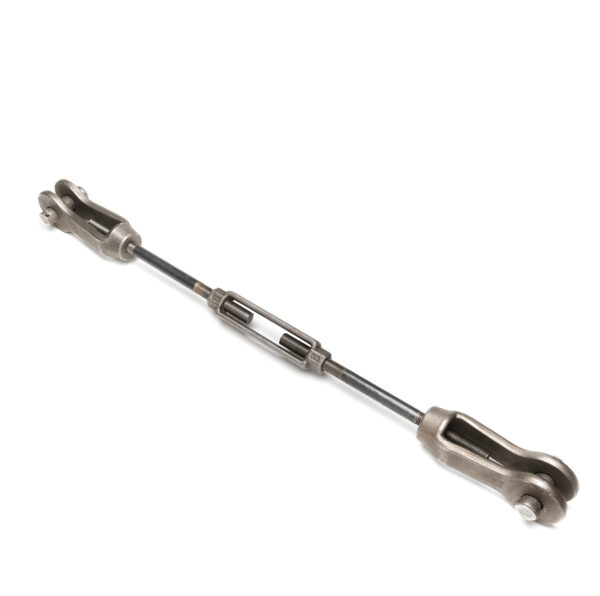
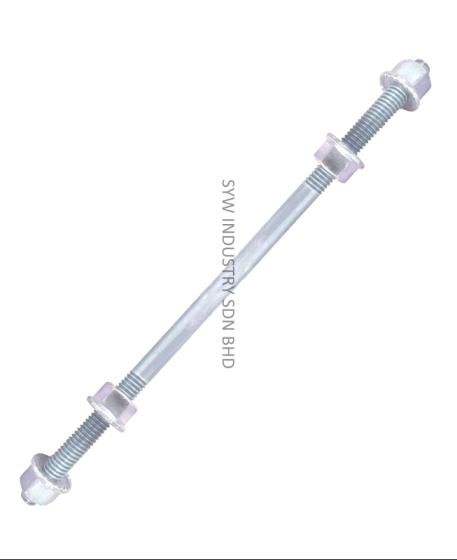
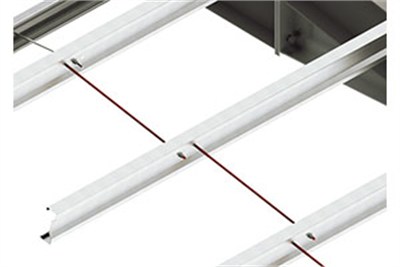
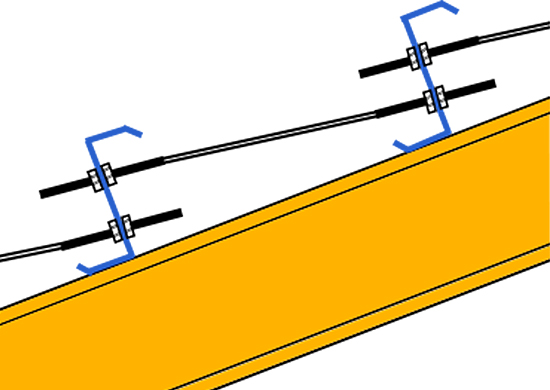
While working on a project, the structural details of an engineering drawing showed the incorporation of sag rods with purlins and braces.
What is a Sag Rod?
A sag rod is a tension member designed to minimize sagging or deflection by providing tensile support and reinforcement in horizontal structural elements such as roof trusses or purlins. Sag rods are typically fabricated from high-strength steel alloys, such as carbon steel or stainless steel.
How does it work?
Sag rods are positioned between purlins or girts along the length of the structure. Once the sag rods are in place, they are tensioned by tightening the nuts on the threaded ends of the rods until the desired tension is achieved, stabilizing and effectively distributing loads within the structure.
While discussing bolts and washers for a connection detail with the team leader, he mentioned DTI washers in the conversation.
What is DTI Washer?
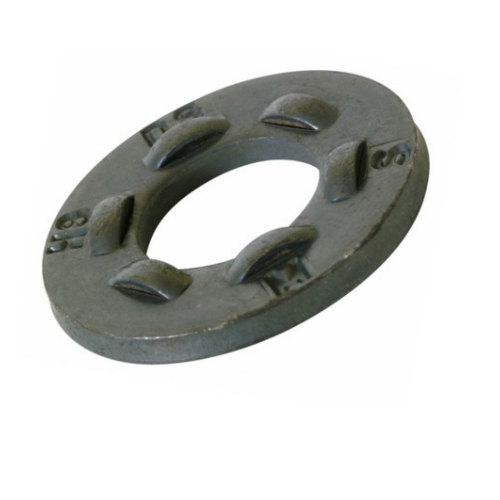
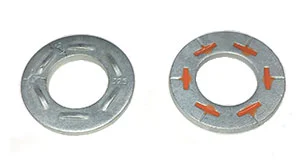
DTI washers, also known as load indicating washers or torque control washers, are specialized washers designed to provide a visual indication of bolt tension during the tightening process. They feature convex ridges that contain small pockets of bright orange silicone.
How does it work:
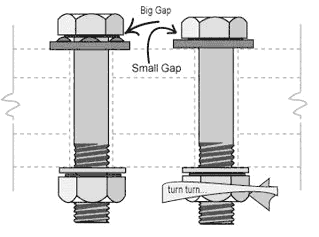
DTI washers are installed the same way as normal washers. During tightening, the ridges resist until the required compression is achieved. At that point, the ridges compress and force the silicone out of the cavity. This allows the erector to immediately know if bolts are tightened to the correct tension, eliminating the need for gauges or extra measures to ensure tightness.
Where is it used:
DTI washers are used in connections where specific tension levels are needed. They are commonly used in various applications, including: