NCDXF Files and & CSK Bolt Holes (in Tamil) from Tek1 on Vimeo.
Hi team, please review the video for CSK bolt holes and NCDXF Files – language is Tamil.
NCDXF Files and & CSK Bolt Holes (in Tamil) from Tek1 on Vimeo.
Hi team, please review the video for CSK bolt holes and NCDXF Files – language is Tamil.
COBie: Construction Operation Building Information Exchange
COBie is a standard for the exchange of Building Information during the life of a building project. Information containing specific project details helpful for understanding, operating and maintaining a facility properly. One of the items is the inventory of spaces and their functional requirements.
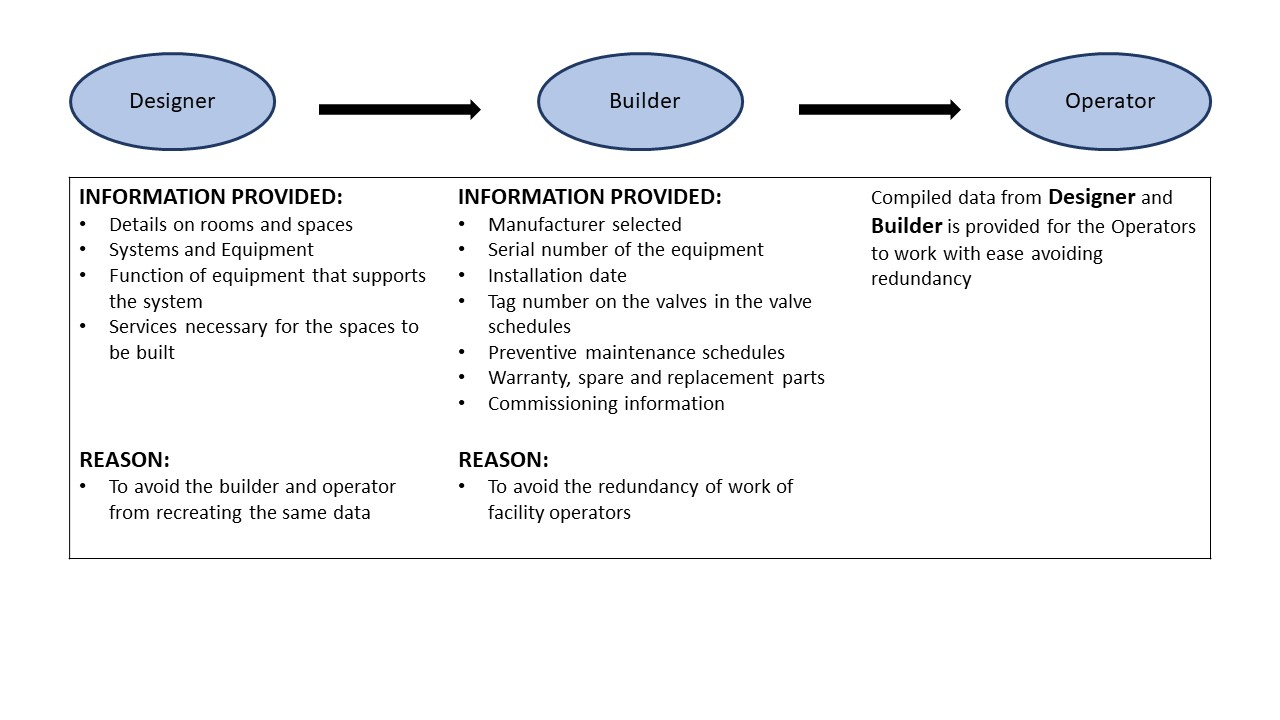
To facilitate requirements the designer must provide a spatial layout for building, facility, floor & room number which forms the basis of assigning equipment and products to specific space. Strictly, there is no information on interior components such as furniture nor on structural members.
In order to obtain information at right time throughout the life cycle of a facility in BUILDING DELIVERY PROCESS, a mechanism is needed. Such a mechanism should filter out unnecessary information, reorganise for owner’s convenience.
Spreadsheets can be a good tool to manage information in small amounts and simple relationships. The COBie project bridges the gap in interpretation by identifying the similarities in the process that contractors, operators, maintainers & asset managers use to accomplish daily activities.
What COBie does: As an information exchange standard, it has capabilities of everything from planning, vdesign, construction, commissioning all the way to operations, maintenance & management of spaces. It simply changes the required deliverable from paper documents to electronic formats, facilitating building information interchange.
“If you use COBie in a way which violates the COBie specification you are no longer meeting it’s requirement. You are doing something else that is not COBie” – Bill East, Inventor of COBie
Here is the data flow in COBie:
Compiled and edited by Shantha Priya S.
Ever wondered how to automate the processes in modeling of steel structures, increase efficiency and accuracy. Grasshopper has got all the answers. Grasshopper is a visual programming interface like the Dynamo we saw in the previous blogs. It is built in within the 3D modeling software called Rhino. Tekla has released a link which enables algorithmic modeling for Tekla Structures using Rhino/Grasshopper. Even the toughest and tiresome models can be easily created using the Grasshopper-Tekla Live Link provided you have a strong visualization capacity and good understanding of the underlying geometry.
We have tried using it for our jobs and it provides great flexibility to alter the parameters. One of the job we used for is creating a Spiral stair and the process was pretty easy and we got accurate results. Another challenging job we experimented was the outer framing for cladding panels, along the sides of a bridge which had a tricky geometry. Have a look at these in the following video.
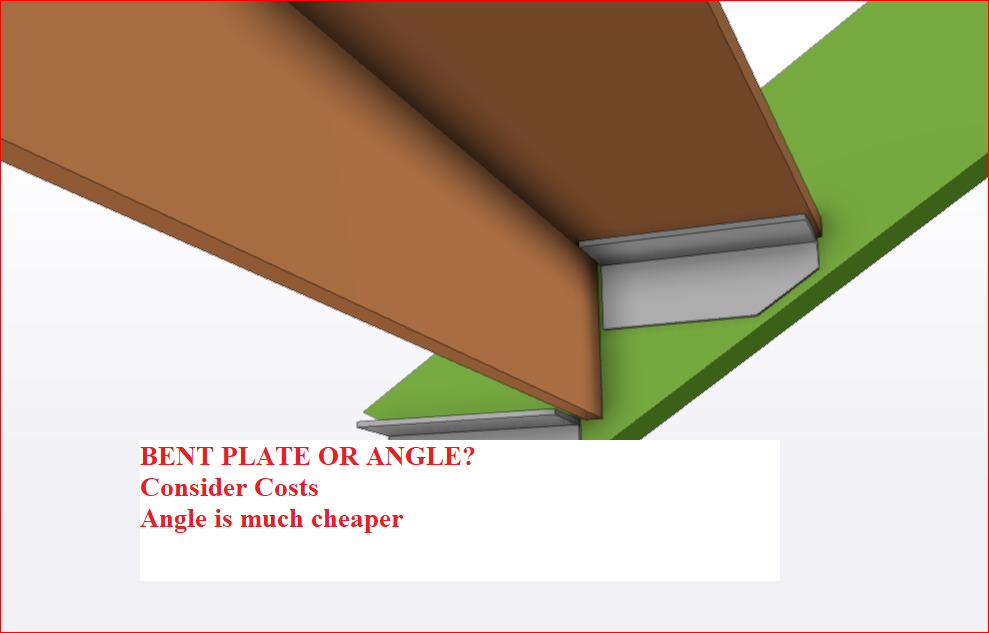
When possible use Angles because
Bent plate is more expensive, more time
GA Checks
Modeling checks
Modeling checks for Houses
Bridging check
Facia Purlins
Modeling checks for Stairs.
Bolt Checks (New)
Dxf files
Minimum 2 Points should be aligned and identfied in drawings and model. One point is not enugh.
How we have used the site measure should be clearly shown in the drawing
Site measure should never be scaled. If the .dwg file turns up with no units, then set the units as appropriate to mm or meters. Never scale meters to mm or in anyway modify site measure. Site measure should be used as is
Chequer Plate Checks
Existing Members
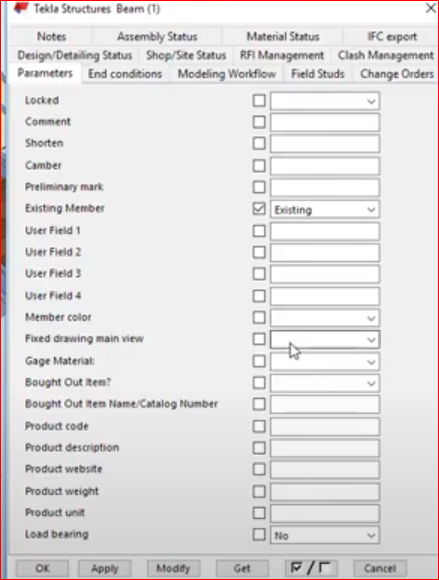
Did you set the existing member user attribute to Existing so that no mat list, Drawing will be created
Wherever Countersunk bolts are provided in a model, it is advised not to send NC DXF files to the client for the corresponding plate/shaft. This is because the hole dia in the generated NC & DXF file is not the actual bolt dia but it is the dia of the countersunk head. Therefore, the hole dia in the plate/shaft is much higher than the actual value. Hence, it is advised not to send NC DXF files for plates/shafts which has countersunk holes.
But, when the client demands for NC DXF files even for plate/shaft with CSK bolts, the generated NC DXF files must be manually edited such that the CSK hole dia in the NC DXF files is bolt dia + 2mm(Tolerance).
Also the tolerance for CSK bolts must be 2mm everywhere irrespective of the members the bolt is connecting i.e, whether it is steel to steel connection or steel to concrete connection the tolerance for CSK bolts must be 2mm.
By Ramakrishnan.L
TEK1