Month: February 2023

  • Audit Checks

    Common things to audit:

    • What is the hold up?
    • What is the date of the ETA?
      1. Is the date/time in AEST? If you don’t specify the time zone, I will get a call asking: “where are the drawings”

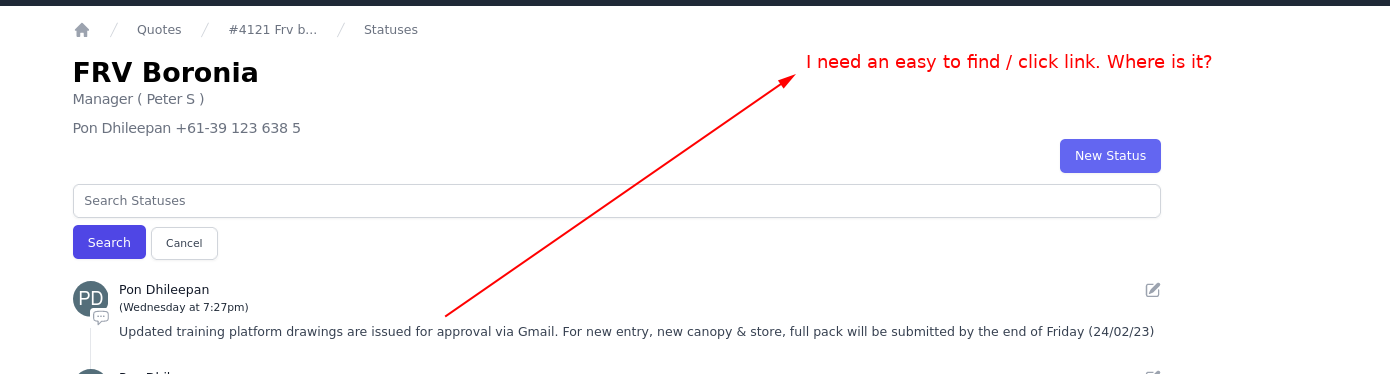
    • You’ve sent an email? Where is it? I need a link or a prolox link.
    • Where is are the IFA approvals for these drawings?
    • Please show me the variation approval document.
    • Get me latest drawing: on the job.

    Drawing Discipline

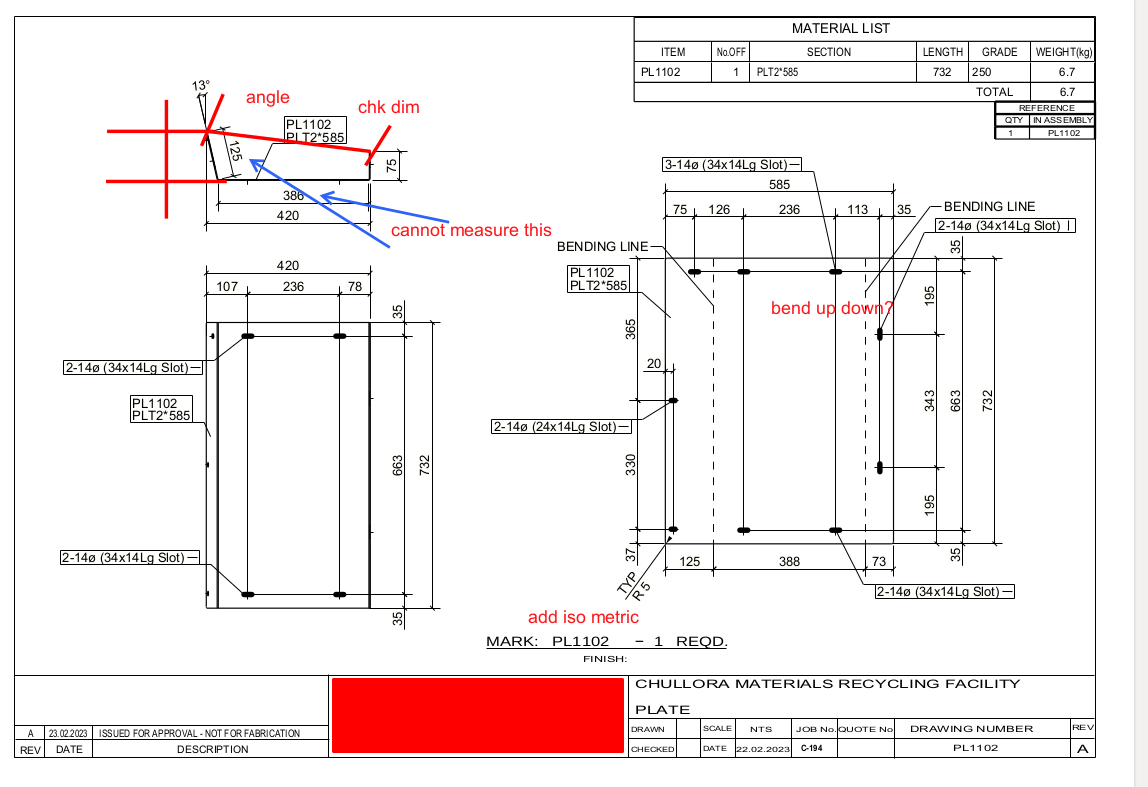
    • Get me any Part Mark. Show me the isometric view. We should see an isometric view on it.
    • Where are the check dimensions?

    General Requirements:

    • Learn Western English. At the very least, use a spell checker. e.g. “I can’t able to” is really painful to listen to. Clients don’t want to deal with bad english, but they’ll tolerate it so long as you give them no headaches.
    • Delight your client:
      • Speak your client’s language: e.g. Many of you say: “COB” so clients call me at 4:30 pm AEST and ask me where are the promised drawings? I have to tell them, COB means 9pm. Speak your client’s language and time zone.
    • Post status updates.
      • What is the ETA in Australian time? Is the project being delayed somewhere?
    • Move the project along: you have a phone – call people, call architects / engineers.
    • Don’t inflate your hours. If you do, the client won’t come back.
    • Post regular blogs about your projects, with useful information on there: a lot of these blog posts read like a student in an exam who is trying to expand his word count.
    • When you’re done: mark it as IFC / IFA.
    • Read the standards: learn the standards properly.
    • Audit the work regularly.

    Weekly Checks

    1. Items to be IFA / IFC to be marked as such so they can be invoiced.
    2. Items to be partially invoiced to be raised.
    3. All client statuses to be updated.
      • If jobs are complete, they should be marked on the status as “JOB Completed”…..and I will close it.
    4. Jobs that are “marked as completed” need to be marketed in some form via blog post.

    Material Take Off Checks

    Clients need to know when their take off reports are coming. Most are pressured for time. If there is a delay in the quoting process, then you’re basically handicapping the client on their bids. We don’t want that. Status updates to be provided on the following:

    1. MTO ETA date.
    2. MTO started.
    3. MTO draft finished and sent for review.
    4. MTO sent to Koshy (with the link). (Sushil to complete)
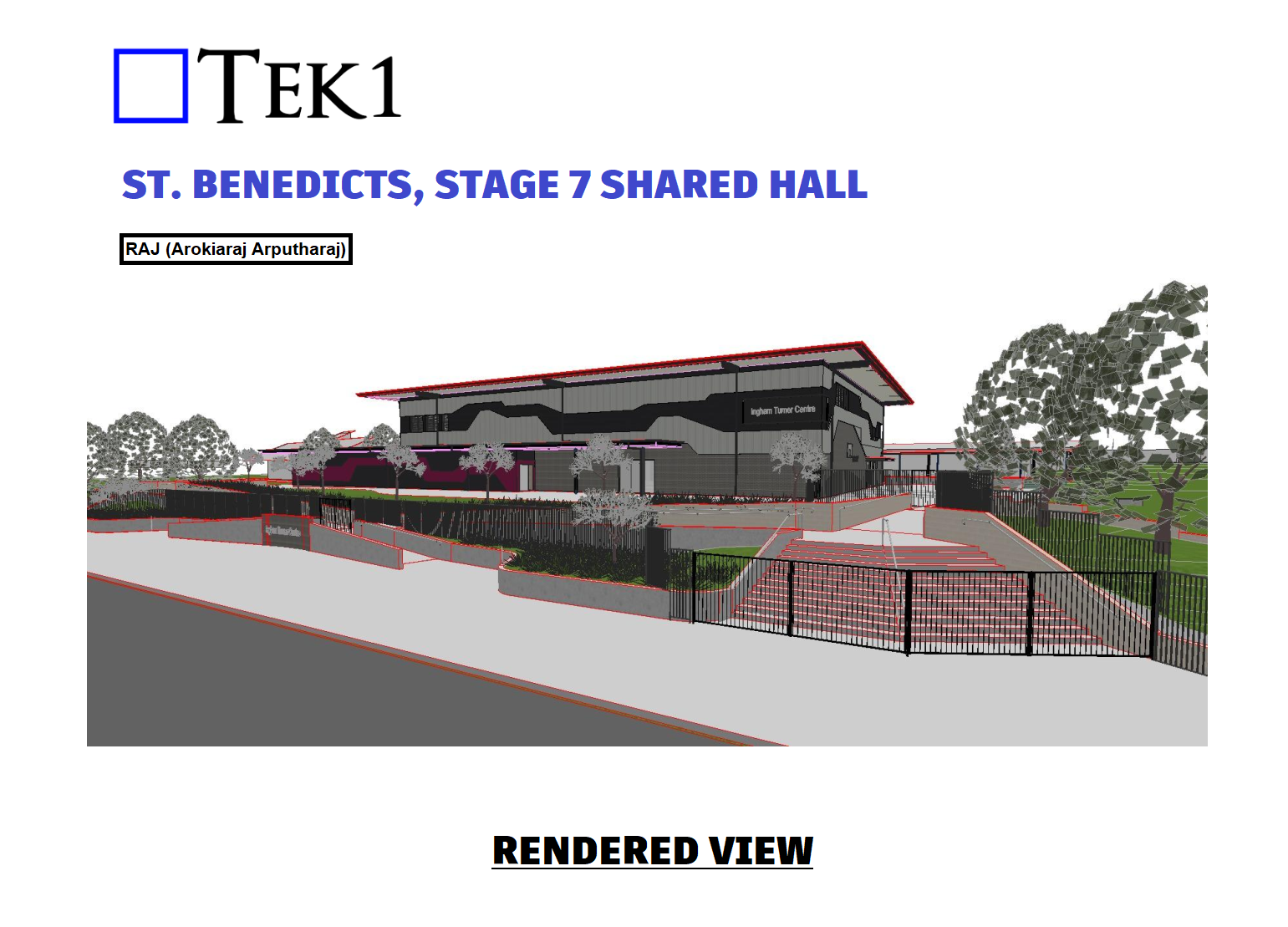
  • St. Benedict’s Stage 7 Hall, Oran Park

    St. Benedict’s Stage 7 Hall, Oran Park

    Raj (Arokiaraj Arputharaj)

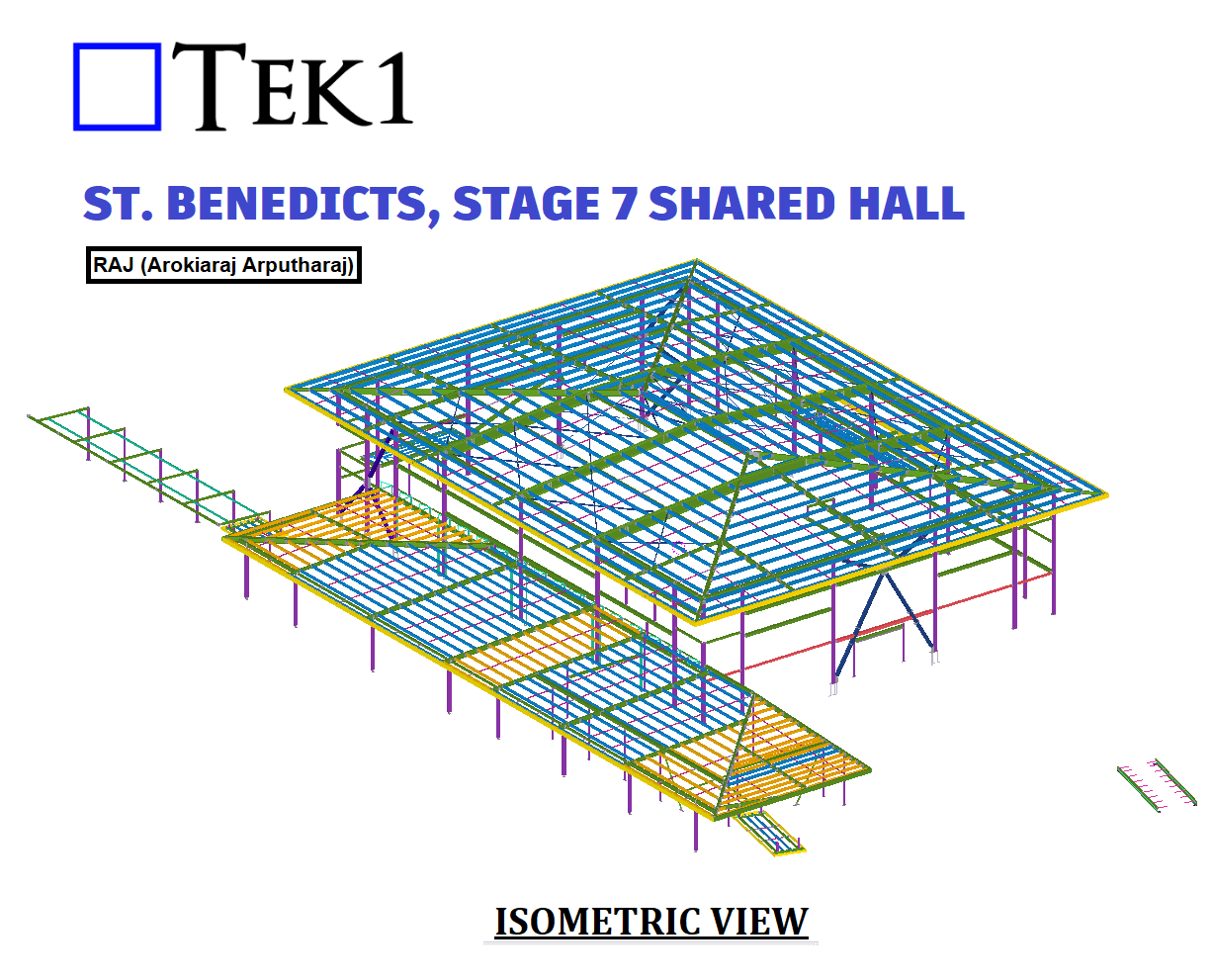
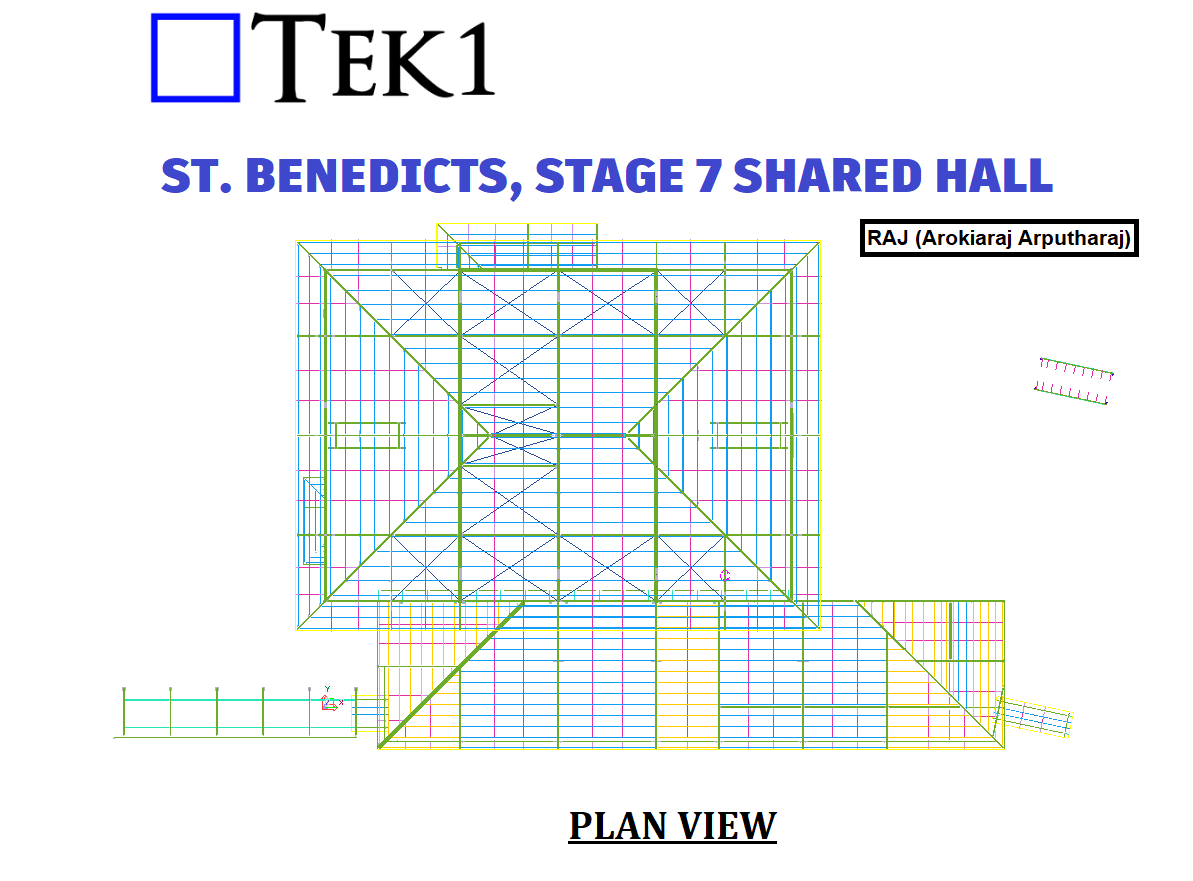
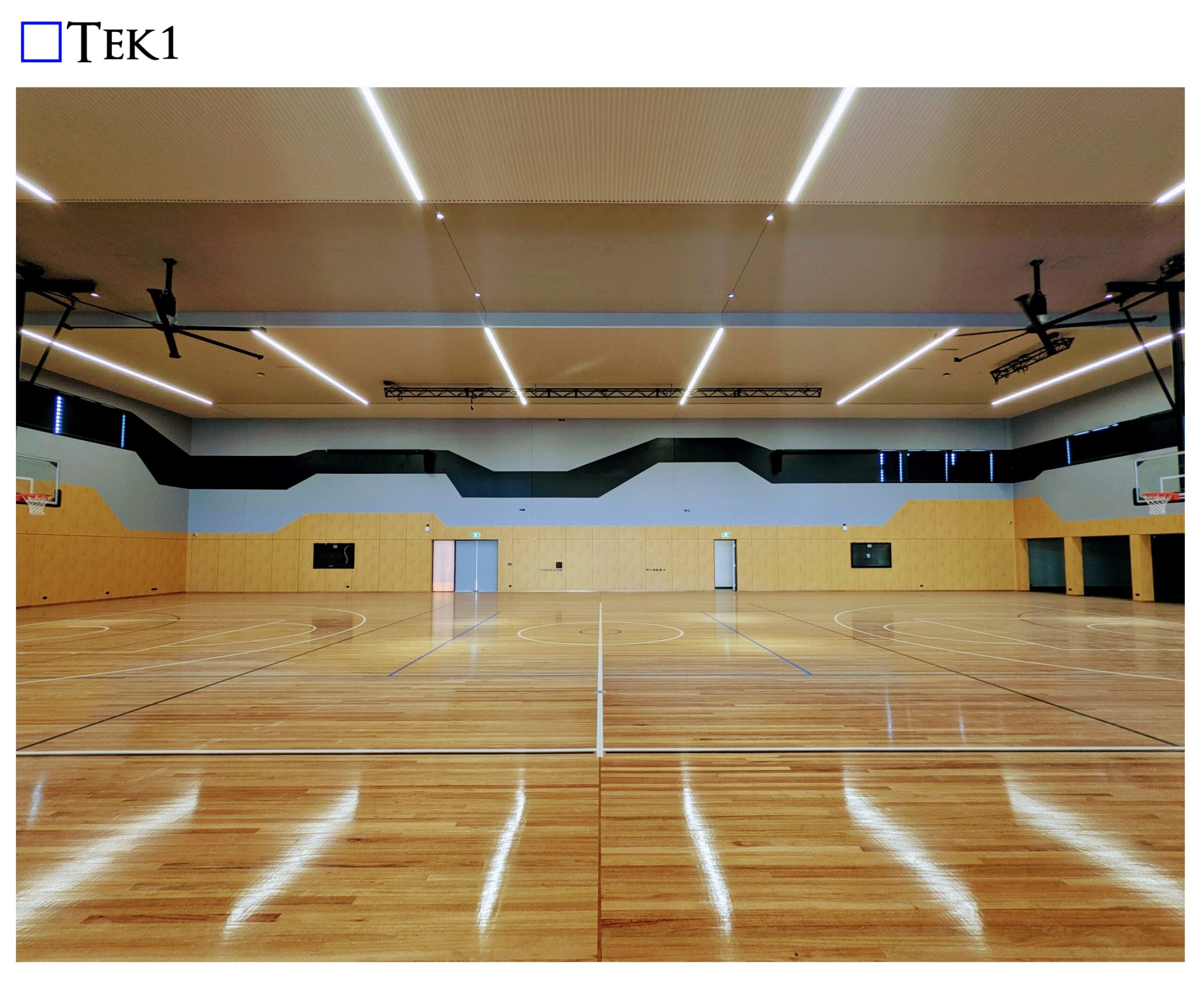
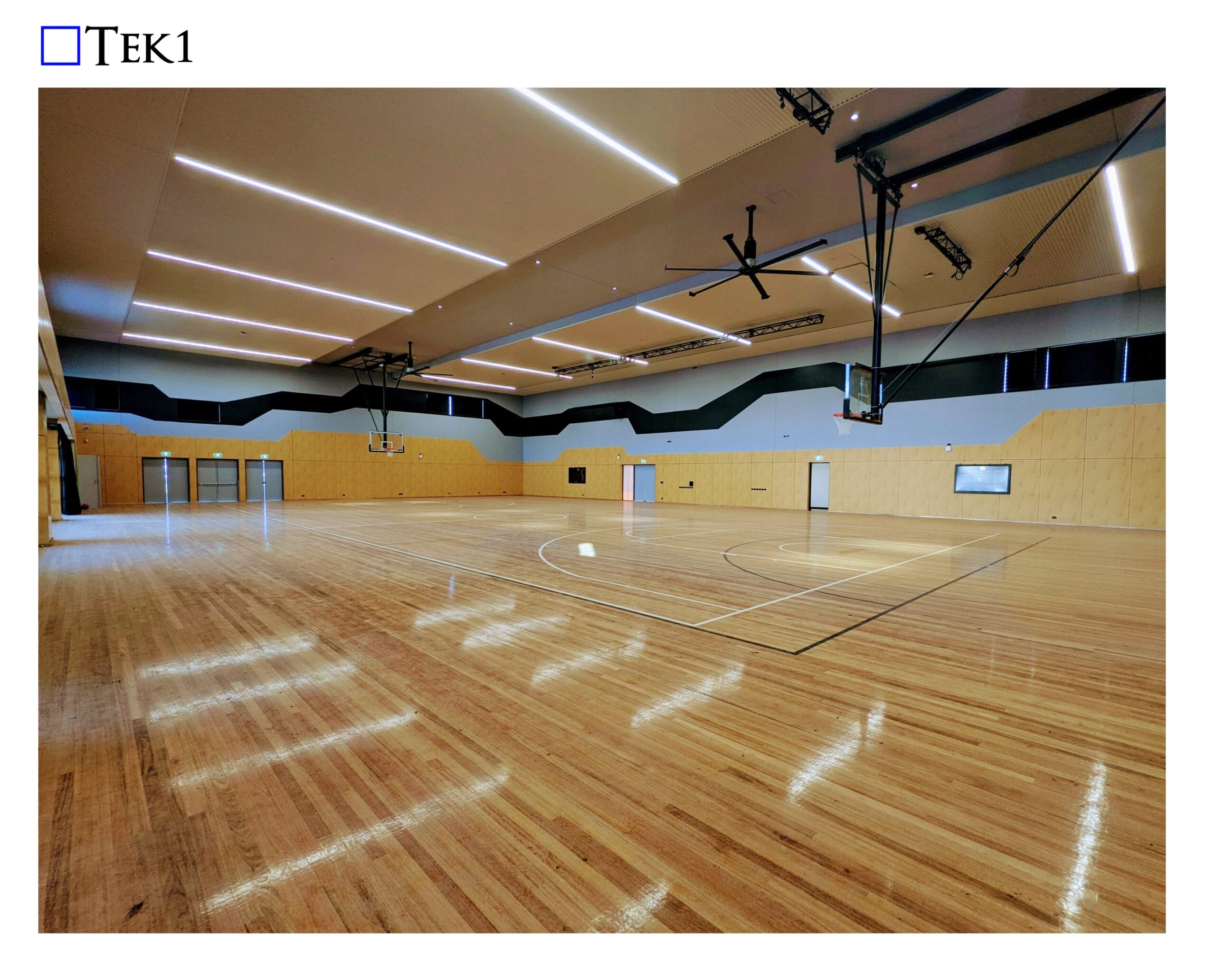
    St. Benedict’s Stage 7 Hall, Oran Park, is a multipurpose hall structure.

    St. Benedict’s Catholic College was opened in 2011 on a greenfield site in Sydney’s south west suburb of Oran Park. 
    There are seven stages of construction work listed below.

    • Technology and Applied Studies (TAS)
    • food technology
    • covered outdoor learning
    • science
    • staff administration
    • library
    • creative and performing arts
    • general learning areas
    • multi-purpose hall 

    TEK1’s scope was Muti-Porspose Hall, and works included anchorbolt steel columns, beams, braces, and purlins.

    TEK1 raised multiple RFIs with a proposal. So the design got revised according to the RFIs.

    The client responded to TEK1 RFIs quickly.

    The project was completed  quickly by our team.

  • Life Saving Facility – Smiths Beach

    Life Saving Facility – Smiths Beach

    Author: Pon Dhileepan

    This was my first project as a modeler, completed in January 2018.

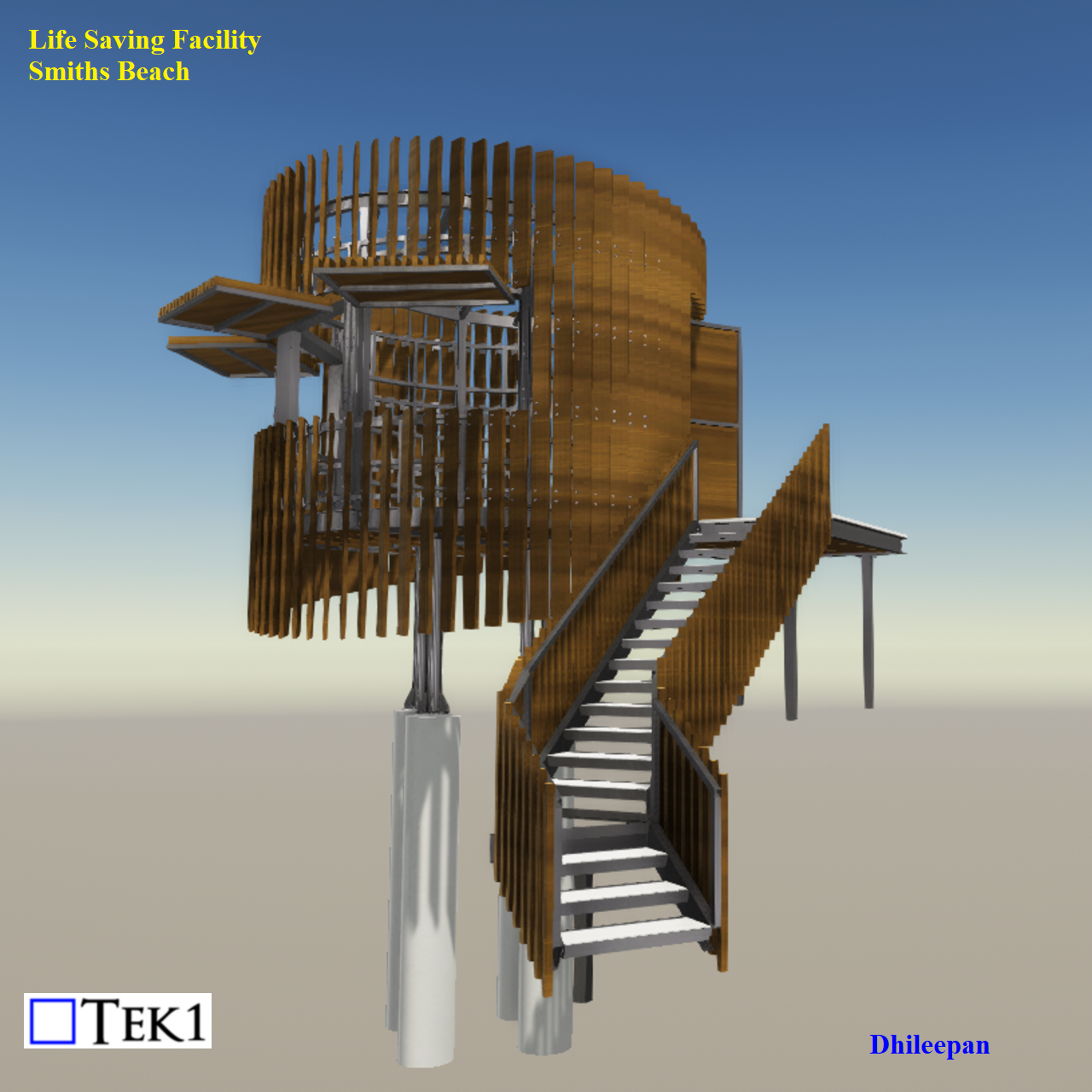
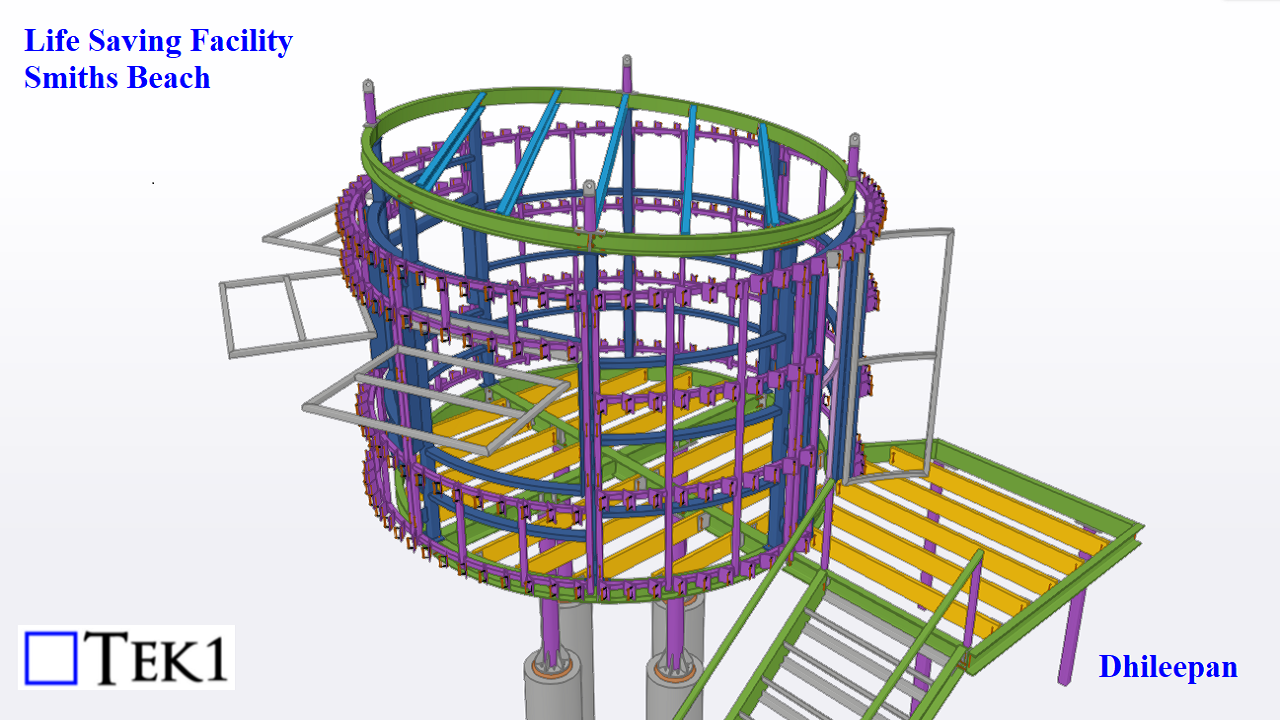
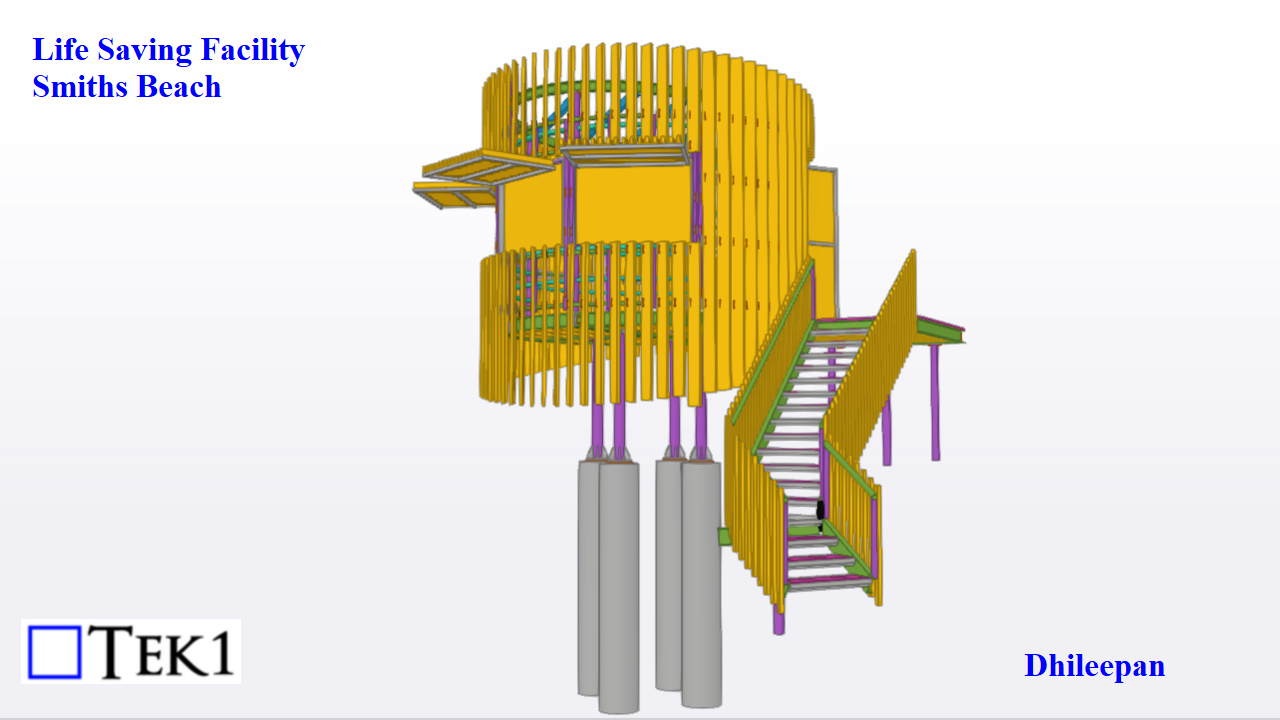
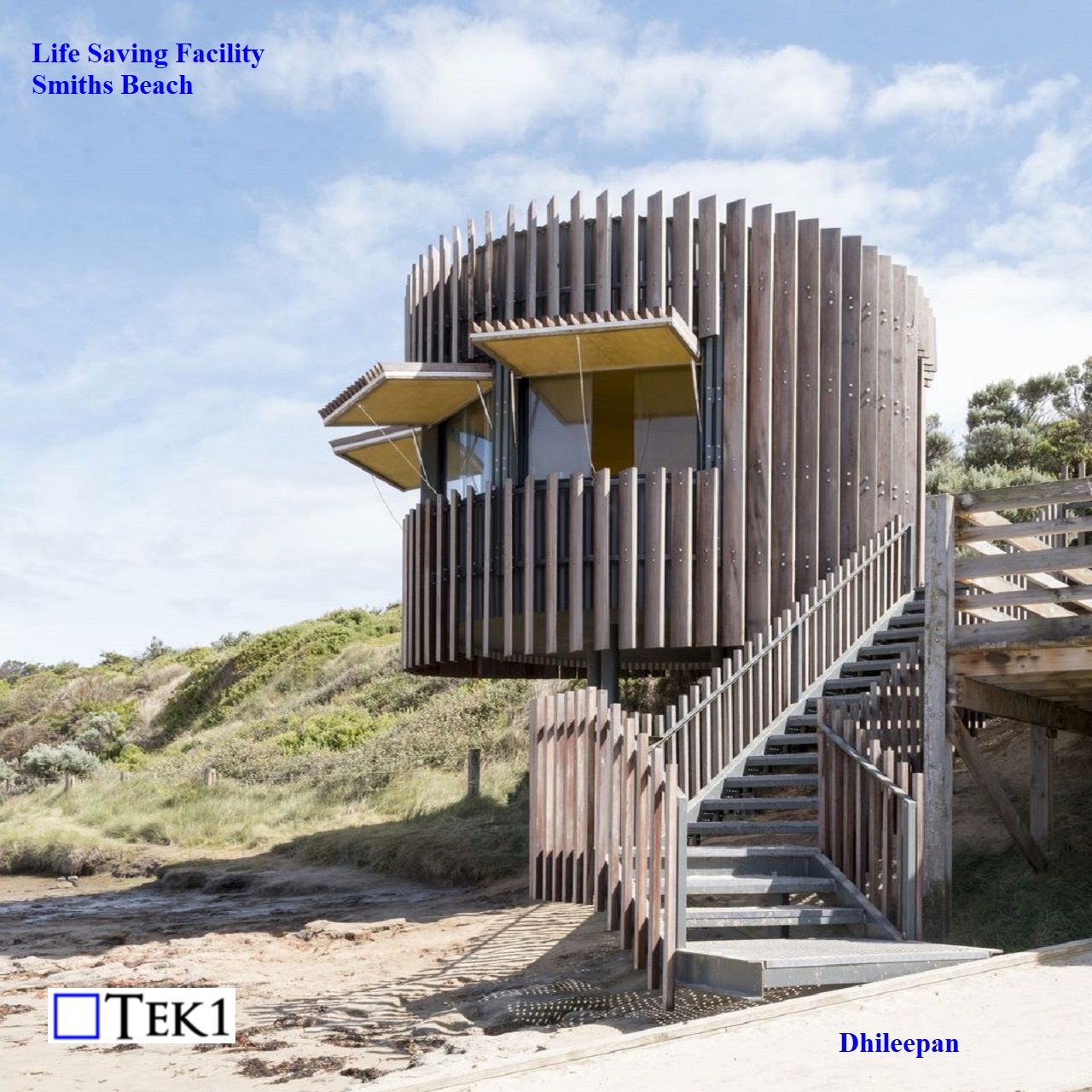
    A circular structure steel structure surrounded by timber battens was modelled & detailed for Smiths Beach, Yallingup WA. Completed site image is attached at the bottom

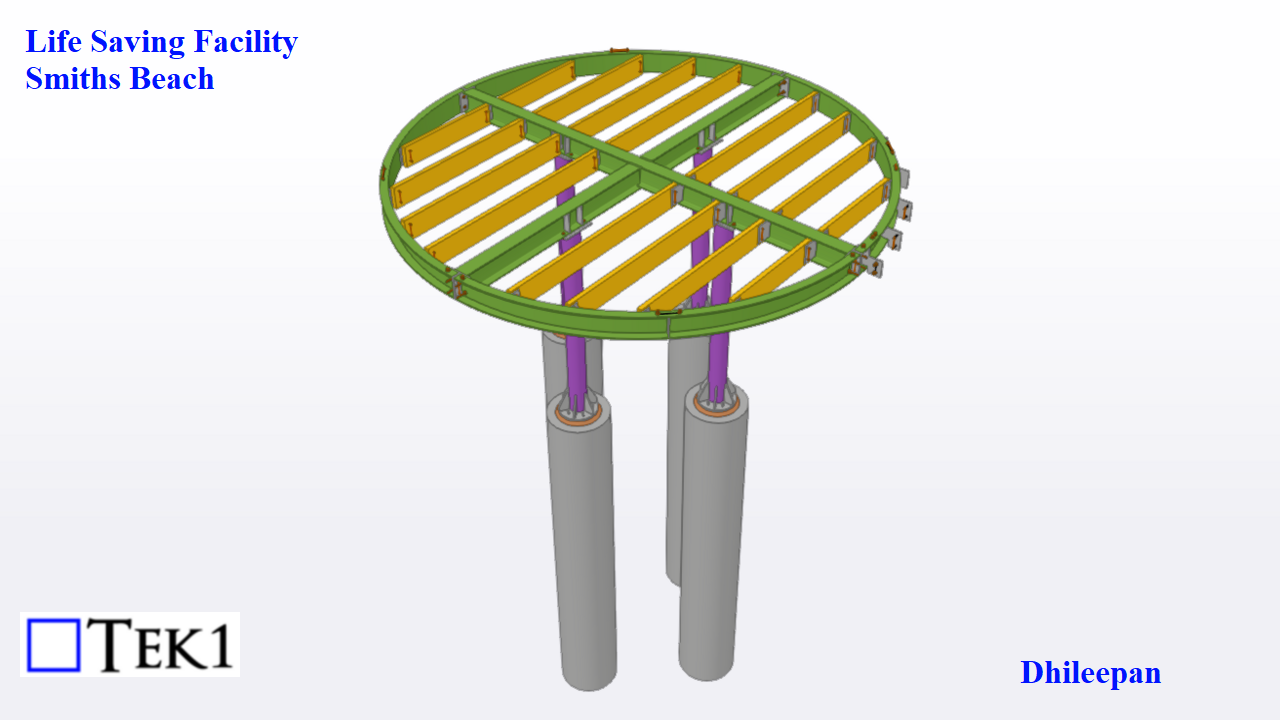
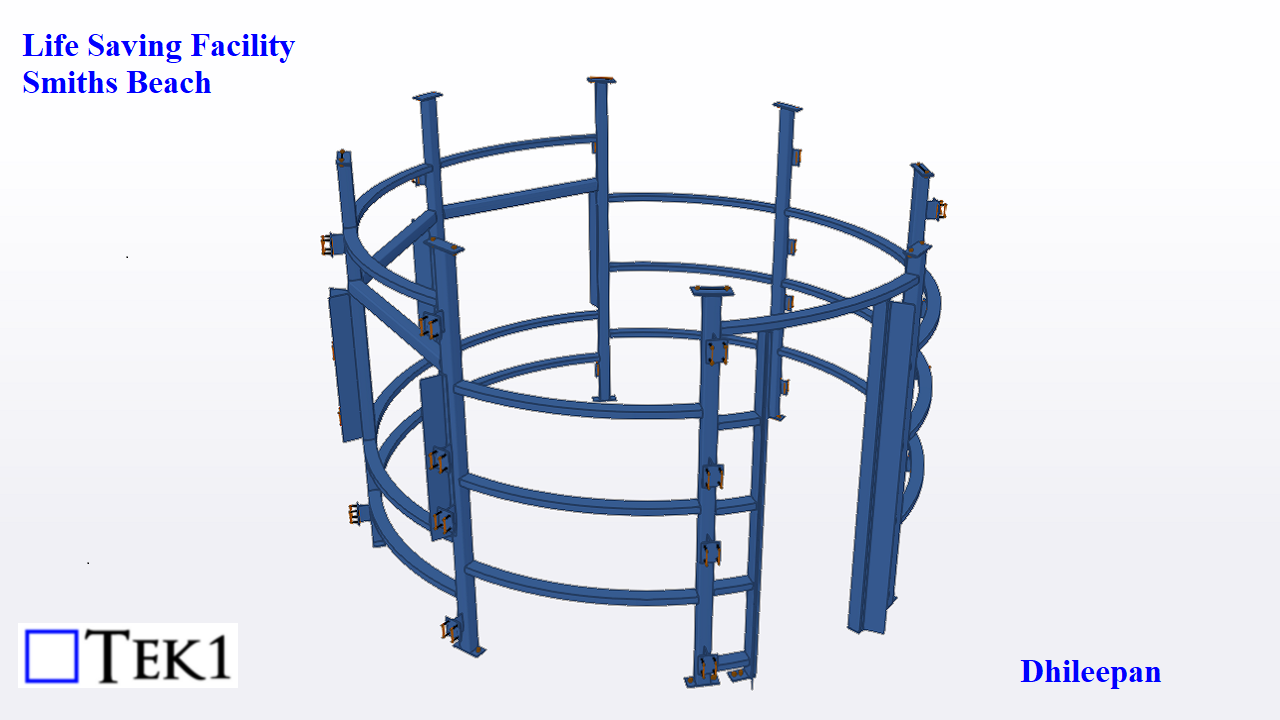
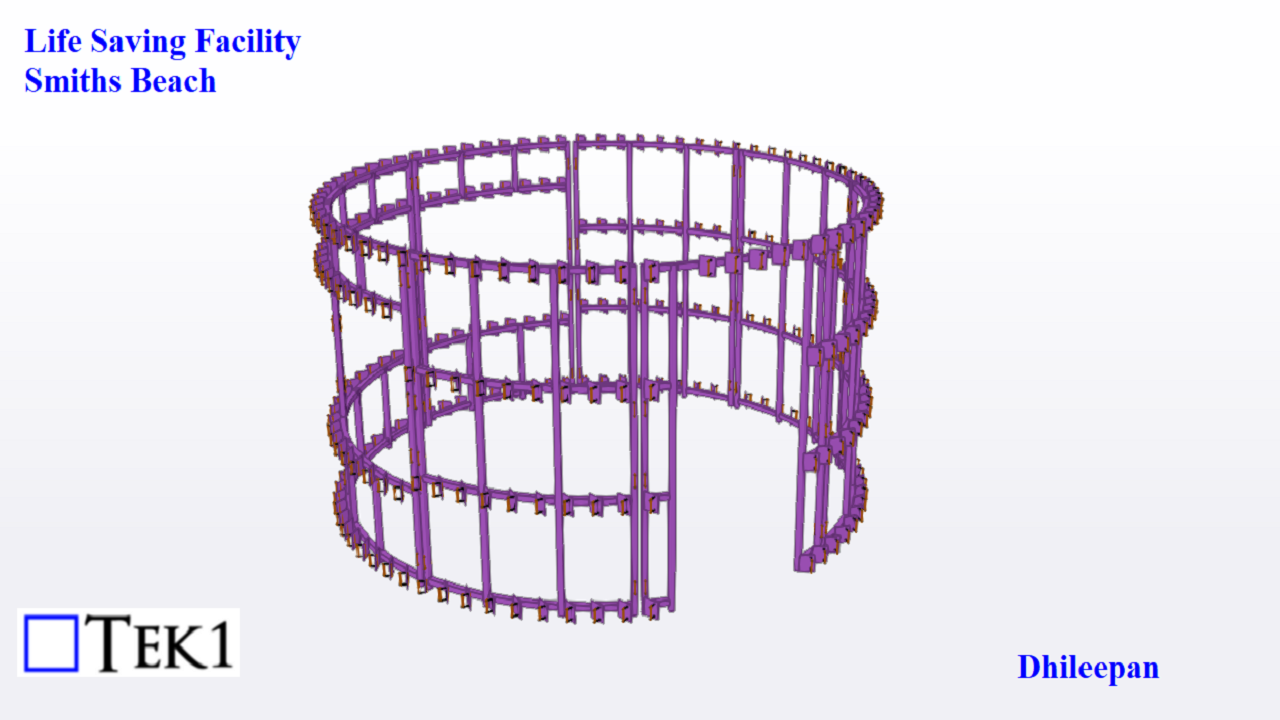
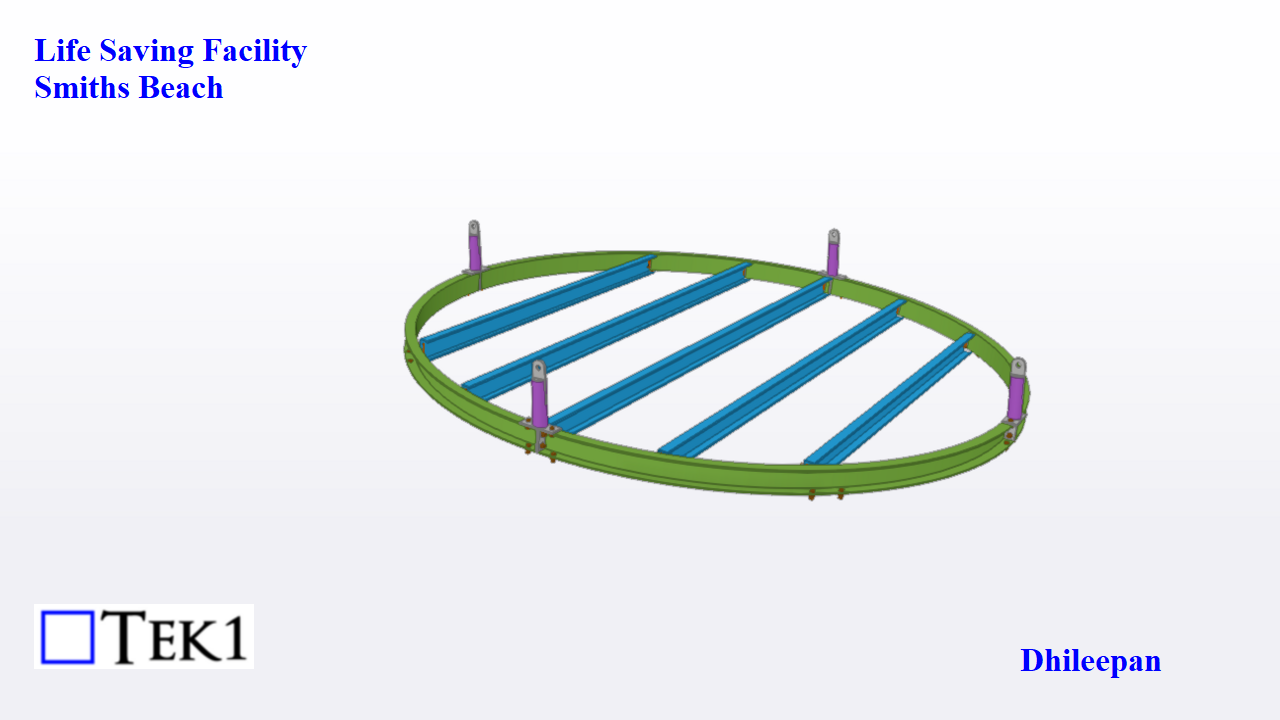
    The structure consists of a bottom ring, a body made as circular cage & a top ring at 5° slope. The body cage is covered by curved SHS flames that has cleats to pick up the outer battens. The entire structure rests of 4 CHS columns.

    BOTTOM RING
    BODY CAGE
    COVER FRAMES
    TOP RING

    There are 3 operable windows & a door, all made of steel frames. Since the structure is elevated from the ground, a staircase of arithmetically increasing width is also detailed to access the life saving facility.

    STEEL STRUCTURE
    FINISHED TEKLA MODEL
    FINISHED SITE IMAGE
  • Bega Tafe – Stage 2

    Bega Tafe – Stage 2

    Raj (Arokiaraj Arputharaj)

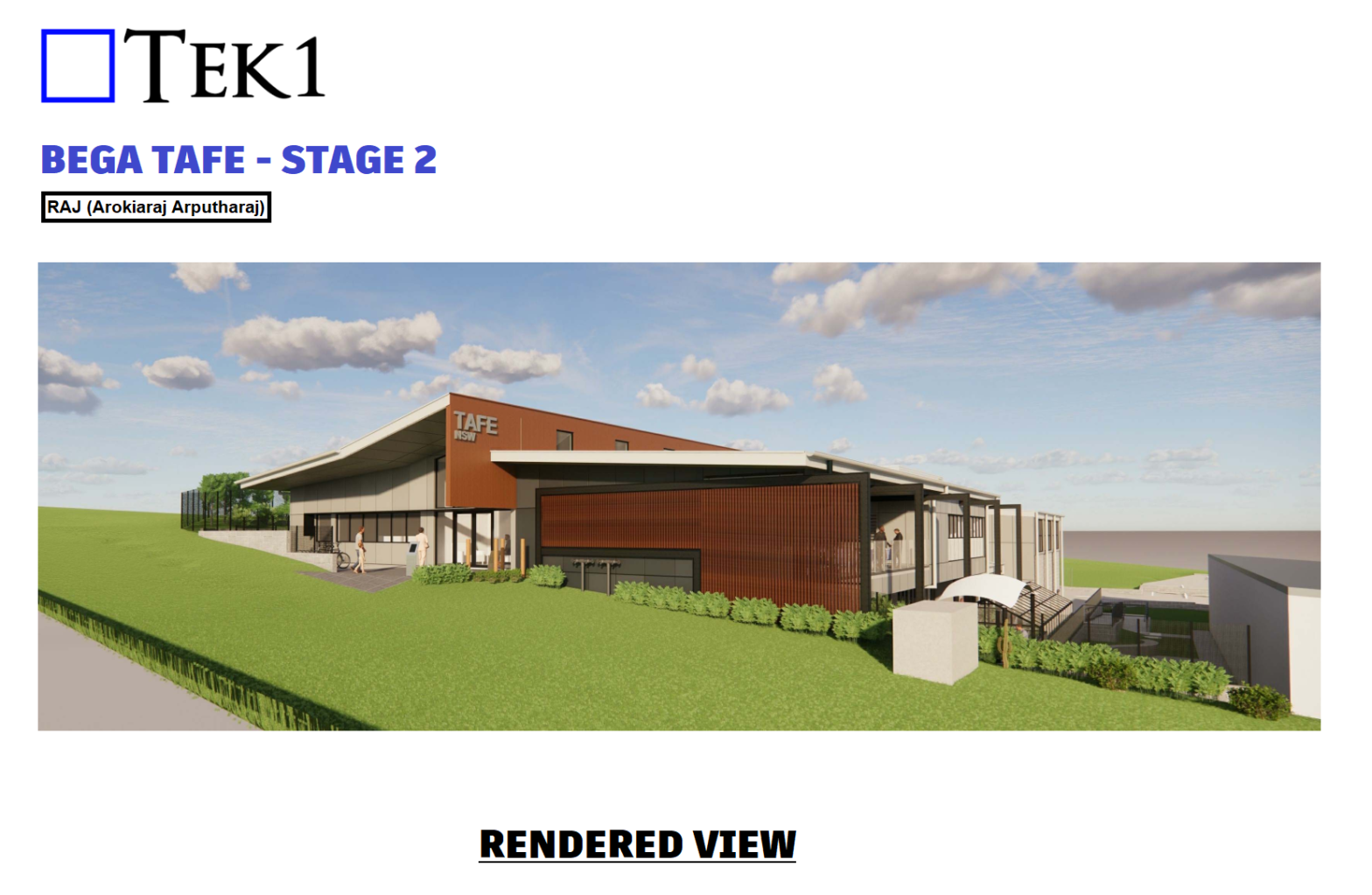
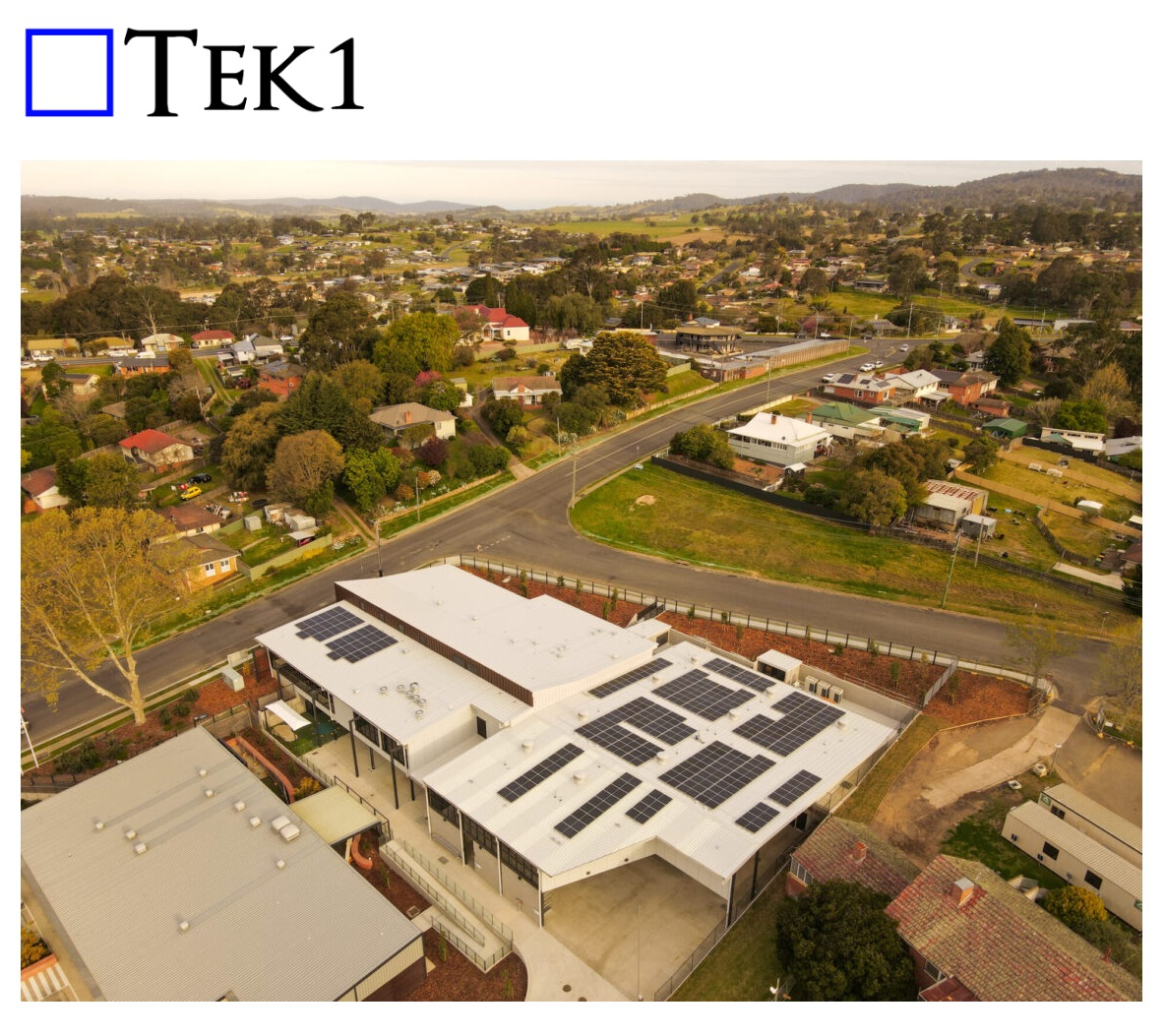
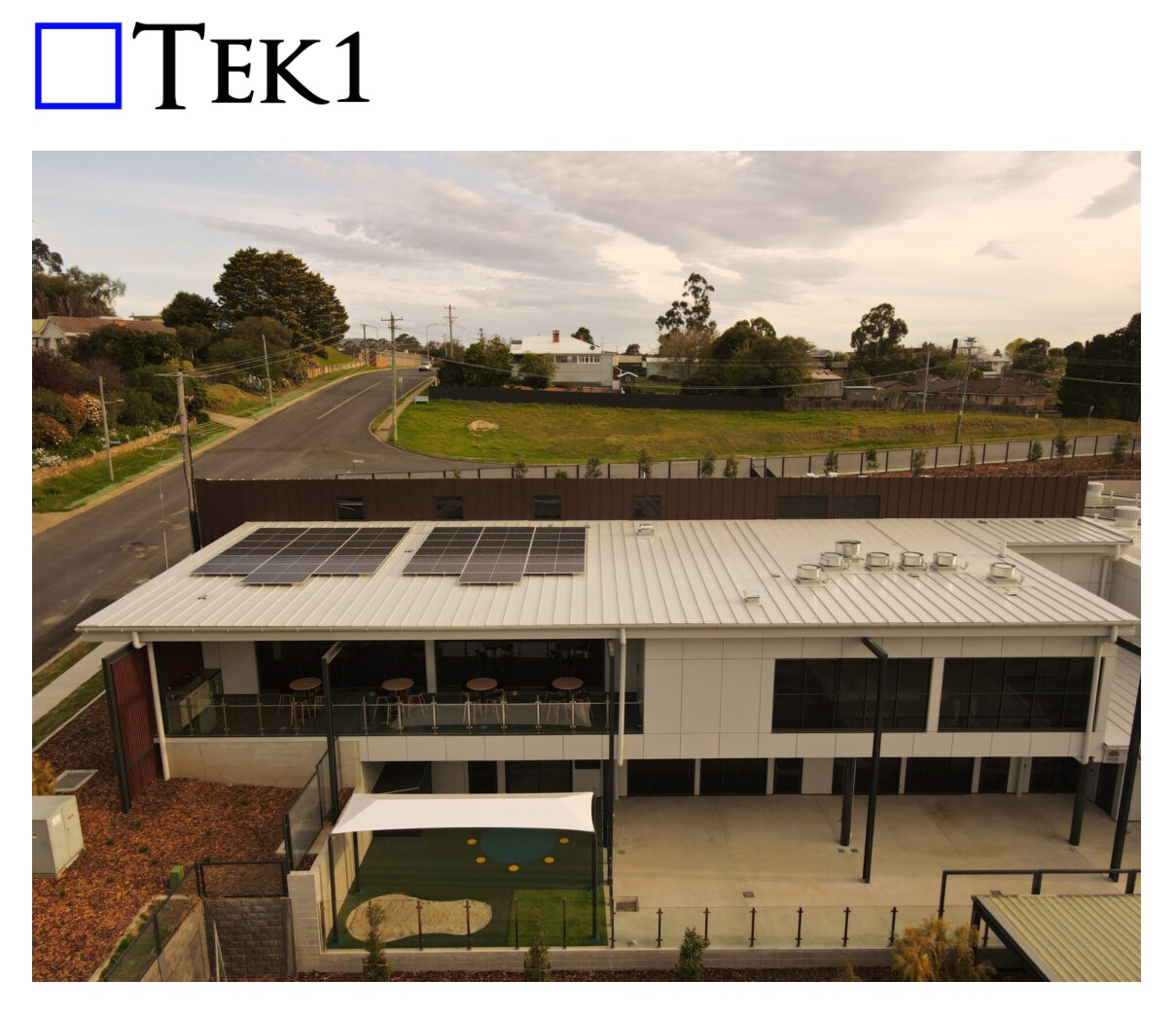
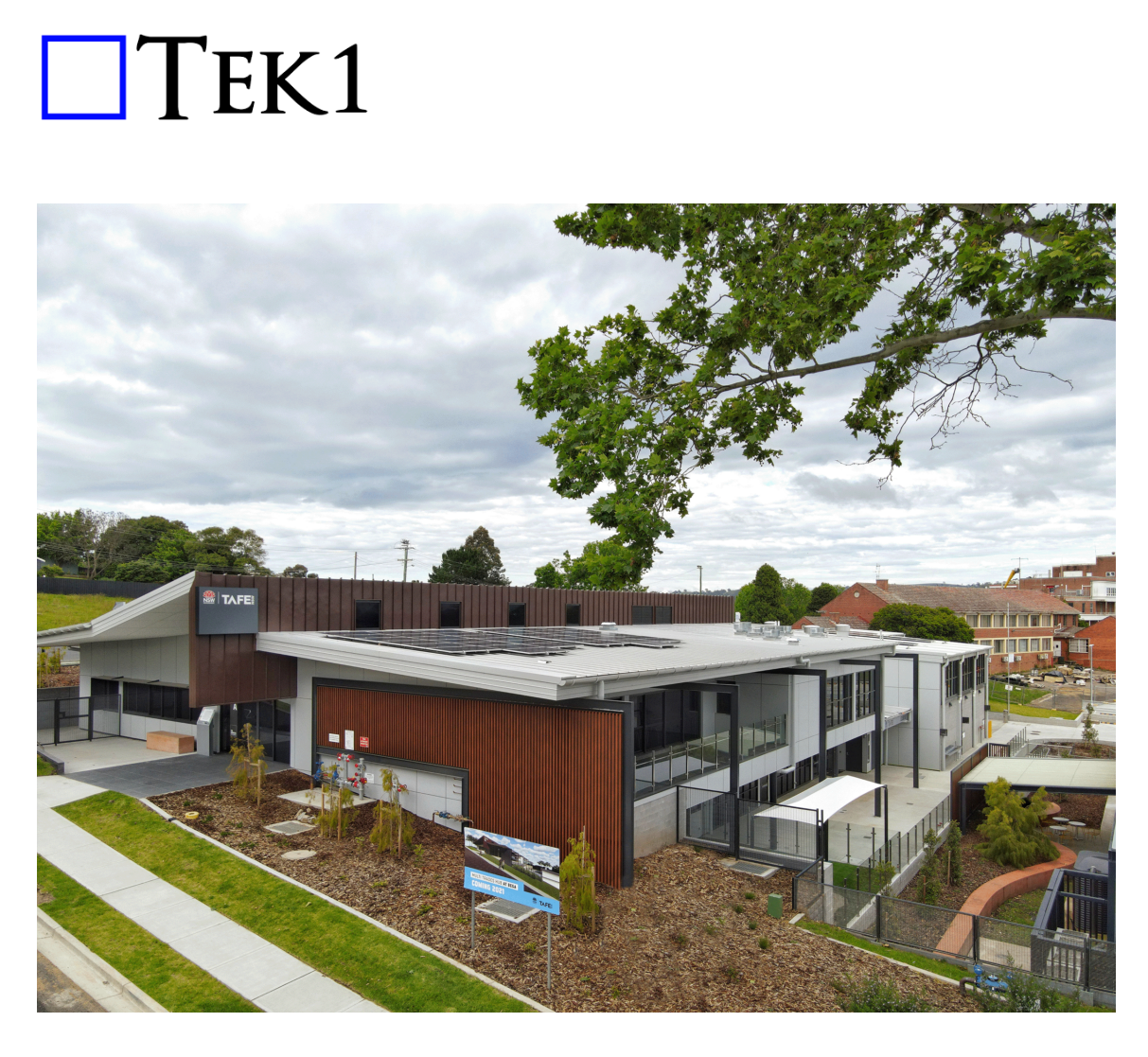
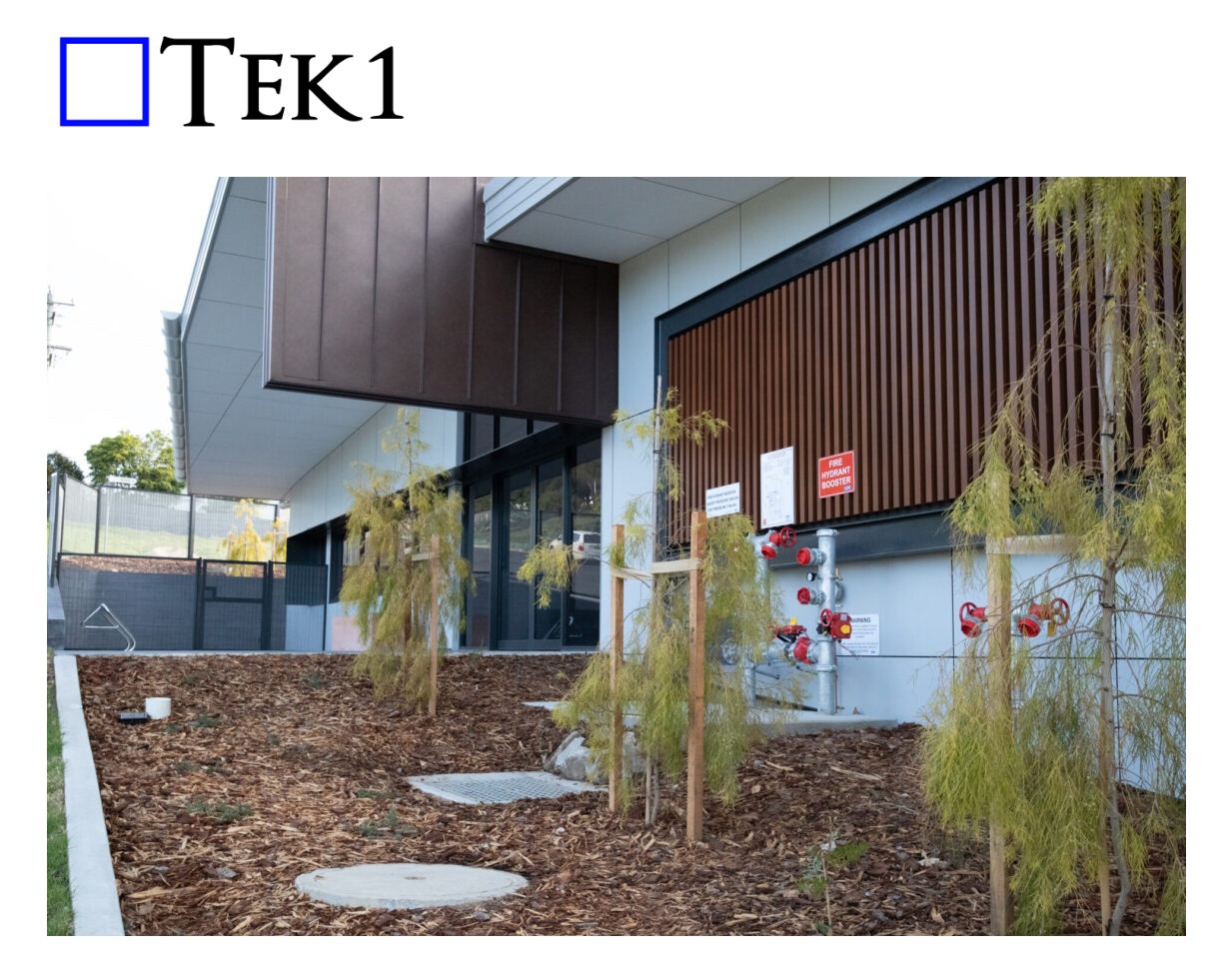
    Bega Tafe-Stage 2 structure is Multi Trades Hub.

    The new 2-level Multi Trades Hub adjoins the existing TAFE NSW Connected Learning Centre and incorporates workshops for automotive, engineering, carpentry, and bricklaying disciplines. Also included are general learning spaces, specialist facilities that support the delivery of aged care, disability courses, and early childcare, as well as a specialised outdoor area for horticulture.

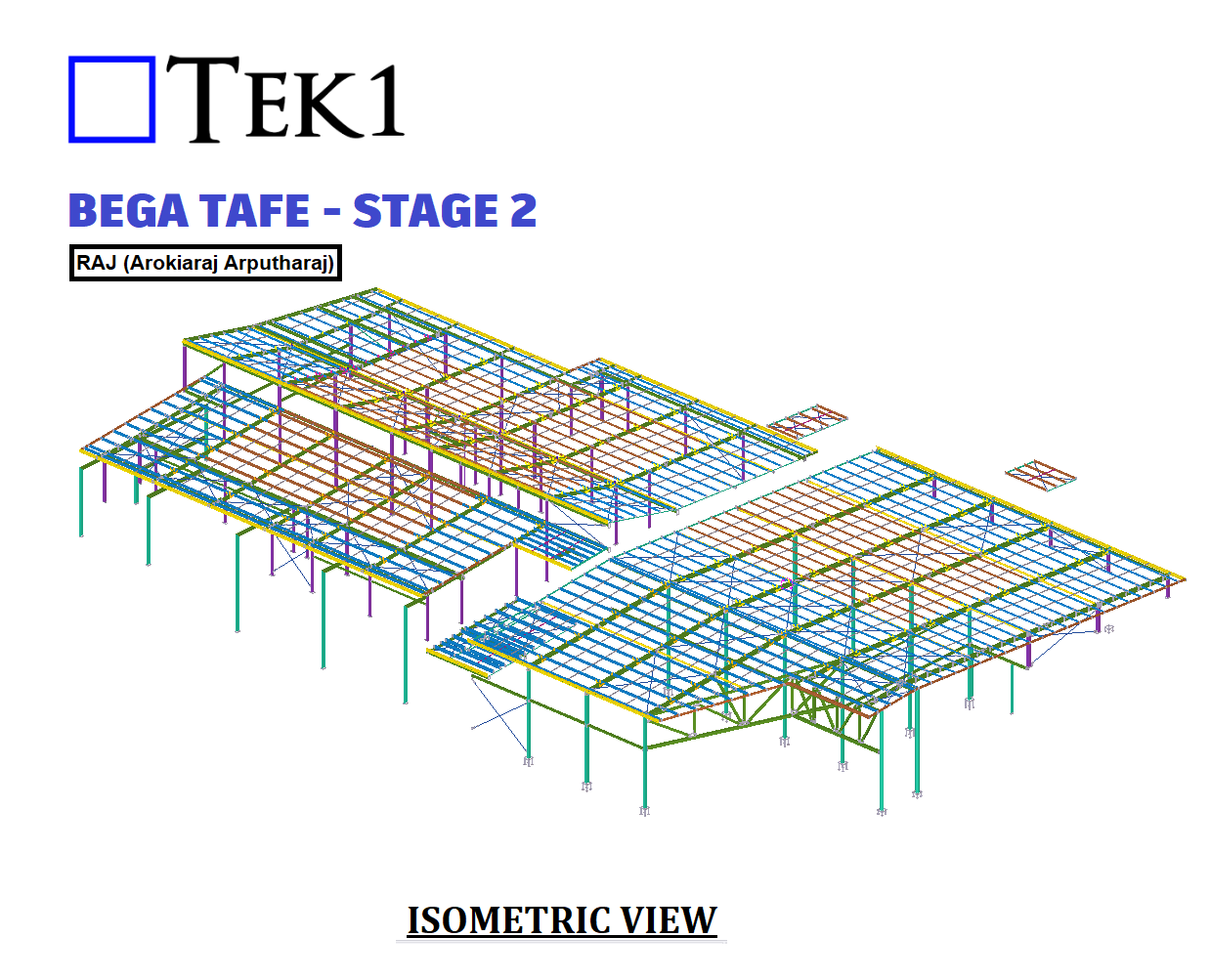
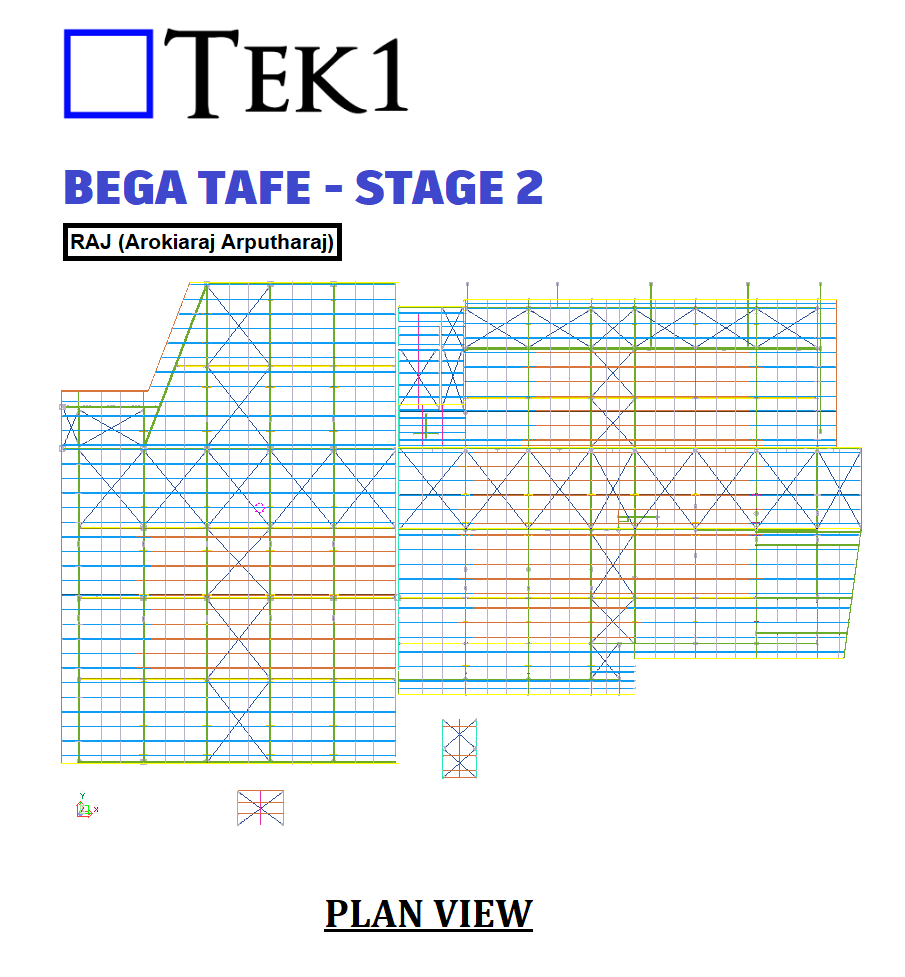
    TEK1 works included anchorbolt steel columns, beams, braces, and purlins.

    TEK1 raised multiple RFIs with a proposal. So the design got revised according to the RFIs. The client responded to TEK1 RFIs quickly. The project was completed quickly by our team.

  • 4 Schofield St, Essendon

    4 Schofield St, Essendon

    Raj (Arokiaraj Arputharaj)

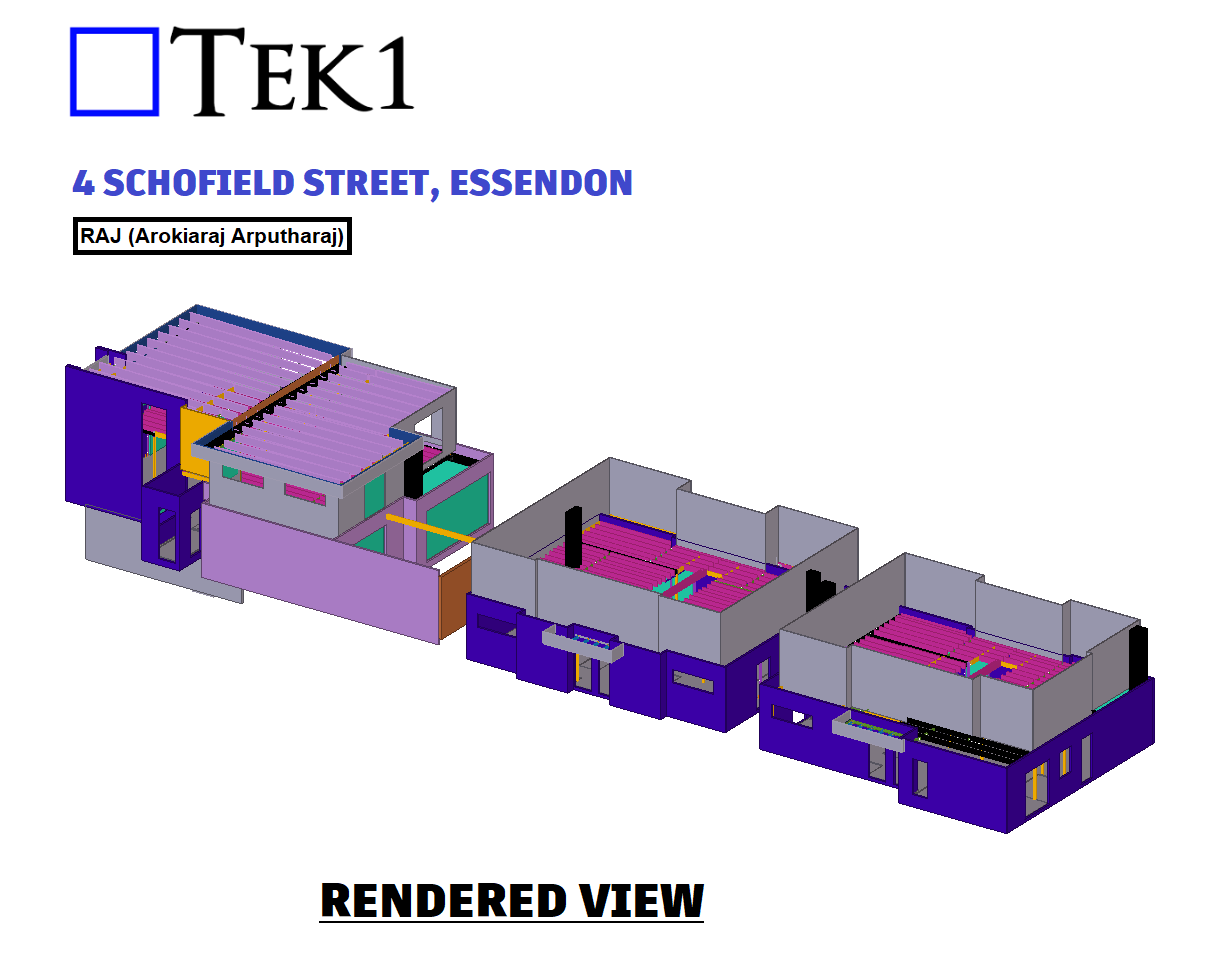
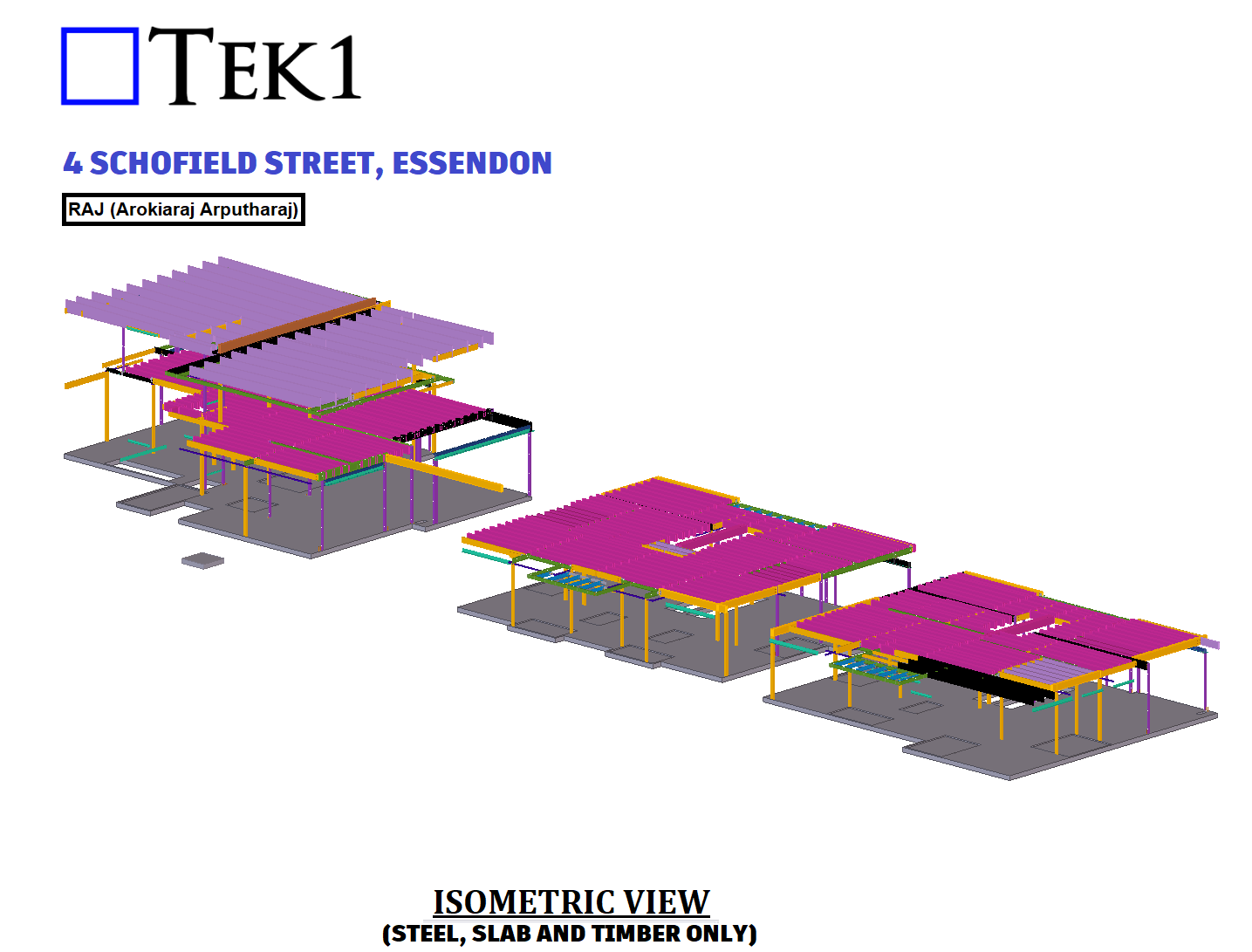
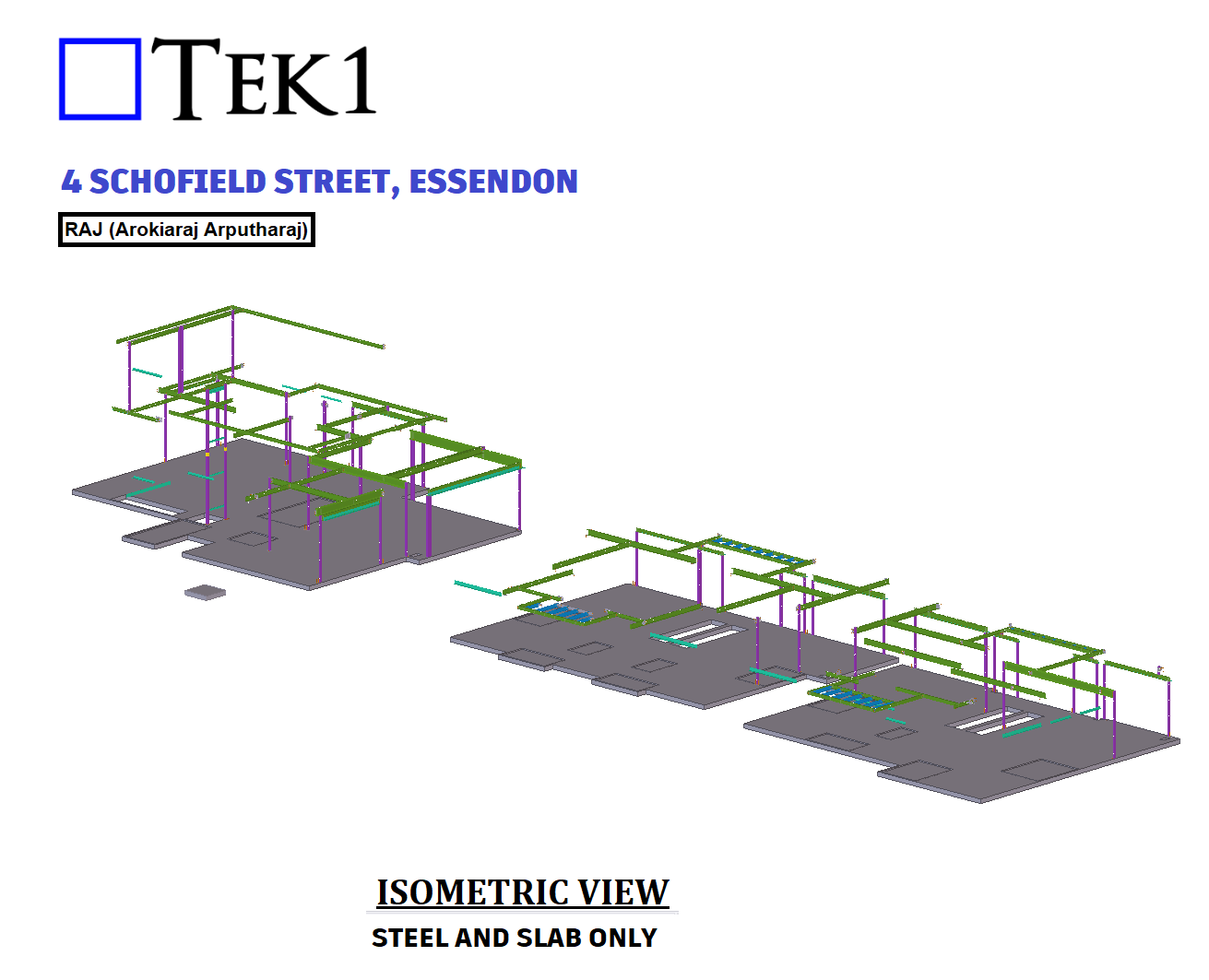
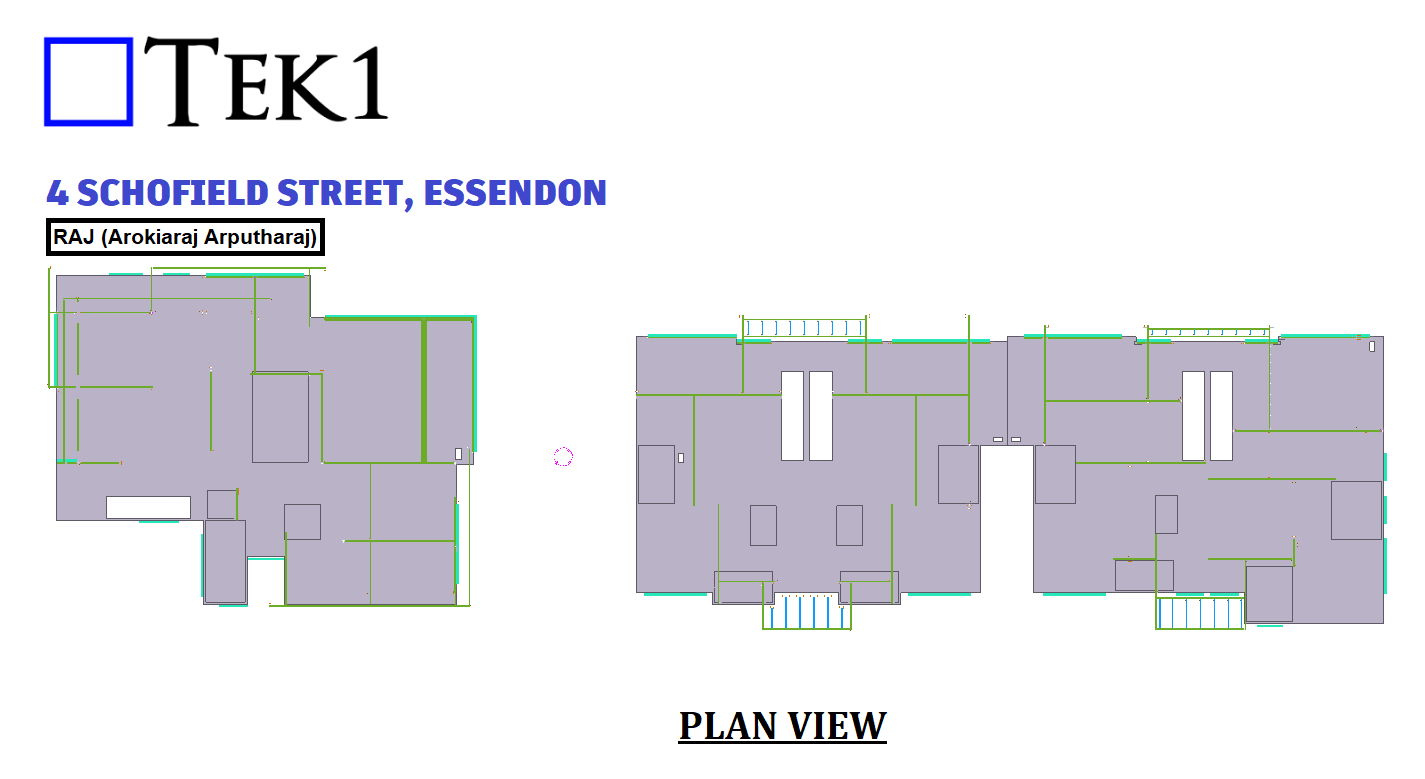
    4 Schofield Street is a multi-residential development structure.

    The structure contained five dwellings. TEK1 raised multiple RFIs with a proposal. So the design got revised according to the RFIs.

    The client responded to TEK1 RFIs quickly.

    The project was completed quickly by our team.

  • Help Fabricators Claim Their Costs

    When something changes, this is what Fabricators want:

    1. They want the updated Steel Reports:
      1. Steel has a cost.
      2. Labour has a cost.
      3. Welding has a cost.
      4. Cranage has a cost.

    They also want:

    2. An updated IFC model, with a short summary:

    3. How much more steel is required:

    • 3 tonnes more steel. See the attached IFC model (or at least a link to it).

  • Getting the Drawings Reviewed

    Getting the Drawings Reviewed

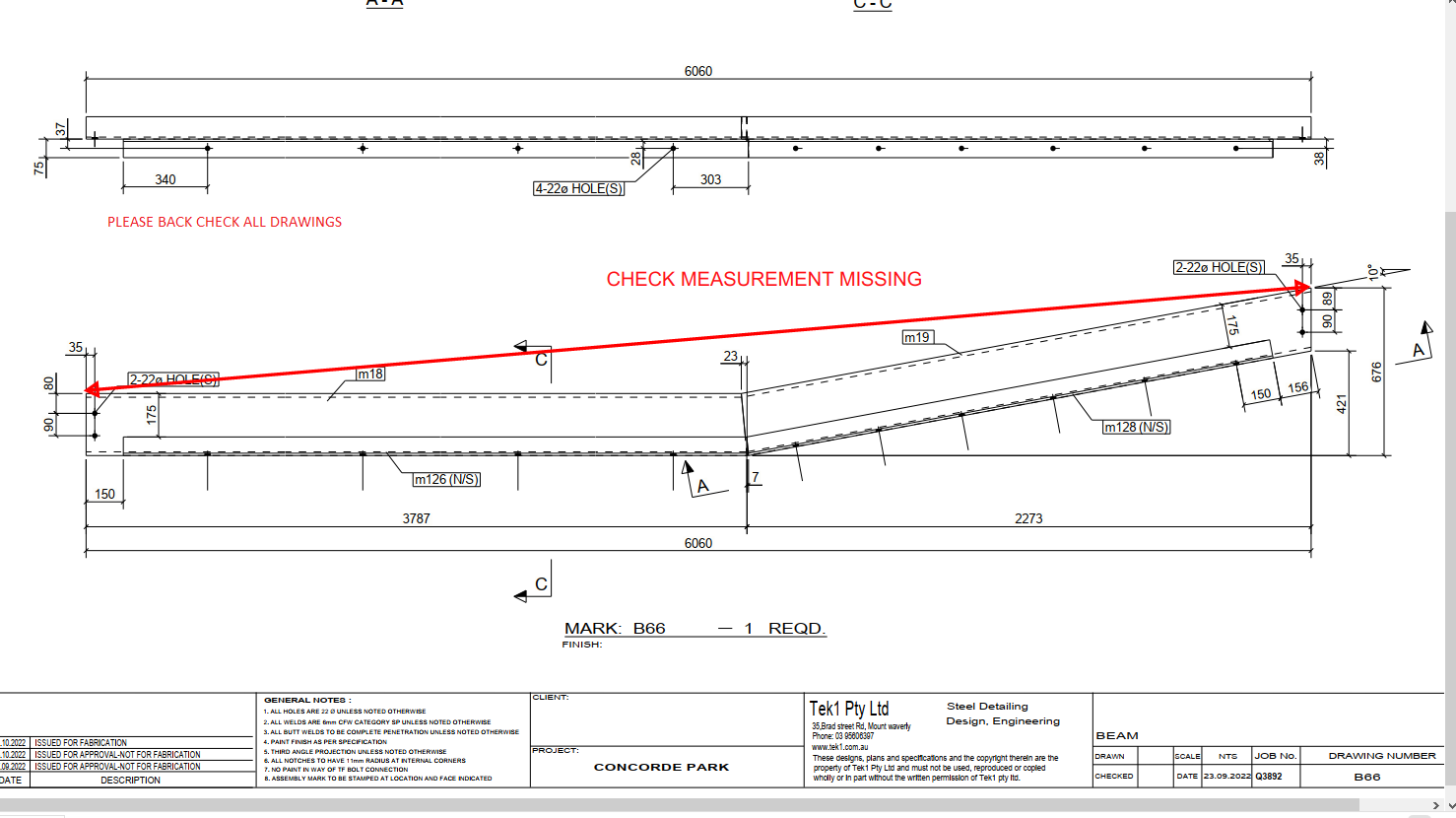
    Drawings are always submitted for approval before fabrication. When any changes are given by the structural engineer or the architect, after implementing the changes, the drawings must be submitted again for 2nd approval so that the structural engineer & the architect will review & approve the drawings.


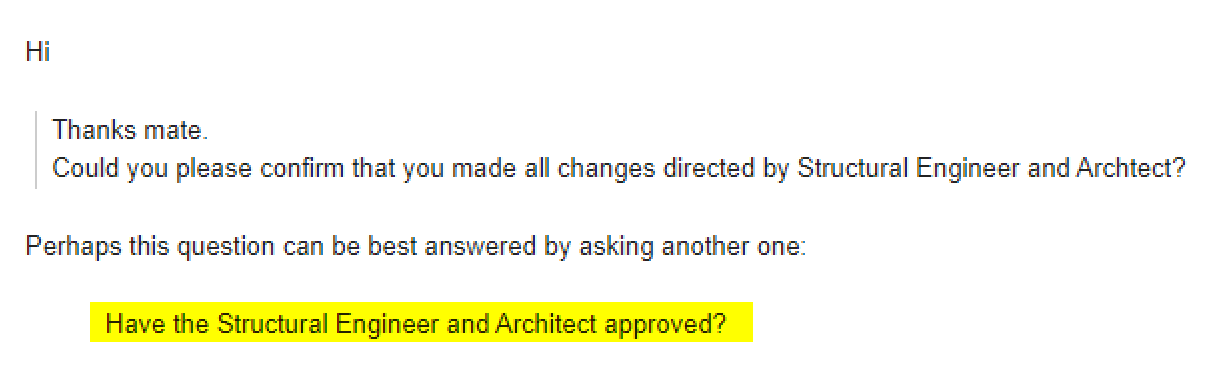
    In some cases, the architect & the structural engineer skip their duty of reviewing & question the detailer whether the detailer has implemented all the changes. Refer below image for an example.


    In such cases answering with a “yes” might cause trouble to the detailer & the corresponding concern in he future.


    Rather than answering the question, the detailer can pose a question to the question asked like “Have the Structural Engineer and Architect approved?”.
    By such way, the detailer has attended to the structural engineer or the architect and also the duty to review the drawings has also been assigned once again to him.

  • Staff Memo #17 – Solve client’s problems

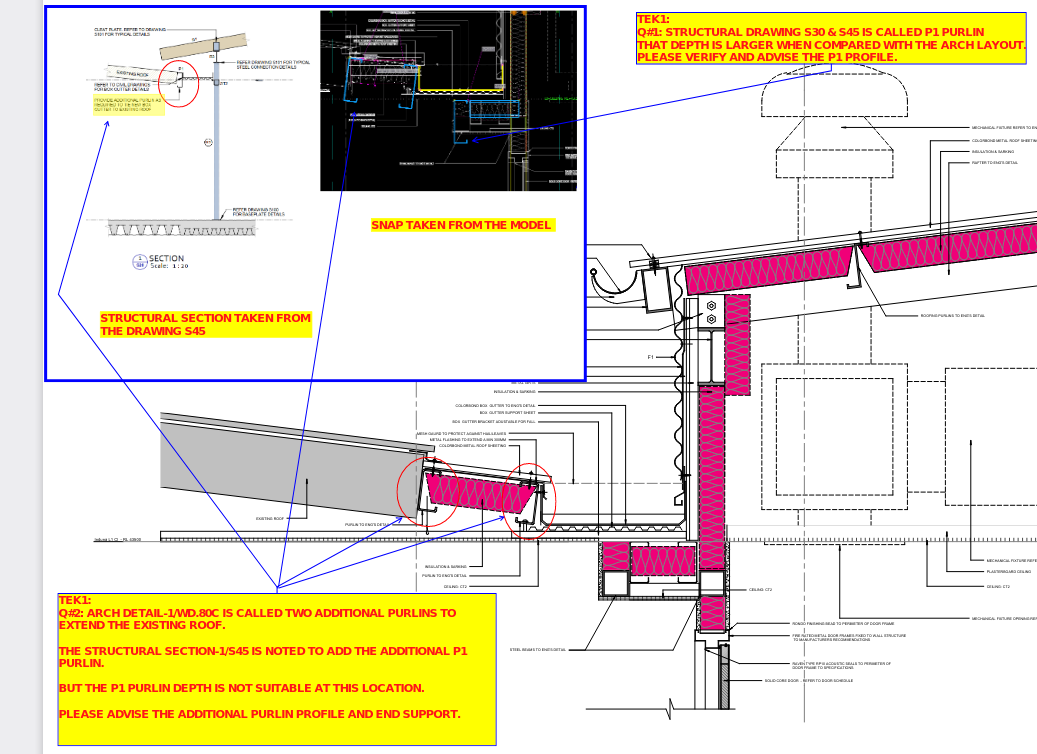
    Team, your job is to identify problems and also provide solutions. See this example below:

    Hi,
    Please clarify the below listed Questions.

    Q#1: Structural drawing S30 & S45 is called P1 purlin

    That depth is larger when compared with the Arch layout.

    Please verify and advise the P1 profile.

    (Email reference)

    Has done a great job with the markups which identify the problem

    Question: What has the detailer done well, and what is wrong with the above?

    Answer: The detailer has done a fanastic job:

    1. identifing the problem (This saves our client: money / time saved).
    2. Has communicated the problem clearly (in writing + markups).
    3. ….but then he stops and asks: “please advise”!

    What’s wrong with that?

    • It doesn’t propose a solution!
    • The consultants will have to spend time coming up with a solution. It delays the entire project. What is easier for the consultant: to do all the markups to solve the problem, or to simply reply:

    “I approve your suggested changes”

    Make it easy for consultants! If you can SOLVE problems, rather than identify them, we will be more valuable to clients because it minimises delays and allows the project to finish quickly.

    Why should I care?

    Because then you can get better clients, at better rates: it is very valuable to them.