Changes were required on the project necessitating variations – at double the cost of the original quote!
When this happens, it is ESSENTIAL that you call the client before you put in your variation documentation.
Why?
The client will suffer from “sticker shock” after he sees your price.
“Sticker shock” means that the client will be so surprised, and shocked, that he will fall off his chair.
The client will lose trust in you.
The client will try to negotiate everything down.
What should I do instead?
Call the client and say that the changes are huge.
Do not send variation documentation before addressing the “sticker shock issue”.
We cannot and do not negotiate on prices.
Going forward clients can choose between: (i) a fixed price quote – where we take on-board the risks of an infinite amount of variations, or (ii) where we charge variations but come in at a lower price.
In the realm of steel detailing, it’s not enough to simply follow design drawings and IFC models. As detailers, a thorough understanding of general standards is crucial to ensure accuracy and compliance.
The Importance of Standards
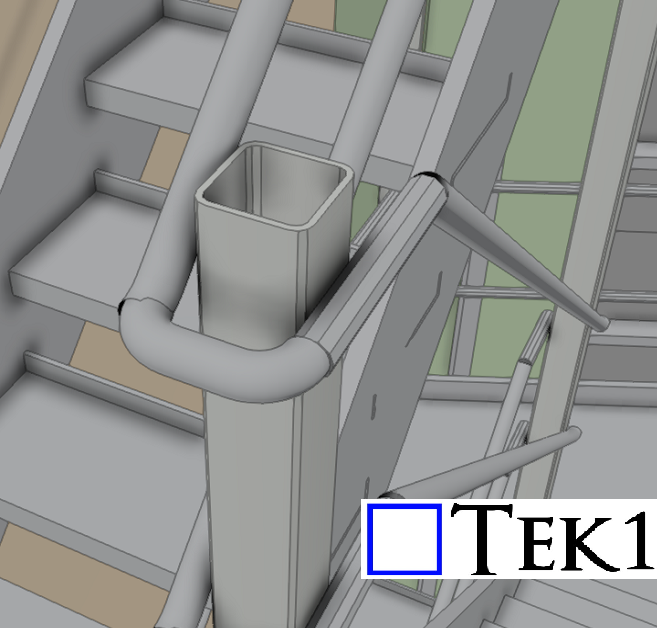
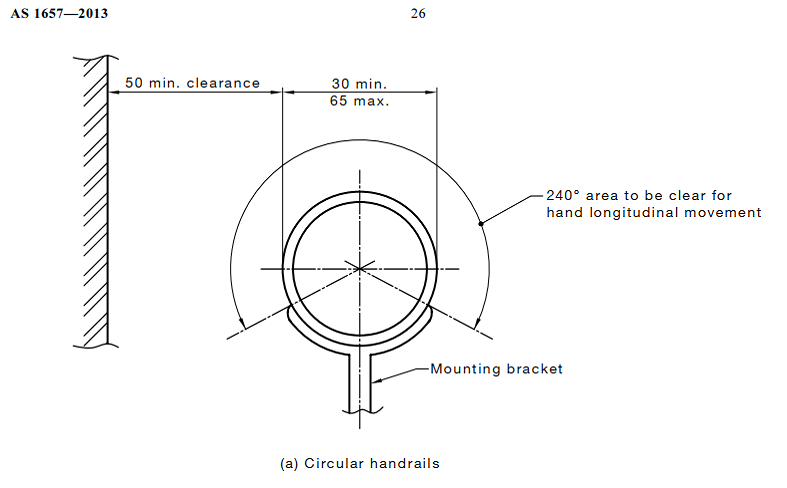
For instance, consider the Australian stair standards AS1657, which require a clear handrail area of 240° with a minimum clearance of 50mm. In the example below, the designer overlooked this standard, focusing solely on structural aspects without accounting for necessary clearances.
Identifying and Addressing Errors
As detailers, it is our responsibility to identify such discrepancies. In this case, the handrail does not meet the required clearance standards, which could lead to safety issues and non-compliance.
When we encounter designs that do not meet standards, it’s essential to raise queries with the client. This proactive approach ensures:
Compliance with Standards: Adhering to necessary safety and design standards.
Cost and Time Efficiency: Preventing costly rework and project delays. Enhanced Quality: Ensuring the final product is safe, functional, and compliant.
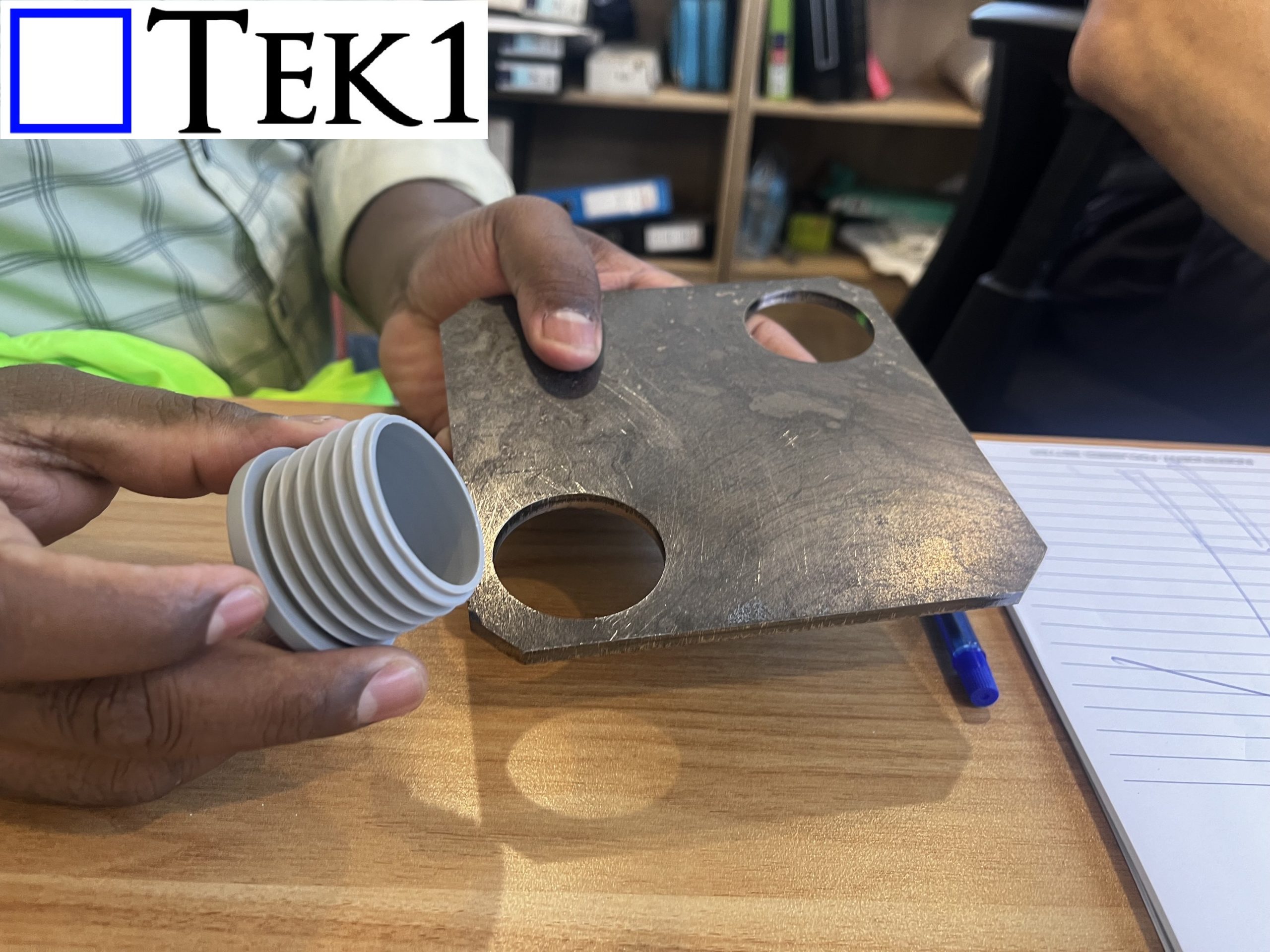
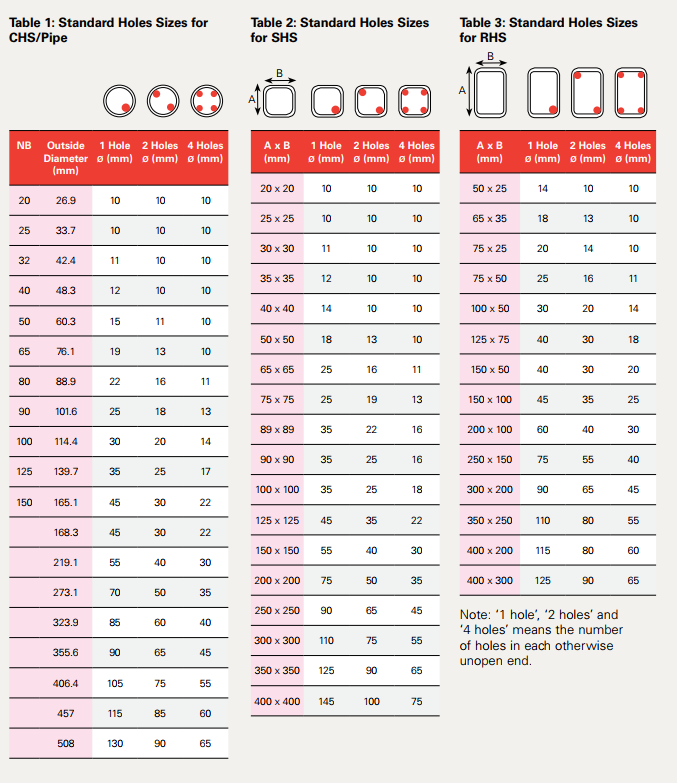
During a recent client visit, we encountered an issue with the size of vent holes. In Australian detailing, we typically use a standard catalogue for specifying galvanizing holes. We followed this standard and provided the holes in the end plate accordingly.
Adequate venting at correct location is very important for efficient galvanizing
However, the client pointed out that the caps used to seal these holes after the galvanizing process did not fit. This was the first time we faced this issue, and it highlighted a crucial point.
Key Takeaway
When providing galvanizing holes, it’s essential to confirm the hole size with the client rather than relying solely on the standard catalogue. This approach ensures compatibility with the caps used and can save a significant amount of money by preventing rework.
By aligning specifications with client requirements from the outset, we can avoid similar issues in the future and ensure a smoother project execution.
Go 10km forward, and then 5 km left, and then 2 km right.
Walk forward 10 steps, and now
dig.
This is great from my current location. But how will you get there from YOUR location? Without changing the location of the treasure, I can tell you how to get there, from your location by aligning coordinate systems.
But it can be confusing. Here’s how I think about it intuitively. Forget the maths, just think about it intuitively.
Consider both examples:
If you think about it that way, it will be much harder to get confused.
Suppose you have a Tekla model and you want to programmatically filter for parts with a revision mark of abc/1. How would you do that?
One way would be to iterate through the entire model, check for items which match your condition (perhaps via a LINQ query).
The second would be to use Tekla’s native filtering metchnicsms, which seem to be FAST:
When I originally tried the code, I had a single Binary Filter expression for just the part Position Number. I made a fatal mistake – I had assumed that Tekla would be smart enough to release that given I want a part position number, I also wanted a part. The API returned almost everything under the sun. And I have no idea why. So then I added a second Binary filter expression – this time one for parts.
Given we have two “filters”, we need to add them into a filter collection, and then finally, when we search, we search by .GetObjectsByFilter(filterCollection).
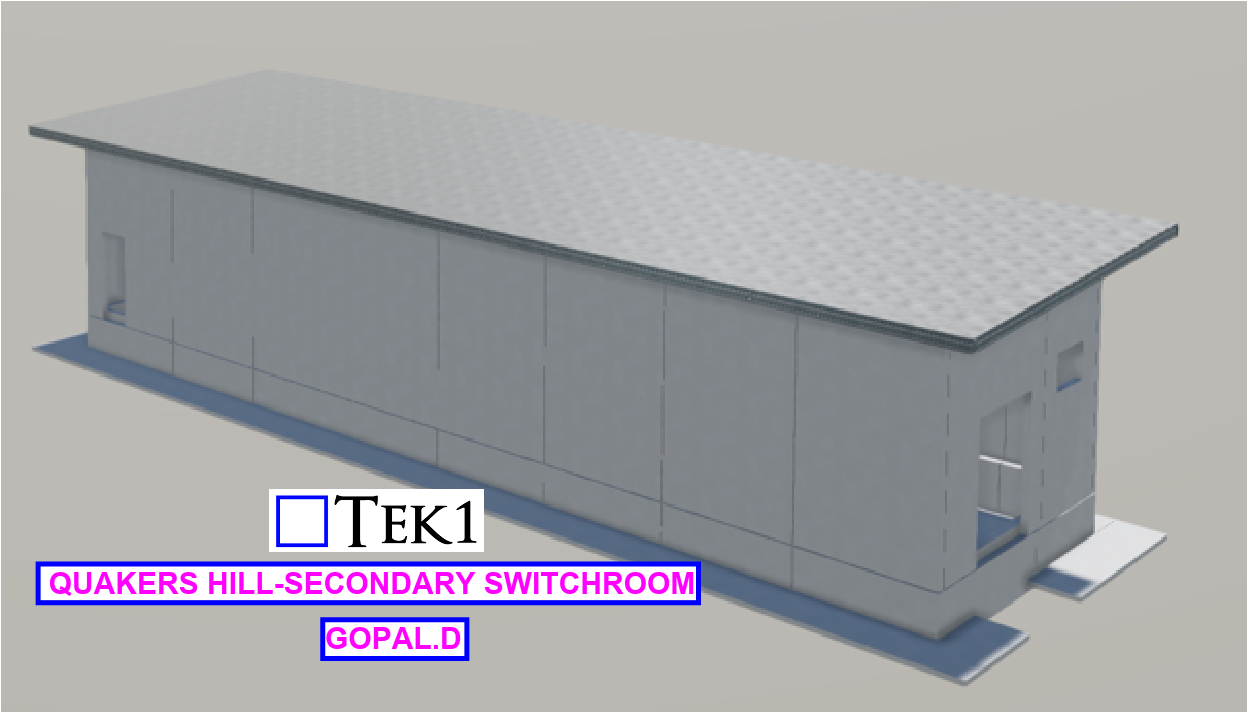
When it comes to construction, the integration of different materials and components is crucial for the success of any project. Steel detailing, particularly when combined with precast concrete, involves intricate planning and coordination. In the case of the Quakers Hill Secondary Switch Room, this integration posed potential challenges that were efficiently managed through the collaboration of our teams. This blog post explores how the synergy between steel and precast detailing led to a flawless execution of this project.
The Challenge of Integrating Steel with Precast
Typically, projects involving both steel and precast components require meticulous coordination. Each element, from the structural steel frames to the precast concrete panels, must align perfectly to ensure structural integrity and aesthetic coherence. The complexity increases as each contractor brings their own schedules, specifications, and work processes.
Coordination with Precast Contractors
In many projects, coordinating with precast contractors can be time-consuming. Differences in detailing standards, communication gaps, and timing issues often lead to delays and errors. The precision required in such tasks cannot be understated, as even minor misalignments can lead to significant problems down the line.
The Tek1 Advantage
For the Quakers Hill Secondary Switch Room project, our in-house team, Tek1 Precast, handled both the steel and precast detailing. This unique setup provided several advantages.
Streamlined Communication
Having both detailing responsibilities under one roof significantly streamlined communication. The teams were able to work closely, share real-time updates, and make adjustments swiftly without the usual back-and-forth with external contractors.
Enhanced Accuracy
With Tek1 managing both components, the accuracy of the detailing process improved dramatically. The team used integrated models to ensure that all elements fit together perfectly, reducing the likelihood of errors during construction.
Time Efficiency
This coordination not only enhanced the quality of the output but also saved time. The project moved faster because there were fewer delays in communication and problem-solving. This efficiency is particularly crucial in projects with tight deadlines.
Project Outcomes
The Quakers Hill Secondary Switch Room project was completed with zero errors in the steel and precast detailing. This flawless execution can be attributed to the effective collaboration and expertise of the Tek1 team.
Zero Error Delivery
Achieving zero errors in a project of this complexity is a significant accomplishment. It speaks volumes about the precision and dedication of our team, and the benefits of having a unified detailing approach.
Client Satisfaction
The client was immensely satisfied with the outcome. The project not only met but exceeded their expectations in terms of quality, timing, and overall execution. This success has further solidified our reputation as a leader in integrated steel and precast detailing.
Most staffers in this firm have very poor English ability.
English is a universal language. It is a very valuable skill. If you don’t want to improve your language (and I know some don’t want to, nor do they care) then you will very significantly limit your earning potential.
Clients demand good communicators – especially with written English.
An easy way of improving is via: MIRRORING.
Listen to an English show.
REPEAT what the actors / news readers are saying verbatim, after they say it.
You will feel like a parrot, but after some time, you will establish new patterns of speaking