Month: November 2024

  • When projects are delayed we need to invoice

    These are our terms

    VariationsVariations affect our cash flow adversely. In the event of any variations, we may need payment prorata for work already completed, before we take up variations — if they cause major delays in the submission of approval drgs. Variations are charged at the above mentioned rate. You will be notified of variations as and when they appear and are applicable. If you do not agree to the variations we are claiming,please inform us within 72 hours of us sending you the notice. If we do not receive a notification from you refusing our claim then this we will presume you to accept the variation, and we will continue to implement the applicable changes required in the drawing and bill it accordingly. Variations will be billed every week and is payable within 7 days. If payments are not made on time, we reserve the right to stop work without being liable for any consequential losses which may arise as a result

  • Maximum Cleat Heights for Purlins and Girts

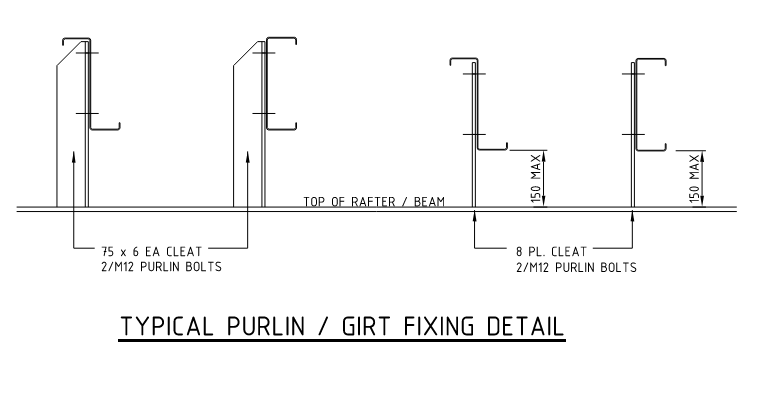
    There are recommended maximum heights for purlins and Girts. If you want more heights the options are increase cleat thickness ore change cleat profile to may be equal angle profile.

    Expert steel detailers will know what to do and will use the appropriate thickness and profile

    If you are using 8 mm plate cleat, you can go upto 150 mm max

    Beyond that use an EA cleat

    75×6 EA is good.

    Increasing plate thickness may not be a good option because of PB30 bolt where the bolt length is only 30 mm.

  • Create customised short cut to start TeklaStructures

    Any questions contact us via contact form or whatsapp

  • Steel Fabrication Drawing

    Steel Fabrication Drawing

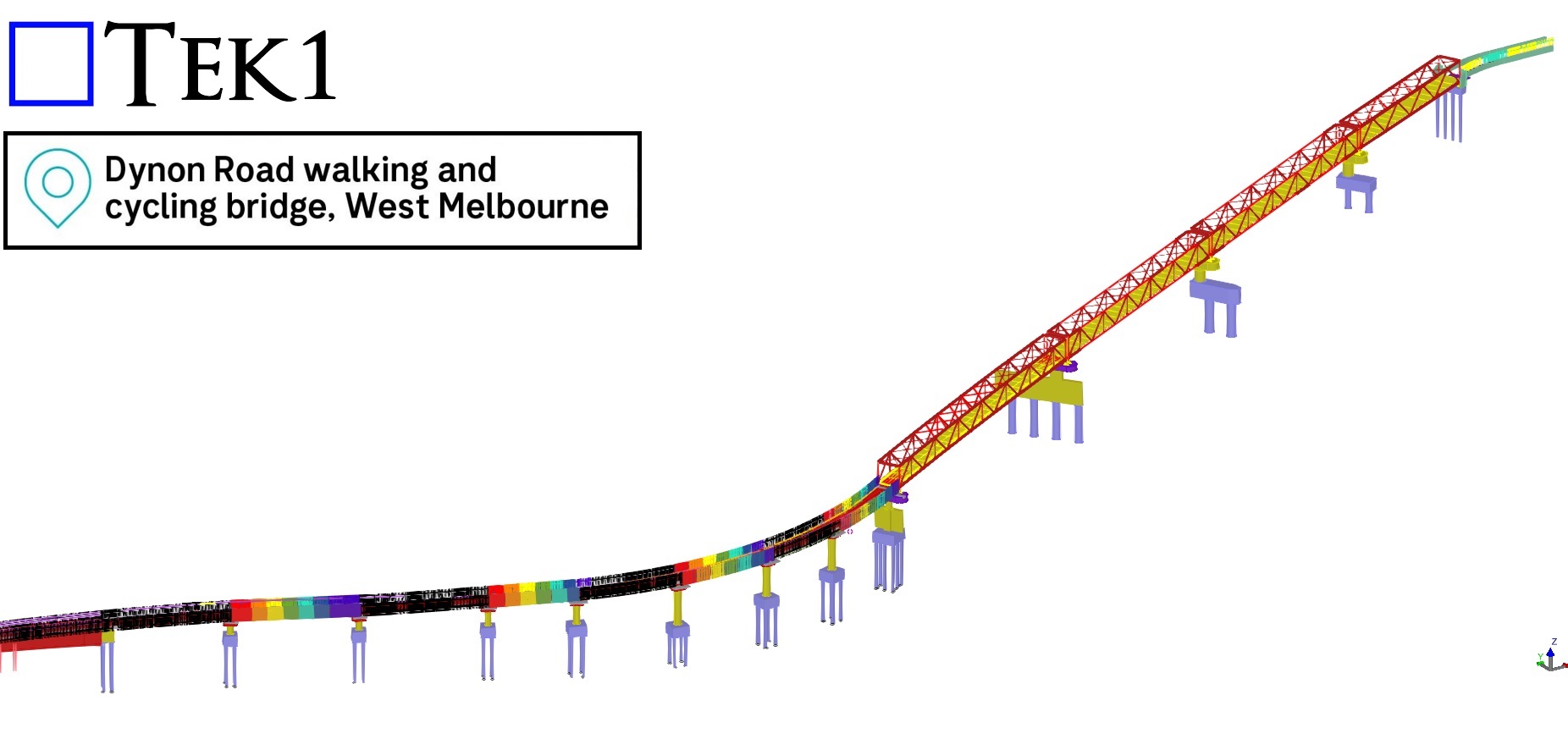
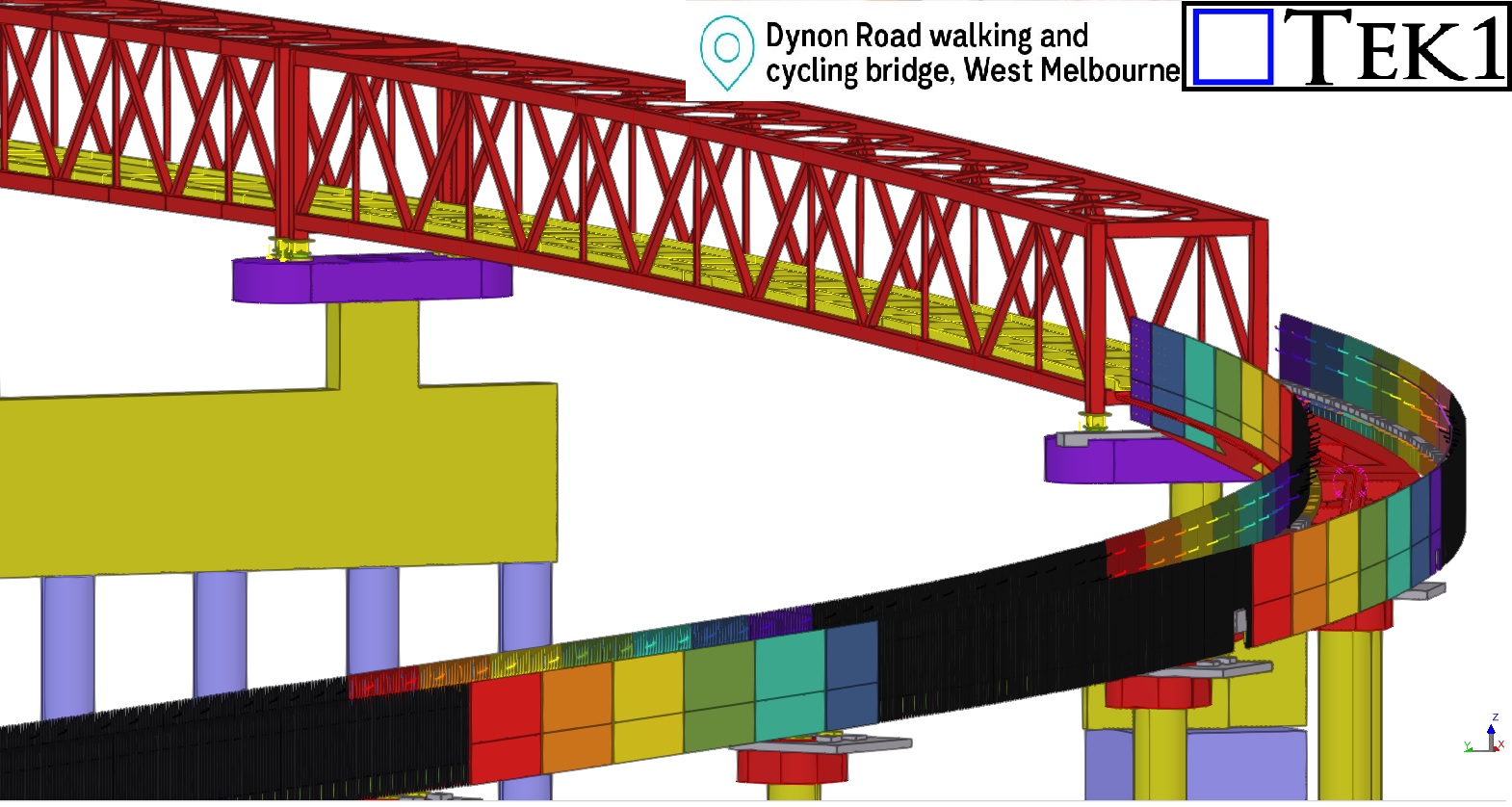
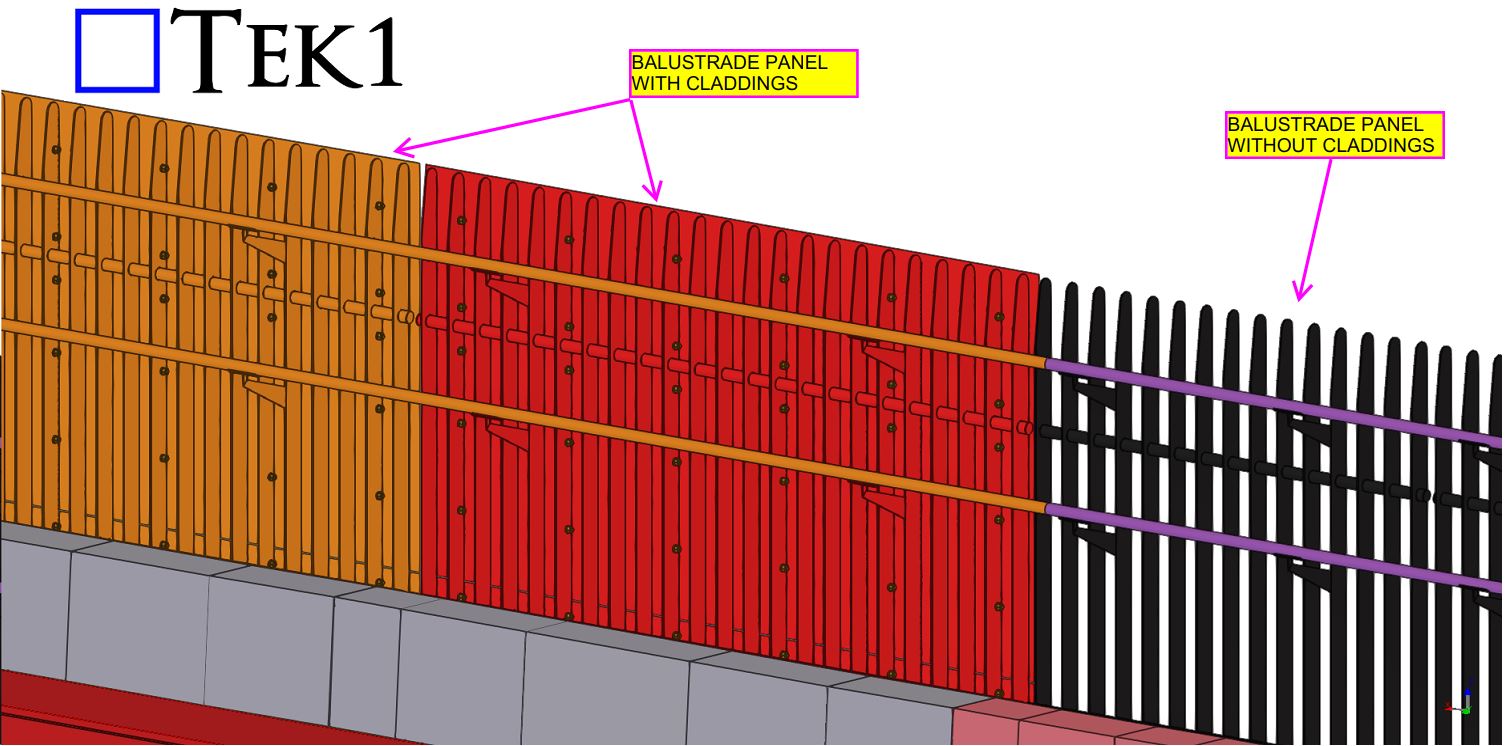
    Workshop drawings for balustrades of Bridge#84 Dynon Road Walking & Cycling bridge, West Melbourne.

    The fabrication drawings for the 230-meter-long balustrade panels, which feature vibrant, rainbow-colored finishes were delivered with NIL mistakes and on time.

    Challenges in the As-Built Stage

    One of the most intriguing aspects of this project was the challenge posed by the as-built ramp slope and its curve, which deviated significantly from the original design coordinates. These deviations added a layer of complexity to detailing the balustrades, as each panel had to align perfectly with the precast kerbs.

    To address this, we worked closely with the builder and requested precise site measurements. These measurements were essential for us to adjust our detailing to account for the as-built ramp’s unique coordinates, ensuring every panel fit perfectly into place.

    Tailored Solutions for On-Site Realities

    The balustrade panels were fixed to the precast kerbs using as-built ferrules, demonstrating the adaptability required in projects where site conditions differ from the initial design. By leveraging the site measurements provided, we completed the detailing of all balustrades with precision, overcoming the complexities introduced by the ramp’s deviations.

    Conclusion:

    The Dynon Road Walking & Cycling Bridge is not just a pathway; it’s a vivid example of how meticulous detailing and innovative problem-solving can overcome challenges to deliver exceptional results. Its rainbow-colored balustrades are now a standout feature in West Melbourne, adding vibrancy and charm to the community.

  • Australian Standards – Available for Staff at Tek1 on the firm’s Google Drive

    All staff should have access to the relevant Standards.

    You should be familiar with them, and master them – otherwise you will embarrass yourself, and the firm, if you claim knowledge but demonstrate ignorance. The latter is especially costly to clients, and detrimental to your name and reputation (as well as the firm’s) – you certainly will not be getting repeat work if you prove ignorance.

    Please access them at the firm’s google drive location here.

    Standards available amongst many others:

    • AS_2870-2011 – residential-slabs-and-footings.pdf
    • AS_1100.101-1992 – technical drawings.pdf
    • AS_3600-2018 – concrete-structures.pdf
    • AS-NZS_2425-2015 – bar-chain-in-reinforced-concrete.pdf
    • AS_5216-2021 – post-installed-cast-in-fastenings-concrete.pdf
    • AS_1657-2018 – Fixed platforms, walkways, stairways.pdf
    • AS_3700-2018 – masonry.pdf
    • AS3850-2003 – tilt-up-concrete.pdf
    • AS_4100-2020 – steel-structures.pdf
    • AS_3850.1-2015 – prefabricated concrete elements – part 1 – general requirements
    • AS-NZS_1170.1-2002 – structural-design-actions.pdf and also AS-NZS1170.2-2021.pdf
    • AS_3850.2-2015 – prefabricated concrete elements – part 2 – building construction.pdf
    • AS-NZS_1554.5-2014 – welding of steel structures subject to high levels of fatigue loading.pdf
    • AS 4100 & AS/NZS 4600 – Steel Structures and Cold-Formed Steel Structures
    • AS/NZS 5131 – Structural steelwork – Fabrication and erection

  • Adding details without approval which affects other trades

    This memo clarifies the process for handling drawing approvals and issuance to ensure project coordination and minimize potential errors.

    Drawing Approval Reviews:

    When receiving approved drawings, carefully review them for any markups that may significantly impact other trades or existing structural elements (e.g., slabs, foundations, anchor bolts).

    Example: If an approved drawing introduces a slab pocket where none existed in the original design, ensure the following steps are taken:

    • Verify Slab Status: Issue an RFI (Request for Information) to determine the current status of the slab construction.
    • Coordinate with Relevant Parties: Communicate the design change to the construction crew responsible for pouring the slab.
    • Provide Updated Drawings: Issue revised slab drawings reflecting the pocket addition.

    Failure to take these steps can lead to costly rework and project delays.

    Issuing Drawings Before Approval:

    Construction drawings should only be issued prior to approval if specifically requested by the client. In such cases, the drawings must be clearly marked and include a disclaimer.

    Scenario 1: Client Does Not Require “For Construction” Marking

    • Issue a full set of drawings marked “Issued for Approval” (IFA).
    • Include a disclaimer stating that the drawings are not yet approved and their use is at the client’s own risk.

    Scenario 2: Client Requires “For Construction” Marking

    • Issue the drawings marked “For Construction.”
    • Include a disclaimer stating that the client was informed of the drawings’ unapproved status but requested them for construction at their own risk.
    • Obtain a written statement from the client acknowledging their request and acceptance of responsibility.

    This process ensures clear communication and accountability in the drawing issuance process, mitigating potential risks associated with using unapproved drawings.

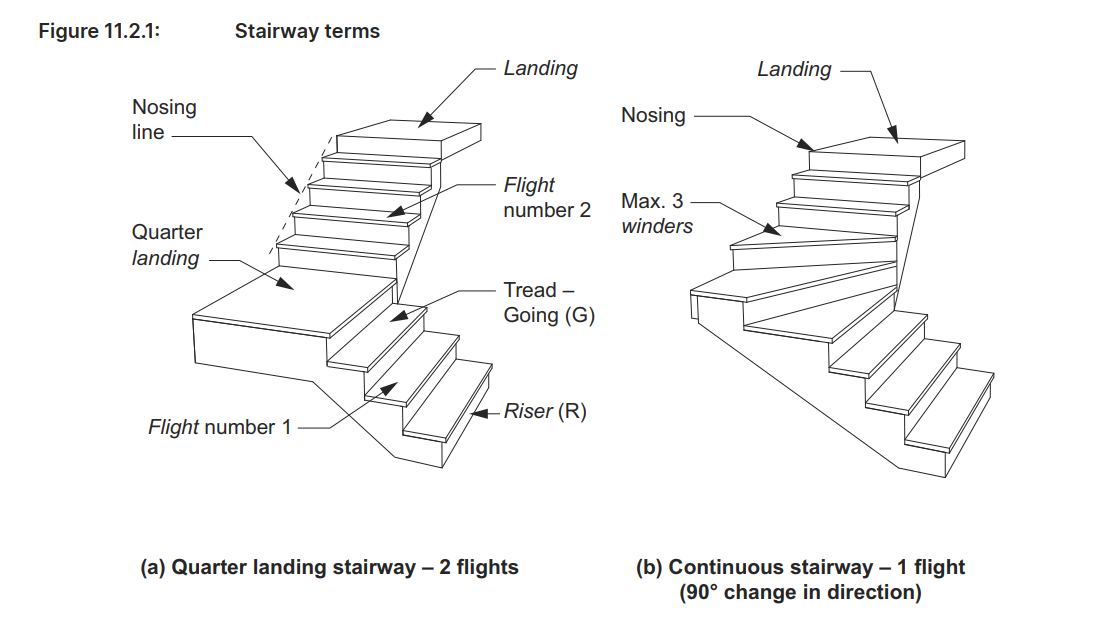
  • Step-by-Step Guide to Commercial Stair Detailing (According to AS1428.1 and ABCB Housing Provisions Standard 2022)

    Step-by-Step Guide to Commercial Stair Detailing (According to AS1428.1 and ABCB Housing Provisions Standard 2022)

    If you would like me to assist with your project, please send an email to koshy@tek1.com.au with your project specifications. Kindly use ‘Raj’ as the subject header.

    Overview
    This guide provides instructions for designing and detailing commercial stairs per the Australian Standards AS1428.1 and ABCB Housing Provisions Standard 2022. These standards ensure safe and accessible stairways in commercial buildings, with specific provisions related to the National Construction Code (NCC) and the Disability (Access to Premises-Buildings) Standards.

    1. General Stair Requirements (Non-Spiral Stairs)

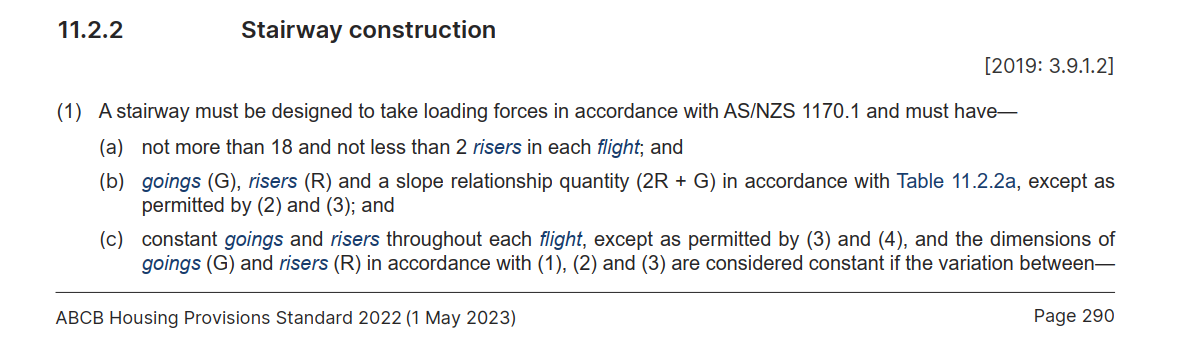
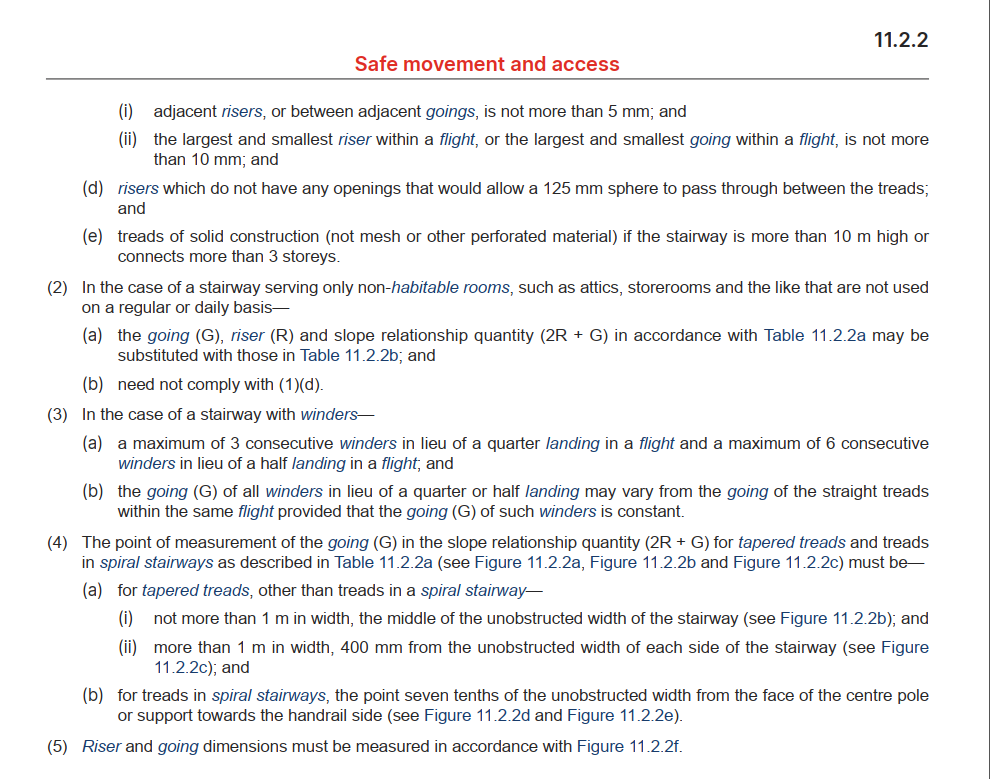
    • Riser Quantity: Each flight should have at least 2 risers but no more than 18 risers.
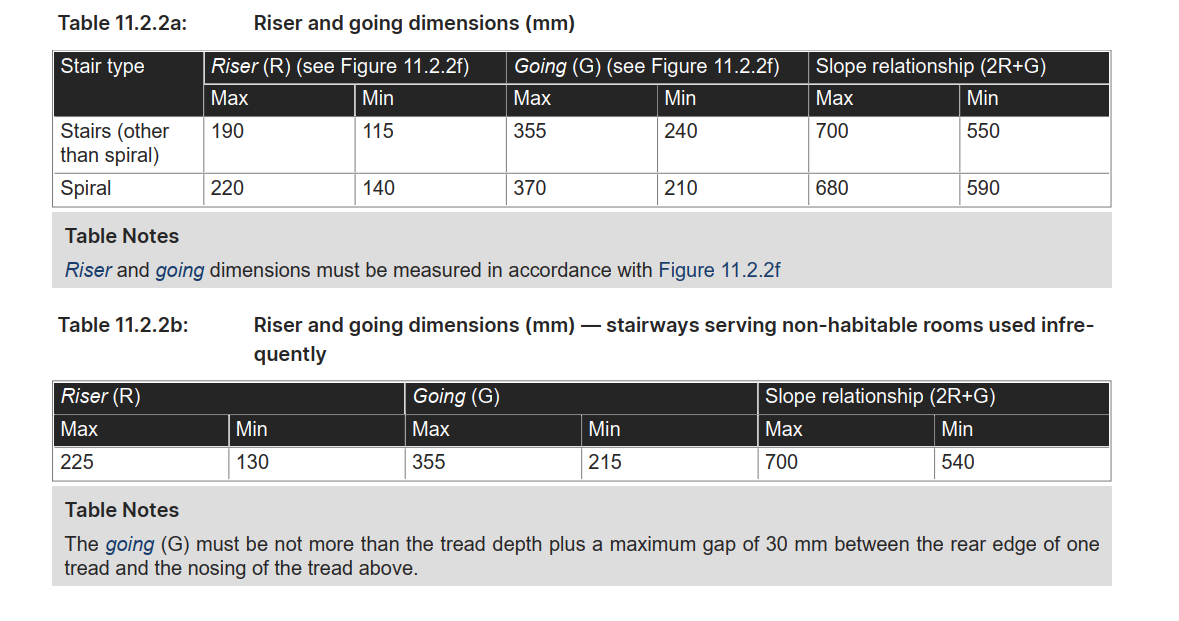
    • Riser Height: Must be between 115mm and 190mm.
    • Going Width (Tread Depth): Must be between 240mm and 355mm.
    • Stair Slope Rule: Follow the formula 2R+G, where:
      • Minimum Slope: 550mm
      • Maximum Slope: 700mm
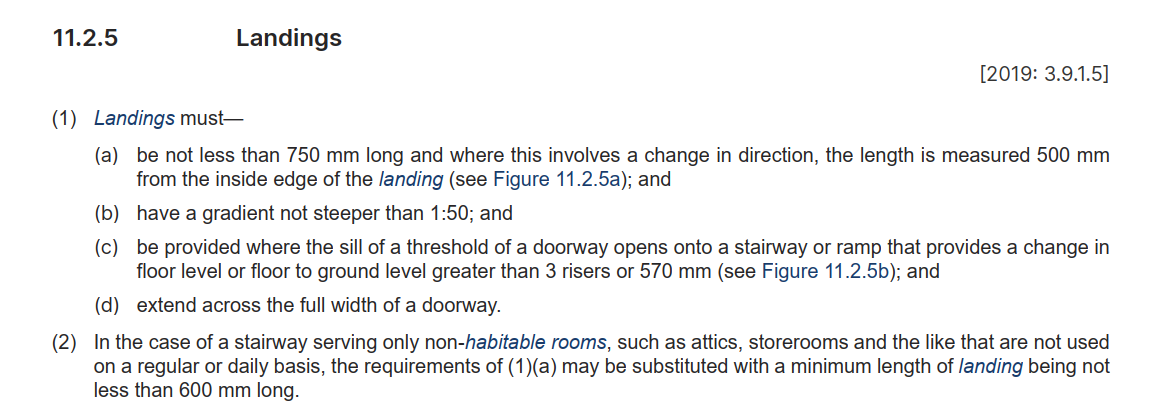
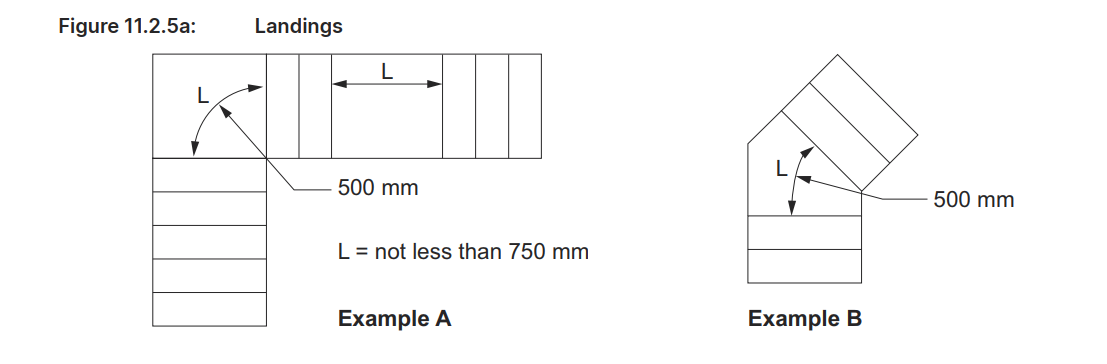
    • Landing Requirement: Landings must be at least 750mm in length. If the landing changes direction, measure at least 500mm from the inside edge of the landing​(abcb-housing-provisions…).

    2. Spiral Stairs Specifics

    • Riser Quantity: Similar to regular stairs, spiral stairs must have at least 2 risers and no more than 18 in each flight.
    • Riser Height: Must be between 140mm and 220mm.
    • Going Width: Must be between 210mm and 370mm.
    • Stair Slope Rule: Use the formula 2R+G with the following limits:

    3. Landings Specifications

    • Minimum Length: Landings must be at least 750mm in length.
    • Directional Change: For landings with a change in direction, measure at least 500mm from the inside edge.
    • Gradient: The landing slope must not exceed 1:50 to ensure levelness while allowing for slight drainage.
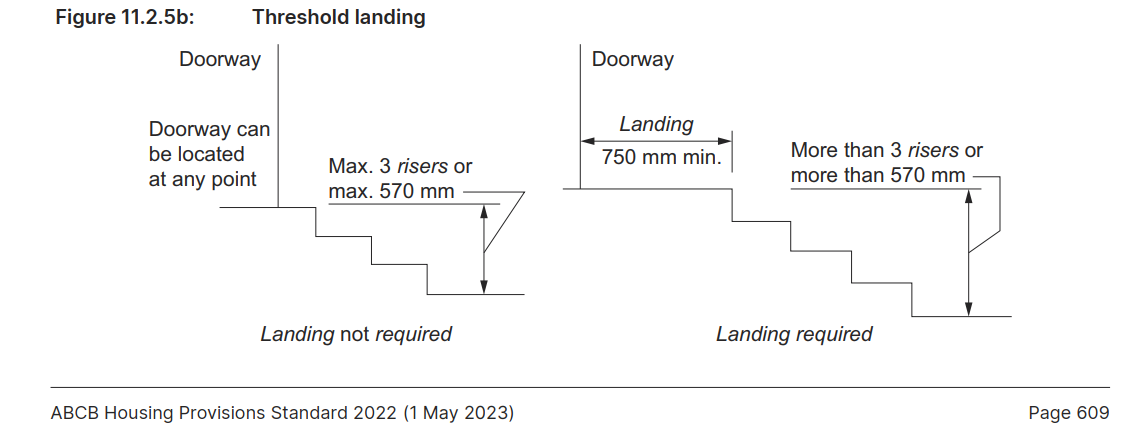
    • Threshold Requirement: A threshold landing is required where there is a floor level change of more than 570mm or three risers​(abcb-housing-provisions…).

    4. Slope and Safety Measures

    • The 2R + G formula is essential for the slope and safety of both standard and spiral stairways, ensuring each stairway is easy to ascend and descend.
    • Open Risers: Risers must not have openings wide enough to allow a 125mm sphere to pass through, minimizing the risk of small children or objects falling through.
    • Tread Solidness: Stairs that are taller than 10m or connect more than three floors must have solid, non-perforated treads for additional safety​(abcb-housing-provisions…).

    5. Consistency in Dimensions

    • Uniformity Across Flights: All risers and goings within each flight should be consistent.
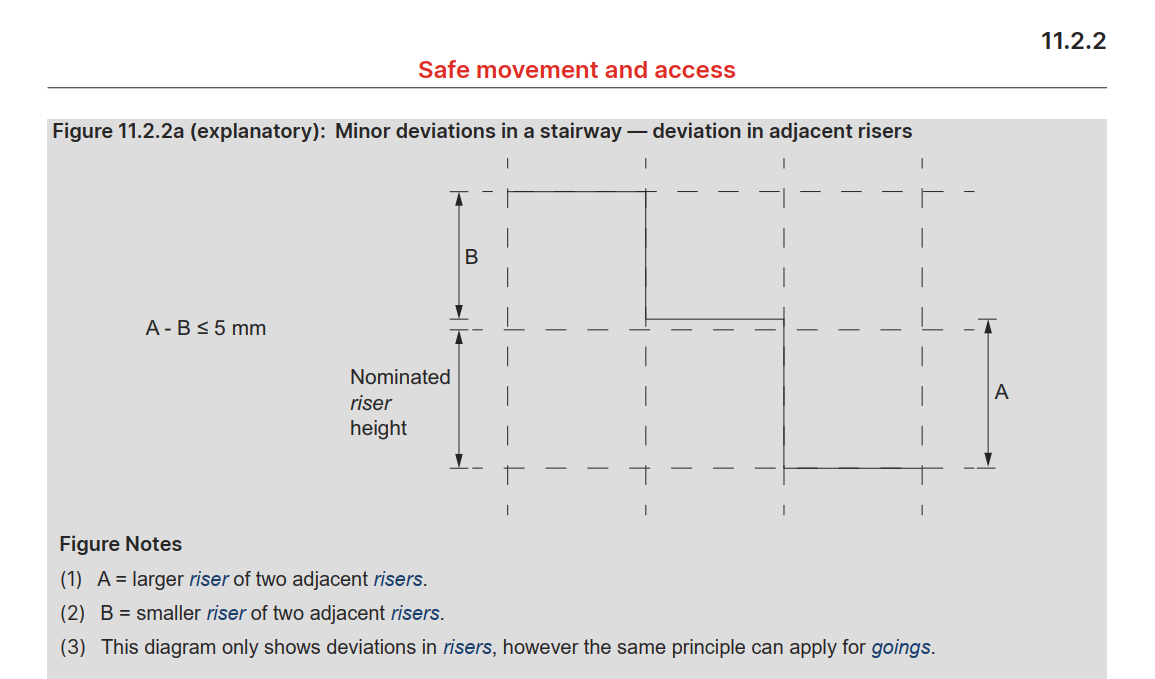
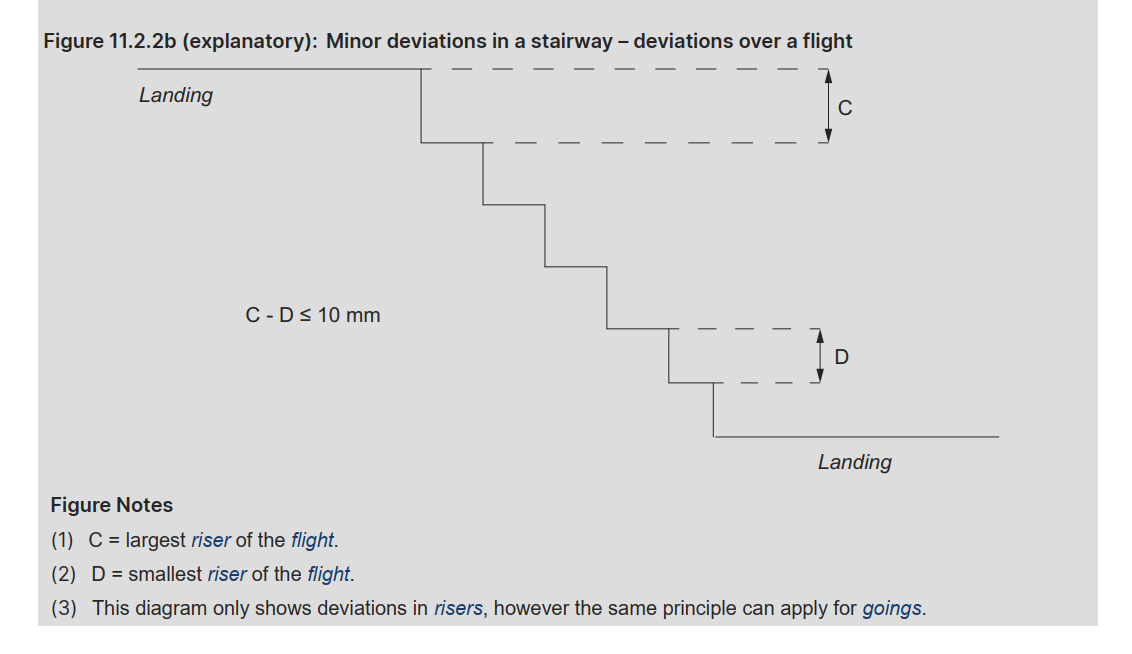
    • Permitted Variations: Adjacent risers and goings may vary up to 5mm, but the difference between the largest and smallest within a flight should not exceed 10mm​(abcb-housing-provisions…).

    6. Slip Resistance Requirements

    • Slip Resistance Testing: All treads, landings, and ramps should meet slip resistance classifications as per AS 4586. This includes:
      • Dry Conditions: Minimum P3 or R10 for treads; P3 for nosing or landing edge strips.
      • Wet Conditions: Minimum P4 or R11 for treads; P4 for nosing or landing edge strips​(abcb-housing-provisions…).

    7. Barriers and Handrails

    • Barrier Height: Barriers should be at least 865mm above the nosing of stair treads, and 1m above landings and other access surfaces.
    • Handrails: Must be placed on at least one side of the stairway, running the full length of each flight and at a height of no less than 865mm.
    • Opening Limitations: No opening in the barrier should allow a 125mm sphere to pass through​(abcb-housing-provisions…).

    By following these steps, builders and architects can ensure that commercial stairs meet the safety and accessibility requirements established in AS1428.1 and the ABCB Housing Provisions Standard 2022.

  • The Power of Coordination: Elevating Project Success with Steel & Precast Alignment

    The Power of Coordination: Elevating Project Success with Steel & Precast Alignment

    🚀 The Power of Coordination: Elevating Project Success with Steel & Precast Alignment 🌟

    In complex construction projects, effective collaboration between steel and precast detailing teams is crucial. Proper coordination ensures smooth project workflows, minimizes delays, and reduces unnecessary costs, ultimately benefiting the client. During our recent team meeting, we explored specific challenges and solutions for optimizing the coordination process.

    Here’s a comprehensive breakdown of the key strategies discussed, along with insights into how we plan to implement them for better efficiency.


    1. Clear Communication on Structural Changes

    • Challenges: Both the steel and precast teams base their work on structural and consultant drawings, but adjustments often arise during the practical implementation. These changes can significantly impact project timelines if they aren’t communicated promptly.
    • Solution: Any modifications in the steel model must be shared with the precast team, allowing them to update their model and drawings accordingly. This is essential to avoid rework and maintain alignment. Our MD emphasized the importance of discussing changes before implementation and ensuring they are approved to minimize unnecessary adjustments.

    2. Model & RFI Exchange Protocols

    • Issue: Delays can occur when teams do not exchange their models and RFI’s efficiently, leading to inconsistencies between steel and precast elements.
    • Solution: To streamline coordination, the precast team should provide the completed model to the steel team, and vice versa. Regular model and RFI’s exchanges help both teams stay in sync and prevent potential clashes in the final stages of detailing.

    3. Setting and Meeting ETA Expectations

    • Importance: The steel team coordinator or the precast team should actively communicate expected completion dates. This mutual accountability is essential to ensure each team is working on schedule.
    • Proposed Workflow: Establishing ETA checkpoints and regular updates will keep both teams informed and accountable, promoting smoother project progression.

    Consequences of Poor Coordination

    When coordination is inadequate, the project risks delays and escalated costs. Here are some potential pitfalls if best practices aren’t followed:

    • Project Delays: Misaligned timelines between steel and precast can cause setbacks, leading to extended project durations.
    • Waste of Resources: Inefficient communication can lead to rework, wasting valuable time and effort.
    • Unplanned Variations: When models are not aligned, variations can arise, leading to costly adjustments for the client.

    Our Key Directives for Improved Coordination

    Highlighted the following directives to improve coordination between steel and precast:

    • Establish Clear Responsibilities:
      It’s essential to specify in the initial RFI who will handle the steel detailing and who will coordinate between the two teams. Clear assignments will create a smoother workflow and enhance accountability.
    • Confirm Internal or External Steel Detailing:
      Knowing whether steel detailing will be done in-house or by an external party ensures everyone is aligned on responsibilities, reducing potential workflow disruptions.
    • Reduce Rework Through Precise Coordination:
      By following these practices, we can eliminate rework and improve project efficiency.

    Future Blog Insights:
    Benefits of In-House Steel and Precast Detailing

    Finally concluding thoughts highlighted the advantages of having both steel and precast detailing by Inhouse. Should the precast team win the job, they can propose in-house steel detailing as well. This approach offers several benefits, which we’ll explore in-depth in our next blog. Stay tuned for more insights on how integrated in-house detailing can drive smoother workflows, lower costs, and ultimately enhance project success.


    Final Thoughts

    Effective coordination between steel and precast teams is foundational to project success. With clear communication protocols, responsibility assignments, and regular model exchanges, we can set a new standard for collaborative project workflows. By continuing to improve these processes, we aim to offer clients timely, cost-effective, and high-quality detailing solutions.
  • Memo 43 – The Process of Invoicing – Check if Invoices have been raised

    What is the problem

    • A cynical view of building and construction around the world: “not paying” is the standard business model of many firms in the indusry.
    • Once you give away your product (for free), there is zero incentive for a client to pay.
    • If a client doesn’t pay does that affect you? Absolutely, it affects you – it might not seem like it – but it affects everything in a business: remuneration, the quality of our infrastructure, training, our ability to take on jobs, our ability to win work.

    What is the process?

    1. We raise an invoice.
    • I typically raise an invoice on IFA.
    • If you don’t mark it as IFA, I will not raise an invoice – unless you tell me.
    • Sometimes we may need to raise an invoice BEFORE you get to IFA. In those instances, please notify me.
    1. I show your client’s bookkeeper your “approval emails” and purchase orders
    2. The bookkeeper will pay.
    • If the book keeper sees no approvals, or no purchase order, they will not pay us.
    1. We get paid.
    2. And then we give away our work.

    Things may vary, depending on the job, but that’s it in a nuthsell.

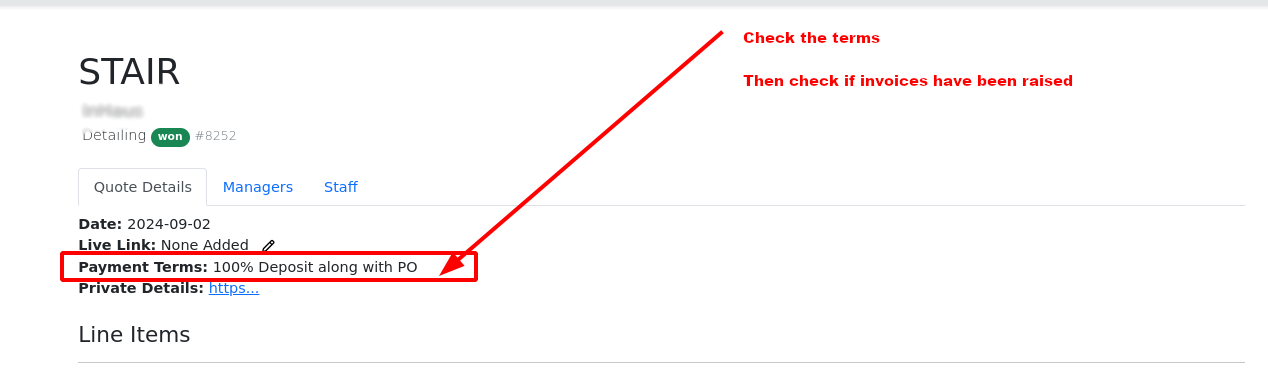
    Check Payment terms before:

    • releasing IFA drawings,
    • before releasing IFC drawings
    • before starting a job.

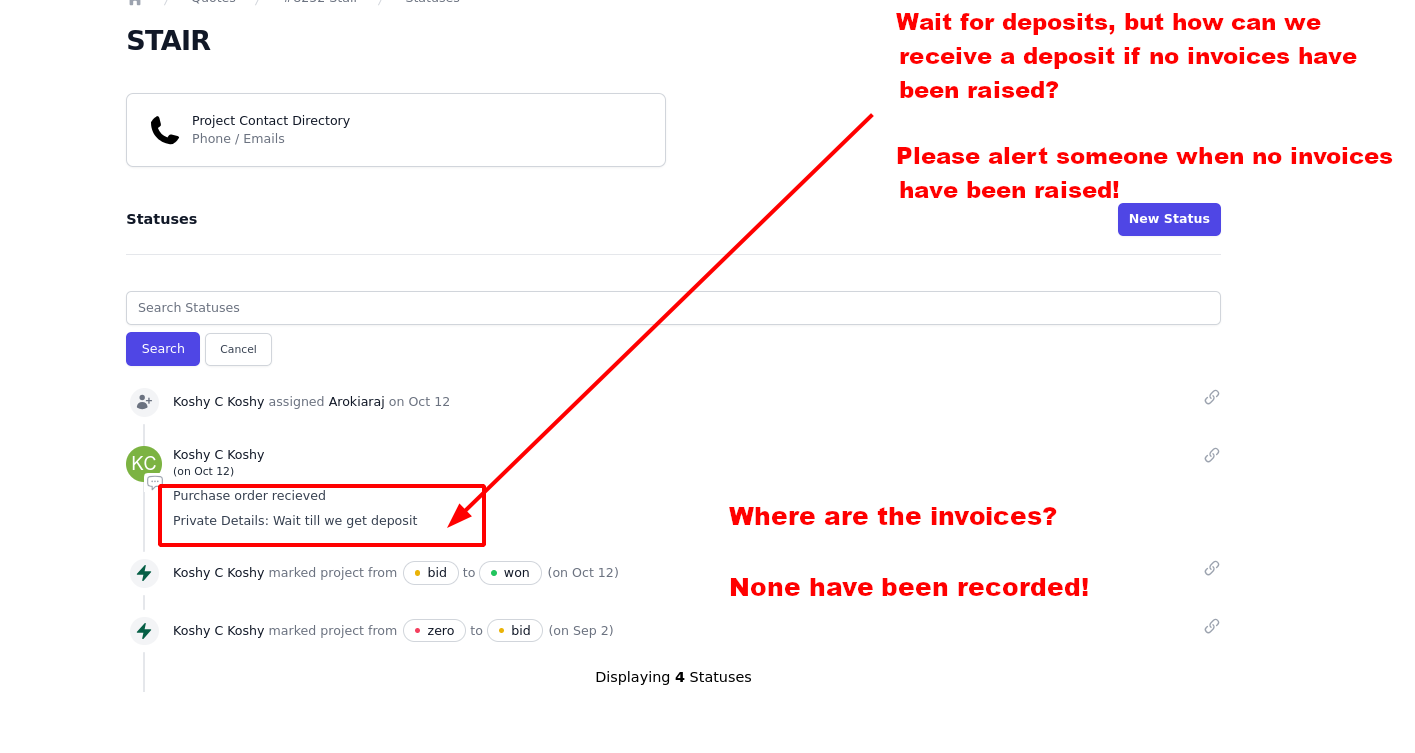
    Alert someone if you see that invoices have not been raised:

    • If you find that we need to raise invoices, and no invoices have been raised: then that is a big problem: how will everyone get paid without an invoice being raised? You will need to immediately alert someone about this. Occassionally things get missed.
    • If you see that we need to collect 100% before IFC is released – then again, check that invoices have been raised, and ensure that the money has been collected BEFORE releasing IFC drawings.

    But the Managing Director said: “we have been paid” therefore I sent the drawings:

    • Sorry but that is not a good enough. Your MD is dealing with 10s of emails / calls etc at the same time, and makes a LOT OF MISTAKES re: invoicing. This has happened many, many, many times. Many times. Q8715 is the latest example of a mistake in invoicing. YOU MUST CHECK that invoices have been raised and sent – which is different from checking whether we have been paid. In other words, how can we be paid, if we haven’t even received an invoice?

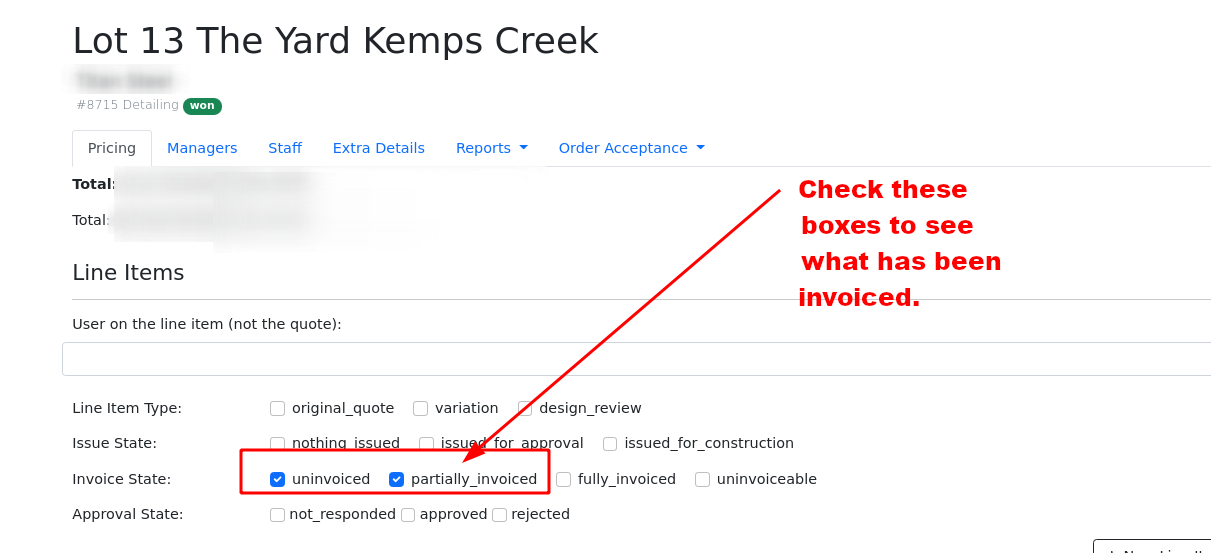
    How do I check?

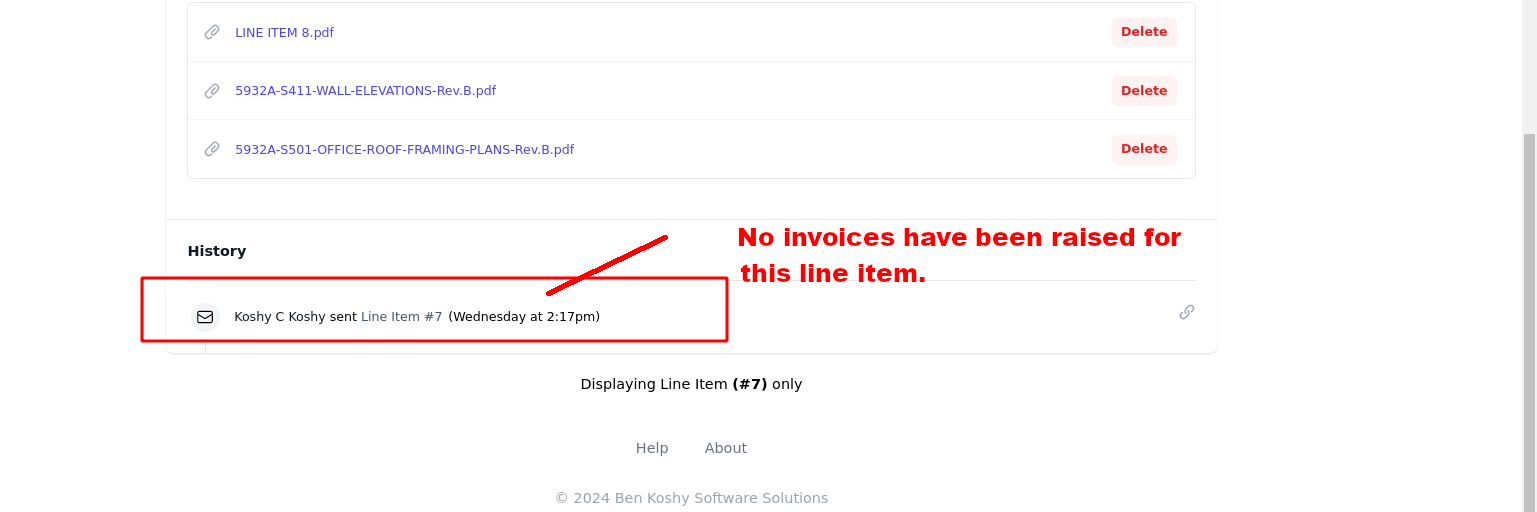
    Check on the line item itself: as you can see, no invoice has been raised for line item 7:

    But two people said two different things:

    • If you have received conflicting instructions, then you need to clarify these things before sending all the drawings. Once the drawings are sent, then it is very, very difficult to collect payment from certain clients.