Today I had a site call about a set out dimension.
Reason for call
Dimension for set out from a Grid line outside the Building.
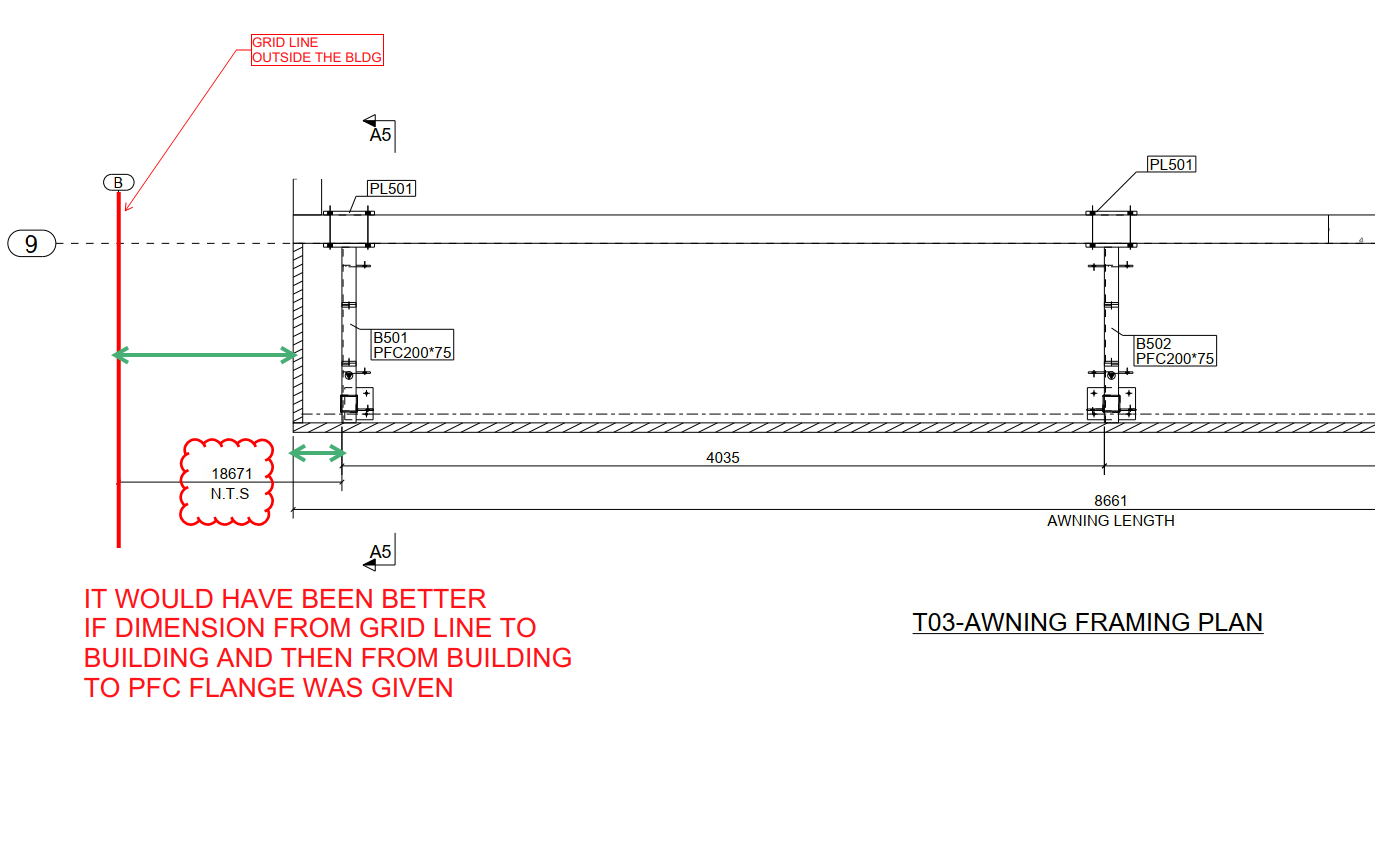
Today I had a site call about a set out dimension.
Reason for call
Dimension for set out from a Grid line outside the Building.
Dimension Bolts
Set up Instructions
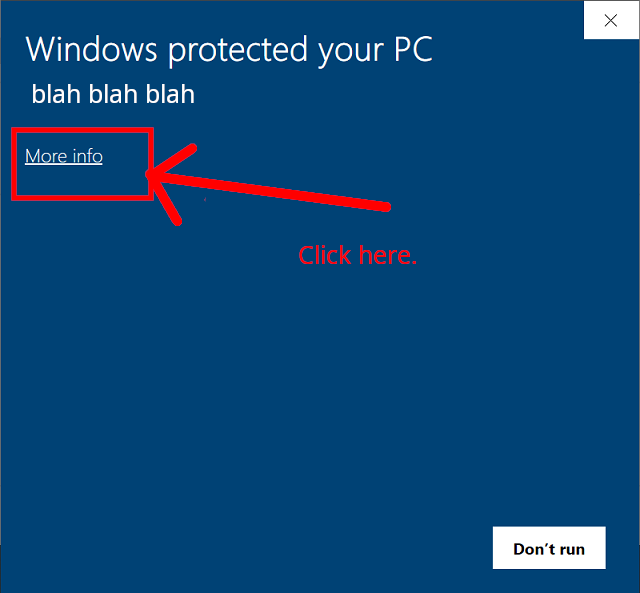
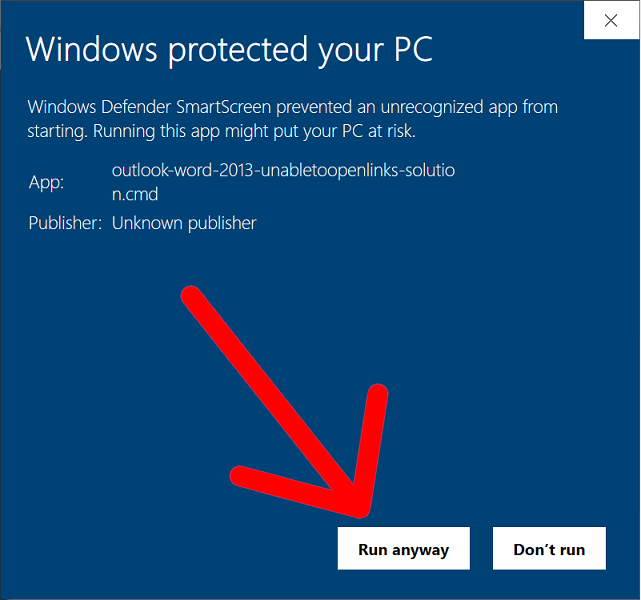
Instructions:
Trouble shooting: it doesn’t work!
Philosophy: make things AS EASY as possible for your clients, do not confuse them.
If someone sends you a link, that you cannot access how would you respond?
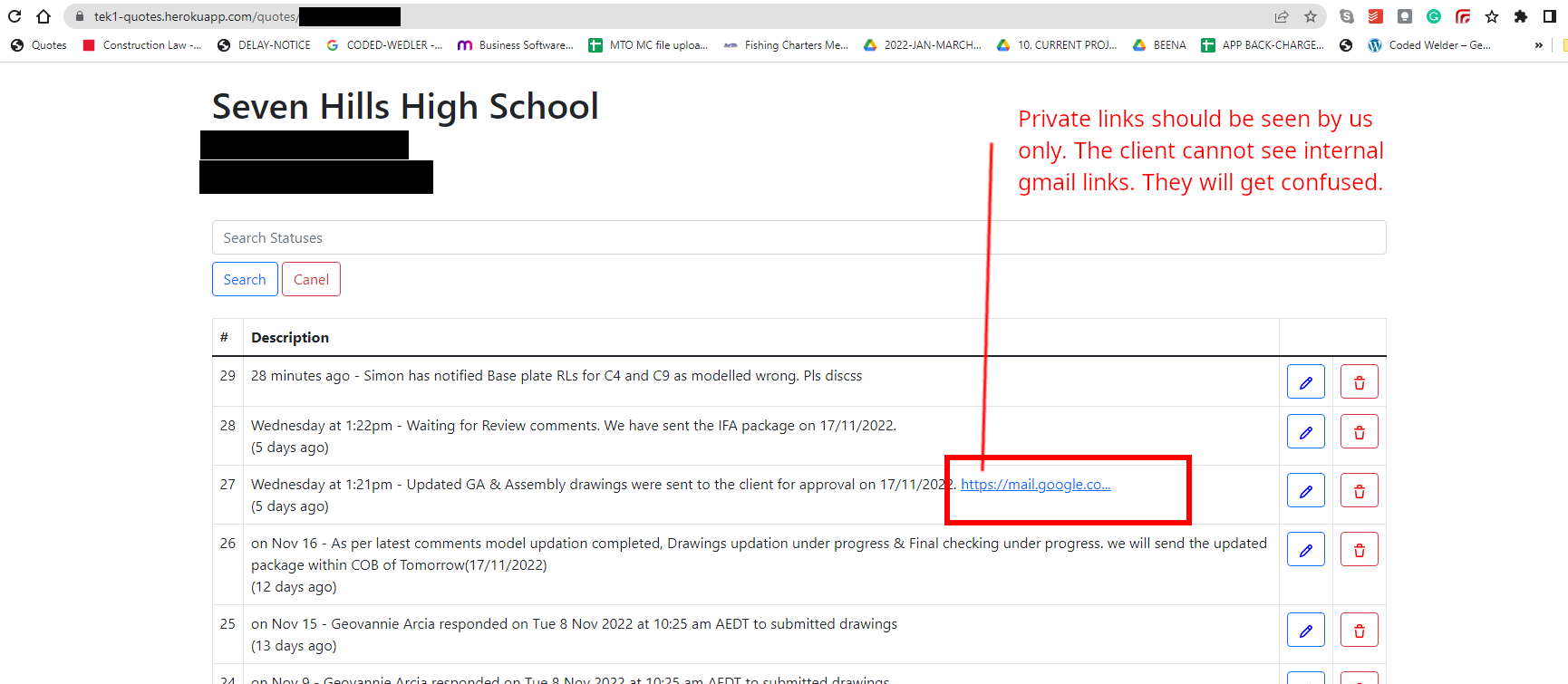
The solution? Add private links and other details in “private details” section.
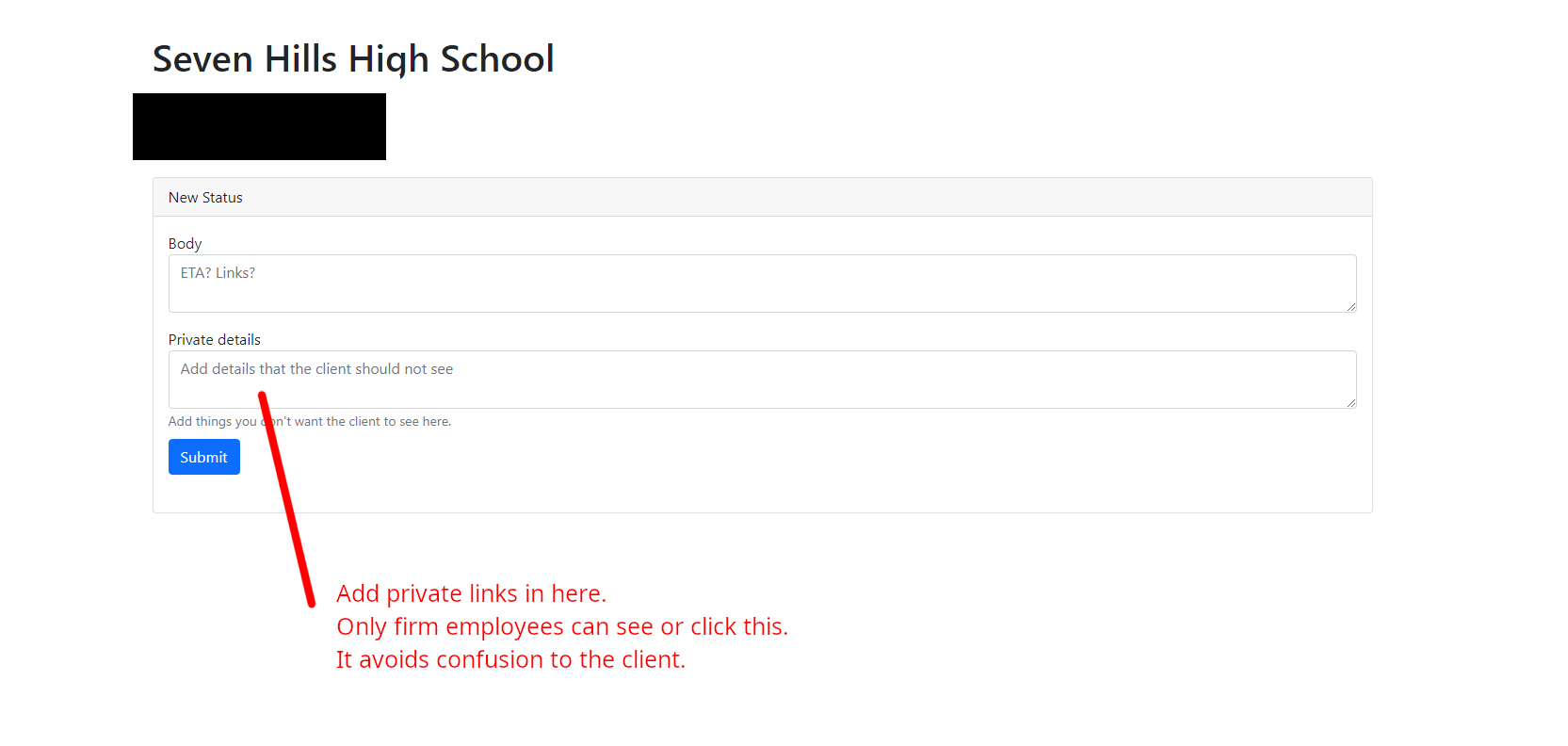
There will be no confusion for the client.
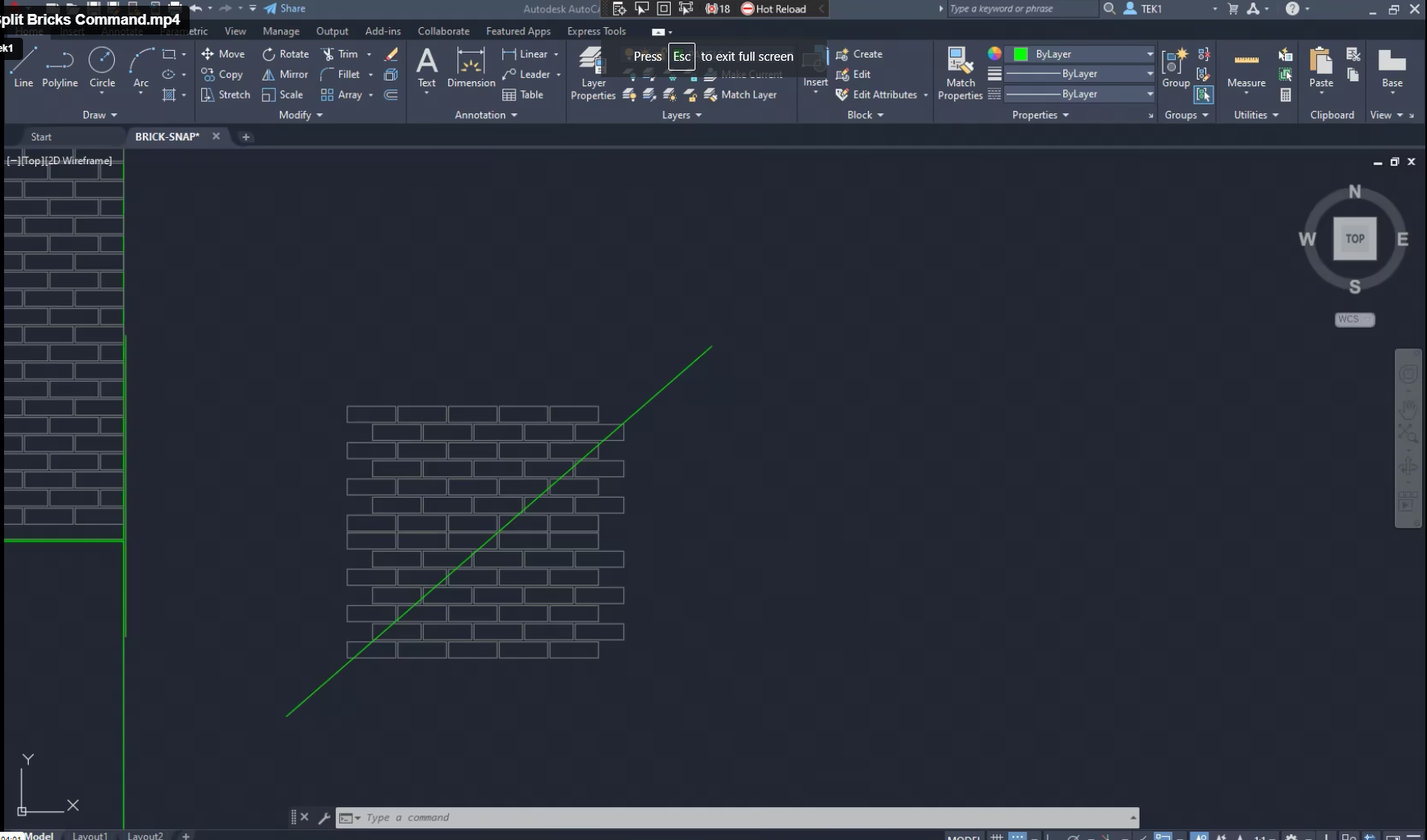
We were having trouble with Precast jobs which involved Brick Snaps. We estimated that it would take +100 hours. Most of the time is pure manual labour – which could be automated, provided you worked out where / how.
We found that splitting bricks along panel lines and curves were taking inordinate amounts of time. A tool was developed and here it is.
Link to access installation files.
(Please note you will need access via Azure and Google in order to get to the installation files).
Revit Tools
Dimension the panel elements quickly:
Dimension the Dowels quickly:
Good luck trying to pirate that software.
The Building industry in Australia is tough. The insolvency rate is over: 20%. Lies, non-paying etc. strikes, cost surges etc. is all de rigger. Builders are stressed. There’s no need to stress them out even more. Variation work is common the industry.
Simply use the forms on our quote app – they are standard template fields which will save you a lotta headaches.
If you need to remind clients about a variation:
DO NOT DO THIS:
No: it is not a variation for both of you: the client will decide the variation. You shouldn’t tell him that. If you do, you will simply annoy the client.
No: do not ever say: “please approve so that we will proceed”. This is akin to threatening the client, and holding up the job. Never, ever do this! It’s the worst way. You will annoy the client and he will walk – this has actually happened (yes there were other factors contributing) but it could be avoided.


WHAT SHOULD I DO?
These are all “no-orientated” questions. They are decided to illicit a “no” – to make it easy and welcoming for the client to object. Use the exact wording above.
Fixed Price Contracting
Be Honest
The Golden Rule: Be very clear and specific about what you are quoting for. e.g. I am only going to work on the following (insert specific details), and everything else is excluded.
Why is this important?
Variations:
Specific Examples of Quoting:
Here are some examples, of how we quote.
Northern Retaining Wall
Detailing structural beams, connections details, according to the following scope:
Drawing 1: Type – T1 250UC90 HDG QTY: 299
Drawing 2: Type – T2-L 250PFC HDG QTY: 1
Drawing 4: Type – T2-R 250PFC HDG QTY: 1
Drawing 5: Type – T7 250PFC HDG QTY: 26
Drawing 6: Type – T8 250PFC HDG QTY: 1
EPH – Station Platform Northern Retaining Wall
Drawing 7: UC 150 x 37.2 post with base plate. QTY: 58
Drawing 8: PFC 200 with Base Plate. QTY: 4
Everything else is explicitly excluded. Changes might incur charges via variations. Fully documentation will be provided.
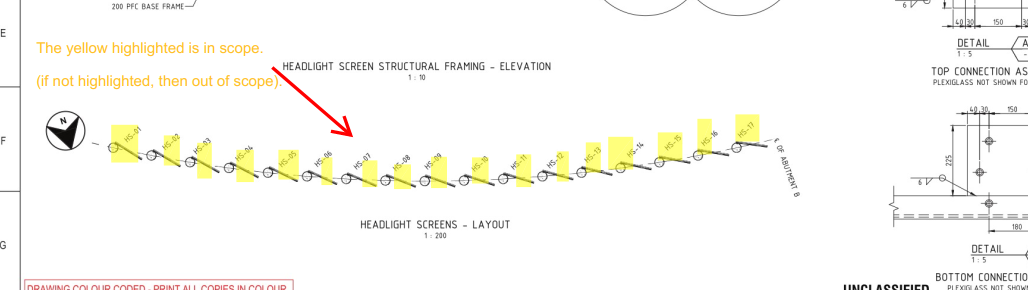
Highlight Items on a Drawing
Here is an example:
At scale, efficient systems of communication and coordination are required in order to efficiently prosecute projects. These systems will likely be of immense value to yourself, and your clients. Consider the following example:
Our critical path sits within the ABCD building, I have run a target date commencing 29/6/22.
Is this possible for the ABCD given the attached review?
What further do you need from us to mitigate any time frames lost?
Can we get ahead on the procurement of the Steel while we look to focus on getting the SD’s to IFC this week with Tek1?
Email received for the ABCD Building.
The critical question: what are the hold-ups for the project?
Likely our client, has no idea, let alone the builder/developer (a large one). Projects are held up in the weeds. The folks at the top of the supply chain need to make resource allocation decisions. Right now, they’re doing so, effectively blind. Or they have to send out emails like this one.
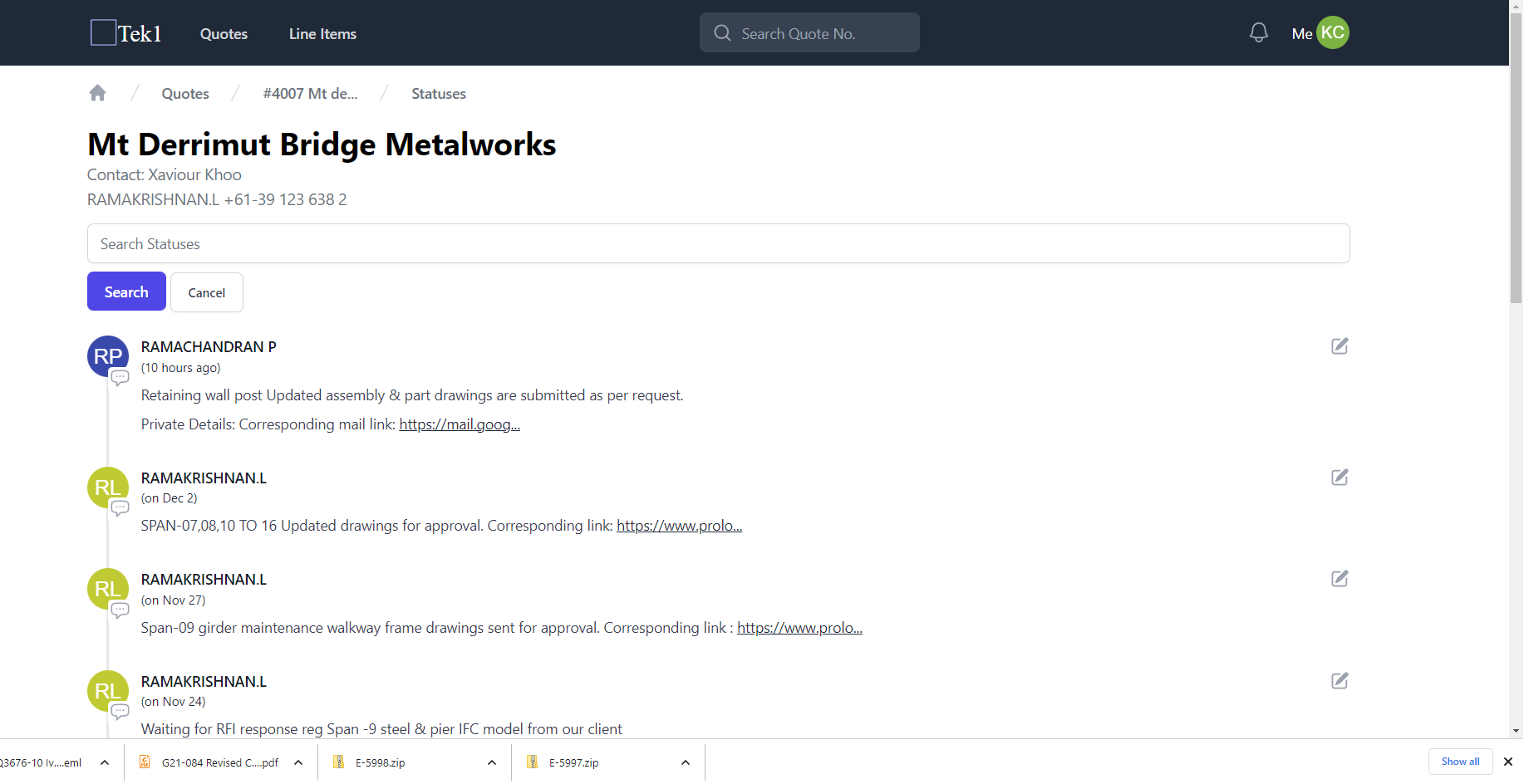
Would anyone remember, what the specific hold up for the project was a few months ago? It’s very hard to remember. And it’s hard to dig it out of the 100s of emails you would have received over that time period. But if you have built up a timeline, it is relatively easy to see what’s happened. All I had to do was to check out our status reports:

As you can see: the project has been in limbo since the 20th of April. It’s self evident. If you didn’t have a timeline, you’d have to bury your head in 100s of emails to retrace your footsteps. We’ve been waiting for this review for three weeks. That’s roughly three weeks ago.
As usual, the reviewers are holding up the show. Except now, given everything is tracked, it’s very hard for them to conceal their inefficacy. Then there were the delays due to: (i) asking RFIs, and (ii) waiting on those answers. (The RFIs are usually asked in the first place, due to the poor quality drawings that are received). The price of inefficient designers (architects / engineers) is monumental. Add poor coordination into the mix, as well as ballooning material / labour costs, and that spells a perfect storm for builders.
Building up a simple status timeline massively improves transparency, improves communication with your client – and all this for very little cost.
Summary: Until further notice, only use the VPN Client when at home. Do not use the VPN Client in the office. Because it is expensive.
VPN To The Office
This is the first project we have completed after an extended training period on the Scottsdale software.
Thanks to Rob, Lance, Derek from Scottsdale
Also thanks to Christy and Nick from Elite Homes.