To open a tekla structure model multiple options are available as:
1. File> Open
2. Keyboard user input Ctrl+O. (Default tekla command)
3.Using the open icon shown as a folder image
How to open a Tekla model
Either of the methods can be used to open a tekla structure model , but before moving to the open dialogue display the existing model has to be “save’ or ‘don’t save’ dialogue will be displayed to confirm the existing model actions (Since only one model can be worked on in tekla). Once the selection is made we can move to the open model dialogue to proceed to the next model.
As always we will try to formulate a simple explanation of what is really going on.
Airport
Imagine you are at an airport and (as always) there is a queue and planes are delayed. See below. What you will immediately notice is that all of the passengers are grouped together promiscuously – standing around in slumps in no particular order. Every body is mixed up with each other.
But, when you get into the plane, everybody is grouped into three distinct orders:
First class
Business class
Third class. These classes are defined today by folks’ ability to pay. Unlike the olden days. Anyways, let’s move on.
That’s basically what group by does. It takes a promiscuous group and separates them into distinct orders – in this case, three distinct groups of people: first, business and third class.
So now you can say:
Get me all the names of all the people in first class.
Get me the names of all the people in the middle class who live in Europe.
And it’s as simple as that! As for the technicalities: please refer to the MSDN documentation – hopefully reading it won’t cause too much discomfort.
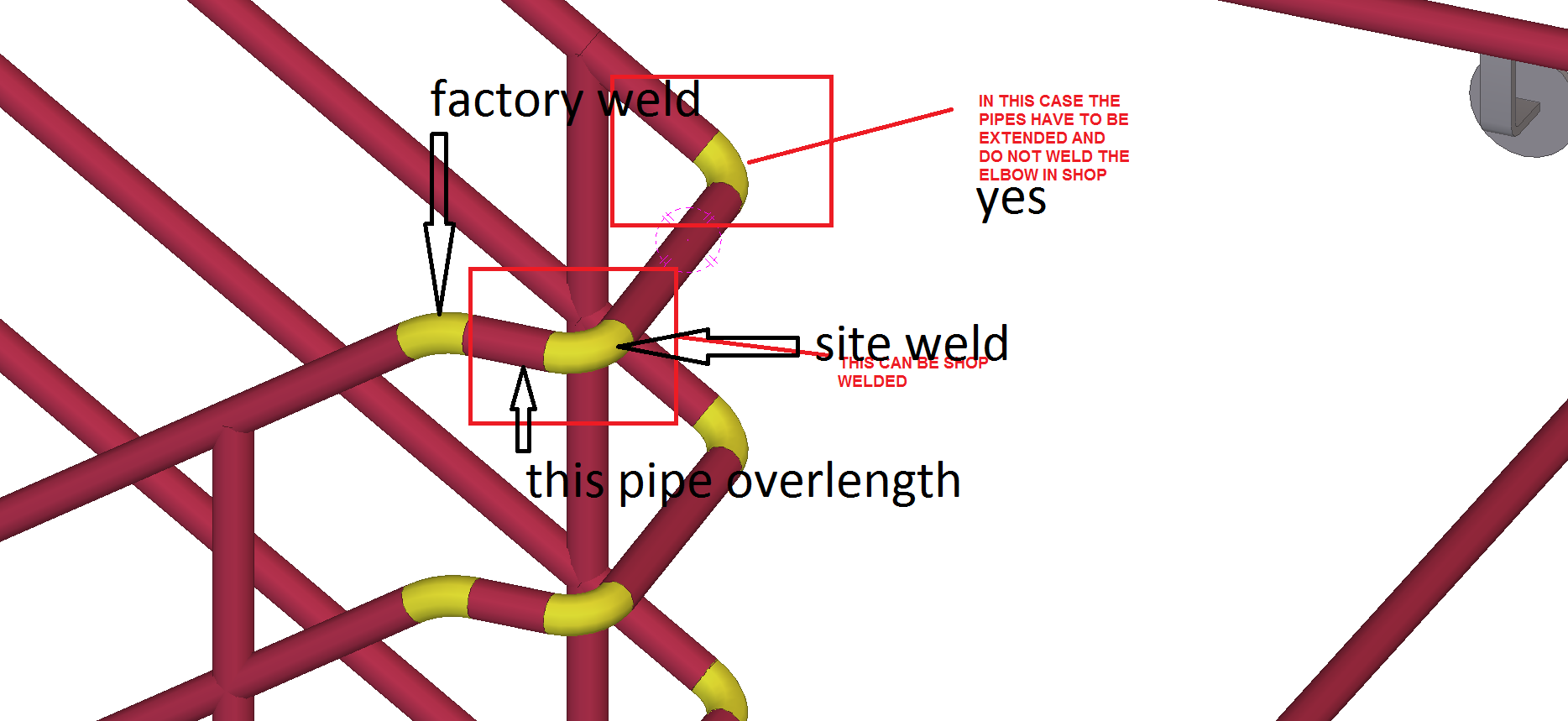
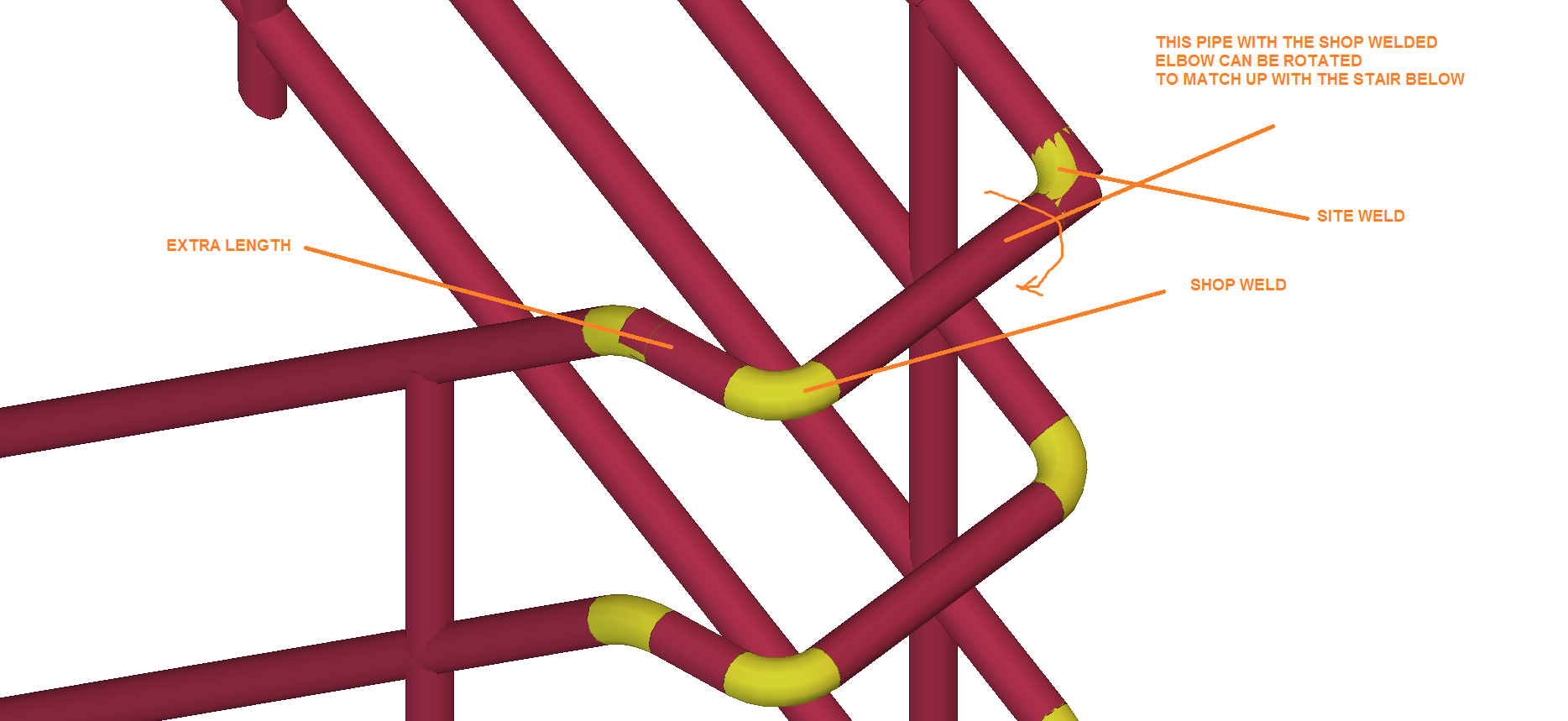
If the pipe is going up then do not weld the elbow to the pipe. Leave extra length on the pipe. Fabricator will cut at site and weld. (Make it slip joint)
If the pipe is horizontal then you can weld at one end.
See images
WELDING ELBOWS TO RAILINGSEXTENDING PIPES TO SUIT AT SITE
If you can build something quicker, than translates into making money quicker. There’s a premium on speed.
Less manpower
Less manpower on site. That means less potential problems to deal with. Which eventually translates into money. Generally speaking, the problems and costs associated with a project are proportional to the number of people involved in it.
Structural Benefits
Bubble deck slabs, because they are filled with air, are significantly lighter. Also you can have wider spans – without as much column support. This is very desirable from an architect’s point of view.
Cost of manufacturing
The BubbleDeckGroup tout it as being cheaper to manufacture. Personally, I’m sceptical of this claim. I think it’s the same, if not more.
Environmentally Friendly?
They also say it’s more environmentally friendly. It probably is relative to other solutions, but I don’t think it’s actually helping the environment. It’s sort of like the marketing on a cigarette packet saying that it’s “healthier” than other cigarettes. It is probably healthier, but cigarettes as a whole, generally speaking are not healthy.
What are the costs?
Everything has to be designed correctly and properly early on. This is not necessarily a bad thing. It forces designers to plan and think things out, before the actual construction. But if the design team does a bad job, you can be sure that the entire project is going to be delayed, and is going to be monumentally expensive.
There’s not much out there in the way of introductions. You’d have to wade through some manuals and it can be tedious. A simple walk through of how to get started. You would do well to record it at 1.5-x2 playback speed.
Ok, so you’ve got a bunch of entities in a collection. You only want to deal with circles. You need to iterate through the collection and consider only the circles. But how will you identify the circles from the other objects.
Casting.
You can cast
Entity en = en as Circle
And then you can test whether entity is null.
If (en == null )
{ // throw new Exception etc. etc. }
Or you can try the equivalent:
If (en is Circle)
{ // Perform operation etc. etc.}
What is the catch with this approach?
The benefits are that it is really quick and dirty.
………most important that you gotta watch out for is that it tests for Circles and subsequent sub classes of circles. You may not want that so watch out!
GetType
I’ve also seen folks on the forums use the Gettype to check for the type of the entity. It goes something like this:
en.GetType() == typeOf(Circle)
The Catch with this approach
It’s painful to read.
Two computations involved, just like the first approach. I can’t see the performance being too much better or worse.
Another approach is to use Dxf codes to check for the name. But this is overcomplicated. I don’t see many people using it on the forums and you need the object ID of the relevant entity and all the overhead associated with it.
In my opinion, keep it simple. Casting, after all things considered, is probably the best option, but you have to watch out – all subclasses will return true. So you need to use the most granular class you can if that is at all important.
It is very common that you will need to create selection filters for different types of blocks. Why repeat yourself?
There is a very simple utility that I wrote that is amazingly handy for solving this very issue. Best part is that it accepts wildcards, so you can search for block references which, for example, start with Fire by passing in “FIRE*” as the argument:
public static SelectionFilter GetSSFilterBlockReferenceByName(string name)
{
TypedValue[] filterlist = new TypedValue[2];
filterlist[0] = new TypedValue(0, “INSERT”);
filterlist[1] = new TypedValue(2, name);
SelectionFilter filter = new SelectionFilter(filterlist);
return filter;
}
When dealing with selection sets we can obtain the object ids of the objects contained within. The method though, returns an array.
But what if we want an ObjectIDCollection?
We can simply pass the ObjectID[] array into the ObjectIDCollection constructor.
Simple. The last thing you want to do is iterate through the array and add it to a collection individually. A simple yet handy hint which can save you a lot of effort.