Author: admin

  • The Signficance of the “Mould” Face in Precast Panel Detailing

    The Mould Face

    This post attempts to explain the following two questions, for those starting to learn the precast trade:

    • A lot of fancy words are thrown around. Near face. Far face. And mould face. What does it all mean?
    • How should shop drawings be marked vis-a-vis the mould face, and why should they be marked as such?

    What is a precast panel?

    These my friends are precast panels:
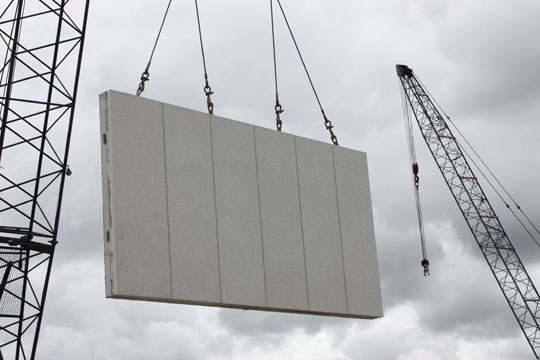
     

    What panels look like.


    • You can build things quickly and cheaply, if you build with precast panels. Your other option is to fabricate on site. The problem with this is that it: (i) is more expensive, and (ii) the construction is a lot slower.

    What is the mould face?

    • First you have to understand how the panels are “fabricated” (i.e. how they are made). Concrete is poured into a mould, on a table. It looks something like this:
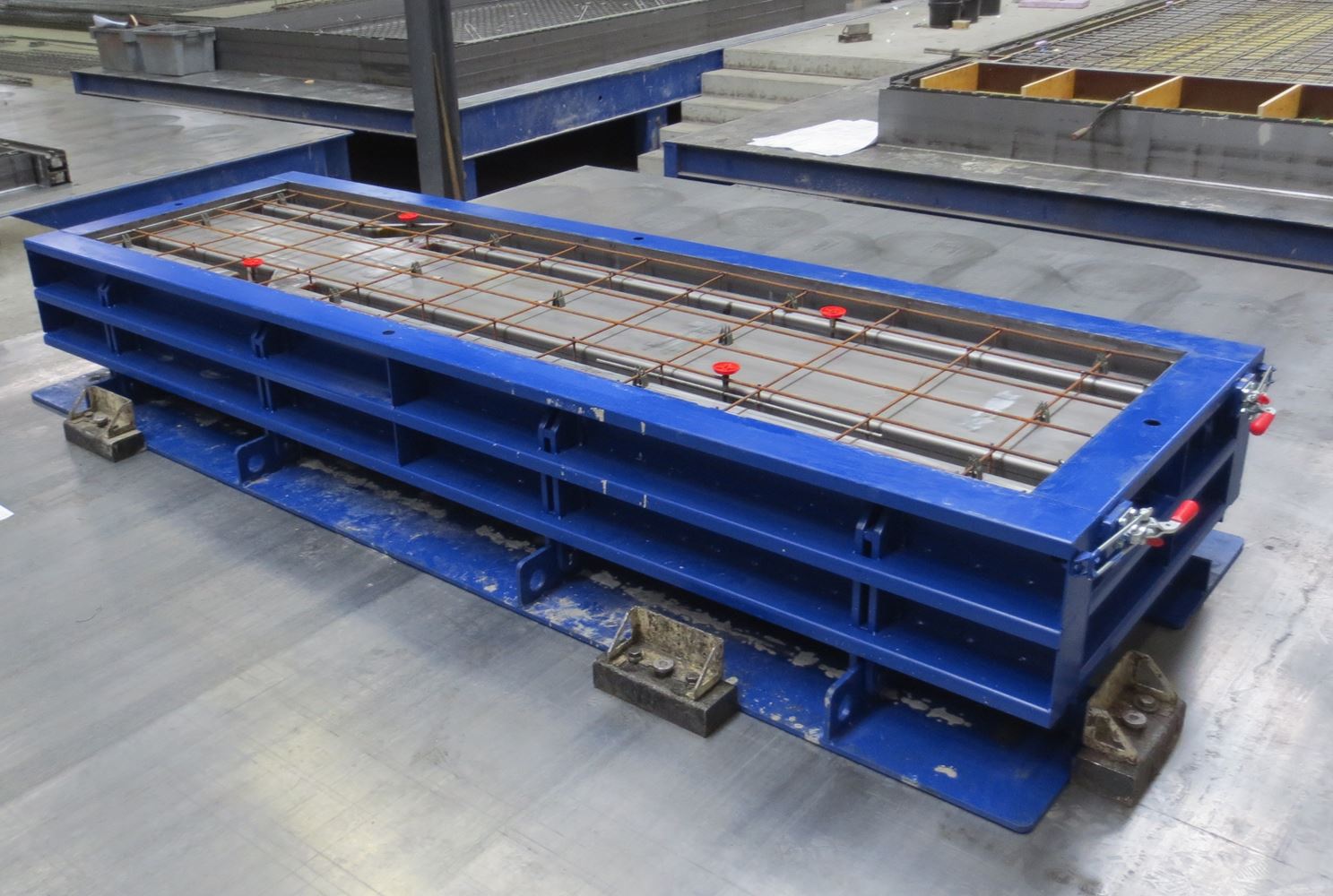
     

    Showing a panel on a table, in its mould.

    So then what is the near face / far face / mould face?

    • The near face is the side of the panel which is exposed to the air. This is the face of the panel which you can see.
    • The far face (or mould face), is the face of the panel which is lying on the table.

    What is the significance of the mould face?

    • The mould face has a smooth finish (or should have one).
    • You do not want a building which has the ugly face of a panel exposed for everyone to see. The architect will be baying for your blood, and moreover it is a very costly remedy. Some precasters, in order to avoid this problem, “trowel” the near face (i.e. the face which is exposed to the air). “Trowelling” is when you smooth the surface of the panel with a tool so that it looks nice.

    When you draw a panel, you want to indicate on your drawings that the mould face is on the building exterior.

    • Why? So that the smooth side is seen by people and the ugly side is hidden from view.
    • “But won’t people on the inside of the building also see the ugly side of the panel?” you ask. Not necessarily. Most of the time, the panel is not visible on the inside of the building because the architect will put up plaster or there will be something hiding the panel from view.

    Standard Shop Drawing Practices

    • People draw elevations assuming they are looking at the near face first, rather than the far face.


    This diagram should certainly clear things up for you:
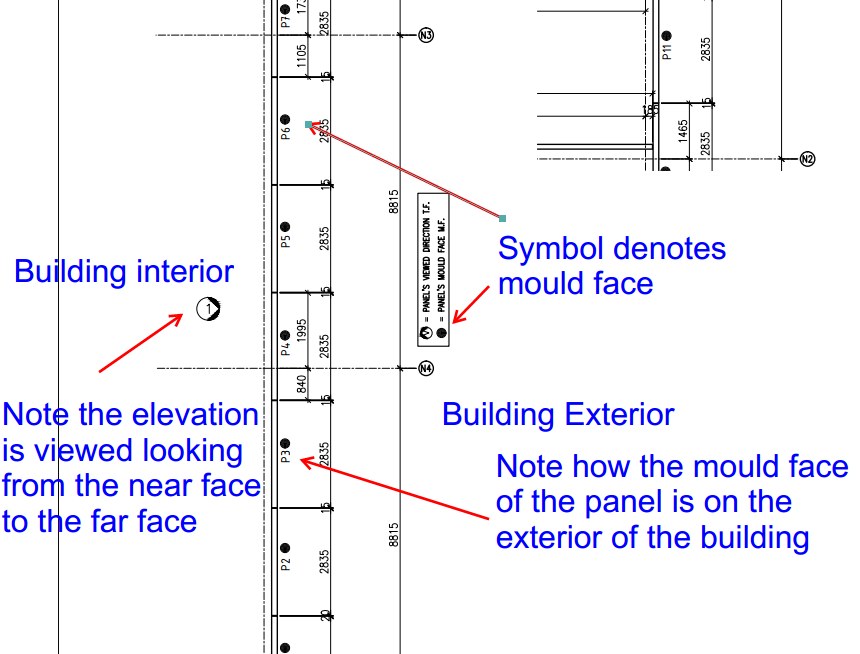


    Shows the near face and far faces on the marking plan – also notes where the exterior of the building is.


    I hope you learned something. Any questions, please ask.
  • Writing Clear Tests

    A very rudimentary but fundamental tip: When you are testing something, it is absolutely paramount that you have a crystal clear idea in your mind of exactly what you are testing.

    If you want to ensure that there are 4 tyres on your car, before you start out from your garage, you must check for exactly that:

    • are there four tyres on my car?

    If you test for something else:

    • are there tyres on my car?

    Then you may win some of the time, but other times you will get confusing and conflicting results.  What if somebody adds 3 tyres, but omits one tyre? Obviously this car will have a lot of problems going forward (pun intended), and you will wonder why all of a sudden your tests are all passing but the car is failing?

    What is going on? And it will not be immediately obvious what is going on. Because the mind can deceive, and while the eyes see, they may yet be blind. You’ll be spending a loooooooooooot of time trying to debug that one little glitch. Save yourself the headache, especially if you’re looking at the code 6 months later.


    So it is a very simple, but very powerful tip:

    • be very specific and clear in your mind as to exactly what you are testing for.
  • Transportation Issues to be aware of when detailing precast panels

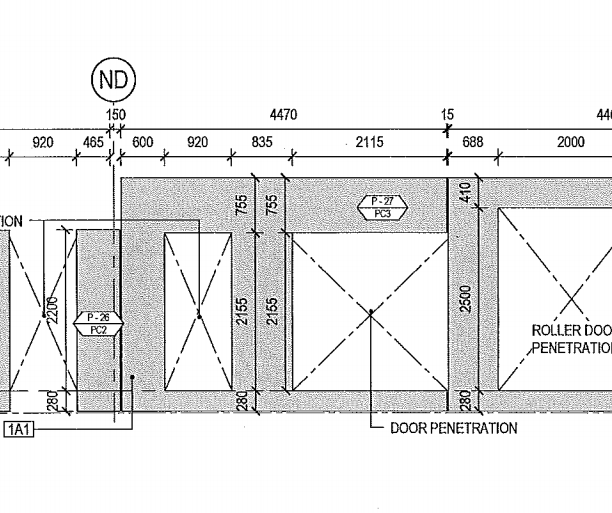
    This is a first in a series of articles I will be writing about the process of precast detailing. Suppose you get a drawing like the one below.

    Any problems you notice here?
    Any problems you notice here?

    Question: Is there anything that strikes you? That might be a potential concern?

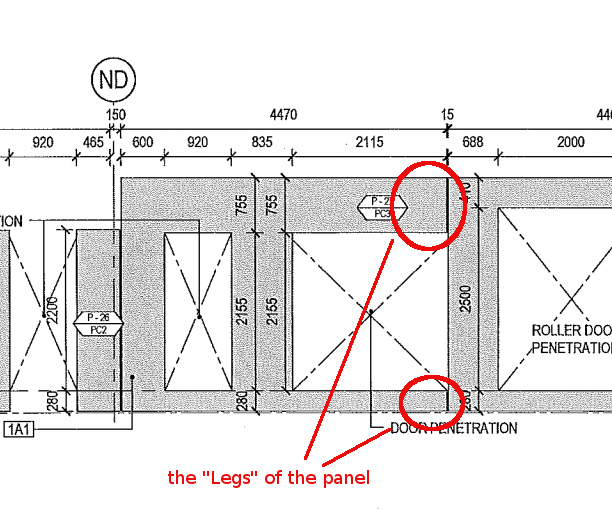
    • Take a look at Panel P – 27. And note that it kinda looks like an arch flipped on it’s side. So what’s the problem with that, you ask?
    • There is a potential issue: the panel might break. Why? Because the right hand side of the panel has no real support. If you try and put the lifters on the left hand side of the panel, when you’re trying to lift it off the table, the “legs” of this panel could break, given the size of the panel notwithstanding its reinforcing.
    • If you put the lifters on top of the panel, then the breakage issue remains – even if you do manage to successfully lift the panel without it breaking, what about lowering it into position?
    Legs of a panel. They can break off easily.

    What then is the solution?

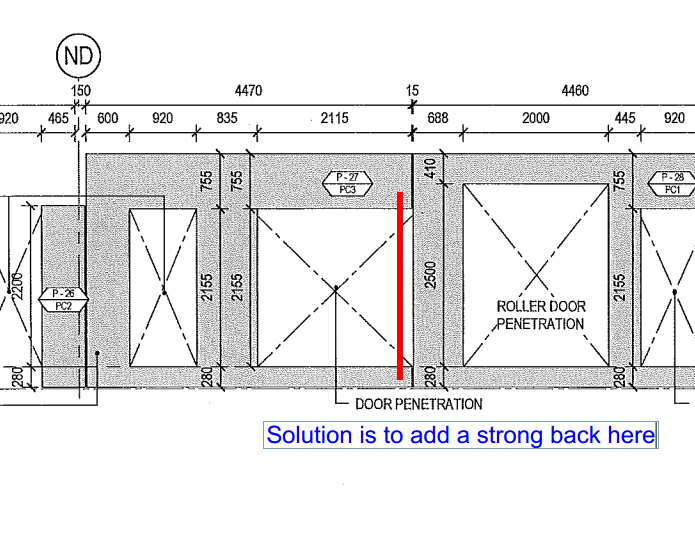
    • Simply use a strongback. If you don’t know what a strong back is, it is simply a beam which can be used to add support to the legs. This will give the right hand side of the panel some support and sturdiness so that it will minimise the chance of breakage.
    A strong back is needed
    A strong back is needed

    Hope you learned something!

  • What is a North Elevation? East and West? Elevations Explained

    What is a North Elevation (when outside a Building)? 

    Explanation with Words:

    • Imagine you are standing north of a building, outside the building, but facing the building in a Southerly direction.
    • What direction are you facing? You are facing south.
    • The view of the building that you are seeing is called the “north elevation”. It is basically what you see while looking South, when you are standing North of a particular building. A little tricky hey? It’s simple enough, but it’s extremely important that you get this distinction right. Here is a plan drawing.

    Pop Quiz:

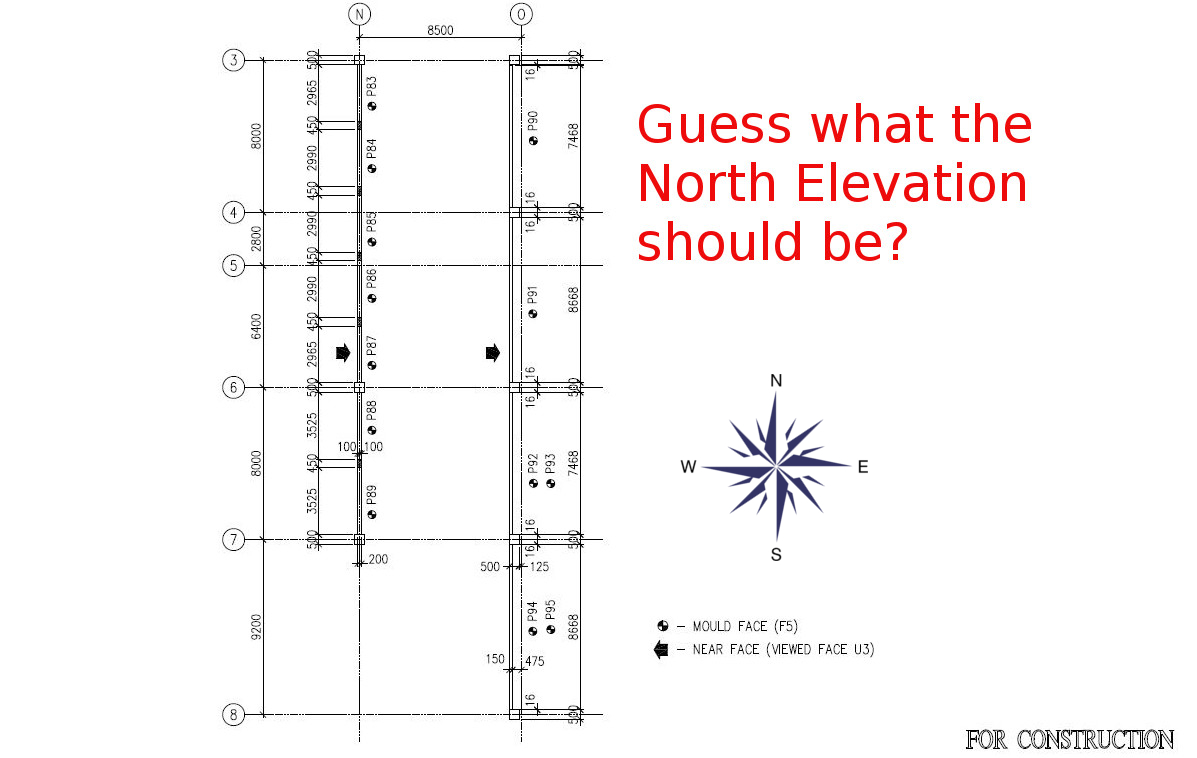
    What is the north Elevation in the drawing below?

    Guess the North Elevation.
    This is a plan drawing. Guess which is the north elevation?

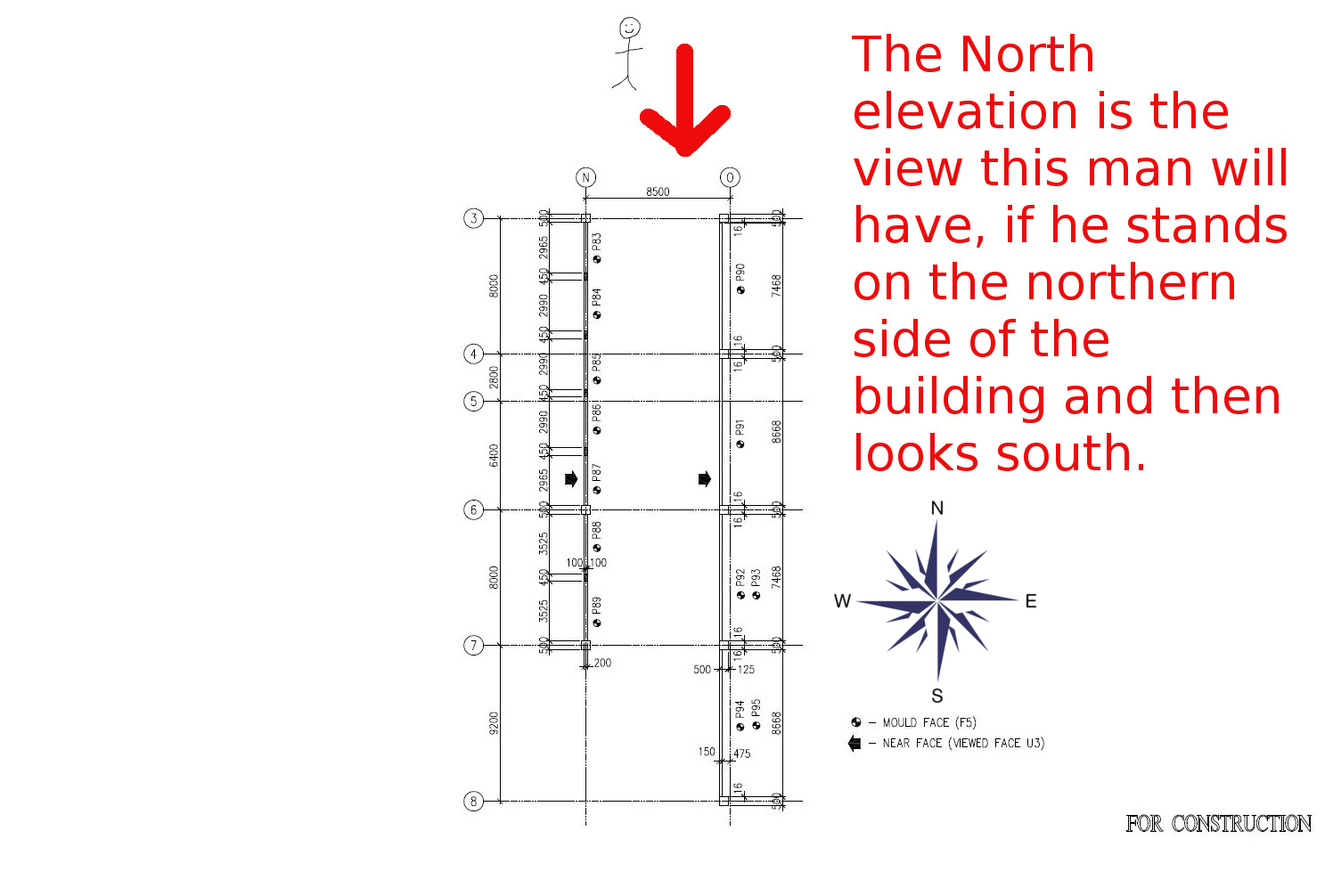
    Here is the answer:

    Diagrammatic Explanation of What a North Elevation (outside a building) is:

    From the North, looking south
    Showing what the north elevation actually is.

    What are East, West and South Elevations?

    Well, you’d basically have to face the opposite of the respective directions, and look at the building from there. For an East elevation, see the building while looking in a Westerly direction. For a West elevation, look at the building while facing East. All of this applies when outside the building.

    Hope that’s clear/helps. Any questions? Just post a comment.

  • Precast Blog

  • Autocad Plug-in: Creating Order Forms Automatically

    Normally creating order forms are a nightmare.

    How does everyone else create order forms?

    I have no idea how people do it. They would have to manually count/iterate through every single block which exists in the model space and simultaneously note down the parts’ associated panel number(s). They could do it on their PC, or they could do it on paper. And the worst part is, is that it would distract them from doing some real work. (Or work that they would rather be doing).

    Trust me – I’ve been doing monkey work like this since I was a kid. Counting panels, counting beams, counting parts: it really is a crime against humanity. Not only is it painfully tedious, it’s error prone: it’s like trying to count the stars in the sky: it is very easy to lose count, to lose your place, or to make mistakes.

    Automatic Order Forms Demo – The power of the Autocad API customisation

    The power of the Autocad .Net API breaks the back of it for you. I begged the head boss to let me release this to the public, just to give you an idea of the cool things that the API can do. I now present to you automated order forms: no more counting. No more errors. All done in less than 5 minutes (as opposed to five hours).

  • WPF Tunnelling – Explanation by analogy

    Tunnelling – What is it?

    And no, I’m not referring to how El Chapo escaped.


    Refresher: what is bubbling?

    In the last post we talked about “bubbling”.

    It’s kinda like those instances where you get a parking fine. If you don’t deal with it then, you’ll get another fine. If you don’t deal with it there, you will get a notice from the county court. Still not paying? Soon the police will come knocking – and like with all things – especially lies and drugs, things keep progressing to ever increasing heights of danger and pain and turmoil. Pretty soon you could end up going to jail simply because you didn’t pay a parking fine. But if you dealt with it properly at the time – well there would be no need to spend 2 years in prison for it. (Do you think I am kidding? Guess again. Why oh why wasn’t the “event” dealt with early before it bubbled up to become more serious? An excellent question. I suppose you would have to ask what was going through the mind of the judge.


    Tunneling is the exact oppose of bubbling

    Nebuchadnezzar was once the top dog in all the land. Nobody could so much as breath without obtaining his express written consent. All life, energy and glory started with him. But suppose something happens, suppose someone in the privacy of his own room refused to bow down to the great emperor. What did he do? He issues an event to find the culprit.

    He has an extensive network of spies. And word travels pretty quickly so this is how they would have found the guilty culprit:

    1. The King asks his Prime minister who did it.
    2. The prime ministers ask State delegates.
    3. The state delegates ask the county delegates
    4. The county people ask local area managers.
    5. The local area managers ask every Tom, Dick and Harry on the street.
    6. And the people on the street finally identify Daniel as the guy who refuses to bow down.

    In other words, an event begins at the top and works its way down the hierarchy to the control element responsible for triggering the event.


    Now that was simple, wasn’t it?

  • What is a routed event?

    What is a routed event?

    This is the answer that is typical on Stack Overflow sites and other such forums:

    A routed event is a type of event that can invoke handlers on multiple listeners in an element tree, rather than just on the object that raised the event.

    It seems – with all due respect to those coders – are not applying the old programming adage:

    Always write explanations as if the guy who ends up reading it is a violent psychopath who knows where you live.

    Now such MSDN techno-speak just hurts everyones’ heads. Why can’t they just speak plain English? I’m no expert, but here it is explained simply so that you can understand:

    Explanation By Analogy: What is a routed event?

    Our judicial system employs routed events. Suppose that somebody commits a crime. This is an “event”. This event can be handled in any one of the following courts, (from the lowest court to the highest court in the land, respectively):

    1. Lower/Magistrate court
    2. County/Distruct Courts
    3. Supreme Court
    4. State/Territory Court
    5. The High Court
    6. The Privy Council
    7. and above that: The Supreme Court of the Galactic Republic

    Now, as is the case, all courts have jurisdiction over the matter. A petty theft can be tried in the High Court – if you wanted to. The High court has jurisdiction, but is that what you really want? Most cases start off in the Lower courts, and then, if required, the matter is passed onto a higher court. And if so required, that court passes on the matter to a still higher court. It can go all the way to the top.

    Or on the other hand, if you so decide: the theft can be handled at the lower court, and the matter can end there.

    Routed events work the same way. If an event happens in the lower court, you, the programmer, can so choose to have the event “bubble up” and be handled by a higher court. The matter can go as high up as you wish and can be taken care of there.

    Now that, in effect, is how routed events work. Something which starts in the Lower Court can be passed on and can be “handled” and heard in the Privy Council. And that’s it! So simple? Yet everyone tries to make it so complicated!

  • What is an event?

    Assumed knowledge:

    • Assume you know what a method is.


    What is an event?

    Let’s keep it simple. An event is anything which “happens”. “Oh great! That helps a lot :’(  ,“ I hear you say. Examples are in order:

    • The President comes to town. He could come at anytime. You don’t know when he could come. So when he comes, it’s an event.
    • Somebody wins the lottery.
    • A house catches fire.
    • Somebody clicks a button.

    All of these are events.

    What happens next?

    • Subscribers explained

    What happens when an event happens? Anything you want!

    Just say a house catches on fire. We will call this event “HouseFireEvent”. When this event is raised (i.e. when it happens), the following occur:

    • People start screaming “OMMAGOD OMMAGAD!” (let’s call this the scream method)
    • They call the fire department. (let’s call this the call-fire-department method)
    • A fireman puts the fire out. (let’s call this the extinguish method).

    In other words, the above methods are “called” when the house-fire event is raised. The house-fire event in fact maintains a list of methods which occur or are run when an event is raised. These methods are called subscribers. How can an event maintain a list of methods you ask? Good question. Usually there is a big book the fire warden in the floor of your department has tucked away in the back drawer of his desk. This book details all the protocols which must be followed when there is a fire. i.e. examples include: (i) staying calm, (ii) taking any valuables you have with you but no more, (iii) evacuating the building in an orderly and calm manner. These instructions, or “methods” are also known as “event handlers” because they are procedures which are called when a particular event occurs.

    So in the above example, the event handlers would be: (i) Scream method, (ii) call-fire-department method and lastly (iii) the extinguish method.


    ………that’s it – it’s as simple as that!