Author: admin

  • Typical purlin girt fixing heights

    What is the maximum height to which plate cleats can be used when dealing with purlins and girts.

    If you are using 8 mm plate cleat, you can go upto 150 mm max

    Beyond that use an EA cleat

    75×6 EA is good.

    Increasing plate thickness may not be a good option because of PB30 bolt where the bolt length is only 30 mm.

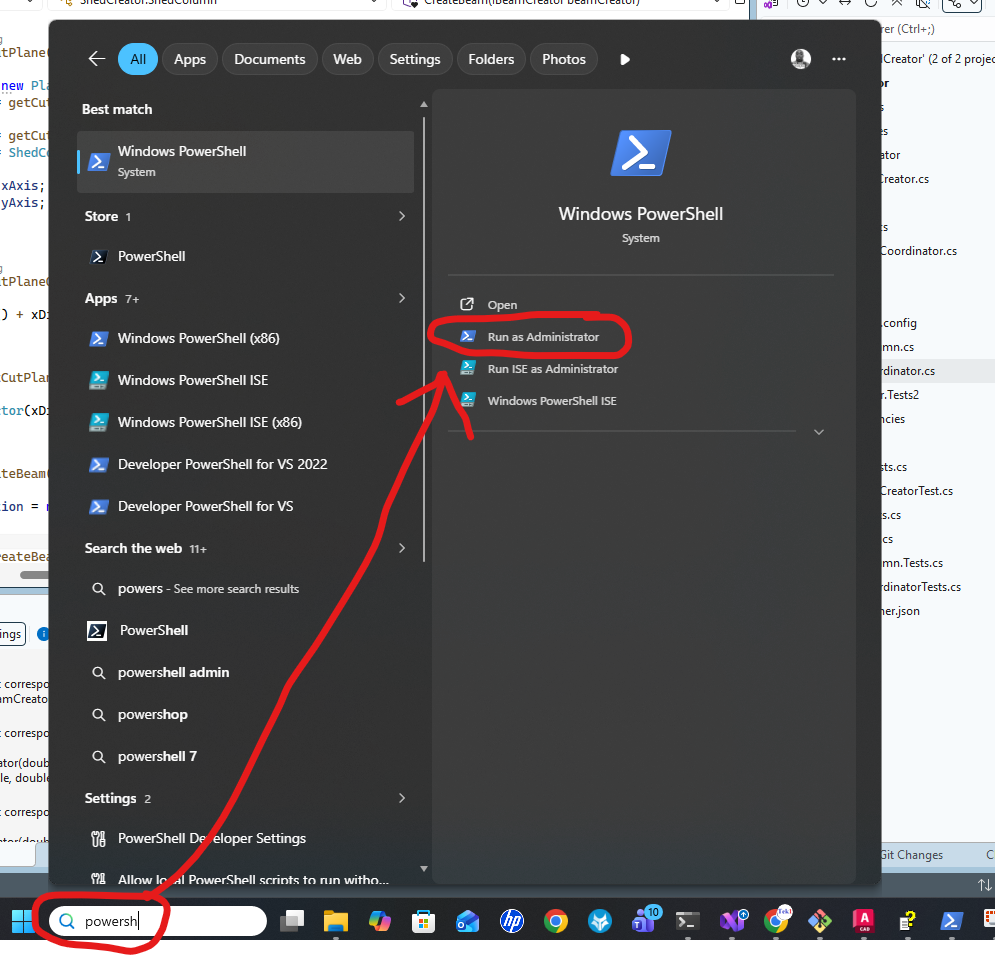
  • Create customised short cut to start TeklaStructures

    Any questions contact us via contact form or whatsapp

  • GENERAL REQUIREMENTS FOR ACCESSAS1428 SERIES — 2009 EDITION

    Download the pdf here.

    Covers toilets bath rooms, stairs, ramps, sliding doors with focus on disablity requirements.

  • Australian Standards – Available for Staff at Tek1 on the firm’s Google Drive

    All staff should have access to the relevant Standards.

    You should be familiar with them, and master them – otherwise you will embarrass yourself, and the firm, if you claim knowledge but demonstrate ignorance. The latter is especially costly to clients, and detrimental to your name and reputation (as well as the firm’s) – you certainly will not be getting repeat work if you prove ignorance.

    Please access them at the firm’s google drive location here.

    Standards available amongst many others:

    • AS_2870-2011 – residential-slabs-and-footings.pdf
    • AS_1100.101-1992 – technical drawings.pdf
    • AS_3600-2018 – concrete-structures.pdf
    • AS-NZS_2425-2015 – bar-chain-in-reinforced-concrete.pdf
    • AS_5216-2021 – post-installed-cast-in-fastenings-concrete.pdf
    • AS_1657-2018 – Fixed platforms, walkways, stairways.pdf
    • AS_3700-2018 – masonry.pdf
    • AS3850-2003 – tilt-up-concrete.pdf
    • AS_4100-2020 – steel-structures.pdf
    • AS_3850.1-2015 – prefabricated concrete elements – part 1 – general requirements
    • AS-NZS_1170.1-2002 – structural-design-actions.pdf
    • AS_3850.2-2015 – prefabricated concrete elements – part 2 – building construction.pdf
    • AS-NZS_1554.5-2014 – welding of steel structures subject to high levels of fatigue loading.pdf
    • AS 4100 & AS/NZS 4600 – Steel Structures and Cold-Formed Steel Structures
    • AS/NZS 5131 – Structural steelwork – Fabrication and erection

  • Adding details without approval which affects other trades

    This memo clarifies the process for handling drawing approvals and issuance to ensure project coordination and minimize potential errors.

    Drawing Approval Reviews:

    When receiving approved drawings, carefully review them for any markups that may significantly impact other trades or existing structural elements (e.g., slabs, foundations, anchor bolts).

    Example: If an approved drawing introduces a slab pocket where none existed in the original design, ensure the following steps are taken:

    • Verify Slab Status: Issue an RFI (Request for Information) to determine the current status of the slab construction.
    • Coordinate with Relevant Parties: Communicate the design change to the construction crew responsible for pouring the slab.
    • Provide Updated Drawings: Issue revised slab drawings reflecting the pocket addition.

    Failure to take these steps can lead to costly rework and project delays.

    Issuing Drawings Before Approval:

    Construction drawings should only be issued prior to approval if specifically requested by the client. In such cases, the drawings must be clearly marked and include a disclaimer.

    Scenario 1: Client Does Not Require “For Construction” Marking

    • Issue a full set of drawings marked “Issued for Approval” (IFA).
    • Include a disclaimer stating that the drawings are not yet approved and their use is at the client’s own risk.

    Scenario 2: Client Requires “For Construction” Marking

    • Issue the drawings marked “For Construction.”
    • Include a disclaimer stating that the client was informed of the drawings’ unapproved status but requested them for construction at their own risk.
    • Obtain a written statement from the client acknowledging their request and acceptance of responsibility.

    This process ensures clear communication and accountability in the drawing issuance process, mitigating potential risks associated with using unapproved drawings.

  • Memo 43 – The Process of Invoicing – Check if Invoices have been raised

    What is the problem

    • A cynical view of building and construction around the world: “not paying” is the standard business model of many firms in the indusry.
    • Once you give away your product (for free), there is zero incentive for a client to pay.
    • If a client doesn’t pay does that affect you? Absolutely, it affects you – it might not seem like it – but it affects everything in a business: remuneration, the quality of our infrastructure, training, our ability to take on jobs, our ability to win work.

    What is the process?

    1. We raise an invoice.
    • I typically raise an invoice on IFA.
    • If you don’t mark it as IFA, I will not raise an invoice – unless you tell me.
    • Sometimes we may need to raise an invoice BEFORE you get to IFA. In those instances, please notify me.
    1. I show your client’s bookkeeper your “approval emails” and purchase orders
    2. The bookkeeper will pay.
    • If the book keeper sees no approvals, or no purchase order, they will not pay us.
    1. We get paid.
    2. And then we give away our work.

    Things may vary, depending on the job, but that’s it in a nuthsell.

    Check Payment terms before:

    • releasing IFA drawings,
    • before releasing IFC drawings
    • before starting a job.

    Alert someone if you see that invoices have not been raised:

    • If you find that we need to raise invoices, and no invoices have been raised: then that is a big problem: how will everyone get paid without an invoice being raised? You will need to immediately alert someone about this. Occassionally things get missed.
    • If you see that we need to collect 100% before IFC is released – then again, check that invoices have been raised, and ensure that the money has been collected BEFORE releasing IFC drawings.

    But the Managing Director said: “we have been paid” therefore I sent the drawings:

    • Sorry but that is not a good enough. Your MD is dealing with 10s of emails / calls etc at the same time, and makes a LOT OF MISTAKES re: invoicing. This has happened many, many, many times. Many times. Q8715 is the latest example of a mistake in invoicing. YOU MUST CHECK that invoices have been raised and sent – which is different from checking whether we have been paid. In other words, how can we be paid, if we haven’t even received an invoice?

    How do I check?

    Check on the line item itself: as you can see, no invoice has been raised for line item 7:

    But two people said two different things:

    • If you have received conflicting instructions, then you need to clarify these things before sending all the drawings. Once the drawings are sent, then it is very, very difficult to collect payment from certain clients.
  • Grating Detailing

    • FRP Grating has no dominant load bar direction.
    • FRP Grating requires support on all edges
    • The span in both direction cannot exceed span specified in the catalogue.
  • How to get a pay-rise?

    How can I get a increment / pay-rise?

    Learn! The more you learn, the more you will earn.

    How does it work?

    I would love to pay you millions for sitting on your chair, however, I do not have pot of gold under my desk.

    Everything you earn must come from customers…..and they will only pay top dollar IF YOU MAKE THEM MONEY or help them in some way.

    In other words, you need to have skills – good skills, in order for THEM to make money. And as they make money, you will make money.

    That’s how the world works.

    Frustration over increments

    You may not be pleased with your increments.

    Again, we’d love to pay you a big increment, but can only do so if you learn quickly and can prove it. If your work needs to be constantly checked, or if you make the same mistakes, again, and again, and again, then the cost of your project increases dramatically, because it will take longer, and more resources in order to deliver it to the client. i.e. instead of you being a COST on a project (juniors, at the moment you are COSTING, not benefiting – but we are hoping you will become sufficiently productive in the future so that you become a benefit) – we want you to become a BENEFIT.

    The faster you become a benefit, the better. And the more you will get paid.

    If you are frustrated over this issue, and you wish to leave – that is fine – but why leave for a small increment? You may as well leave for a large one.

    Secondly, people seem to think they can “get ahead” by jumping ship every 12 months. This will likely work in the short run. New employers will be pleased to hire someone who is already trained, and they can pay for it since they did not incur the costs of training you have benefited from. However jumping ship may not work as well in the long term. i.e. in 5 years, you will have accrued 4-5 different employers, and you become “risky” in terms of anyone investing time and money into you. Some past employees have sought to get around this issue by lying on their resume.

    What do I need to learn?

    Some examples:

    • Learn, how to use your tools. AutoCAD, Tekla, Revit.
    • Learn how to write essays.
    • Learn how to speak good English. Clients VALUE THIS.
    • Learn how to market yourself.
    • Learn Australian / American standards. By yourself. Everyone wants to claim that they know the standards, but very few actually sit down to properly learn them.
    • Make something better, or faster, or cheaper. Ingenuity is valued highly.
    • Videos are highly regarded.

    All of the above is hard-work, and will require self-directed learning.

    If you want big increments but can speak broken Tamil-glish, and don’t know how the standards, cannot use the tools properly, cannot manage RFIs – where will the money come from?

    How can I prove I have learned?

    A great way to prove your expertise on a subject matter is to write about what you learned. Why should you bother?

    1. You will benefit. By writing, you will crystalize the concepts you have learned.
    2. Writing is a super power:

    The ability to write concisely is a super power – it will open doors for you: with clients, and all manner of business. A simple proposal, well thought out, is all that is required to procure millions in funding.

    Generally speaking a well thought out plan will trump none at all.

    Writing has the following benefits:

    1. Primarily: it refines your own thinking.
    2. The process of writing forces you to validate your own logic.
    3. It effectively communicates your logic to others – who can improve it, or invalidate it. In other words, it aids in better truth-seeking.
    4. It allows for groups to better coordinate, in order to produce an outcome.

    Prove your knowledge to others

    Why should another firm hire you for a large increment, when you don’t know anything, or can’t prove you know something?

    An easy way to prove your knowledge is to point to a portfolio of articles.

    When you go to interviews you can say:

    • “Here are my articles on Tekla” or “steel detailing” on https://www.tek1.com.au/category/steel-detailing/
    • Here are my portfolio of projects.

    Recruiters will immediately see your value. And you’ll be hired for a big increment rather than a small one.

    Tek1 Affords you the opportunity to self-promote

    I do not know any other firm who does this.

    Most other firms will try to limit you. But we do not. Why not take advantage of it?

    Promote your portfolio to the world, on social media etc.

  • Memo 43 – Cut the Crap from your marketing materials

    I see this type of thing all too often from Tek1 staff – from both our offices:

    At Tek1, we believe in pushing the boundaries of conventional design to provide our clients with superior results. This project exemplifies our dedication to innovation and quality in every detail

    Cut it out. It’s nothing but BS / Crap.

    Here is another example

    In the fact paced world of engineering projects, time management is critical. Recently I encountered a situation that highlighted the importance of accurate time estimation and the complexities involved in project rework. Here is a detailed account of my experience.

    Again, please cut the crap.

    It doesn’t look good at all. People will think that you have very, very poor English skills, and that you used ChatGPT to formulate your answer.

    This will reflect very poorly on your name, and mine.

    Incidental, you should not praise yourself. Let someone else do that for you. Adhere to the adage:

    Let someone else praise you, and not your own mouth; an outsider, and not your own lips. (Proverbs 27:2 )