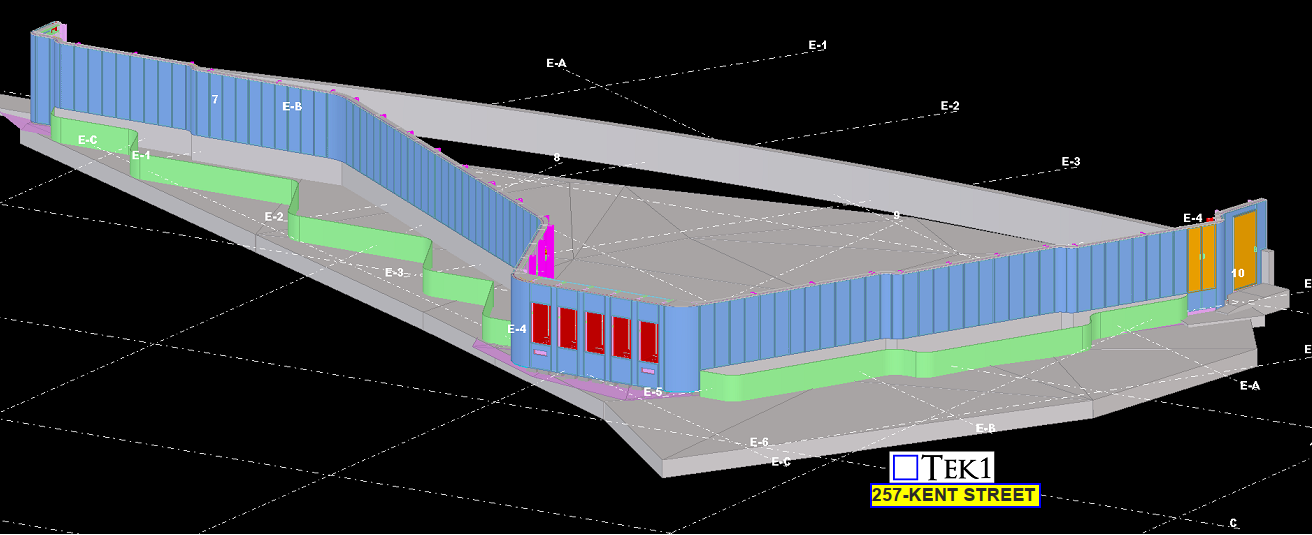
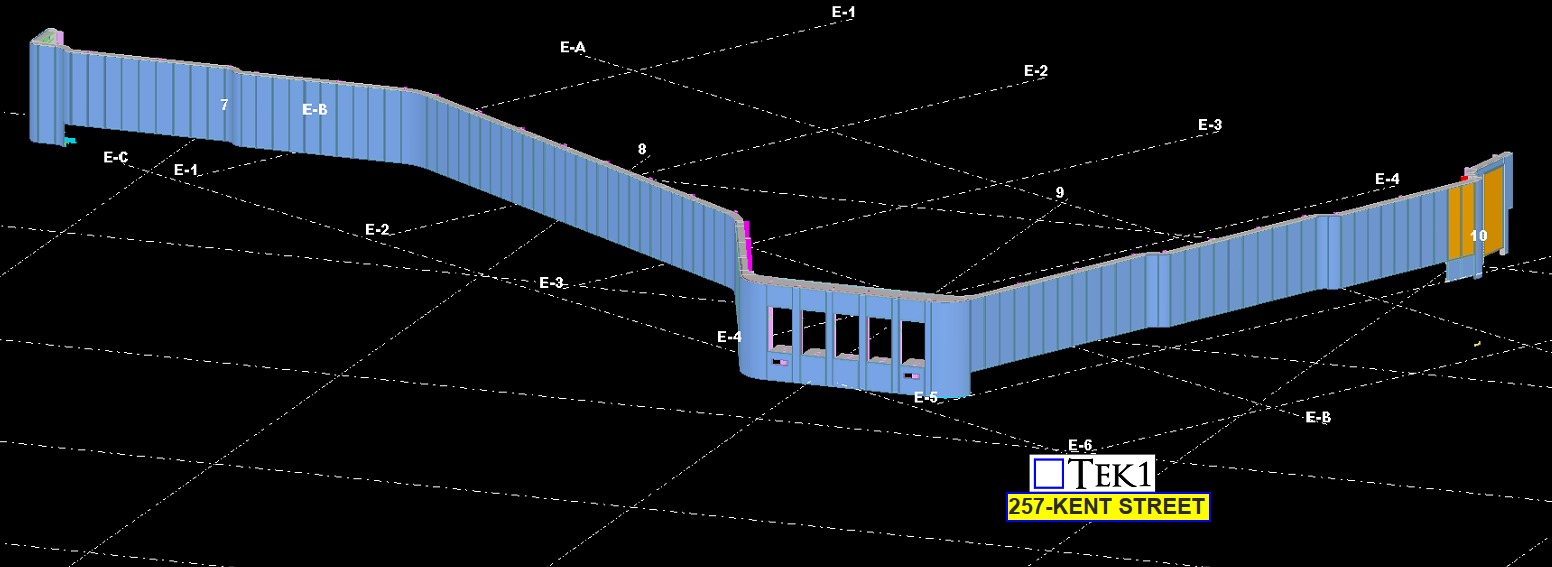
Month: September 2022

  • INSULATED PRECAST CONCRETE PANEL

    INSULATED PRECAST CONCRETE PANEL:          

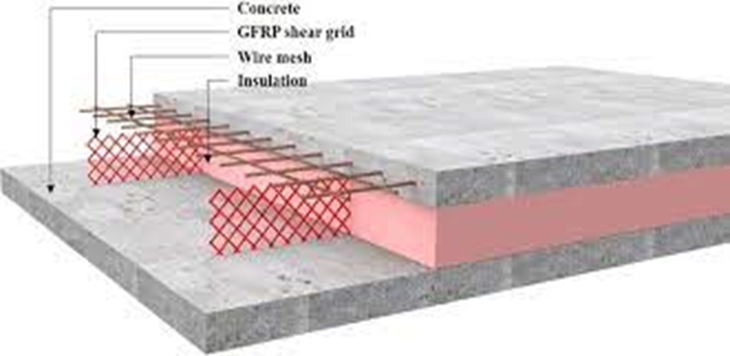
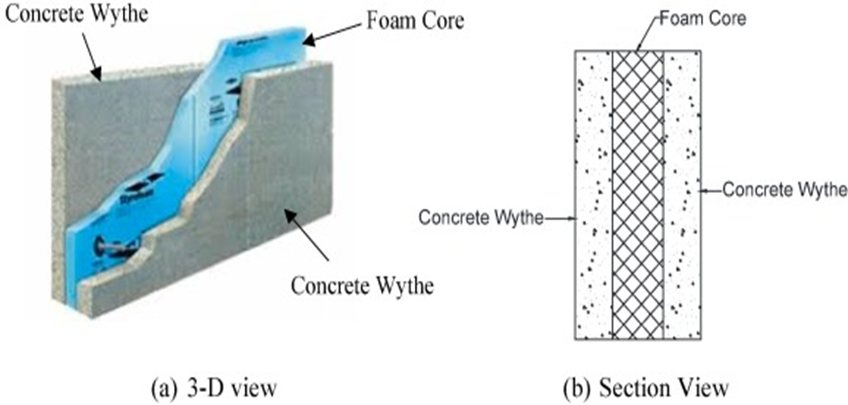
    Insulated precast concrete panels consist of interior and exterior thickness of concrete with the rigid insulation inserted or ‘’sandwiched’’ between the two layers, thus their alternate name of insulated panel is “sandwich panels”.

    LAYERS IN INSULATED PRECAST CONCRETE PANEL:

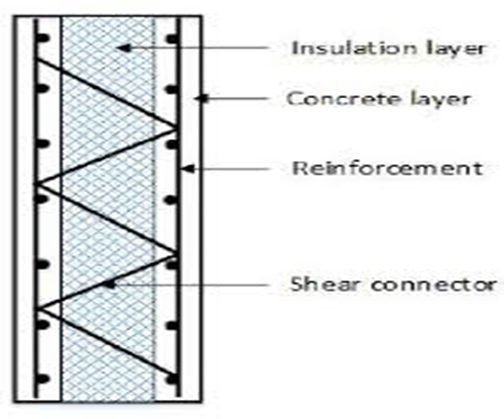
    • The two layers of concrete thickness, often referred to as concrete wythes and a layer of insulating materials are connected by using one of many wythes connecting systems (connectors).
    • Each layer of concrete thickness contains reinforcement as per structural design.
    • The concrete wythes can vary in thickness depending on structural and architectural requirements of a project.

    METHOD OF MANUFACTURING:

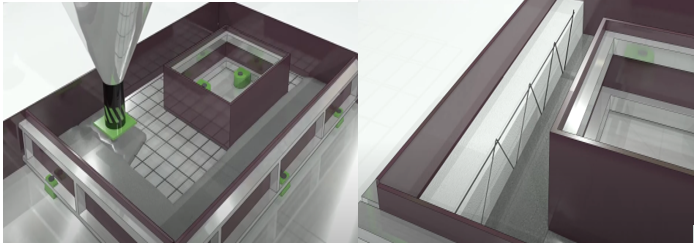
    • The insulated precast panel is manufactured by using two pours (pour-1 and pour-2).
    • Table with reinforcement for pour 1 wythe to be arrange and start to pour concrete (Pour-1).
    • After the first wythe is poured and the pre-cut rigid insulation segments are placed on top of the wet concrete and all insulation connectors are installed.
    • The reinforcement for the interior wythe is then placed and the second wythe is poured. Finally, the interior surface can be trowelled smooth.

    APPLICATION:

    The insulated precast concrete panels are mostly used for the place where the thermal insulations are required. some of the applications are shown in below

    • Cold storage factories.
    • Residential houses.
    • Hospitals.
    • School buildings.
    • Offices.
    • Chemical laboratories.
    • Shops.
  • DEMOULDING SLOPE

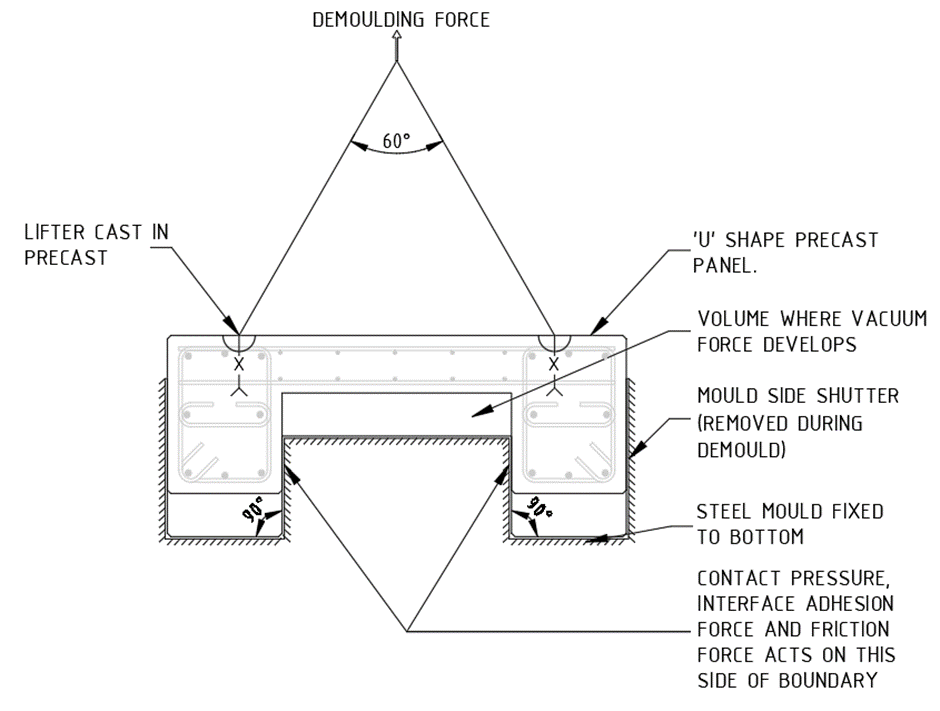
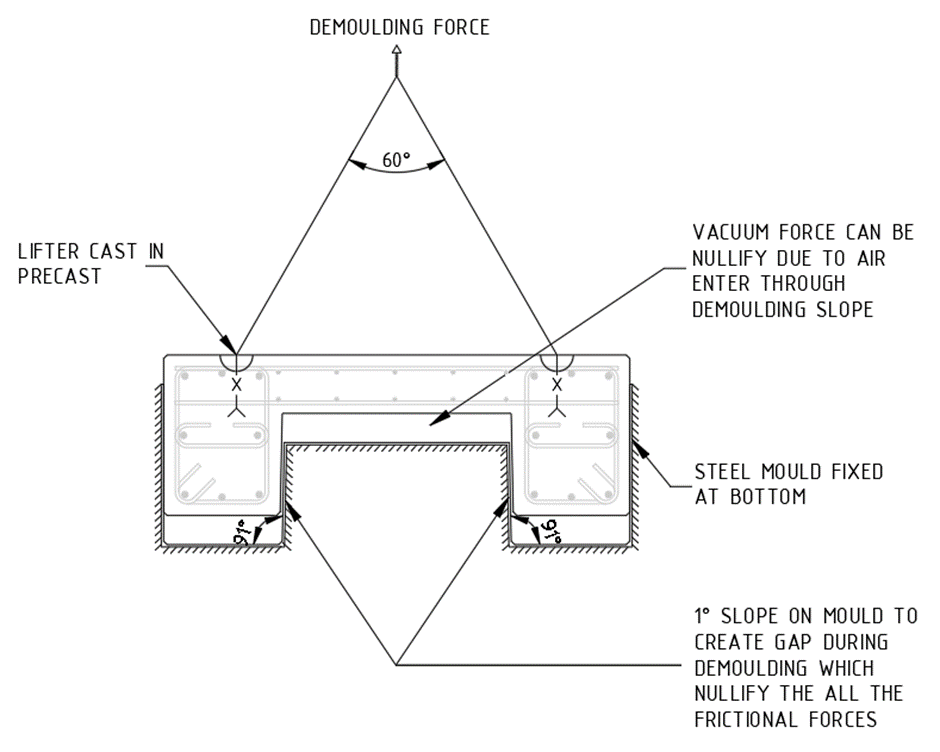
    Demoulding of precast member without damage to either the components like lifter or mould is critical to successful replication process for the particular complicated design. During mould design, the designers concentrate to make minimum draft (nearly 10 ) on mould to wherever the possible  to minimize demoulding force and resultant stress on lifters and prevent on weaker part of the precast member.

    For Example,

    CONTRIBUTORS DURING DEMOULDING WITHOUT SLOPE

    The above picture shows influencing factors for demoulding force. In this case the resultant DEMOULDING forces like vacuum & friction (Area of contact, Coefficient of friction & Normal contact Pressure) along with self-weight of precast will increase demoulding force. If the demoulding force exceed the lifter capacity limit leads to fail the lifters. So, we can’t able to lift this precast member. To eliminate this type of failure. We need to provide slope where contact pressure or interface adhesion develop.

    CONTRIBUTORS DURING DEMOULDING WITH SLOPE

    The above picture shows the effect of demoulding slope. Where the 10 slope didn’t affect too much the original shape of precast, but considerably minimize the demoulding force. The slope reduces the frictional force & provide passage to air enter where vacuum force develops.

  • CONCRETE WITH SPECIFICATION DIFFERENCE (N & S)

    CONCRETE:

     (AS 1379 Specification and supply of concrete) A mixture of Cement, aggregates and water with or without the addition of chemical admixtures or other materials.      

    Cement: (AS 3972 Portland or blended cement) A hydraulic binder composed of Portland or blended cement used alone or in combination with one or more supplementary cementitious materials.

    Concrete is defined as follows,

    • Plastic concrete:

    Concrete in the state between completion of mixing and initial set as defined in AS 1012.18 Methods of determining setting time of fresh concrete, mortar and grout by penetration resistance.

    • Hardened concrete:

    Concrete after initial set, as represented by test specimens that have been subjected to a specified process and duration of curing.

    • Normal- Class Concrete:

    Concrete that is specified primarily by a standard compressive strength grade up to 50 MPa and otherwise in accordance with Clause 1.5.3.

    • Special- Class Concrete:

    Concrete that is specified to have certain properties or characteristics different from, or additional to, those of normal-class concrete and otherwise in accordance with Clause 1.5.4.

    SPECIFICATION OF CONCRETE:

    Concrete shall be specified,

    (a) as either

    (1) Normal-class(N), or

    (2) Special-class(S), or

    (b) By strength grade or other readily verifiable parameter by which compliance with the specification can be assessed.

    NOTE: Standard strength grades should be specified wherever possible.

    • NORMAL-CLASS CONCRETE:

    Normal-class concrete shall be specified only by the parameters given in Clause 1.5.3.2(Basic parameter), and shall have the following attributes:

    • A mass per unit volume in the range 2100 kg/m3 to 2800 kg/m3 when determined in accordance with (AS 1012.12.1 Determination of mass per unit volume of hardened concrete) in the saturated, surface-dry condition.
    • Acid-soluble chloride and sulfate contents within the limits given in Clause 2.7, when determined in accordance with Clause 5.5.2.
    • A shrinkage strain not exceeding 1000 × 10−6, when determined in accordance with Clause 5.6 after 56 days drying.

    NOTE: This maximum value of 1000 × 10−6 is consistent with the use for design purposes of a median basic shrinkage strain value of 850 × 10−6.

    • A mean compressive strength at 7 days, assessed in accordance with Clause 5.7, of not less than the values of Grade designation for N20-9MPa, N25-12MPa, N32-16MPa, N40-20MPa & N50-25MPa.
    • A cement complying with (AS 3972 Portland or blended cement) alone or in combination with one or more supplementary cementitious materials.
    • No lightweight aggregate as defined in AS 2758.1 Aggregates and rock for engineering purposes Concrete aggregates.

    Basic parameters of normal-class concrete:

    The following basic parameters shall be specified by the customer:

    • A standard strength grade selected from 20MPa,25MPa,32MPa,40MPa, 50MPa,65MPa,80MPa or 100MPa and designated as one of N20, N25, N32, N40 or N50.
    • The slump at the point of acceptance, selected as one of 20 mm, 30 mm, 40 mm, 50 mm, 60 mm, 70 mm, 80 mm, 90 mm, 100 mm, 110 mm or 120 mm.

    NOTES:

    1. The customer should carefully consider that the specified slump of concrete suits the placement method.
    2. For residential slabs and footings, if the slump is not specified by the customer, the specified slump should be considered to be 100 mm.
    3. The maximum nominal size of aggregate, selected as one of 10 mm, 14 mm or 20 mm. Unless otherwise specified, the default value shall be taken as 20 mm.
    4. The intended method of placement, including relevant details of equipment.
    5. If project assessment is required to be carried out by the supplier (see Note).

    NOTE: If unspecified, it will be assumed that project assessment is not required.

    • If required, a level of air entrainment up to a maximum of 5.0%.

    (2) SPECIAL- CLASS CONCRETE:

    Concrete other than normal-class concrete shall be specified by the customer as specialclass and, if applicable, by strength-grade. The parameters and attributes that should be specified for special-class concrete should be as set out listed below with reference to Appendix B and Table B1 on AS1379.

    Special-class concrete commonly has the same basic parameters as normal-class concrete with some additions and(or) exceptions. Parameters or attributes that are different from, or additional to, those of normal-class concrete should be included in specification below. If the requirements of specification for any concrete are inconsistent with those for normal-class concrete then the requirements of specification take precedence for that concrete.

    Where any parameter other than strength grade requires the specification of a special-class concrete, or the proportions of the mix are specified, the concrete should be identified by an appropriate code agreed to between the supplier and customer that identifies that particular mix.

    Basic parameter for specification of special-class concrete:

    • It is recommended to select from standard strength grades of S20, S25, S32, S40, S50, S65, S80 and S100.
    • Where concrete is specified as special-class and a strength grade is applicable, the strength grade is designated by the prefix:

    S, for compressive strength grades;

    SF, for flexural strength grades; or

    ST, for indirect-tensile strength grades.

    Where concrete is special-class and any property other than strength grade is Specified as the principal criterion, or the proportions of the mix are specified, it is designated by an appropriate alphanumeric code, agreed between the supplier and the customer, to indicate the criterion.

    • Special-class concrete should be subject to project assessment.
    • Certain concrete exposure classifications may require special provisions for aggregate durability (AS 2758.1 Aggregate & Rock for engineering Purposes.)
    • Any departures from the parameters or composition, or both, of normal-class concrete and any other criteria or limitations shall be specified by the customer in consultation with the supplier.

    NOTE: A summary list of several such parameters, some or all of which may be specified for the production of special-class concrete for a project, is given in Appendix B on AS 1379.

    • Other requirements additional to these parameters may be specified.

  • BEAM Vs COLUMN

    BEAM Vs COLUMN

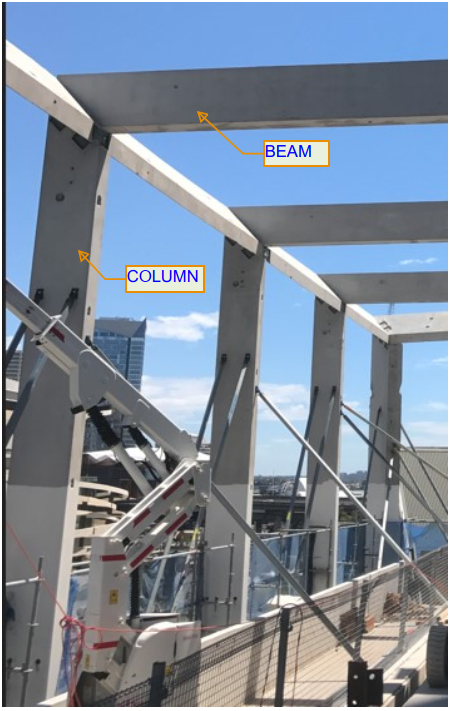
    BEAM: A beam is a horizontal structural component that resists vertical loads. Its mode of deflection is primarily bending. It transfers loads imposed along its length to its endpoints to walls, column and foundations.

    The beam is structural element that stands against the bending. Mainly beam carries vertical gravitational forces, but also pull the horizontal loads on it.

    (If structural member transfers any load whichever is acting on it through bending, then that element will be refer as a beam.)

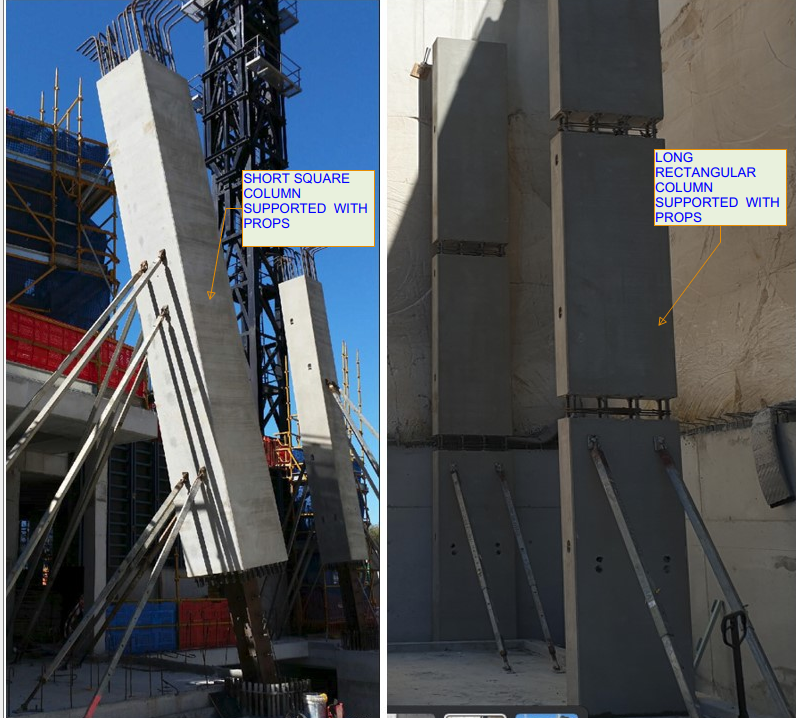
    COLUMN: A column is a vertical structural compression element that bears loads mainly in compression. It might transfer loads from a ceiling, floor slab, roof slab to a floor or foundation, it usually transfers loads from superstructure to foundation.

    Column plays an essential role in the entire load transfer system, though many columns are embedded forming part of a wall.

    Columns are commonly used to support beams or slabs or arches on which the upper parts of walls or ceilings rest. Sometimes a column is a decorative element as well as for structural purpose.

    (If structural element transfers the load through compression, it will be called as column.)

    DIFFERENCE BETWEEN BEAM AND COLUMN

    SL.NO

    DESCRIPTION

    BEAM

    COLUMN

    1

    Built

    Without a beam, a structure can be constructed.

    Without a column, a structure can’t be built.

    2

    Support

    They are supported by the column one end or both ends.

    They are directly built from the foundation.

    3

    Weight transfer

    It carries weight of slabs, ceiling. Floor, Roof of a building and transfer it to columns.

    It carries load transferred by beam and ultimately transfer it to footing and ground.

    4

    Classification

    Beams are classified based on their support end condition.

    Columns are classified based on their cross-section shape, material for construction and types of loading.

    5

    Shape

    A beam may be square, rectangular, T-shape, I-shape and H-shape.

    A column may be rectangular, circular, square, t-shape, L-shape and C-shape.

    6

    Simple Terms

    Beam is structural member carrying transverse loads.

    Column is also structural member carrying axial loads.

    IMAGES FOR BEAM AND COLUMN

    EXAMPLE:
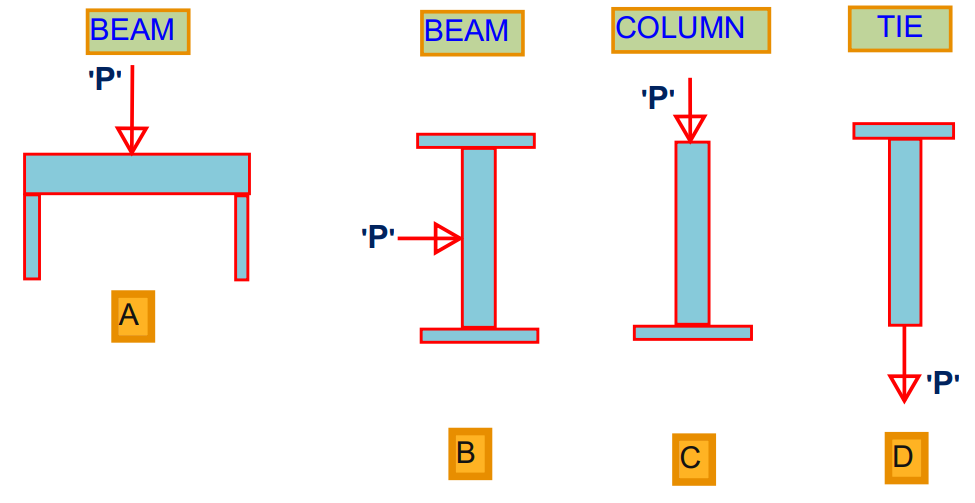
    we have a rod of length 5 meter made out of steel and a load “P” to support

    1. We keep the rod on two supports and then place load on top of it. This time the primary mode of load transfer is by bending and thus we call it a Beam.
    2. We keep the rod vertical and apply load Horizontally to it. This time the primary mode of load transfer is also be bending and thus we call it a Beam.
    3. In this case the rod is kept vertically on the floor and the load is placed on top of it. Now the load is being transferred by compression and thus we call it a Column.
    4. We decide to hand the rod from ceiling and hook the load to the other end of the rod. The load in this case being transferred primarily by tension and thus we call it a Tie.
  • Bathers Bay – New Castle Beach

    Bathers Bay – New Castle Beach

    Author: Pon Dhileepan

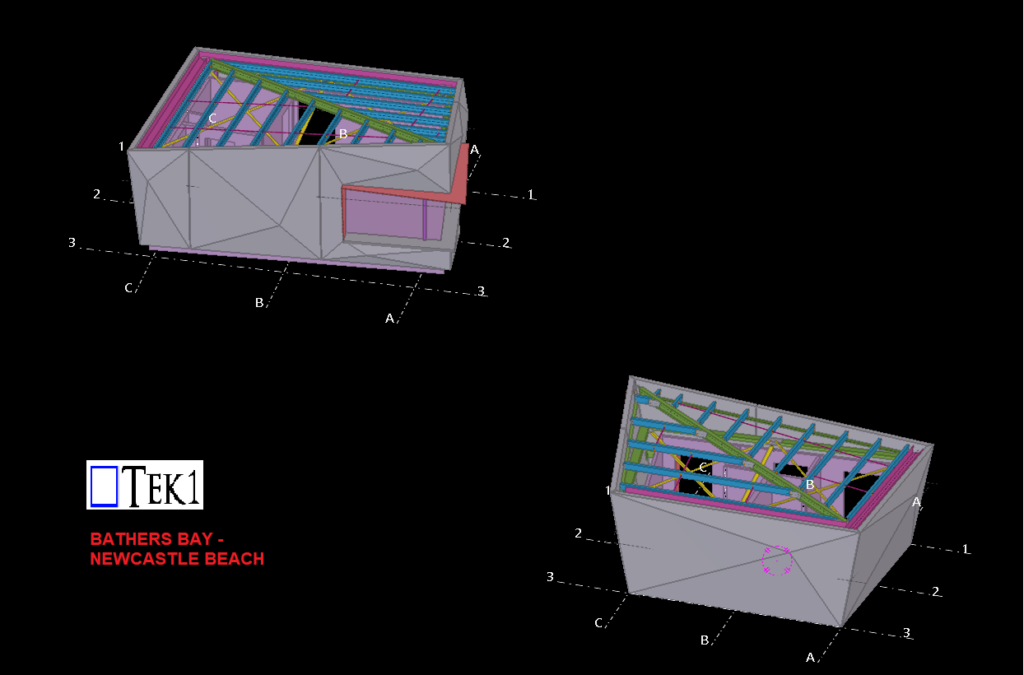
    Both precast concrete and steel drawings in this project are supplied by TEK1. The outer face of precast concrete has irregular pyramid shape.

    FULL ISOMETRIC VIEW
    ISOMETRIC VIEW WITHOUT ROOF SHEET
    ISOMETRIC VIEW – ONLY STEEL

  • Cracking of panels at opening Corners


    Cause
    * During lifting
    * During Transportation
    * During Erection
    * After erection & slab pouring
    Problem
    * where the cracking of panel further affected the waterproofing by damaging the internal stud walls of the building.
    * Reinforcement getting Weak
    * If any interior work will damage due to the weather proof issue.
    Remedies
    * Get concentrate those location & intimate to reinforce team for additional reinforcement
    * Insist to follow the Guidelines from the engineering team
    * Insist Factory to concern the reinforcement for the specific openings
    * Insist Factory & Erection Crew to Follow the standards & guide line when the lifting from the store, during transport & installation the panel
    * During transportation take care all panels sitting on ‘A’ frame to be vertically supported on 2 points & if any additional support should only be for lateral purposes. Insist to follow the transportation guidelines
    * The Grouting must be taken care on time for the panel with openings Coordinators to advise if any special cases if needed.