Tek1 Provides Accurate Precast Panel Take offs
Deliverables include
- Tekla Db1 file
- IFC file
- Rebar Schedule
- Mesh Qty
- Lifters
- CIPs
- Concrete Qty
- Reo Weight per panel and Total
- Snap shots
- Special Comments
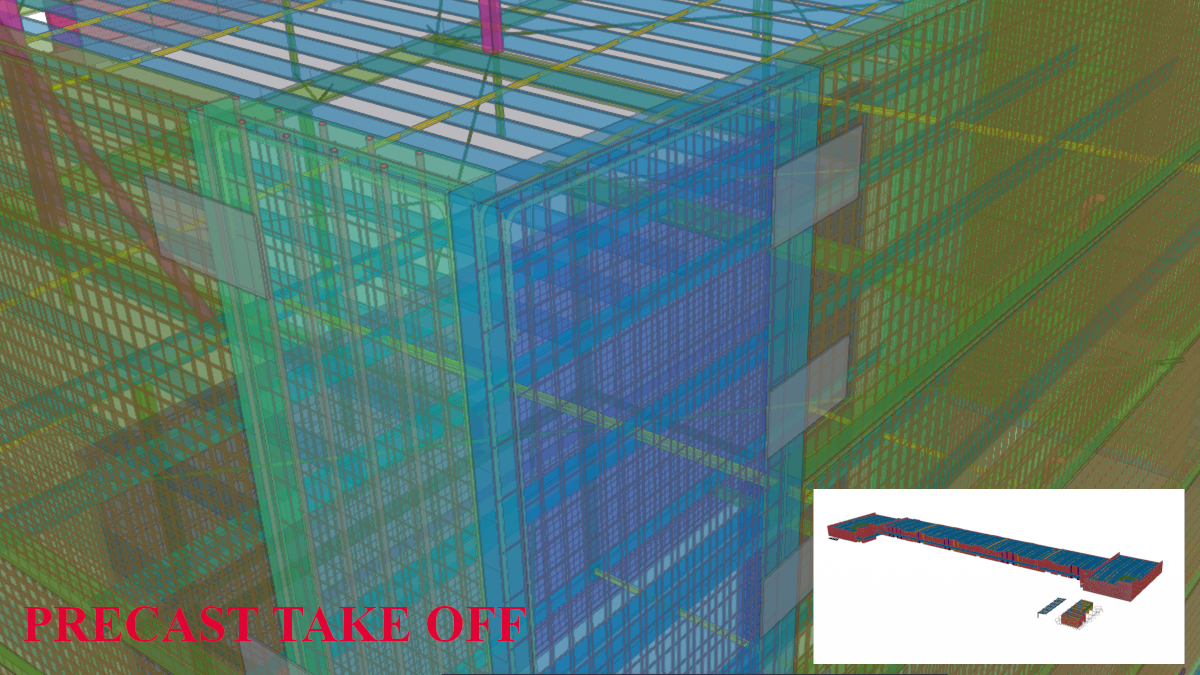
Tek1 Provides Accurate Precast Panel Take offs
Deliverables include
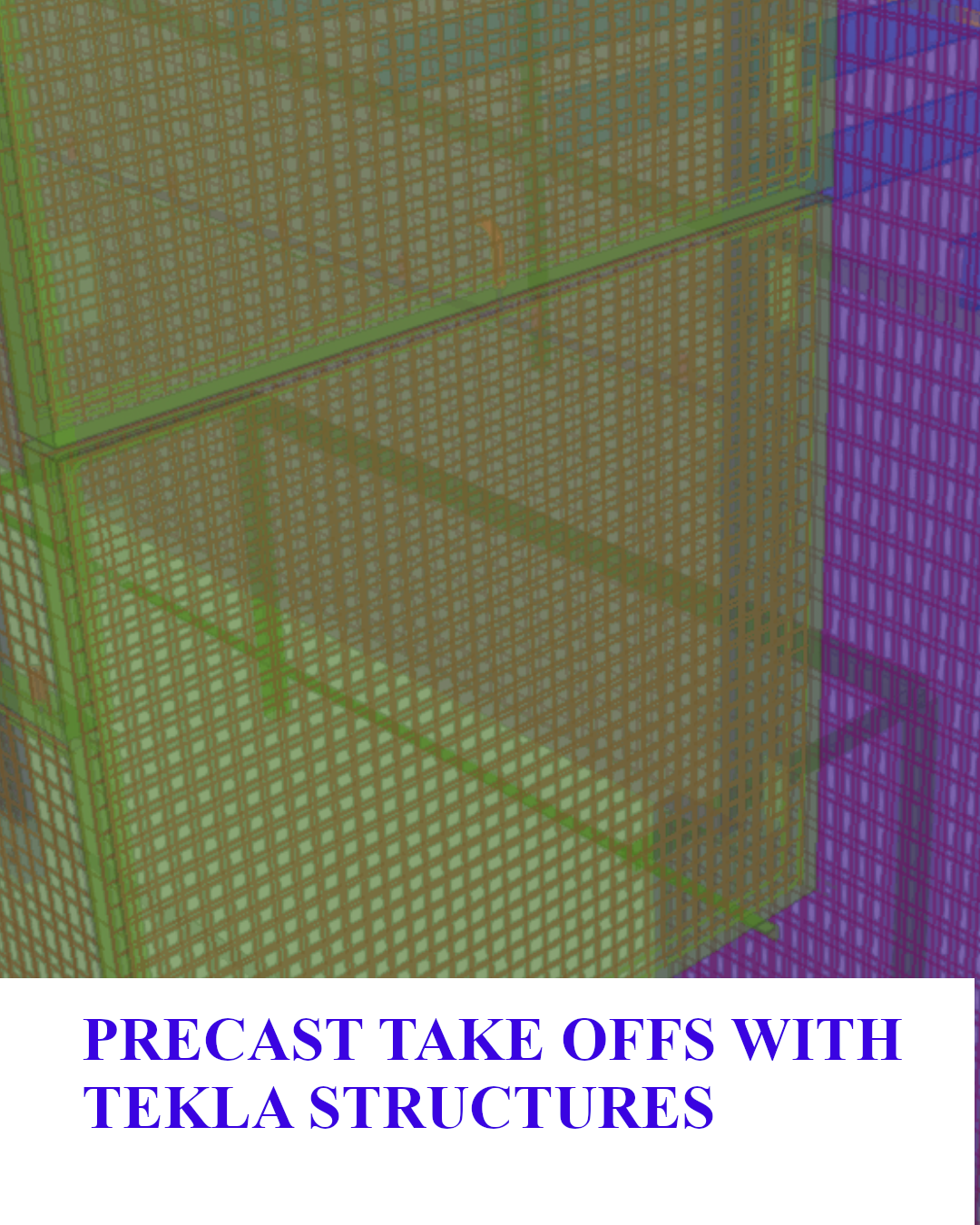
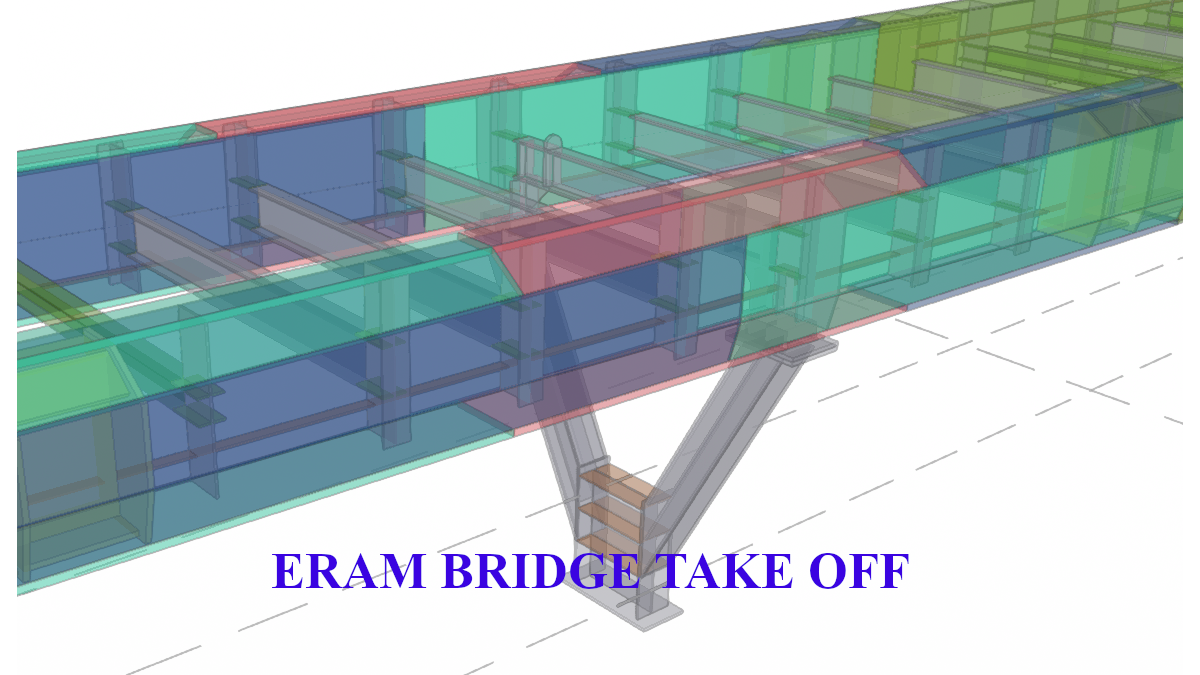
Accurate Steel Take off with Tekla Structures.
Talk to us for low cast fast accurate take offs.
Deliverable include

This post and tutorial shows you how to set up your Tekla Dependencies (i.e. DLLs) on an Tekla Open API project:
Source code:
Directly Embedded code:
Model model =  new Model();

if (model.GetConnectionStatus())
{
    Beam beam = new Beam();
    beam.StartPoint = new Point(0, 0, 0);
    beam.EndPoint = new Point(1000, 0, 0);
    beam.Profile.ProfileString = "UB150*14"; // make sure this is available in your environment.
    beam.Finish = "PAINT";

    beam.Insert();


    model.CommitChanges();
}
Nuget Packages:
And if you prefer vimeo (i.e. if you hate youtube ads) checkout this link:
Download Model and PDF from Google Drive
Split Large complitcated assemblies into sub assemblies.
Preferably do that in the modeling stage. But if you have already modelled and do not want to change, split groups of parts into virtual sub assemblies for detailing purposes.
Detail the the sub assemblies. That will reduce clutter in the main view of the drawng.
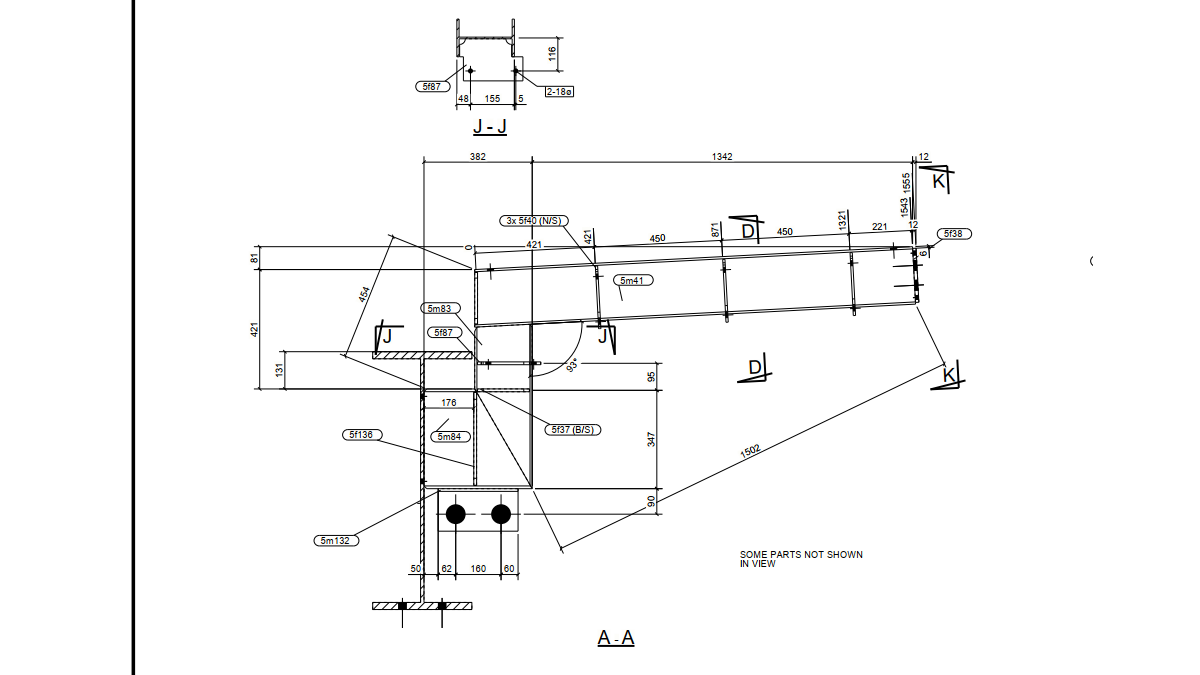
Parts are cut to single part drawings, palletted and given to the boiler maker with Assembly drawing. Part drawings will be missing.
But the boiler maker will need know some dimension in the parts to assemble the weldment correctly.
Hence you may have to produce single part drawings within the assembly drawing.
This will reduce clutter and make life easy for you as well as for the boiler maker. Make sure necessary single part drawings are added in the assy drg
In a cluttered drawing, main views will have many parts shown which basically makes those views very difficult to use.
You add detail views and hide parts for clarity.
Short Cuts
You must have Show / Hide parts in drawing short cuts. Else you will spend a lot of time showing and hiding with right click
Content for Subject 2
This is going to be a concise, high value and pithy course on the Tekla Open API.
You may find other courses out there that boast about: 50+ hours. That might work well for them and their students, but almost everything you need to know can be boiled down to a few simple concepts. Especially helpful if you are an engineer and wanting to automate a few simple tasks. For more specialised requirements that involves making API calls, or developing web apps, you want to a workflow that is engineered by a professional – whether by Tek1 or other parties.
The following documents the course.
Video Course:
Youtube Playlist of the Course (inclusive of all Tekla API related Material)
This is a course on how to program using Tekla’s Open API. We will start from the very beginning and get into some complicated topics. These are the principles I use when developing Tekla API applications.
The following posts a video tutorial on how to get started using the Tekla Open API. The first thing you need is visual studio.
Ensure you have enough memory on your C (or XYZ drive). If you do not have enough memory, then watch me trouble shoot this problem.
Getting Set-up:

The Code Behind the Shed Builder
As promised, here are the key methods behind the ShedBuilder:
I have separate classes – e.g. Facia, Column, Chord, Girt etc. to better represent the concepts and the interplay between all the items – and then I simply tie them all together to get the output that I want, but the main logic is here – if you wish to write the code yourself:
And to extract properties given a particular profile:
And finally to get all profiles which have a “HEIGHT” property:
The Key Libraries I use:
This is a live production / job example of how we can quickly / accurately detail sheds at scale.
Meaning we can handle:
(i) volume
(ii) speed
You can do the same too!
If you have questions or need assistance automating – feel free to email: [email protected] or [email protected] or visit our website: https://www.tek1.com.au/ or +61 0411 022 502 if you need to call me.
Or if you wish to develop the software yourself checkout our blog posts – where all the basic elements to create this type of automation is present.
For more posts checkout our Tekla API blog.
The way of the future is automation.
Use the Tekla API to automate the modelling of items that are relatively standardised – e.g. sheds, or warehouses etc.
The following is a program we putting into production re: the detailing of Sheds. If the designs can be standardized, you can turbo-charge the detailing / design.
You may want to use further automation re: custom components to further automate.
I will provide to you the full details on how you can do the above via our Tekla API blog.
Need to automate?
Call: +61 0411 022 502 or email:
With some a basic idea of what you want to automate – whether simple, or more complex requirements which may pull data from various sources, or which may require a workflow that is more complicated.
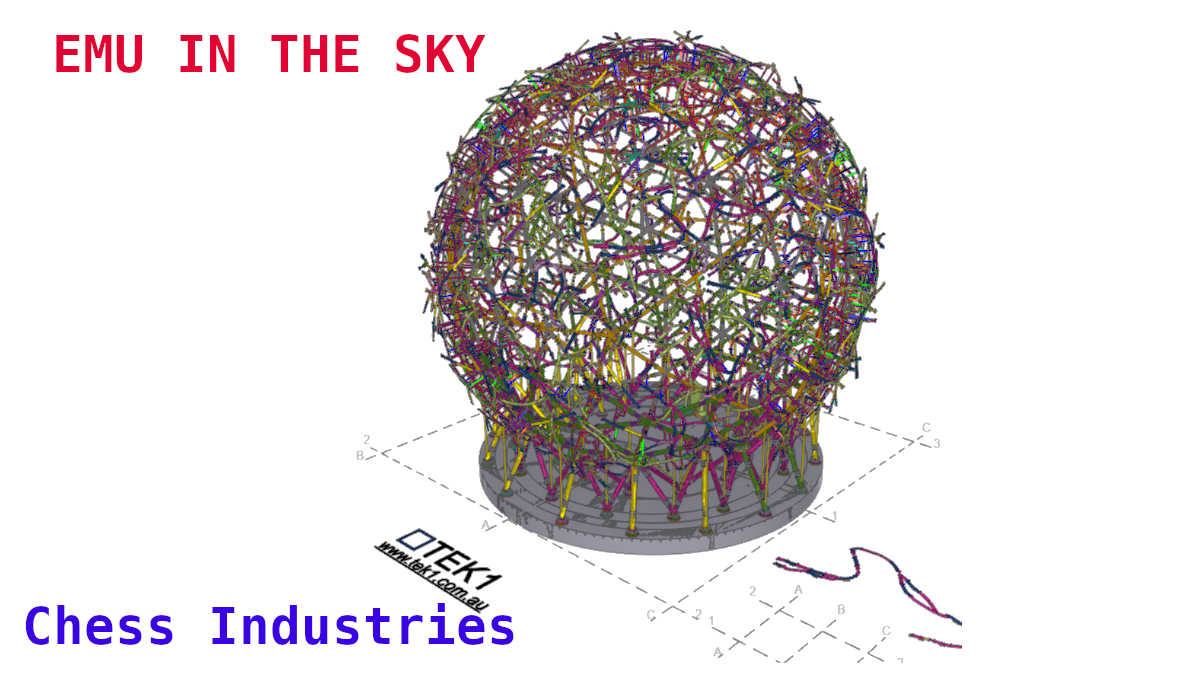
Chess Industries was the client here. We were ably guided by Mohan and Mike on this project. We also put in our two cents worth cutting costs, eleminating problems before they crystallized.
The jigs and tooling required was thought about even before we started. We have proposed certain tooling, which Chess have made some slight modifications. The tooling was part of the modelling, which simplified the fabrication of the entire job.
We have taken the concept design. Identified problems with the design which could make fabrication erection extremely difficult. Chalked out certain proposals. Mohan and Mike expanded on our ideas came out with a proposal which all were happy to work with. The result is easy fabrication and assembly.
You can view the trimble connect Tekla Model at this link