It’s got nothing to do with being over taken on the F1 track. Lapping refers to the “overlapping” of reinforcement with another section of reinforcement.
Why do we lap?
It gives greater structural integrity to the structure you are fabricating. What does this mean? It means that when you lap, your concrete will be stronger, and will be better able to withstand loads/weights. In other words, a lapped structure will be more sturdy that unlapped structures.
AS 2870 requires that we lap.
Lapping Requirements?
Trench Mesh Laps
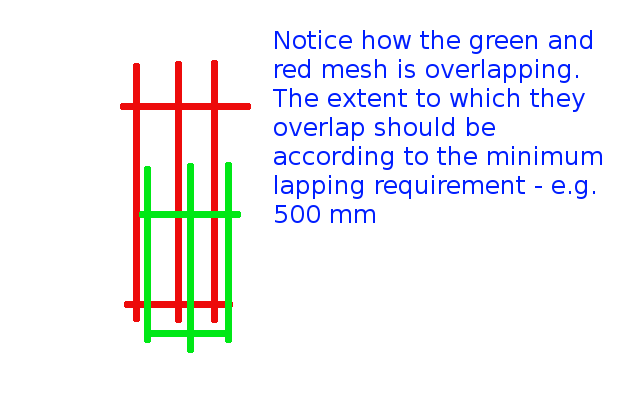
If they are overlapping at T or L intersections, then overlap the full width of the mesh.
When end to end, they need to be at least 500 mm.
Please see below:
Demonstrates the concept of lapping.
Square mesh lap
These need to be lapped by 225 mm minimally.
Very similar to the above – please refer to that diagram.
Reinforcing Bar Laps
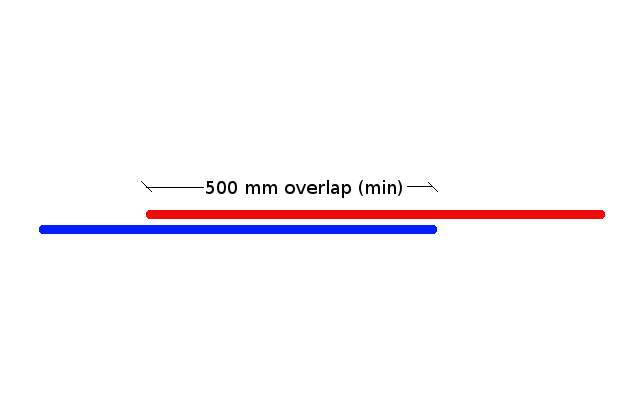
Lapping needs to be at minimally: 500 mm.
Please see below:
Shows the minimal lapping required for reinforcing bar laps.
I hope this helps you. Any questions? Feel free to ask. I may even write up another post if the question is good enough.
This post attempts to explain the following two questions, for those starting to learn the precast trade:
A lot of fancy words are thrown around. Near face. Far face. And mould face. What does it all mean?
How should shop drawings be marked vis-a-vis the mould face, and why should they be marked as such?
What is a precast panel?
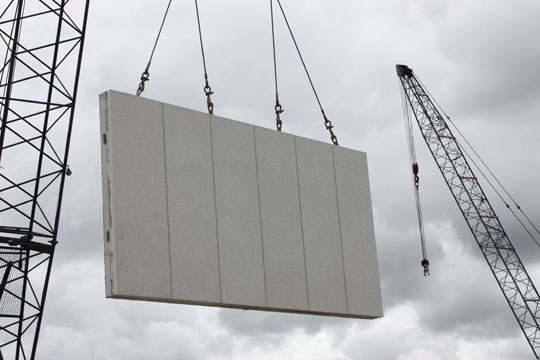
These my friends are precast panels:
What panels look like.
You can build things quickly and cheaply, if you build with precast panels. Your other option is to fabricate on site. The problem with this is that it: (i) is more expensive, and (ii) the construction is a lot slower.
What is the mould face?
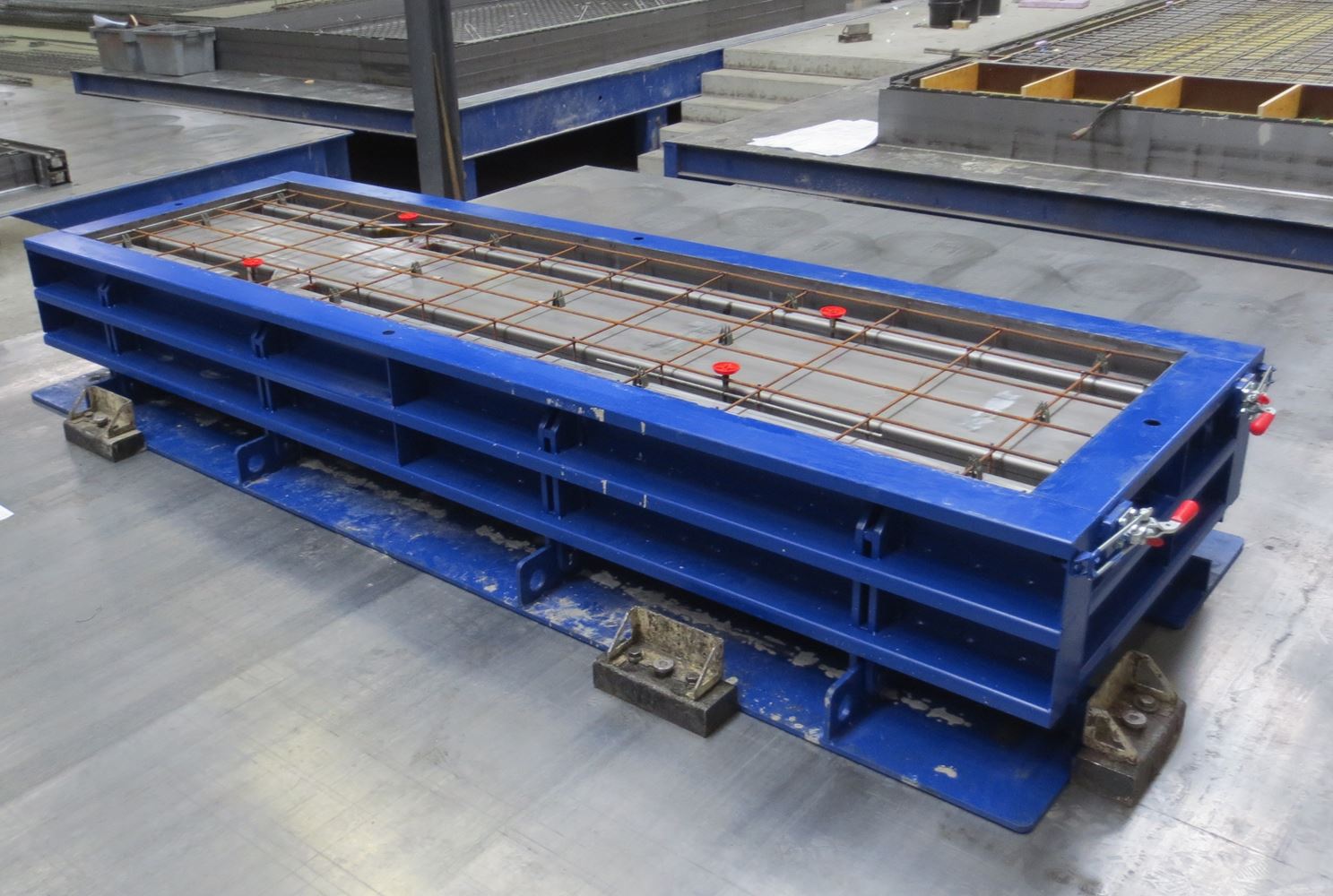
First you have to understand how the panels are “fabricated” (i.e. how they are made). Concrete is poured into a mould, on a table. It looks something like this:
Showing a panel on a table, in its mould.
So then what is the near face / far face / mould face?
The near face is the side of the panel which is exposed to the air. This is the face of the panel which you can see.
The far face (or mould face), is the face of the panel which is lying on the table.
What is the significance of the mould face?
The mould face has a smooth finish (or should have one).
You do not want a building which has the ugly face of a panel exposed for everyone to see. The architect will be baying for your blood, and moreover it is a very costly remedy. Some precasters, in order to avoid this problem, “trowel” the near face (i.e. the face which is exposed to the air). “Trowelling” is when you smooth the surface of the panel with a tool so that it looks nice.
When you draw a panel, you want to indicate on your drawings that the mould face is on the building exterior.
Why? So that the smooth side is seen by people and the ugly side is hidden from view.
“But won’t people on the inside of the building also see the ugly side of the panel?” you ask. Not necessarily. Most of the time, the panel is not visible on the inside of the building because the architect will put up plaster or there will be something hiding the panel from view.
Standard Shop Drawing Practices
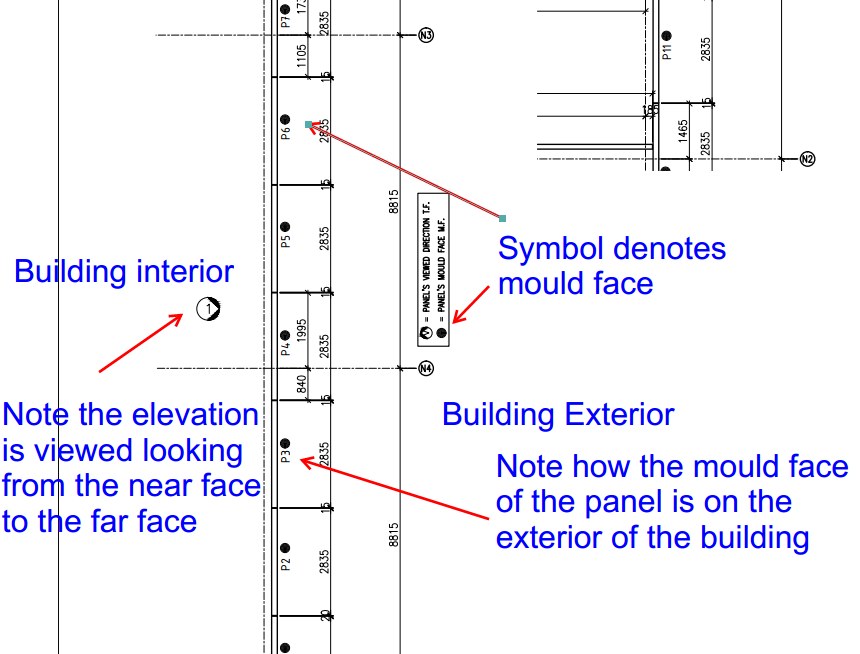
People draw elevations assuming they are looking at the near face first, rather than the far face.
This diagram should certainly clear things up for you:
Shows the near face and far faces on the marking plan – also notes where the exterior of the building is.
I hope you learned something. Any questions, please ask.
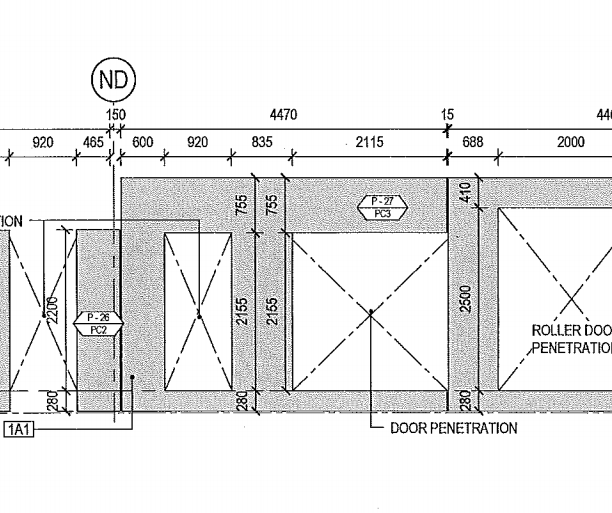
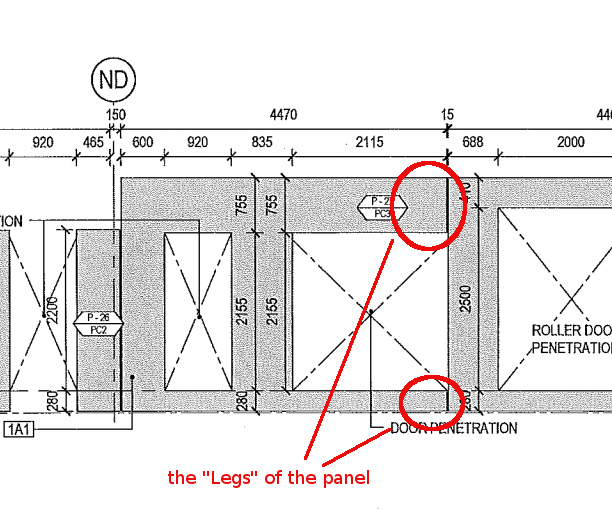
This is a first in a series of articles I will be writing about the process of precast detailing. Suppose you get a drawing like the one below.
Any problems you notice here?
Question: Is there anything that strikes you? That might be a potential concern?
Take a look at Panel P – 27. And note that it kinda looks like an arch flipped on it’s side. So what’s the problem with that, you ask?
There is a potential issue: the panel might break. Why? Because the right hand side of the panel has no real support. If you try and put the lifters on the left hand side of the panel, when you’re trying to lift it off the table, the “legs” of this panel could break, given the size of the panel notwithstanding its reinforcing.
If you put the lifters on top of the panel, then the breakage issue remains – even if you do manage to successfully lift the panel without it breaking, what about lowering it into position?
Legs of a panel. They can break off easily.
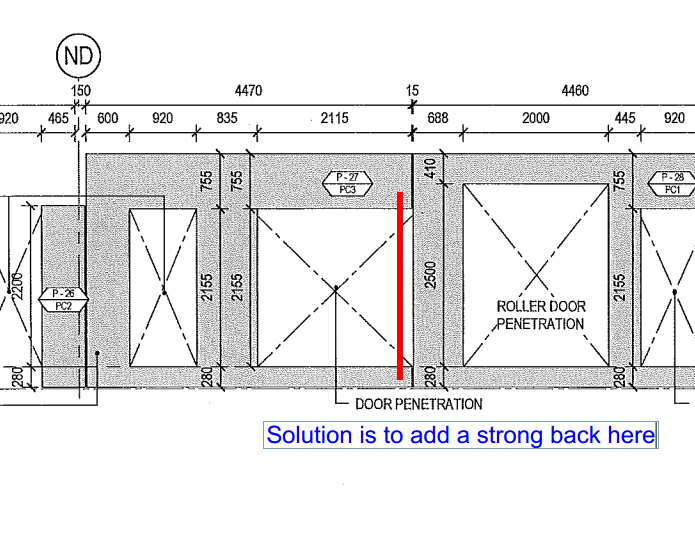
What then is the solution?
Simply use a strongback. If you don’t know what a strong back is, it is simply a beam which can be used to add support to the legs. This will give the right hand side of the panel some support and sturdiness so that it will minimise the chance of breakage.
What is a North Elevation (when outside a Building)?
Explanation with Words:
Imagine you are standing north of a building, outside the building, but facing the building in a Southerly direction.
What direction are you facing? You are facing south.
The view of the building that you are seeing is called the “north elevation”. It is basically what you see while looking South, when you are standing North of a particular building. A little tricky hey? It’s simple enough, but it’s extremely important that you get this distinction right. Here is a plan drawing.
Pop Quiz:
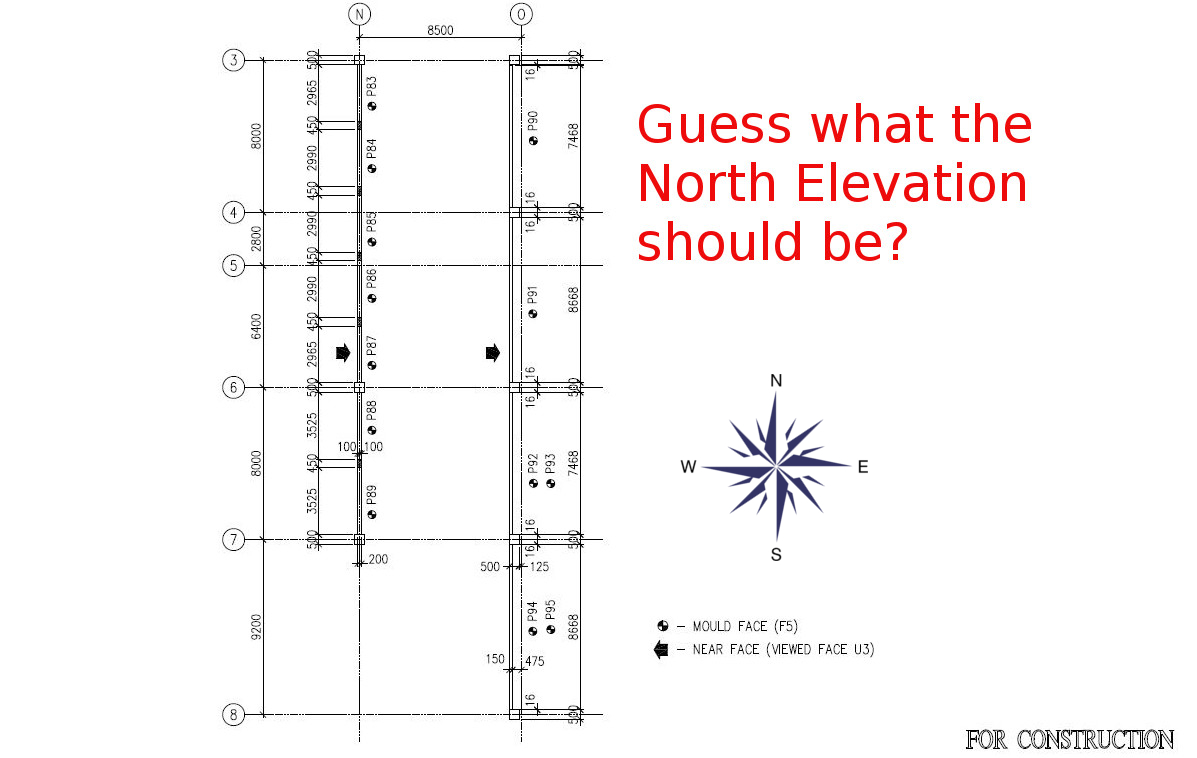
What is the north Elevation in the drawing below?
This is a plan drawing. Guess which is the north elevation?
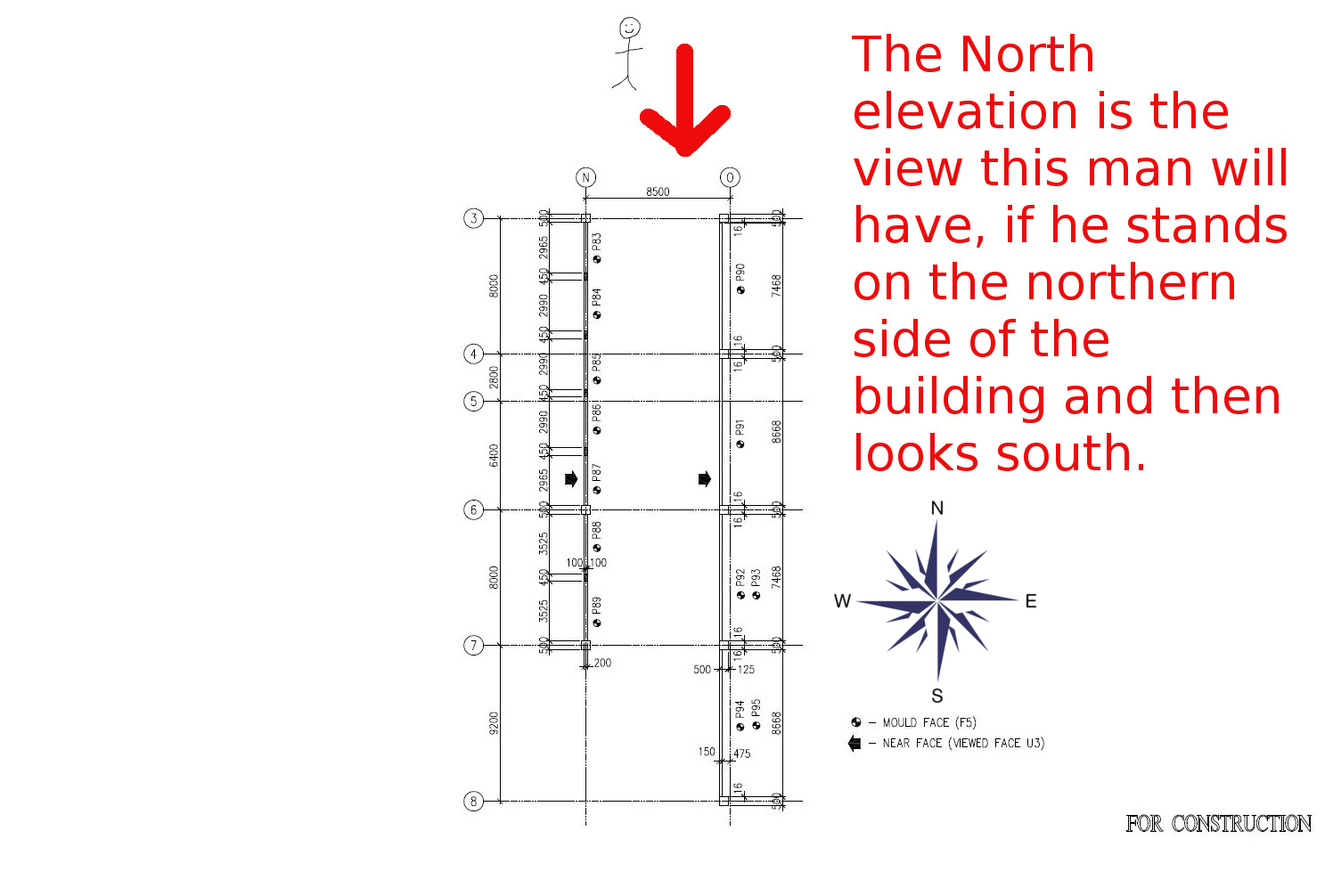
Here is the answer:
Diagrammatic Explanation of What a North Elevation (outside a building) is:
Showing what the north elevation actually is.
What are East, West and South Elevations?
Well, you’d basically have to face the opposite of the respective directions, and look at the building from there. For an East elevation, see the building while looking in a Westerly direction. For a West elevation, look at the building while facing East. All of this applies when outside the building.
Hope that’s clear/helps. Any questions? Just post a comment.