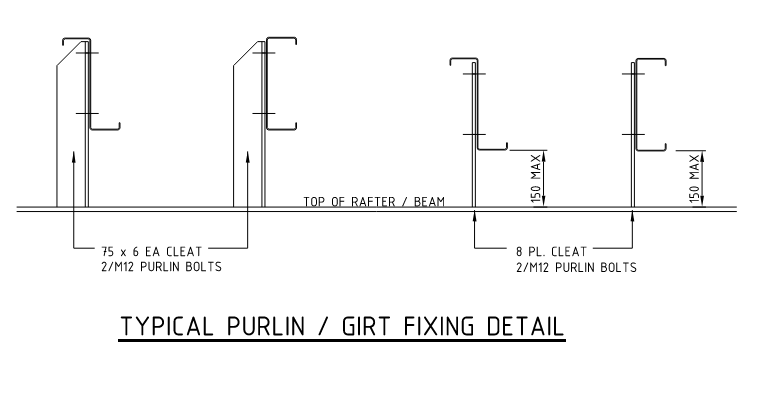
Was Very interesting to note that the Veloway Bridge is very similar to to Bridge 54 we are detailing right now

Veloway detailed by Others

I found the regulations kafkaesque. Wanting to spare you all the trouble so you know exactly what you need to comply with, in order to build a facility, here is a short precis of the regulations you need to cover:

| D500 N BAR dia d, (mm) | Pin dia factor f, (Pin dia meter dp= fxd a | 180 deg hook b | 135 deg hook | 90 cog c |
| 10 | 4 for fitments | 100/105 | 120 | 140/155 |
| 12 | 4 for fitments | 110/115 | 130/145 | 155/170 |
| 16 | 4 for fitments / 5 dia 80 | 120/130 | 150/165 | 185/205 |
| 20 | 4 for fitments / 5 dia 80 | 140/150 | 200/220 | 220/240 |
| 24 | 4 for fitments / 5 dia 80 | 170/180 | 200/240 | 265/290 |
| 28 | ||||
| 32 | ||||
| 36 | ||||
| 40 | ||||

Important points.
Do not pick points along the Arch to do a polygon cut.
Select Extreme end of the Arc and Create tangent to circle at those points.
Use the intersection of the tangents as one polygon cut node.
Other nodes should be outside the Arc.
No node of the Polygon should be on the Arc.
2 Nodes on the tangent outside the arc.
1 Node on the Tangent intersction
4th Node to close the polygon as needs to be.
The video says any point on the arc. Any point will not do- extreme points of the arc is necessary
There may be a perception that “big is better”.
i.e. that working in: Tata Consultancy / Microsoft / Facebook / Amazon or
…is better than working in smaller companies with “unknown” names and with headcounts of less than 150……but why?
(A) Job Security?
Is your job really safe(r) at these “big” companies?
These companies sometimes fire entire departments of people – it may be rare, but consider carefully whether it really is “safer”.
The only safety you have is working hard. And this applies in small and large businesses.
(B) Small Cog In a Big Edifice
If you’re working in a large corporate office: you will be a commodity resource – an employee. In other words:
(C) Benefits of smaller offices:
(D) Bigger Pay
Perhaps you might get more today at a big company rather than a “risky” wage increase tomorrow at your current company. But consider the pay implications of smaller businesses: if it grows: you’re getting in at the first floor. Especially so if you help in “grow the pie”.
Maybe those things don’t interest you. Maybe money and brand is the only thing that matters. If so, then switch. But if other things do matter, consider them carefully before leaping.

You’ve got 2-3 quotes for a precast or steel detailer or draftsman / draftsperson. Different prices. Who do you pick?
When comparing (prices), make sure you compare apples-to-apples:
Consider the following when assessing candidates:
If they’ve managed to: (i) establish themselves, and (ii) remain in business for a long time, then that, in and of itself is a semi-reliable indicator. It means:
The longer the better.
We’ve been in business since 2008. That’s at least: 16 years (at the time of writing). You can check out our ASIC filing here, and you can also check out our start year of incorporation:
We’ve been operating, successfully since 2008:

• How many past projects have then done?
• Have they documented them?
This is easily assessable:
• Steel: We have done many, many 100s of projects – possibly nearing 1000 – check out our past Steel Projects blog.
• Precast: We have done over +130 precast panel projects for Meriton alone (indirect client and through another entity we managed). Checkout all our past precast projects blog.
Documenting projects takes time. If a firm has documented it over a long period of time, it is more likely than not, that they have actually done the project. It also allows you to ask further questions about a particular project. Further it demonstrates that clients are trusting that particular detailing firm to conduct those (perhaps large, and risky) projects.
If you don’t see any projects: ask your detailer if there is any reason? Perhaps there may be commercial reasons why they are not there. Perhaps they don’t have the time / resources to post their projects.
They should only serve as a loose guide. Why?
• Only over-joyed clients will make a comment, and many will only do so after prompting because:
• Clients who are happy with their detailer: WILL NOT be incentivised to promote their detailer’s name via Google Reviews (or any other platform): because this would entail further competition for themselves, which would serve to push up their prices when asking us to quote for their work. We are not dealing with cafes and restaurants. Precast jobs are expensive, and there is zero incentive to promote “their” cornered resource, especially on jobs worth millions of dollars.
• Clients who are disappointed will not bother to leave a review: they will leave and not return.
You cannot trust the existence or non-existence of Google reviews, unless these clients are mums and dads (doing 1 off jobs), or you’ve gone above the call of duty for your client. Nevertheless, we do have some – If interested, check out Tek1’s Google reviews: Tek1’s Google Reviews:
• Do they document knowledge? Do they know what they are talking about?
• Do you learn something that you yourself did not know?
At Tek1 we document our learnings for our staff. They serve a secondary function: that of marketing to prospective clients: clients can form a judgment of competence based on the quality and quantity of documentation they can see.
Check out our technical blog posts:
1. Steel
2. Precast
3. Tekla
4. AutoCAD .net API (our programming capabilities)
5. Tekla Open API (our programming capabilities)
6. Staff Memos.
As above: documenting knowledge and creating training courses takes time: it demonstrates that a firm has the resources, and commitment to do so.
Can the cheaper detailing firms do the same?
The better firms will document their training. We do this through:
Staff are also assessed for their knowledge on the job.
If you know your domain, ask whoever claims to hold knowledge, some simple questions:
• What is the difference between a UB and an SHS? Where would I use one over another?
• What does a “grade” of material mean?
• What are my transport limitations?
• What Ausutralian standards are applicable for this staircase / balustrades?
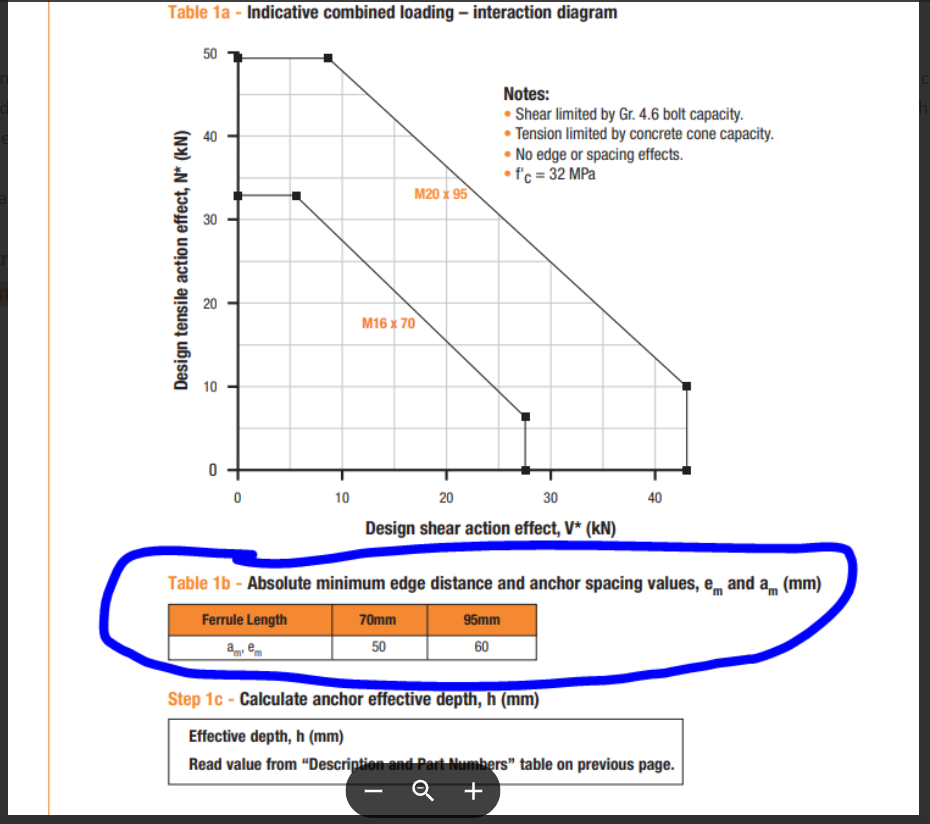
• What is the difference between a ferrule and a coupler? Where would I use one over another?
• What does rebar mean?
• How should you dimension a precast panel?
Then you can gauge whether they know what they are talking about.
• Who is doing the work?
• How long have they been with the firm?
• Where are they located?
• Do you own or control your detailers?
• How much are they being paid? What is their incentive structure?
At Tek1, we’re open about who are staff are. Many have been with us for a very long time: +8 years. This means they’ve seen a lot of issues. You can check out our team, and their blogs in the our team page.
Staff churn is not a good thing, as a client or as a business.
Our staff are located in our privately held back office in South India. We hire, we fire. We train, manage and steward. We have direct control of our staff: we do not hail-Mary your job to external contractors in Timbuktu and hope that it comes back perfect. It never does. And we pay our very staff well. When you compare our quote to cheaper detailers, consider: how much are they paying their staff? If you pay peanuts, you may get monkeys.
Legitimacy serves to add additional costs, but with those costs come integrity in the work. Basically you get what you pay for.
Will they throw you under the bus?
These are some ideas that will give you some insight into qualifying your detailer. There are many others which I have missed, or have avoided for the sake of brevity. Good luck!
Caulking: what, why and how?
Once installed, precast panels need to be “caulked”.
Why?
• To prevent air and water from getting in between.
• So what? If water gets in, it will cause damage: mould etc. – which is not pleasant for those occupying the building.
What is caulking?
• Basically putting a sealant in between the panels, to prevent air and water from getting in.
• Most caulking, when done well, can last up to 20 years, and perhaps much longer.
• Ideally, you should use fire resistant caulking.
How do you do it?
1. Wire brush the panel joints. This means to get a wire brush and scrape the edges of the panel. Why? This helps for the sealant (i.e. the caulk) to stick to the panel. Then get rid of any dust which accrued due to the wire brush. Why? To ensure maximum adhesion.
2. Add prime: where applicable. Why?
◦ Helps the caulk to stick.
◦ Fills in any porous areas, or shallow areas.
◦ Makes it easy to spot areas which need caulking and priming. But mostly, for precast panels, you might not need to prime if you choose the right sealant, and the circumstances do not require it.

Image from: https://www.wbdg.org/guides-specifications/building-envelope-design-guide/joint-sealants
As you can see it is time consuming and very expensive. Perhaps innovations can be made to speed things up in the future.
More Detail:
“I am going to leave because I need to learn American standards!”
I cannot understand why. When I ask detailers, their reasoning seems circular:
For anyone who is feeling afraid or scared about Australian Standards and who wants “American Standards” as if it is a golden ticket – consider the following post:
The “more opportunity” argument has it’s pitfalls:
Otherwise you are taking on a risk without a commensurate gain?
Australian Standards are much harder to master than American ones. If you master Australian standards – then you will easily handle American Standards. But if you have not even mastered Australian standards, then you will likely be departing here knowing little, to another domain where you not required to be as sharp.
There are differences between the standards but not a lot.
But if you have only started with Australian standards, and if you haven’t even learned that properly: then you have learned neither Australian, nor American. You have essentially learned nothing.
Then you can say: “yes I know American standards”.
People learn American standards not because it is fun but because they will earn a wage. You are earning a wage here. Becoming an Australian specialist is like becoming a heart surgeon: there will always be plenty of demand, but it is very hard to master. Smaller market, but a niche market. Still money to be made. No doctor in Australia is complaining: “but I don’t have American accreditation”. This market is large enough for them.
If you leave now: you will lose out on: (i) EBs, and (ii) Bonuses (iii) you will get less gratuity if you work here for only 1 year vs 10 years, and (iv) and the opportunities which we are working towards creating, for our staff.
I cannot promise anything, but we are working on some exciting things. In the past, people who left missed out on EBs, bonuses. You may miss out, in the future, if things are successful. Because now you are inside at the ground-floor. Because once you leave, unfortunately, I cannot take you back. Many of our former staff have learned the hard way.
Presumably, you are working for money. If you get paid well, by implementing Australian standards – who cares! Looking for “opportunity” only makes sense if you have no job. But if you have a job, why would you go from a well paid role, to a lesser paid one, for “more opportunity”?