Category: Precast Blogs

Tek1 has detailed over 100,000 precast panels over 19 years.
over 90,000 were detailed under a proxy name Advanced Pretty Pictures Pty Ltd

PRECAST PANEL DETIAILING
EXPERT PRECAST PANEL DETIAILING
  • Stair Outline Routine (AutoCAD .net + Code attached)

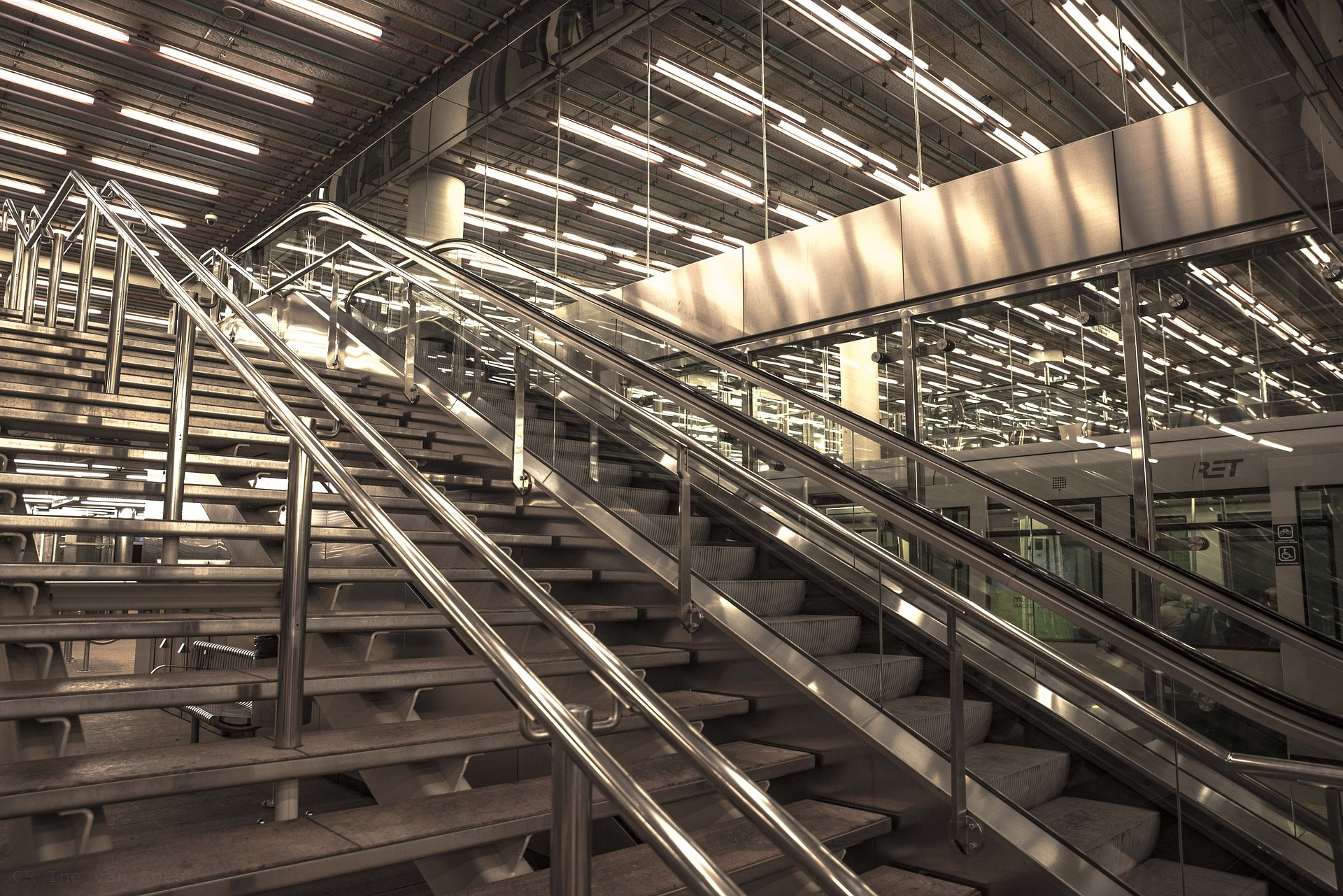
    An example of the type of stairs we draw. We do a lot of stairs. Both AS 1428 and AS 1657 compliant stairs.
    An example of the type of stairs we draw. We do a lot of stairs. Both AS 1428 and AS 1657 compliant stairs.


    We continue delving into our discussion of stairs. The boss hates it when I do things like this – releasing code to the public. But it’s too good not to share. Below is a routine you might find useful. We use it to model stairs – it’s super fast, and efficient. It allows us to try different things out and to discard what doesn’t work with ease. I’ve gone to the effort of drawing up an entire flight of stairs and then realised that I’m missing a tread. Then I’d have to redo the whole thing from the beginning. Once you have this outline done, the a good chunk of the work is finished.

    One of our many, many versatile routines:

    Here is a gif of the project:
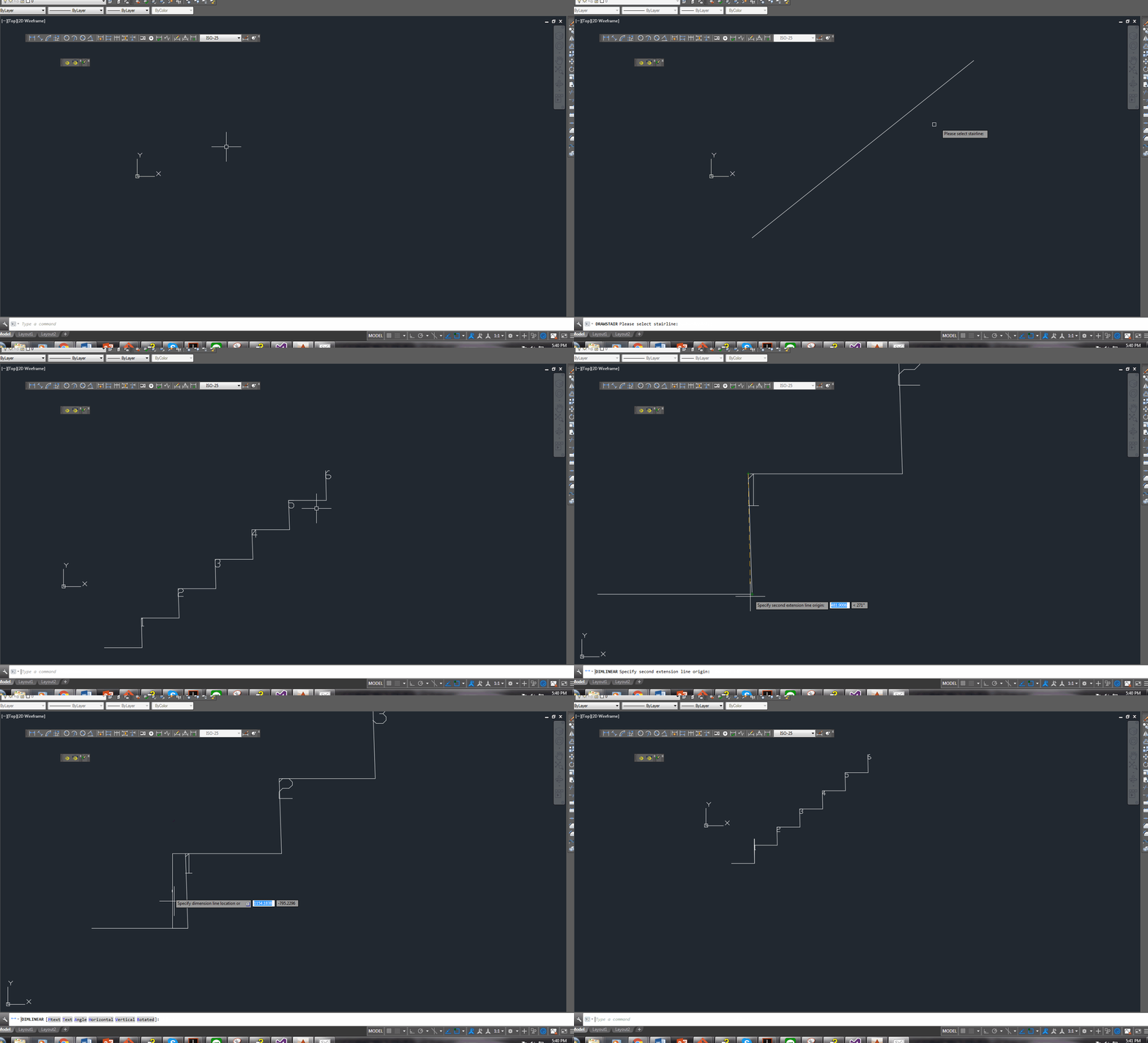
    A Stair AutoCAD Plugin
    A plugin I wrote for AutoCAD. Written using c#.

    And here is the code for the benefit of study.

    I suppose I should refactor it, but I don’t think I’ll be changing it any time soon. So why worry?

  • Tekla–AutoCAD: Interoperability Tool

    Tekla – AutoCAD Interoperability Tool

    Tekla licenses are pricey. About $30k + maintenance per license. That’s expensive. And if you had 10 licenses, or perhaps even 50 licenses, what if I told you that you needed: 30-50% less licenses than you currently hold? That’s a huge cost saving. If you only need 5 licenses, then you’ve saved $150k instantly, plus maintenance. You can now do that.

    AutoCAD licenses are significantly cheaper than Tekla.

    But if only the work you did in AutoCAD could be transferred into Tekla? That would save you some licenses.

    That’s just what I’ve done here in my latest project. You can check it out here:

    Tekla – Autocad Interop. from Tek1 on Vimeo.

    Thanks for visiting this page.

  • Past Precast Projects

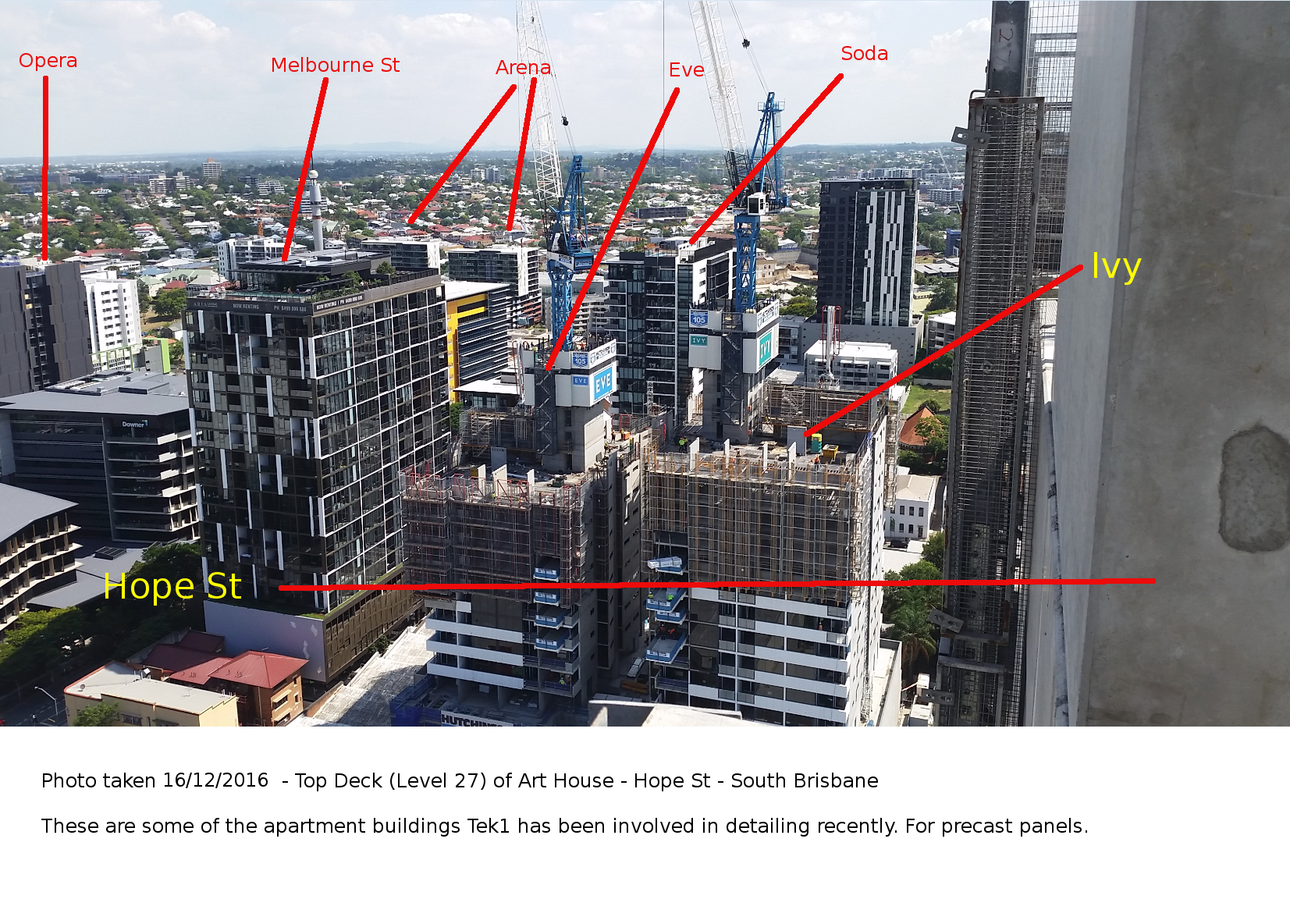
    Here are some of the projects we’ve been involved with in recent times – as of this photo (2016-2017). What’s cool about it is that they’re all in the same place at around the same time.

    Rarely will you ever see them so closely located together, let alone in the same photo. Personally I thought it was pretty cool. (Please click on the photo below to get a close-up view).

    The projects that we’ve been involved with in recent times. Either detailing or tracing.
  • Bubble Deck and Panel Detailing Tooling – AutoDimension Metal Curves

    Hi folks

    Demo of the Auto-dimension metal curve tool

    Auto Dimensioning Metal Curves from Tek1 on Vimeo.


    This post is a demonstration of the powerful tooling Tek1 has at its disposal. This will save you, the client: time and incorrect dimensions.

    This tool dimensions complex metal curves in a fraction of a second.  You can’t make a mistake – that is impossible because the computer does the heavy lifting. And it can’t take more than 10 seconds (maximum). Imagine dimensioning everything by hand. That would take forever!

    It allows our engineers and draftspeople to focus on the more important things: reading and interpreting drawings, and making good design decisions.

    with kind regards


    Ben

  • Why Bubble Deck?

    Bubble Deck – What’s so good about it?

    BubbleDeck
    BubbleDeck
    1. It’s fast, really fast.

    If you can build something quicker, than translates into making money quicker. There’s a premium on speed.

    1. Less manpower

    Less manpower on site. That means less potential problems to deal with. Which eventually translates into money. Generally speaking, the problems and costs associated with a project are proportional to the number of people involved in it.

    1. Structural Benefits

    Bubble deck slabs, because they are filled with air, are significantly lighter. Also you can have wider spans – without as much column support. This is very desirable from an architect’s point of view.

    1. Cost of manufacturing

    The BubbleDeckGroup tout it as being cheaper to manufacture. Personally, I’m sceptical of this claim. I think it’s the same, if not more.

    1. Environmentally Friendly?

    They also say it’s more environmentally friendly. It probably is relative to other solutions, but I don’t think it’s actually helping the environment. It’s sort of like the marketing on a cigarette packet saying that it’s “healthier” than other cigarettes. It is probably healthier, but cigarettes as a whole, generally speaking are not healthy. 

    What are the costs?

    Everything has to be designed correctly and properly early on. This is not necessarily a bad thing. It forces designers to plan and think things out, before the actual construction. But if the design team does a bad job, you can be sure that the entire project is going to be delayed, and is going to be monumentally expensive.

  • Tek1 Now Drawing Bubble Deck!

    Tek1 – Now has Bubble Deck Capabilities

    Bubble Deck

    After sending our staff overseas for an intensive Bubble Deck training camp, and after the development and preparation of tools to handle Bubble Deck detailing, Tek1 is pleased to announce that in addition to stand panel detailing, Tek1 has started to draw Bubble Deck slabs.

    This has been the culmination of months of hard work.


    What is bubble Deck?

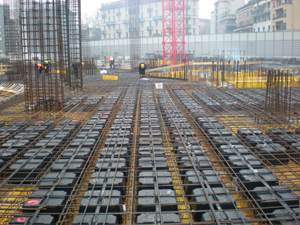
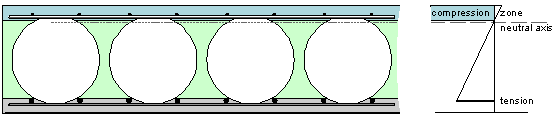
    • It is basically a concrete slabbed, reinforced, with voids in it. It is perhaps best illustrated with pictures:


    Bubble Deck Slabs
    Bubble Deck Slabs


    Cross section of bubble deck slab
    Cross section of bubble deck slab

  • Technical Note: Lifters minimum 10 tonnes & must use N20 loop bars

    What is happening?

    Summary: Lifters minimum 10 tonnes & must use N20 loop bars

    • Lifters must have a minimum capacity of 10 tonnes from now on.
    • N20 loop bars must be used on 10 tonne lifters. This is a slightly thicker diameter than the previously used bars.

    Why?

    Suppose you have a 9 tonne panel. Then a 10 tonne lifter will suffice, would it not? Wrong! The panel will sometimes actually be more than 9 tonnes due to dynamic loading. What is dynamic loading? It is the additional load that is felt by the lifter, caused by lifting the panel. If the crane drops the panel very quickly, and then stops abruptly, then the panel lifter will face a strain significantly higher than its static weight. To prevent accidents and injuries – not to mention losing a panel and the antecedent costs, all panels henceforth must have 10 tonne lifters as a minimum.

    What to do now?

    • Please make changes to the code to ensure that it is impossible to place a lifter less than 10 tonnes.
    • Please add a check on the audit to ensure that lifter under 10 tonnes are not found.
    • Please add an audit check to ensure staff are following procedures.


    For the general public, as an aside:

    What is a lifter?

    If you don’t know what a lifter is, it is basically a hook that allows a crane to lift up a panel. This “hook” is secured to the panel with what is called a loop bar.

    What is a loop bar?

    It is simply a bar which secures the lifter to the panel. If you have no bar, then the hook will simply snap off the panel. If the hook snaps off the panel while it is being lifted by a crane, you can be sure that it’s gonna kill some unlucky soul who might be walking under it. So it’s very important that every lifter is secured with the correct loop bar. There is no point putting in a loop bar if you put in the wrong one.

  • What does N12-200 EF mean?

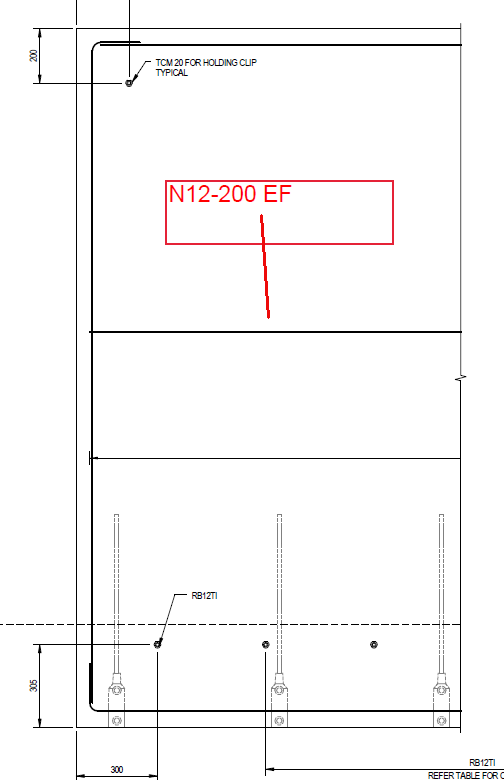
    In this blog post we will explain what N12-200 EF means.

    Please see the below diagram of a precast panel elevation

    Well, what does N12-200 EF it mean?

    Let’s break it down.

    • N12

    This is the diameter of the rod. 12 mm.

    • 200

    The 200 portion means that the rod should be spaced 200 mm apart.

    • EF

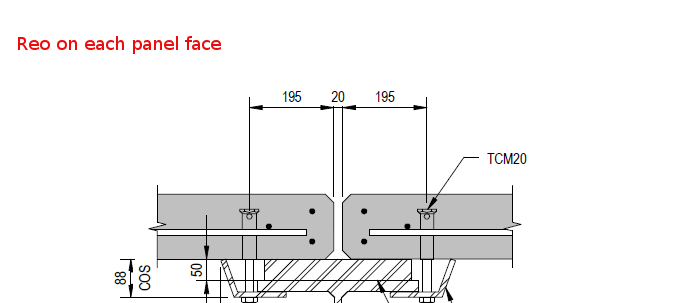
    This means that the rod should be on each face. i.e. on both panel faces. This is best served via a diagram.

    I hope you learned something!