Category: Staff Memos

Staff memos are memos to staff.
Purpose to annonce company policies, Process and procedures.
Emphasis is mainly on the process to follow

  • I need to learn AISC – American Standards! (Staff Memo)

    “I am going to leave because I need to learn American standards!”

    I cannot understand why. When I ask detailers, their reasoning seems circular:

    • “because I want American Standards sir”.
    • Others may articulate the following response: “American Standards give more opportunity”. More opportunity for what? I would understand the “opportunity” argument if you did not already have a job, but when you have a job, and can get other jobs too, it is a very confusing!?
    • Perhaps they think that learning Australian standards is a death knell for their careers? Perhaps they feel trapped?

    For anyone who is feeling afraid or scared about Australian Standards and who wants “American Standards” as if it is a golden ticket – consider the following post:

    The “more opportunity” argument has it’s pitfalls:

    (A) More opportunity also means more competition.

    • Let us take the medical profession as an example. You can be a general practitioner (more opportunity) or you can become a heart surgeon (less opportunity). But remember: more opportunity also means more competition with other service providers i.e. detailers. GP doctors earn much less than heart surgeons. Why? They are less specialised. They have “more opportunity” but less money. Heart surgeons have “less opportunity” but they make more money.
    • Rather than asking if there is “more opportunity” you should ask: “how much money can I make using American Standards” vs “Australian Standards”?

    (B) Everyone in Tek1 who has left – has left for very big increments and they know ZERO American standards.

    • If you are going to leave consider: will you get the same level of training in your new firm? Remember, it costs a lot of money to train: we have the best TLs in the world training you. We put in a lot of money to train you.
    • I would also encourage you to learn as much as you can while you are here, because the more you learn, the more you will earn – you will be promoted very quickly if you show that you have learned quickly. We are different from other firms because we want to promote you up the ladder as fast as possible.
    • HR people and managers in other firms will be incentivised to pay you as little as possible. “Do you know AISC?” You don’t know? Ok bye. “Please start as a fresher,” they will say. I wouldn’t listen to them very closely. HR recruiters as a crude generalisation know very little, and managers who do know, will want you to join with them cheaply, so they can pay you lower wages, while taking advantage of your existing Tek1 knowledge.
    • How much are our senior TLs earning in EB and bonuses? How much did anyone who has left, leave for? Ask them: and you will see that if you want to leave, then you can leave at any time and for large amounts, because you have been operating under the Tek1 brand.

    (C) If you’re going to leave, then leave for big increments.

    Otherwise you are taking on a risk without a commensurate gain?

    (D) Once you learn Australian standards then you American standards are very easy.

    Australian Standards are much harder to master than American ones. If you master Australian standards – then you will easily handle American Standards. But if you have not even mastered Australian standards, then you will likely be departing here knowing little, to another domain where you not required to be as sharp.

    There are differences between the standards but not a lot.

    But if you have only started with Australian standards, and if you haven’t even learned that properly: then you have learned neither Australian, nor American. You have essentially learned nothing.

    (D) You can learn the AISC standards WHILE YOU ARE HERE and then go.

    Then you can say: “yes I know American standards”.

    (E) You can earn Good Money Catering to the Australian Market

    People learn American standards not because it is fun but because they will earn a wage. You are earning a wage here. Becoming an Australian specialist is like becoming a heart surgeon: there will always be plenty of demand, but it is very hard to master. Smaller market, but a niche market. Still money to be made. No doctor in Australia is complaining: “but I don’t have American accreditation”. This market is large enough for them.

    (F) Lost Opportunity

    If you leave now: you will lose out on: (i) EBs, and (ii) Bonuses (iii) you will get less gratuity if you work here for only 1 year vs 10 years, and (iv) and the opportunities which we are working towards creating, for our staff.

    I cannot promise anything, but we are working on some exciting things. In the past, people who left missed out on EBs, bonuses. You may miss out, in the future, if things are successful. Because now you are inside at the ground-floor. Because once you leave, unfortunately, I cannot take you back. Many of our former staff have learned the hard way.

    (F) But they want AISC!???

    • Why do they insist that you have x years experience + AISC? It’s because a lot of job applicants are actually liars – it is very difficult for them to tell you apart – with your Tek1 knowledge + training – from everyone else. As a result, they don’t want to take risks: that’s why they demand such high (and absurd) requirements.
    • They don’t know any better: managers and HR people, who don’t know, simply say: “I want AISC experience”. But anyone who knows steel detailing knows that learning a new standard, after you already know existing ones – is very easy. So either they: don’t know, or are low-balling you (to get you cheaply).

    (G) Don’t forget why you are working?

    Presumably, you are working for money. If you get paid well, by implementing Australian standards – who cares! Looking for “opportunity” only makes sense if you have no job. But if you have a job, why would you go from a well paid role, to a lesser paid one, for “more opportunity”?
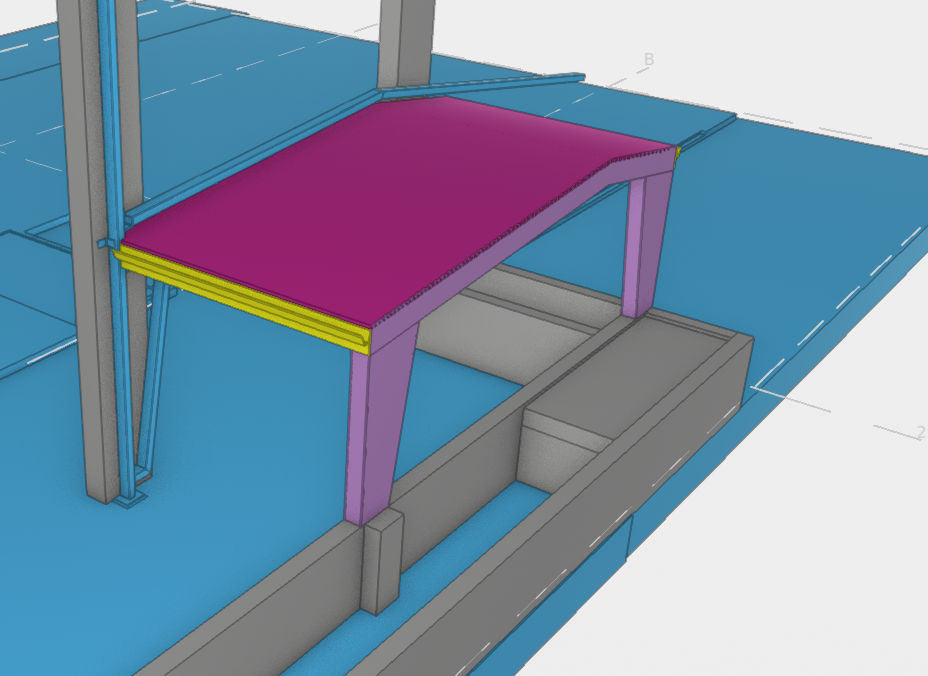
  • Surveying: renting vs buying; ourselves vs out-sourcing

    This will give you an insight into our decision making process at Tek1.

    We are investigating the feasibility of purchasing Trimble surveying equipment. Total Station etc. For internal use only.

    * Cost of equipment: $100,000 + subscription software / maintenance.

    * Cost of renting: $500-800 / day

    We have $0 revenue coming from surveying, moreover we are not licensed surveyors. It will not be easy competing with professional surveyors. Unless we have a significant advantage in acquiring customers, it would not make a lot of sense competing with the professional surveyors.

    What would you do? Buy or purchase? Or use a professional?

    Given a choice of renting vs buying – we would rent – because:

    * we would need 125 days of rental utilisation ($100,000 / $800 per day) before it becomes and profitable to purchase this equipment vs renting:

    * prefer for Tek1 to be well capitalised by retaining cash – i.e. it is better for the cash to be in our pockets rather than Trimble’s.

    * This is a mutually exclusive decision: if we purchase the surveying equipment, that will limit our ability to get into some more profitable arenas.

    If we owned, we would have to maintain it. It could break, or get stolen etc.

    But even better than rolling our own: should we get a third-party surveyors

    • The benefit of rolling our own is that we will have intimate detail of all things pertaining to surveying – which will (potentially) allow us to deliver a better product. But it comes at a cost:
    • Cost: you’ll have to pay more for a contract surveyor – but then they take care of everything: machine, licenses, transport, and deliver a final output to you. Benefit is that you save time. And you don’t have to learn the nitty gritty. i.e. finding that menu options buried deep in the Total Station equipment. We can focus on what we’re good at, at let others focus on what they’re efficient at.
    • Cost: you will have to coordinate with them (vs coordinating internally. It’s tough to find a good one.
    • Hidden benefit: as a customer, you can “learn” some hidden tips your surveyor. Most will be happy to help, so long as you don’t burden them.

    Aside: Renting is similar to borrowing

    Imagine if I borrowed: $120,000 and repaid the loan over the course of a year.

    Cash flow from borrowing:

    • $120k – January
    • $120k – February
    • …etc.

    Now let’s look at the cost of renting at $120k / month but also getting ownership of the final product at the end of the period

    • $120k – January
    • $120k – February
    • etc

    You’ll notice that they look quite similar. You can think of renting as also borrowing money, and repaying – and if you rent short term, it’s like borrowing, repaying, and not getting an ownership interest in the underlying asset. If you can immediately end your rental, then it would be the equivalent of borrowing, purchasing an asset, and then reselling it when you no longer need it – with the rental provider doing all the work for you. i.e. it essentially allows you to take on debt, without explicitly declaring it on your balance sheet (all of this subject to the accounting rules and practices in your jurisdiction).

  • How can I earn more? (Memo 29)

    • How can I earn more?
    • How can I get a higher wage?

    Legitimate questions.

    In order to answer those questions, consider:

    • Where is the money coming from?
    • Why is the money being paid?

    Where is the money coming from?

    • Nobody has a pot of gold.
    • For all businesses, the money comes from clients. It is the client who is paying you, not me. The client pays you, not the shareholder.

    Why is the money being paid?

    • You are being paid because the client needs help.
    • Your job is to guide the client to his destination. This means looking after and caring for your client.
    • Clients are risking million dollars (in some cases) on their projects. You need to help the client so that they don’t lose their money, business and reputation.
    • This means if you want to get paid well and get repeat business: focus on doing a great job for your client.
    • If you do a mediocre job, barely good enough – then this will not impress the client. How then are you going to ask the client for a pay rise?

    How can I get a higher wage?

    If you want more, the only way to do this is to give more. The question you should be asking is: how can I give my client more?

    (a) Outstanding Service

    • First provide an outstanding service to your client. If you do this, you’ll get more clients and more work. If you don’t do this, then you’ll lose clients, and you’ll have less work. Keep doing mediocre work and you’ll soon have zero clients, and no work.
    • Do the simple things well. I do not want to keep reminding you to:
    1. update your status,
    2. inform the client when you are unavailable (perhaps a cultural celebration, or an event, or a wedding etc),
    3. or to post links to drawings in the private details of your statuses.
    4. don’t promise things you cannot deliver.
    • Once you have many clients, then we can choose our clients carefully, and choose the rates.

    (b) Innovate

    • Anything you can suggest which will make us cheaper / faster / better will be highly regarded.
    • Innovate: This is the best way to get higher wages. Because if you provide something that the client finds valuable, that they cannot easily get elsewhere, they will pay for it. Small things are fine. Here are a few examples of innovation.
      • All of you have Teams accounts so you can better communicate.
      • We are now providing Live Links on all projects.
      • We provide statuses. We have private_details on all statuses.
      • All of you now have phones. Use them! Turn them on. Be a professional. Call clients on delivery of drawings.
      • We have multi-tenancy on the quote app. (Ram suggested it a long time ago).
      • Big one: we have EBs and approval process.
      • Big one: We have bonuses for winning and retaining clients (i.e. client reviews).
      • Barath made tutorial videos – this reduces our cost of training.

    Proof of Tek1’s commitment to your remuneration:

    1. EB. We have proven that if you give clients something valuable to them – they will pay you for it. You have seen this with our EB system.The innovation here is simple: give clients compelling documentation.
    2. Bonuses. For winning and retaining clients. For high quality work.
    3. Higher wages. Retaining a stable of premium clients allows us to pay you higher.

    Higher wages takes time. If you focus on client outcomes, and innovate (or at least, help me innovate) then you will be able to get persistent differential returns. However, if you don’t focus on client outcomes, then it will be difficult for you to earn differential returns anywhere – whether inside or outside Tek1.

  • Why builders and fabricators should care about the legitimacy of supplier services?

    Dealing in Fenced Goods and Services

    It’s not uncommon for those receiving fabrication drawings to overlook the legitimacy of the products used by service providers. There seems to be a prevailing mindset of indifference, with the attitude being, “As long as the drawings are correct, I’m fine—I’m legally protected, and proving involvement with stolen goods is too challenging.”

    Similarly, many fabricators and builders consciously avoid probing into the legitimacy of the software used for services. The fear of inadvertently becoming complicit in any wrongdoing deters them from asking uncomfortable questions. However, this approach presents a couple of significant issues.

    1. It sets a concerning tone within your own business. If engaging in any form of dealing with stolen goods becomes an accepted part of your company philosophy, you inadvertently create an environment where “dealing in stolen goods is acceptable as long as we avoid problems.” This not only makes your business susceptible but also ingrains a risky culture among your staff.
    2. Secondly, this approach poses a broader threat to society. By turning a blind eye to the legitimacy of goods and services, you inadvertently contribute to a scenario where bad actors replace good ones.

    The moral compass guiding what can be stolen and how far one can go becomes unsettlingly subjective, lacking the high ethical standards needed to foster a thriving and reputable industry.

    It’s crucial for businesses to reassess their practices, placing a premium on integrity and ethical conduct to ensure the industry maintains its standards and safeguards against potential harm.

  • The fallacy of insurance in the building and construction industry – (Staff Memo)

    Clients often ask me: “do you have professional indemnity insurance” (PI Insurance)? The short answer is “yes” we do. It isn’t cheap: we pay over $20,000 per year in premiums – last year was about $27,000. But the long answer is, while we do have insurance: you cannot rely on it.

    Here’s why:

    • Insurance companies are not in the business of paying out. Their business model consists of collecting premiums (up front), re-investing those premiums, earning a return on the “float” as well as profiting from any claims that are not paid out. In order to minimise their costs, they are incentivised to fight claims.
    • The procedural / documentation issues: in getting a pay-out is very high – it is almost impossible for anyone to meet these requirements. If a claimant cannot access the insurer’s honey-pot, then you’re stuck without a paddle.
    • Subrogation: You’ll have to claim from me, I will be required to notify the insurance company, and then they will grab the steering wheel off me and takeover – i.e. “subrogation” occurs. Since the insurance company is the one who will be paying out, they must necessarily do this to safeguard their interests.
    • The costs of pursuing a claim are very high.
    • If there is a successful payout – such firms will be black-listed in the insurance market, they won’t be able to get insurance, consequently they may have to go out of business. The mere existence of a firm, lasting 15 years, is indicative of their quality.
    • At Tek1, we limit our liability.
    • Building and construction is usually collaborative endeavour. If a project goes wrong, everyone gets dragged into the fray. Most firms cannot afford to pay for the costs and mistakes of third parties.

    In summary, while we have insurance, both you and me cannot rely on it.

    The best protection is prevention: mitigate risk, and take care, and ensure all parties are equally vested to achieve the desired outcome.

  • You Need to Win Jobs at a Margin (Commercial Tips)

    There is no point being “a busy fool”. If you’re winning jobs at a loss, or at really unattractive margins – things are probably not going to go well for you.

  • Collect a deposit: (Commercial Tips)

    It is critically important that you collect a deposit:

    • So that your client is on the journey with you. i.e. you are both incentivised to reach the same outcome
    • So that you can pay your suppliers (on time).
    • So that you are not held to ransom.
    • So that you can actually do the job, to the standards which you are attaching your name / reputation to.
    • So that you don’t have to BS people – so that when you say you will pay, you can actually do so.
  • How to get fast variation approvals (or denials) on your construction projects?

    How do you get fast variation approvals (or denials) on your construction projects?

    You need:

    (1) Clarity : Be clear of what change is needed.
    (2) Evidence : Evidence of client change request.
    (3) Brevity : Be brief, concise, to the point.

    Watch here for an example from a real life project (not a hypothetical) of the fantastic work done by @Ramakrishna L.

    If the approvals / denials are delayed, it is super easy to track and follow up – now that you have the records.

    Subscribe for more useful tips on Tek1’s Steel Detailing blog: https://www.tek1.com.au/category/steel-detailing/

  • Memo 28 – Staff Moonlighting Policy

    Memo 28 – Staff Moonlighting Policy

    Moonlighting Policy

    I do not believe it is possible for someone to work for two entities at the same time:

    No servant can serve two masters: for either he will hate the one, and love the other; or else he will hold to the one, and despise the other. Ye cannot serve God and mammon. Luke 16:13 KJV

    This applies to both spiritual things and also worldly things.

    If a staffer is drawing income from another source, especially if that income is substantial, then that is a problem for me – because:

    Why should he care about this firm?

    • If he makes a mistake in the work – it’s no big deal – he doesn’t suffer a loss in income because he is drawing some from elsewhere. In fact, he will take less care.
    • He won’t bother to focus on improving his work, his efficiency at Tek1, because he is getting money elsewhere.
    • His energy is divided. It is impossible to run two marathons, with the same energy as if you ran just one.

    Using Tek1 licenses for your own private endeavours is DISHONEST, it cheats the firm, it cheats other staff.

    Entrepreneurship

    If you are capable and skilled at bringing in work – then bring in work FOR THE FIRM.

    You will be rewarded for doing so.

    But if you do things on the sly – use the firm’s resources to personal gain – then that is a policy that will not serve you well, nor will it serve the rest of the firm well. You must choose: either be hot, or cold. But lukewarm water: I will spit out.