Category: Staff Memos

Staff memos are memos to staff.
Purpose to annonce company policies, Process and procedures.
Emphasis is mainly on the process to follow

  • Australian Standards – Available for Staff at Tek1 on the firm’s Google Drive

    All staff should have access to the relevant Standards.

    You should be familiar with them, and master them – otherwise you will embarrass yourself, and the firm, if you claim knowledge but demonstrate ignorance. The latter is especially costly to clients, and detrimental to your name and reputation (as well as the firm’s) – you certainly will not be getting repeat work if you prove ignorance.

    Please access them at the firm’s google drive location here.

    Standards available amongst many others:

    • AS_2870-2011 – residential-slabs-and-footings.pdf
    • AS_1100.101-1992 – technical drawings.pdf
    • AS_3600-2018 – concrete-structures.pdf
    • AS-NZS_2425-2015 – bar-chain-in-reinforced-concrete.pdf
    • AS_5216-2021 – post-installed-cast-in-fastenings-concrete.pdf
    • AS_1657-2018 – Fixed platforms, walkways, stairways.pdf
    • AS_3700-2018 – masonry.pdf
    • AS3850-2003 – tilt-up-concrete.pdf
    • AS_4100-2020 – steel-structures.pdf
    • AS_3850.1-2015 – prefabricated concrete elements – part 1 – general requirements
    • AS-NZS_1170.1-2002 – structural-design-actions.pdf and also AS-NZS1170.2-2021.pdf
    • AS_3850.2-2015 – prefabricated concrete elements – part 2 – building construction.pdf
    • AS-NZS_1554.5-2014 – welding of steel structures subject to high levels of fatigue loading.pdf
    • AS 4100 & AS/NZS 4600 – Steel Structures and Cold-Formed Steel Structures
    • AS/NZS 5131 – Structural steelwork – Fabrication and erection

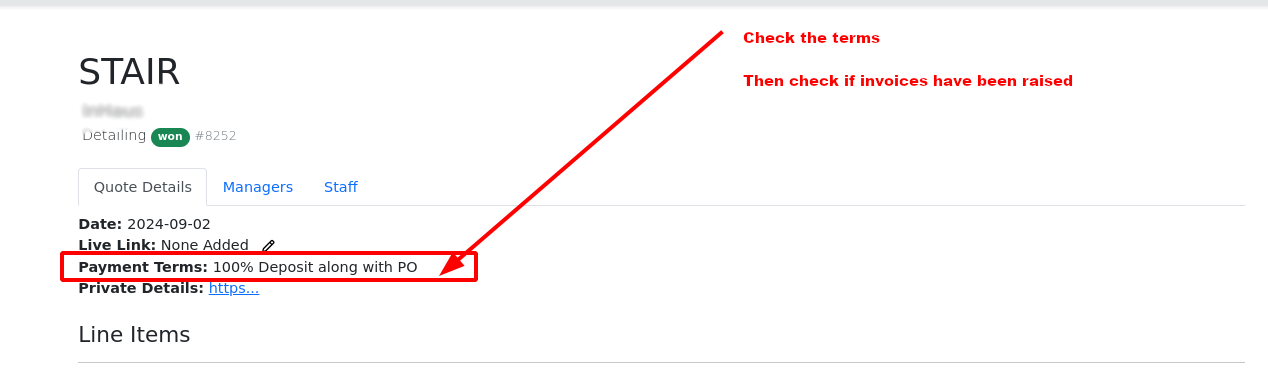
  • Memo 43 – The Process of Invoicing – Check if Invoices have been raised

    What is the problem

    • A cynical view of building and construction around the world: “not paying” is the standard business model of many firms in the indusry.
    • Once you give away your product (for free), there is zero incentive for a client to pay.
    • If a client doesn’t pay does that affect you? Absolutely, it affects you – it might not seem like it – but it affects everything in a business: remuneration, the quality of our infrastructure, training, our ability to take on jobs, our ability to win work.

    What is the process?

    1. We raise an invoice.
    • I typically raise an invoice on IFA.
    • If you don’t mark it as IFA, I will not raise an invoice – unless you tell me.
    • Sometimes we may need to raise an invoice BEFORE you get to IFA. In those instances, please notify me.
    1. I show your client’s bookkeeper your “approval emails” and purchase orders
    2. The bookkeeper will pay.
    • If the book keeper sees no approvals, or no purchase order, they will not pay us.
    1. We get paid.
    2. And then we give away our work.

    Things may vary, depending on the job, but that’s it in a nuthsell.

    Check Payment terms before:

    • releasing IFA drawings,
    • before releasing IFC drawings
    • before starting a job.

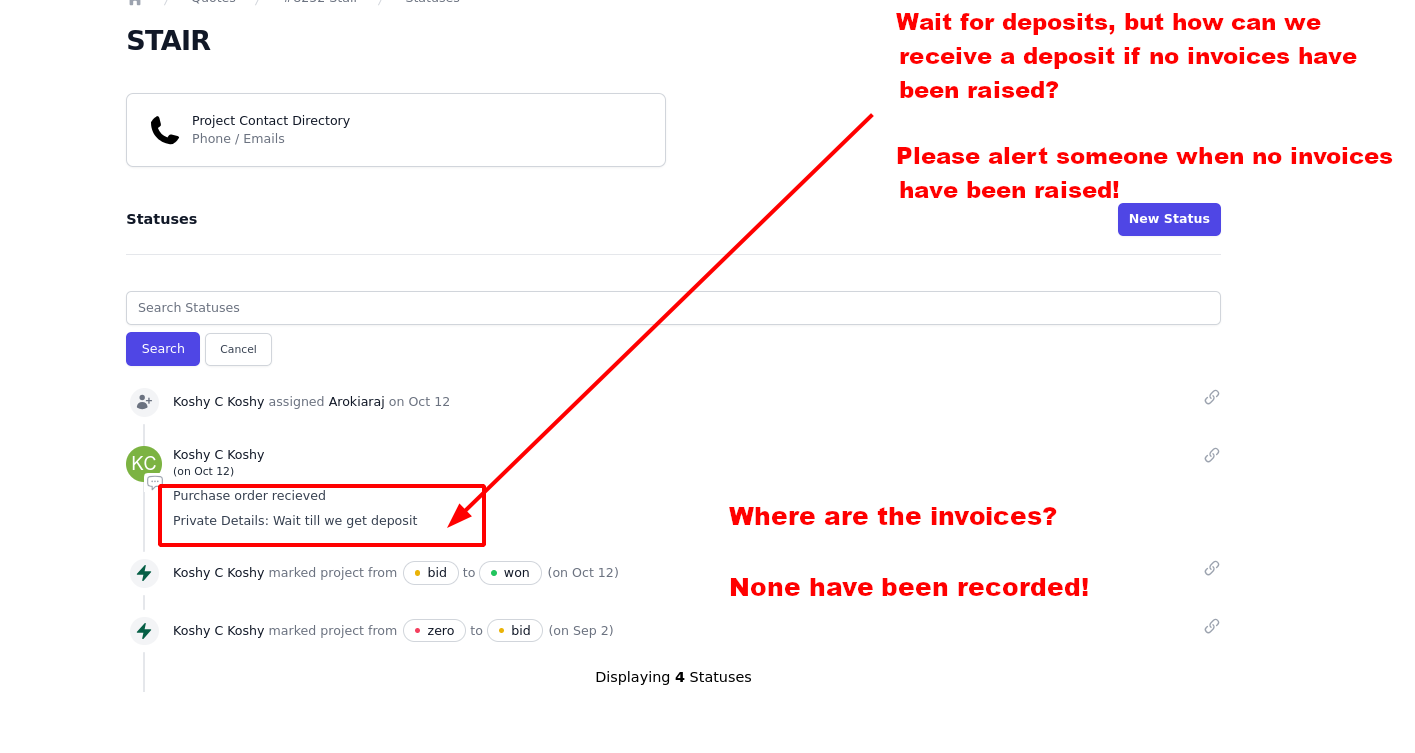
    Alert someone if you see that invoices have not been raised:

    • If you find that we need to raise invoices, and no invoices have been raised: then that is a big problem: how will everyone get paid without an invoice being raised? You will need to immediately alert someone about this. Occassionally things get missed.
    • If you see that we need to collect 100% before IFC is released – then again, check that invoices have been raised, and ensure that the money has been collected BEFORE releasing IFC drawings.

    But the Managing Director said: “we have been paid” therefore I sent the drawings:

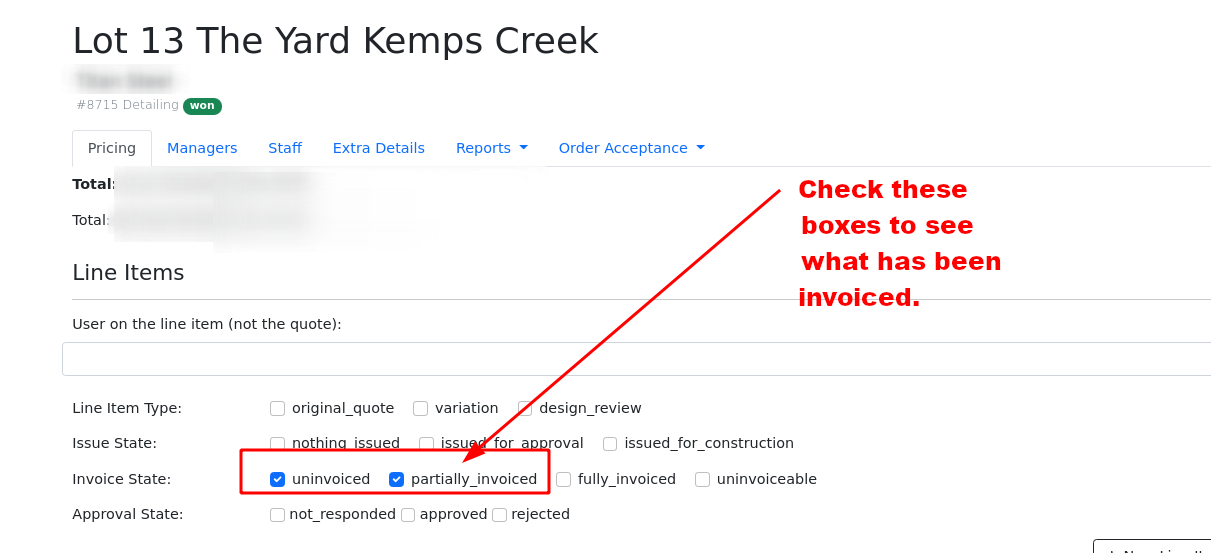
    • Sorry but that is not a good enough. Your MD is dealing with 10s of emails / calls etc at the same time, and makes a LOT OF MISTAKES re: invoicing. This has happened many, many, many times. Many times. Q8715 is the latest example of a mistake in invoicing. YOU MUST CHECK that invoices have been raised and sent – which is different from checking whether we have been paid. In other words, how can we be paid, if we haven’t even received an invoice?

    How do I check?

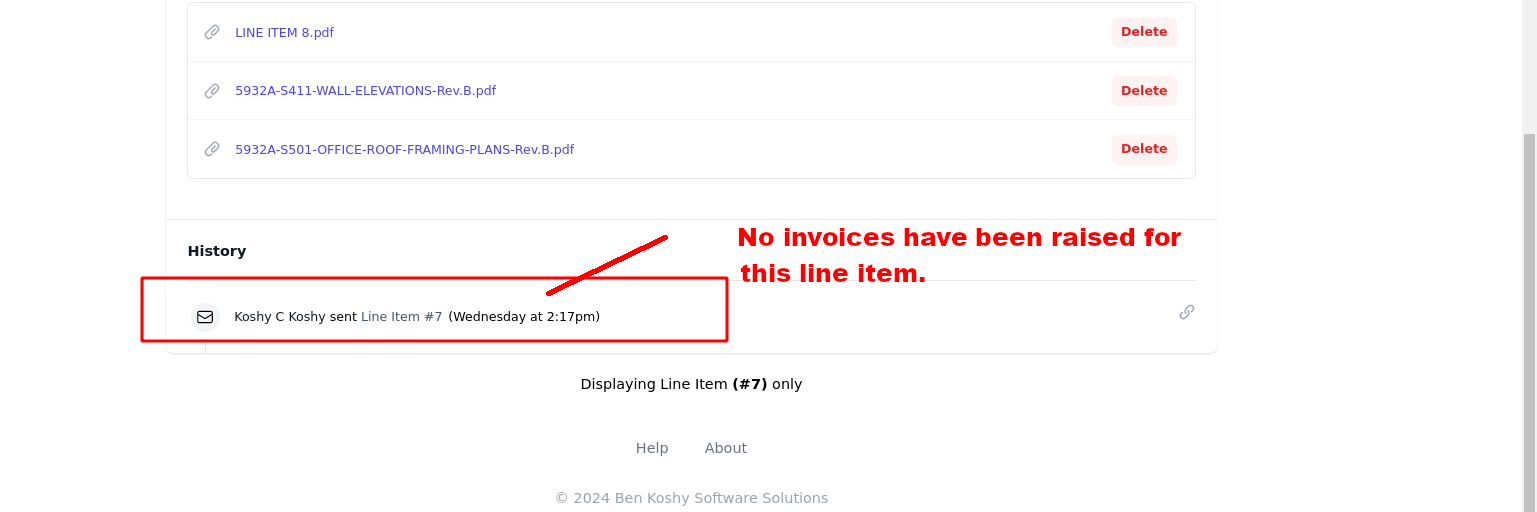
    Check on the line item itself: as you can see, no invoice has been raised for line item 7:

    But two people said two different things:

    • If you have received conflicting instructions, then you need to clarify these things before sending all the drawings. Once the drawings are sent, then it is very, very difficult to collect payment from certain clients.
  • How to get a pay-rise?

    How can I get a increment / pay-rise?

    Learn! The more you learn, the more you will earn.

    How does it work?

    I would love to pay you millions for sitting on your chair, however, I do not have pot of gold under my desk.

    Everything you earn must come from customers…..and they will only pay top dollar IF YOU MAKE THEM MONEY or help them in some way.

    In other words, you need to have skills – good skills, in order for THEM to make money. And as they make money, you will make money.

    That’s how the world works.

    Frustration over increments

    You may not be pleased with your increments.

    Again, we’d love to pay you a big increment, but can only do so if you learn quickly and can prove it. If your work needs to be constantly checked, or if you make the same mistakes, again, and again, and again, then the cost of your project increases dramatically, because it will take longer, and more resources in order to deliver it to the client. i.e. instead of you being a COST on a project (juniors, at the moment you are COSTING, not benefiting – but we are hoping you will become sufficiently productive in the future so that you become a benefit) – we want you to become a BENEFIT.

    The faster you become a benefit, the better. And the more you will get paid.

    If you are frustrated over this issue, and you wish to leave – that is fine – but why leave for a small increment? You may as well leave for a large one.

    Secondly, people seem to think they can “get ahead” by jumping ship every 12 months. This will likely work in the short run. New employers will be pleased to hire someone who is already trained, and they can pay for it since they did not incur the costs of training you have benefited from. However jumping ship may not work as well in the long term. i.e. in 5 years, you will have accrued 4-5 different employers, and you become “risky” in terms of anyone investing time and money into you. Some past employees have sought to get around this issue by lying on their resume.

    What do I need to learn?

    Some examples:

    • Learn, how to use your tools. AutoCAD, Tekla, Revit.
    • Learn how to write essays.
    • Learn how to speak good English. Clients VALUE THIS.
    • Learn how to market yourself.
    • Learn Australian / American standards. By yourself. Everyone wants to claim that they know the standards, but very few actually sit down to properly learn them.
    • Make something better, or faster, or cheaper. Ingenuity is valued highly.
    • Videos are highly regarded.

    All of the above is hard-work, and will require self-directed learning.

    If you want big increments but can speak broken Tamil-glish, and don’t know how the standards, cannot use the tools properly, cannot manage RFIs – where will the money come from?

    How can I prove I have learned?

    A great way to prove your expertise on a subject matter is to write about what you learned. Why should you bother?

    1. You will benefit. By writing, you will crystalize the concepts you have learned.
    2. Writing is a super power:

    The ability to write concisely is a super power – it will open doors for you: with clients, and all manner of business. A simple proposal, well thought out, is all that is required to procure millions in funding.

    Generally speaking a well thought out plan will trump none at all.

    Writing has the following benefits:

    1. Primarily: it refines your own thinking.
    2. The process of writing forces you to validate your own logic.
    3. It effectively communicates your logic to others – who can improve it, or invalidate it. In other words, it aids in better truth-seeking.
    4. It allows for groups to better coordinate, in order to produce an outcome.

    Prove your knowledge to others

    Why should another firm hire you for a large increment, when you don’t know anything, or can’t prove you know something?

    An easy way to prove your knowledge is to point to a portfolio of articles.

    When you go to interviews you can say:

    • “Here are my articles on Tekla” or “steel detailing” on https://www.tek1.com.au/category/steel-detailing/
    • Here are my portfolio of projects.

    Recruiters will immediately see your value. And you’ll be hired for a big increment rather than a small one.

    Tek1 Affords you the opportunity to self-promote

    I do not know any other firm who does this.

    Most other firms will try to limit you. But we do not. Why not take advantage of it?

    Promote your portfolio to the world, on social media etc.
  • Memo 43 – Cut the Crap from your marketing materials

    I see this type of thing all too often from Tek1 staff – from both our offices:

    At Tek1, we believe in pushing the boundaries of conventional design to provide our clients with superior results. This project exemplifies our dedication to innovation and quality in every detail

    Cut it out. It’s nothing but BS / Crap.

    Here is another example

    In the fact paced world of engineering projects, time management is critical. Recently I encountered a situation that highlighted the importance of accurate time estimation and the complexities involved in project rework. Here is a detailed account of my experience.

    Again, please cut the crap.

    It doesn’t look good at all. People will think that you have very, very poor English skills, and that you used ChatGPT to formulate your answer.

    This will reflect very poorly on your name, and mine.

    Incidental, you should not praise yourself. Let someone else do that for you. Adhere to the adage:

    Let someone else praise you, and not your own mouth; an outsider, and not your own lips. (Proverbs 27:2 )

  • Memo 41: Be aware of Risks, Transportation and Site Costs when making changes

    Engineer says, make the change to a little cleat.

    And then fabricate. No need to re-submit for stamping.

    But should you?

    Just a little cleat?

    Except it’s on the end of a 15m beam.

    What’s the problem with that?

    • 15m beams are not standard size.
    • They need to be placed on oversized trucks. Trucks ain’t cheap.
    • This means that they they can only be transported outside business hours – big trucks will slow down traffic.
    • Also you need a special crane to lift such large beams into place. They ain’t cheap: $600 per hour. And remember, you cannot just hire it for one hour, you have to hire it for an entire day / week.
    • If there’s a problem with the cleat, then you might find it difficult to fix on site. This means you have to bring the beam back down to the ground. Where are you gonna keep it?
    • Are you going to send the truck away? Of course not – you’ll need the truck.
    • And you’ll need the crane for an extra day.
    • And you’ll need to pay overtime rates.

    ……..so the question is, if something goes wrong, who’s carrying the can?

    What should you do?

    Make sure everyone’s on the same page. Seek an approval from the engineer. When everything’s fine, then party keeps going. But when there’s a mistake, and huge costs, and liquidated damanges, fingers will be pointed.

    Make no mistake, they want you to carry the can.

  • Memo 40: What is your job as a detailer? Is it to simply do what the engineers said without question?

    Memo 40: What is your job as a detailer? Is it to simply do what the engineers said without question?

    Typically you receive

    • engineering drawings
    • architectural drawings

    And using them, you must make shop drawings.

    You must consider:

    1. Buildability
    2. Any applicable standards (Australian Standards).
    3. Transportability
    4. Erectability
    5. Risks / Complexity
    6. How to minimise work/labour,
    7. and minimise costs to your fabricators
    8. …. and remember: concrete is NEVER where it should be. It is NEVER poured correctly. When concrete is involved, you will typically need site measurements.

    Key Issues:

    1. Engineers and architects often make mistakes,
    2. and/or present unworkable designs
    3. or expensive / complicated details.
    4. ……..they are not an authority figure.

    You must question everything they suggest.

    Everything you see must pass the “smell test”.

    Do not put something ridiculous on the drawings simply because the engineer wrote it on HIS drawing.

    Your job is to apply your judgment to the engineering and architectural drawings and produce something which can be built quickly and efficiently by your clients.

    If you see an engineering design that is questionable, you must question it:

    DO NOT ever say to your client: “but it was on the engineering drawings”

    That is not an acceptable answer.

  • Memo 39: Remove any reference to “hourly billing” and expose prices to staff

    Memo 39: Remove any reference to “hourly billing” and expose prices to staff

    • Today marks the day we are completely moving away from the “hourly” billing model. In other words, we are no longer billing clients “by the hour”.
    • Secondly we are fully exposing our pricing to our staff.

    Why?

    1. Because client do not care how long it takes for you to do something. Whether it takes 10 hours vs 12 hours is irrelevant to them: all the client cares about is cost, and quality, and value.
    2. Client do not pay for hours. They pay for solutions.
    3. Clients want solutions NOW, rather than 10 hours later. So if you can give them something valuable NOW, then charge for it!

    And the ironic thing? We always quoted fixed prices

    • We never billed by hours. We always quoted fixed prices, but the problem was that we rationalised those prices in terms of hours. I felt that clients often got confused when they saw “hours” on the “approval emails” versus rationalising them as fixed costs. I also felt that they may have gotten them confused with those prices as being estimates. Our latest policy change makes everything explicit.
    • Occasionally, some clients argued that the “hours” were “too expensive”………. Most clients, initially did not appreciate the value of this model. All of our clients now do. There were two who did not – they are no longer our clients. We amicably parted.
    • e.g. if we charged our client $1000 and then reasoned to the client: “but we took 10 hours” then that would average out to be “$100 / hour” which might be acceptable to the client. However, if it took us 5 minutes, because we had a special tool to speed up the process, then how should we charge our client? For 5 minutes? No we should perhaps charge at least $1000 plus a premium for delivering it super fast. Clients value speed, especially if an entire workforce is sitting on the factory floor, twiddling their thumbs.
    • It prevents arguments. I have wasted so much time with clients arguing and haggling endlessly about $100. No more. Once we put the price, then that is the price. There are no hours to haggle over anymore.

    Exposing Prices

    • Our leadership always felt apprehensive about exposing pricing to staff. Why? Because staff may not appreciate the huge costs associated with running a going concern operation. For example, $100 entails: taxes, exchange rates, licenses, cloud services, and significant administration costs. Staff do not see that cost. But they may think that “they are getting ripped off”. Nothing could be further from the truth.

    We’re going Fixed Pricing All the Way

    ….and we’re completely getting out of the business of mentioning hours.

    Is it a risk? Yes.

    Is it a big risk? No.

    What should you do?

    Normally you would quote your hours on the “cost justifications” field:

    Break down of hours: why so many?

    • Time required for model amendment: 3 Hour
    • Time required for GA drawings: 1.5 Hour
    • Time required for assembly drawings: 1.5 Hour
    • Total Variation Claim: 6 Hours

    We are not going to be doing this any more. So do exactly what you did above, but remove the hours quoted:

    Cost Justification

    • model amendment.
    • GA drawings amendment.
    • assembly drawings amendment.
    • Checking of everything.
    Notice how we do not mention hours anymore?

    Lastly, you must still enter the hours you take. But note – we are no longer exposing this to clients:

  • Drawing Stamped Not Satisfactory

    When drawing is stamped as ‘NOT STATISFACTORY’ RFI should be raised as to whether we update markups and submit as IFC or do we resubmit

  • Managing Sticker-shock

    Managing Sticker-shock

    Author: RAJ (Arokiaraj Arputharaj)

    • The initial project was quoted at: $x
    • Changes were required on the project necessitating variations – at double the cost of the original quote!

    When this happens, it is ESSENTIAL that you call the client before you put in your variation documentation.

    Why?

    • The client will suffer from “sticker shock” after he sees your price.
    • “Sticker shock” means that the client will be so surprised, and shocked, that he will fall off his chair.
    • The client will lose trust in you.
    • The client will try to negotiate everything down.

    What should I do instead?

    • Call the client and say that the changes are huge.
    • Do not send variation documentation before addressing the “sticker shock issue”.
    • We cannot and do not negotiate on prices.
    • Going forward clients can choose between: (i) a fixed price quote – where we take on-board the risks of an infinite amount of variations, or (ii) where we charge variations but come in at a lower price.
    • Our variations are FIXED in price.
    • They are not negotiable.