Category: Steel Detailing Blog

This page show cases some of the Steel Detailing projectgs completed in Melbourne, Sydney, WA, Brisbane Tek1 has completed

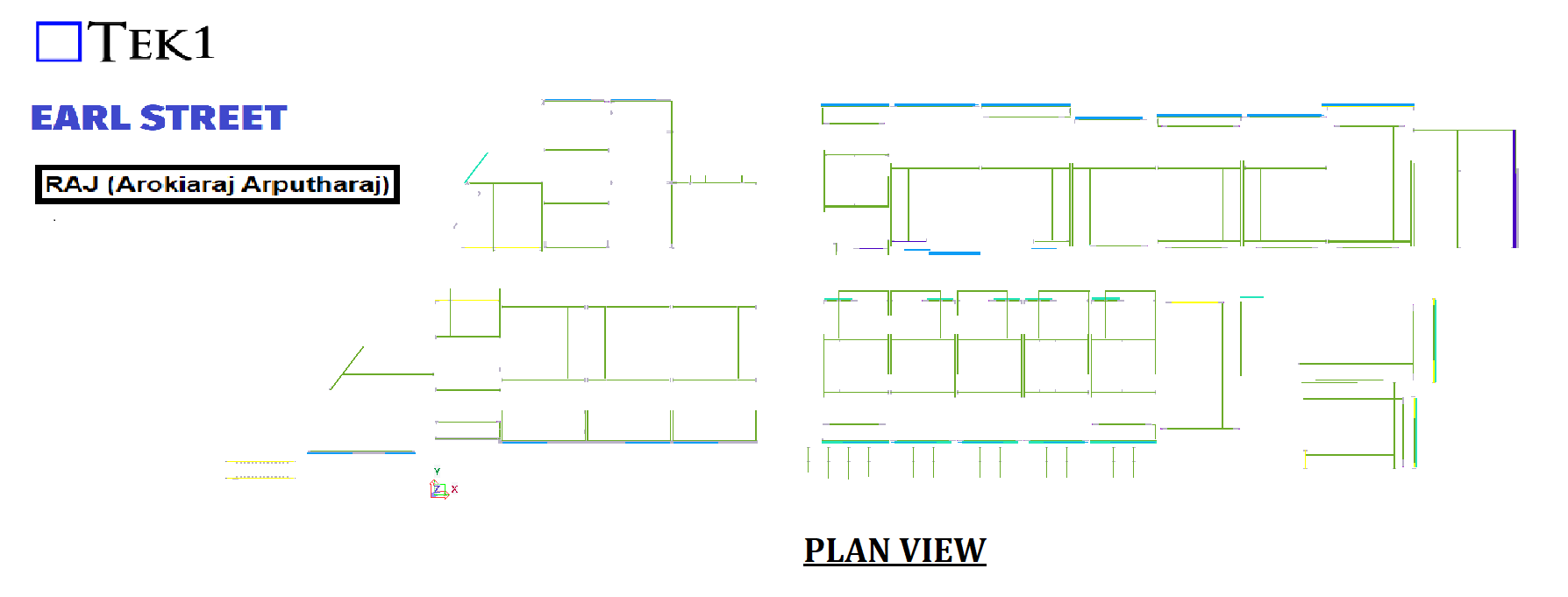
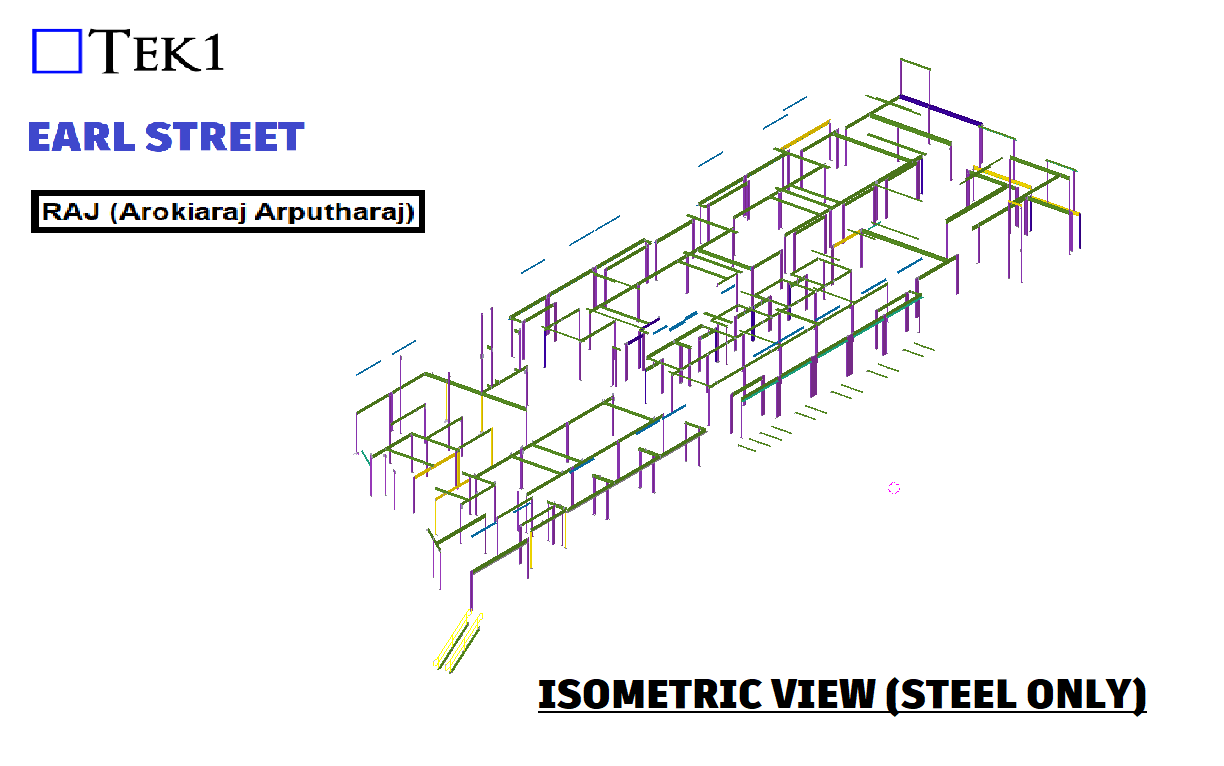
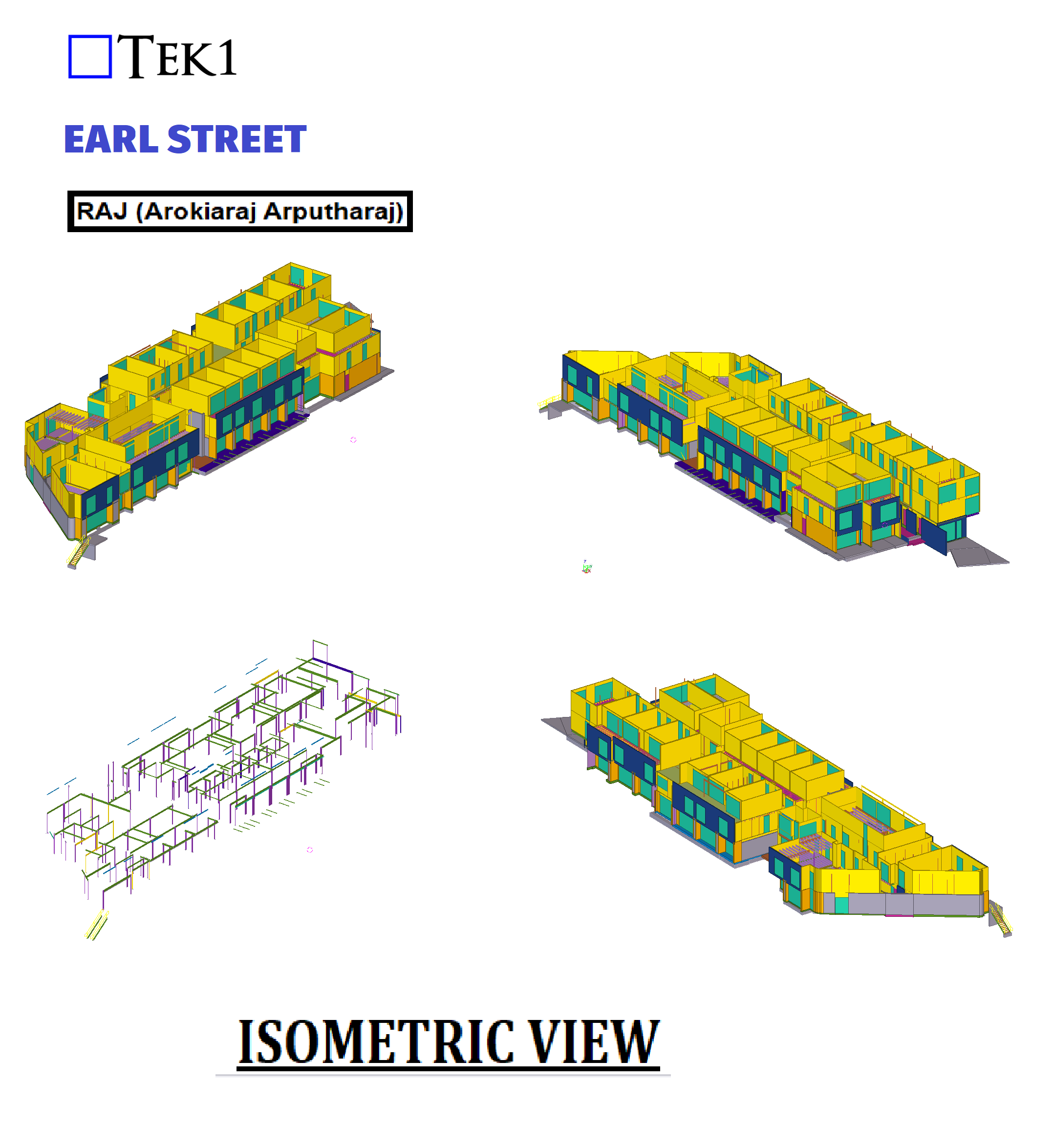
  • EARL STREET

    EARL STREET

    Author: RAJ (Arokiaraj Arputharaj)
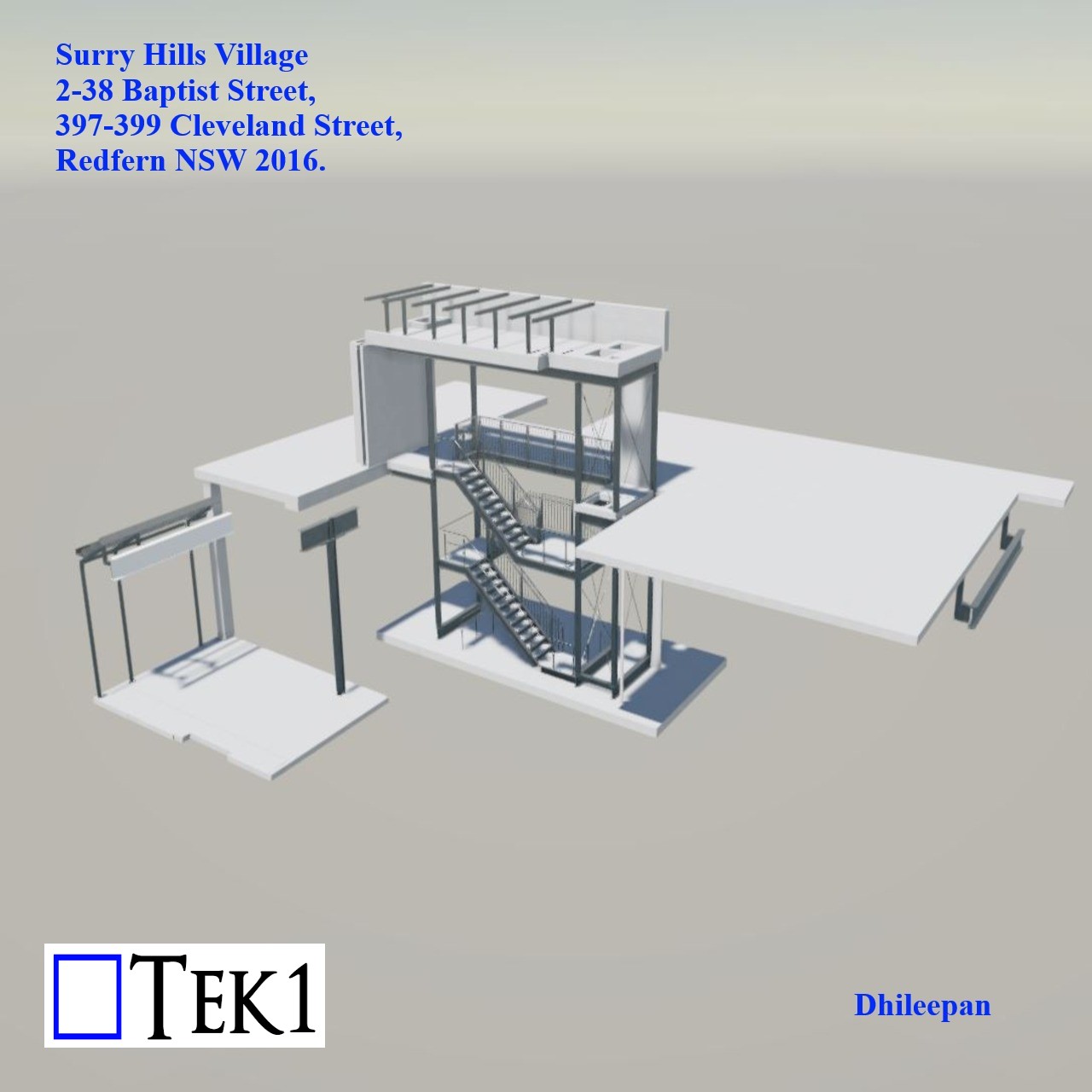
  • Surry Hills Village – Stair

    Surry Hills Village – Stair

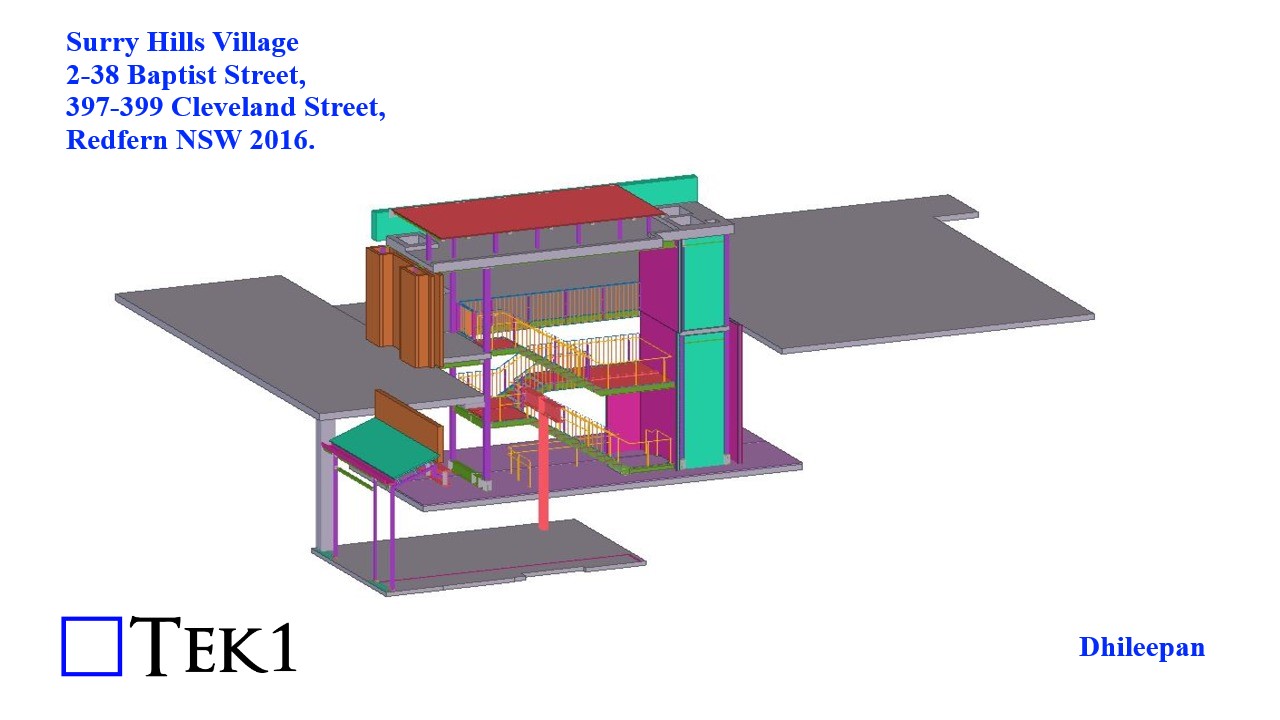
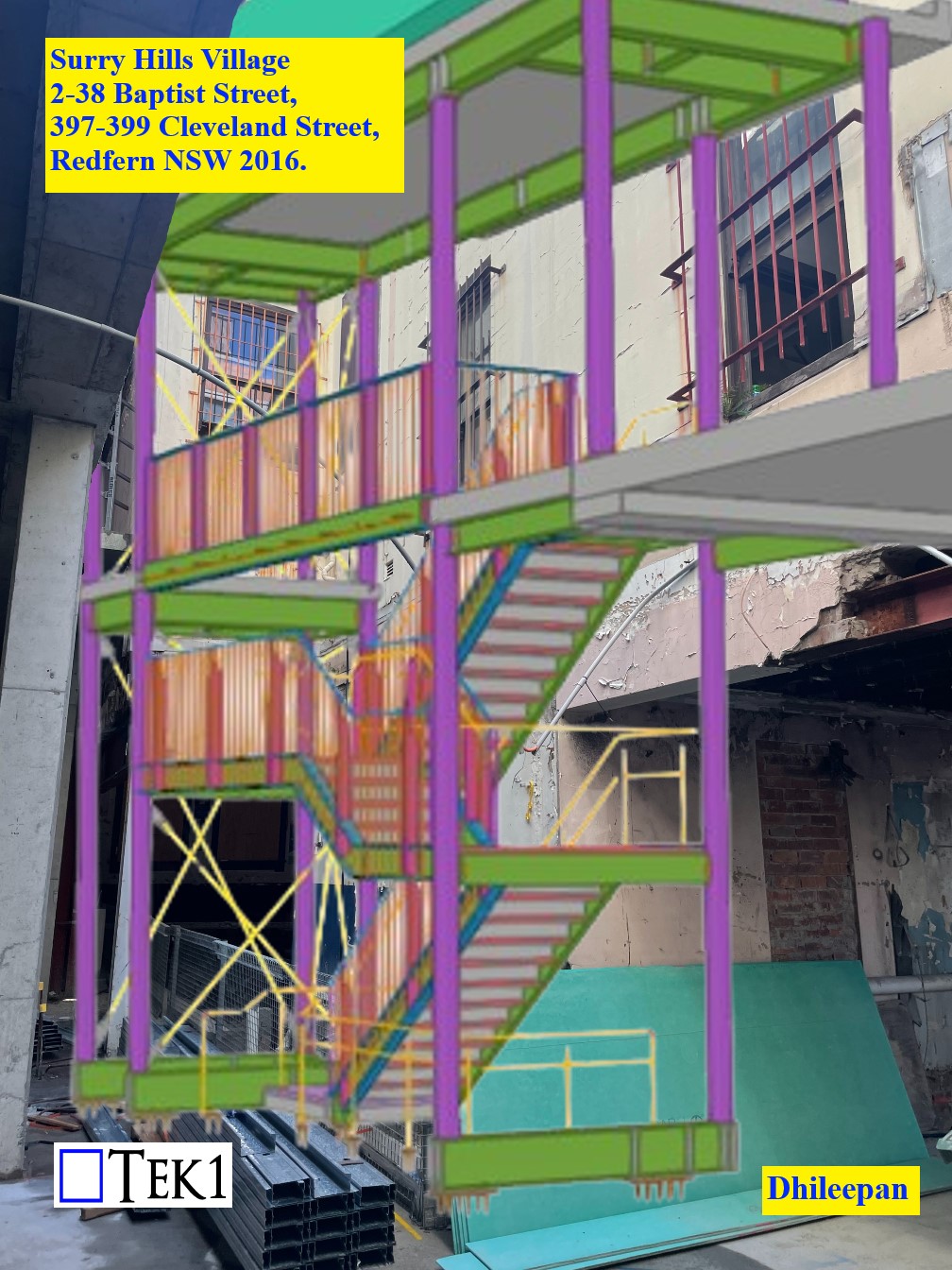
    Renovation projects often present unique challenges, especially when integrating new elements into existing structures. Surry Hills Village, located on Baptist Street, NSW, encountered such challenges during the addition of a stair to Building-H.

    At the project’s outset, only the existing structure stood. As Tek1 began detailing the stair, concrete columns, beams, and slabs were poured, necessitating adjustments to accommodate the evolving design. Discrepancies between the initial design width and site measurements required the stair’s width to be reduced.
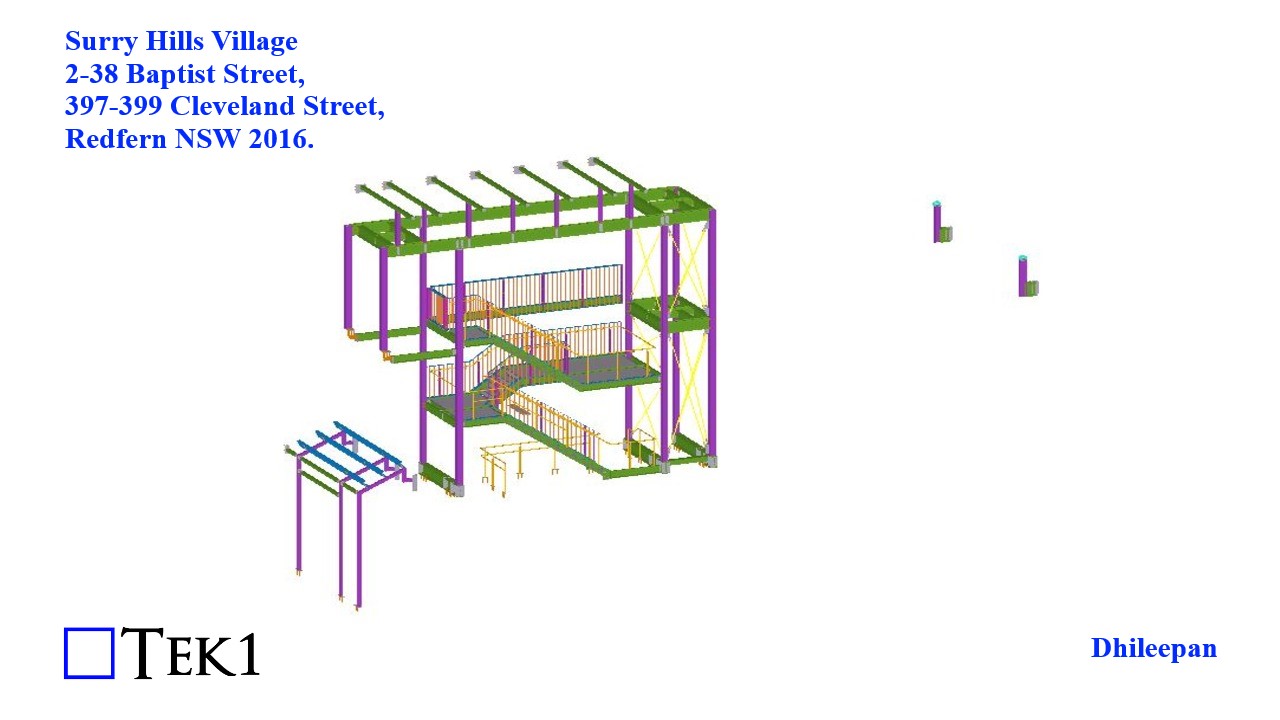
    Further complications arose when the balustrade design underwent a complete overhaul after fabrication had begun. Tek1 meticulously detailed the balustrades to preserve part numbers and maximize the reuse of fabricated components.
    Even after assemblies arrived on-site, adjustments were still necessary to align with site conditions. A total of 43 RFIs were generated throughout the project, supplemented by site images and measurements to inform decision-making.
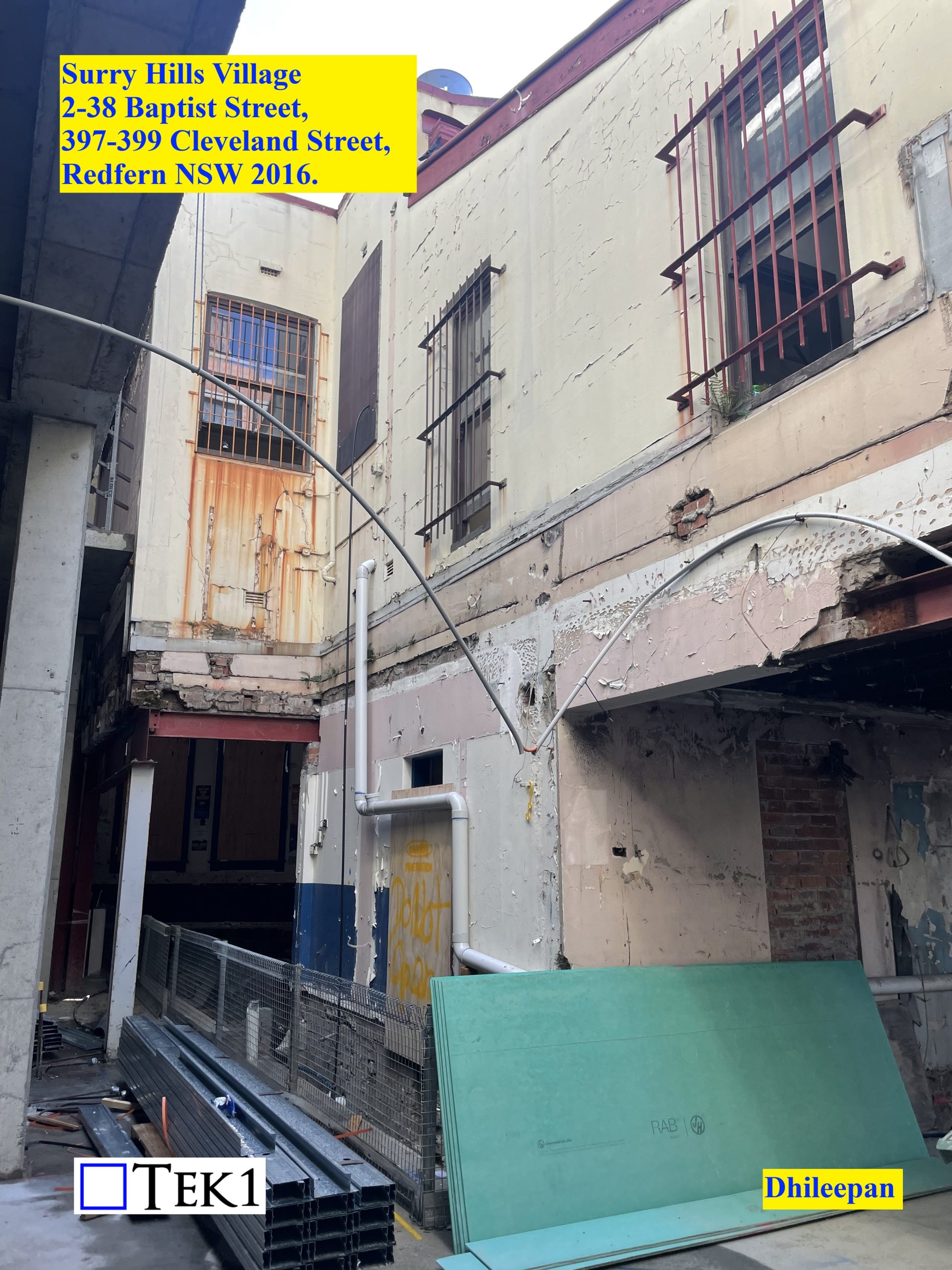
    Based on site images, Tek1 proposed alterations to the existing structure, helped preemptively avoid changes that would have been disruptive on-site.

    Despite its seemingly straightforward nature, the stair project spanned 10 months from commencement to final delivery, underscoring the intricacies of renovation endeavors.
  • How to choose a good detailer / draftsperson?

    How to choose a good detailer / draftsperson?

    You’ve got 2-3 quotes for a precast or steel detailer or draftsman / draftsperson. Different prices. Who do you pick?

    When comparing (prices), make sure you compare apples-to-apples:

    • are you also comparing quality and/or
    • other deliverables?

    Consider the following when assessing candidates:

    1. Assess on QUALITY, not price!
    2. Deliverables?
    3. How long have they been in business?
    4. Past Projects
    5. Past Reviews (this is a loose guide only)
    6. Documentation of Knowledge
    7. Documentation of Training
    8. Test Their Knowledge!
    9. Legitimacy of their operations
    10. Understand Internal Processes
    11. Understand Pricing: terms, supply vs demand for their services
    12. Staff: who are they? How long have they been there?
    13. Accreditation

    Warning: Assess on Quality, not on Price

    • A bad detailer will cost you your entire project: whether that’s $10,000 or $20,000,000 m, they will destroy your reputation, your cash flow, and your business. To me it makes no sense to assess on price alone – it is insanity to do so – you must assess on quality.
    • e.g. Story time: I went to meet a big fabricator in Melbourne – who wanted shop drawings for $6.00 / panel. That was an order of magnitude cheaper than what I was quoting. I said how is are you going to do that? He quoted an overseas firm whom we know (this firm is a client killer – they destroy clients but seem to churn enough to stay alive). Fabricator wanted me to price match at $6.00 / panel. I laughed and said: “I can’t do that. Impossible. Good luck with$6.00 / panel!” He was smug. I was astounded at how smug he was – because he did not know, and could not foresee the danger that lay in front of him – for himself, and his employer. This guy was awarded the precast project – it was a prison job – and he then flipped his project to $6.00 detailers, and that detailer basically killed him, and the job. The fabricator lost the contract, and it eventually landed in our lap. That manager essentially killed his employer and the last I heard of him – he was transferred out of his Melbourne position into a role interstate. I could have told him that he was heading for trouble, but this guy wouldn’t have listened to me. The point being: do not assess on price, assess on quality. We are dealing with high stakes outcomes, not a low stakes trinket where ersatz will suffice.

    Deliverables

    • Enumerate their deliverables. Different business have different deliverables and different mechanisms by which they deliver results to you.
    • Our deliverables are as follows:
      • IFA: Marking Plans, Assembly Drawings, Anchor Bolt Plans. No IFC model when we release IFA drawings.
      • IFC: Marking Plans, Assembly Drawings, Anchor bolt plans, drilling layout for Chemset/True Bolt, Part Drawings, NC1 files, DXF files for Plates, CAD exports of requested marking plans and elevations
      • And we don’t deliver db1 files until invoices are cleared. Why? Because fabricators can shop that model; and secondly, and more importantly: we want to control all aspects of the quality process: if a fabricator absconds with the model, and produces a set of drawings via a third party: and it fails – who is to be held liable? We do not want to be dragged into the fray.
    • Reports: Variations reports. How is a fabricator to keep track of all the documentation associated with changes on large jobs? We will do the work for you, we have systems + processes to ensure that you will get change reports.
    • Statuses / Delays: With Tek1, you will largely be informed of the status of your project. Rarely will you have to chase us.
    • Timeliness: We have tools to make us efficient. We write them and build them. This allows us to deliver drawings FAST! Which means you won’t have people sitting around in your factory doing nothing.
    • Further value added services. programming capabilities, tooling, surveying resources etc.

    How long have they been in business?

    If they’ve managed to: (i) establish themselves, and (ii) remain in business for a long time, then that, in and of itself is a semi-reliable indicator. It means:

    • they began, and sustained themselves through that beginning phase,
    • they have enough customers, and enough profits to survive.
    • they’ve had ample opportunity to make mistakes, yet have survived.

    The longer the better.

    We’ve been in business since 2008. That’s at least: 16 years (at the time of writing). You can check out our ASIC filing here, and you can also check out our start year of incorporation:

    We’ve been operating, successfully since 2008:
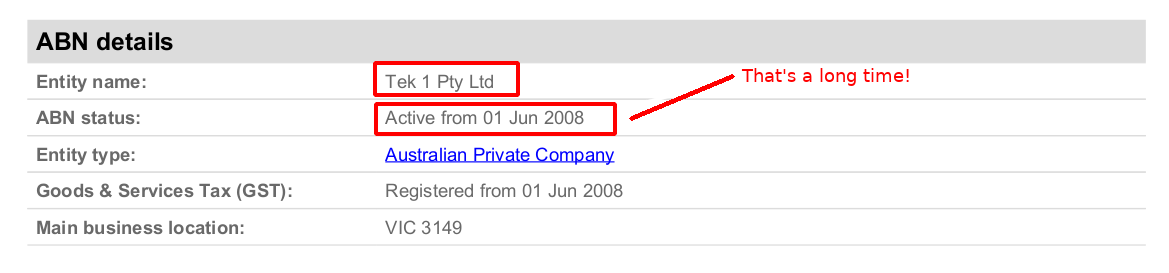
    Tek1 ASIC filing

    Past Projects

    • How many past projects have then done?
    • Have they documented them?

    This is easily assessable:
    Steel: We have done many, many 100s of projects – possibly nearing 1000 – check out our past Steel Projects blog.
    Precast: We have done over +130 precast panel projects for Meriton alone (indirect client and through another entity we managed). Checkout all our past precast projects blog.

    Documenting projects takes time. If a firm has documented it over a long period of time, it is more likely than not, that they have actually done the project. It also allows you to ask further questions about a particular project. Further it demonstrates that clients are trusting that particular detailing firm to conduct those (perhaps large, and risky) projects.

    If you don’t see any projects: ask your detailer if there is any reason? Perhaps there may be commercial reasons why they are not there. Perhaps they don’t have the time / resources to post their projects.

    Past Reviews

    They should only serve as a loose guide. Why?

    • Only over-joyed clients will make a comment, and many will only do so after prompting because:
    • Clients who are happy with their detailer: WILL NOT be incentivised to promote their detailer’s name via Google Reviews (or any other platform): because this would entail further competition for themselves, which would serve to push up their prices when asking us to quote for their work. We are not dealing with cafes and restaurants. Precast jobs are expensive, and there is zero incentive to promote “their” cornered resource, especially on jobs worth millions of dollars.
    • Clients who are disappointed will not bother to leave a review: they will leave and not return.

    You cannot trust the existence or non-existence of Google reviews, unless these clients are mums and dads (doing 1 off jobs), or you’ve gone above the call of duty for your client. Nevertheless, we do have some – If interested, check out Tek1’s Google reviews: Tek1’s Google Reviews:

    Documentation of Knowledge

    • Do they document knowledge? Do they know what they are talking about?
    • Do you learn something that you yourself did not know?

    At Tek1 we document our learnings for our staff. They serve a secondary function: that of marketing to prospective clients: clients can form a judgment of competence based on the quality and quantity of documentation they can see.

    Check out our technical blog posts:

    1. Steel
    2. Precast
    3. Tekla
    4. AutoCAD .net API (our programming capabilities)
    5. Tekla Open API (our programming capabilities)
    6. Staff Memos.

    As above: documenting knowledge and creating training courses takes time: it demonstrates that a firm has the resources, and commitment to do so.

    Can the cheaper detailing firms do the same?

    Documentation of Training

    The better firms will document their training. We do this through:

    Staff are also assessed for their knowledge on the job.

    Test Their Knowledge!

    If you know your domain, ask whoever claims to hold knowledge, some simple questions:

    • What is the difference between a UB and an SHS? Where would I use one over another?
    • What does a “grade” of material mean?
    • What are my transport limitations?
    • What Ausutralian standards are applicable for this staircase / balustrades?
    • What is the difference between a ferrule and a coupler? Where would I use one over another?
    • What does rebar mean?
    • How should you dimension a precast panel?

    Then you can gauge whether they know what they are talking about.

    Staff

    • Who is doing the work?
    • How long have they been with the firm?
    • Where are they located?
    • Do you own or control your detailers?
    • How much are they being paid? What is their incentive structure?

    At Tek1, we’re open about who are staff are. Many have been with us for a very long time: +8 years. This means they’ve seen a lot of issues. You can check out our team, and their blogs in the our team page.

    Staff churn is not a good thing, as a client or as a business.

    Our staff are located in our privately held back office in South India. We hire, we fire. We train, manage and steward. We have direct control of our staff: we do not hail-Mary your job to external contractors in Timbuktu and hope that it comes back perfect. It never does. And we pay our very staff well. When you compare our quote to cheaper detailers, consider: how much are they paying their staff? If you pay peanuts, you may get monkeys.

    Legitimacy of Our Operations

    • We use 100% genuine Tekla licenses. These are very expensive, and is why we cannot compete with cheaper pirate licenses. Do you really think a pirate, who steals software, will miraculous be straight in their dealings with you?
    • We’re above board: we pay tax. No cash.
    • We pay our suppliers well, and on time. This enables you job to be delivered well, and on time.
    • We’re tooled up and constantly innovating. Our AWS (Amazon Web Services) cost alone – at one stage: was around $500 / month. How many detailing firms do you know with AWS in their stack? Why do we have AWS? Tooling: it allows us to deliver a better, overall product to you.
    • Proprietary software: as alluded to above: we don’t steal. We write our own tools. Many in this industry are little better than thieves, both in software, and in taxes.
      • e.g. Why should you care if a detailing firms gives you shop drawings cheaply (via thievery)? You should care because it speaks volumes about the integrity of the people in your supply chain. If they lack integrity, how can you expect them to have integrity in performing their work when you are not watching them?
    • If they claim to have custom tooling, but cannot program, and have little ability to innovate: it doesn’t take a rocket scientist to figure out how they got their tools. The good old fashioned way: pilfering.

    Legitimacy serves to add additional costs, but with those costs come integrity in the work. Basically you get what you pay for.

    Will they throw you under the bus?

    • Client did not pay us, gave us obsolete drawings, and was a poor interface with their client i.e. the builder. The project was delayed, because the builder could not contact them directly – because they absconded and went to a destination wedding overseas. A frustrated builder called us directly, wanting a few cast-in-plates: “just give me the drawings, I”ll pay you direct”. What would you do? Cut your client loose (and get paid)? We knew our client would not pay us – he was already late in payment, and routinely paid late, and sometimes not at all.
    • But I never liked going direct: because it might completely screw over our client – who knows if they are using this job to extract payment on other jobs etc. Predictably: the builder fired our client. Our client reassured us that he would pay us regardless, but he reneged. We knew it. The point being: even when we knew we are going to lose, we did not screw over our client. For us, it’s not about the money, but some very basic ethics.

    Understand Internal Processes

    • Do you know HOW they operate? We publish our processes (where relevant).
    • What happens if the architect / engineer adds a few extra tonnes of steel in your job? What if the reo in your panel changes? Will your detailer notify you? How will they do so?
    • Will they update you on your jobs?
    • Do they have systems that other detailers do not have?

    Understand Pricing: terms, supply vs demand for their services

    • Is the job risky? The higher the risk, the higher the price.
    • Does it involve a bridge? Bridges add to the firm’s insurance premiums: these costs must be recouped.
    • What are the terms of the job? Are they taking a deposit?
    • Remember: good detailers are hard to find: they are always in demand. If you’re shopping for a cheap price, perhaps an established detailelr will not want to deal with you.
    • Are you a known brand? Do you pay on time? Good detailers will want to deal with well established and credit-worthy players. If you’re an unknown entity, detailers may decline by quoting you a high price. Perhaps you can negotiate with them by adjusting the terms.

    Further Benefits

    • Are they able to deliver a 3d model to you which you can interrogate? We offer a “live link” service to our clients, so they can see their model, live, and check out any problematic areas.
    • Will they give you documentation if things change for you (rather than for them)?
    • Are they contactable?
    • Will they update you on the status?
    • Will they save your files?
    • Do they have back ups?
    • Do they have insurance? How much cover? What about liquidated damages? Consequential damages? Retention?

    Accreditation

    • If required: are staff accredited?
    • Is the firm accredited? (Tek1 – as of 2024 is a registered member of the Concrete Institute of Australia)
    • Verify any accreditation.

    These are some ideas that will give you some insight into qualifying your detailer. There are many others which I have missed, or have avoided for the sake of brevity. Good luck!
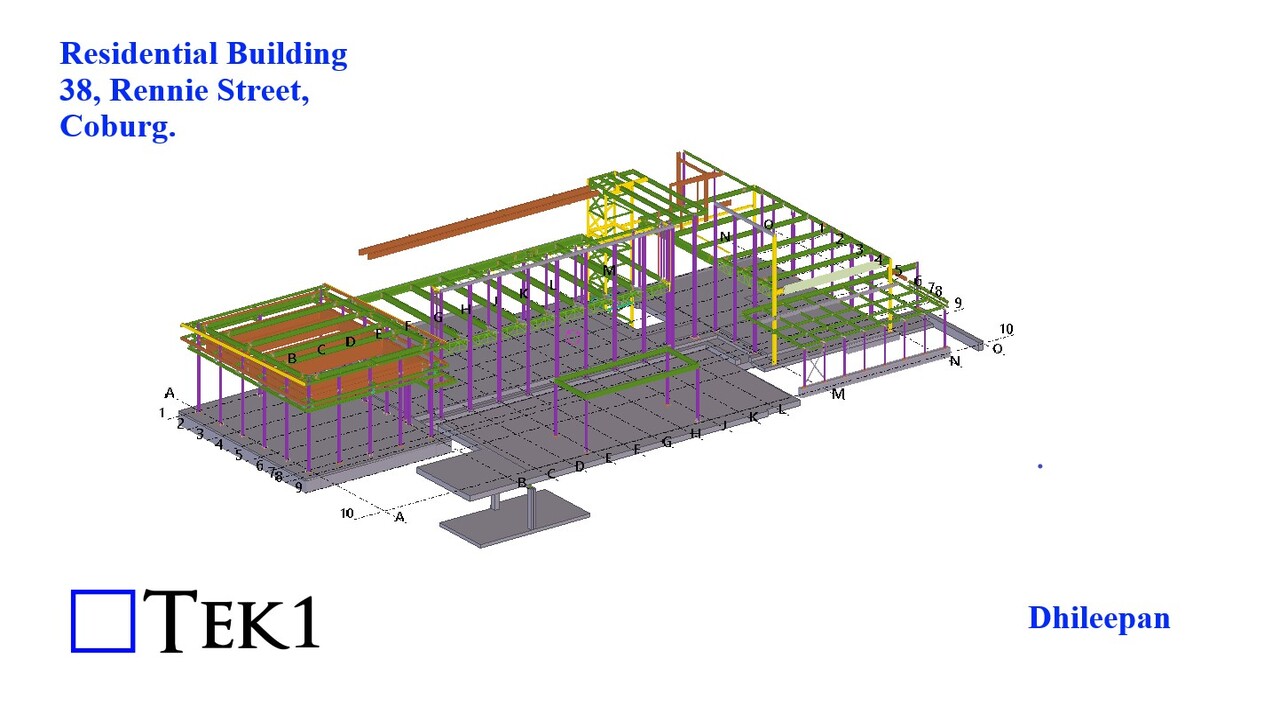
  • Residential Building

    Residential Building

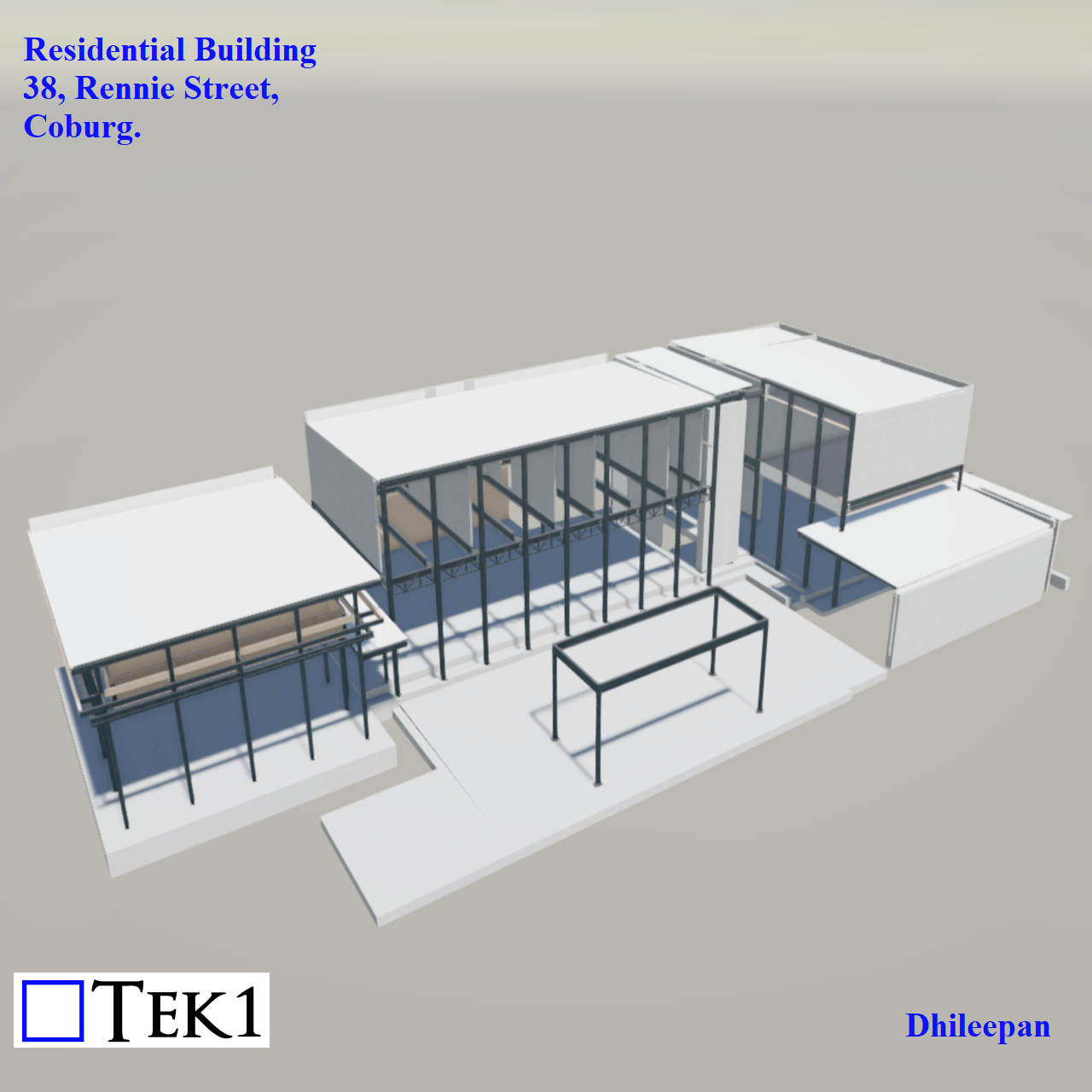
    Nestled at 38 Rennie Street, Coburg stands a residential marvel, meticulously detailed by our dedicated team. This architectural gem boasts of being one of the largest, most advanced, and aesthetically pleasing buildings in the neighbourhood.

    Spanning across a sprawling area of 981 square meters, this residential masterpiece demanded a profound understanding of architectural intricacies. Seamless integration of structural steel and the architectural intricacies like glass panels, door hinges and aluminium composite panels was meticulously planned and executed.

    What sets this project apart is the deliberate choice to leave certain steel columns exposed, a rarity in residential constructions. Rather than concealing them, these columns stand proudly, adding an industrial charm to the structure. To complement this unique design choice, a diverse range of finishes were employed across the steel assemblies. In total, five distinct finishes were meticulously curated to enhance the visual appeal and architectural integrity of the building.
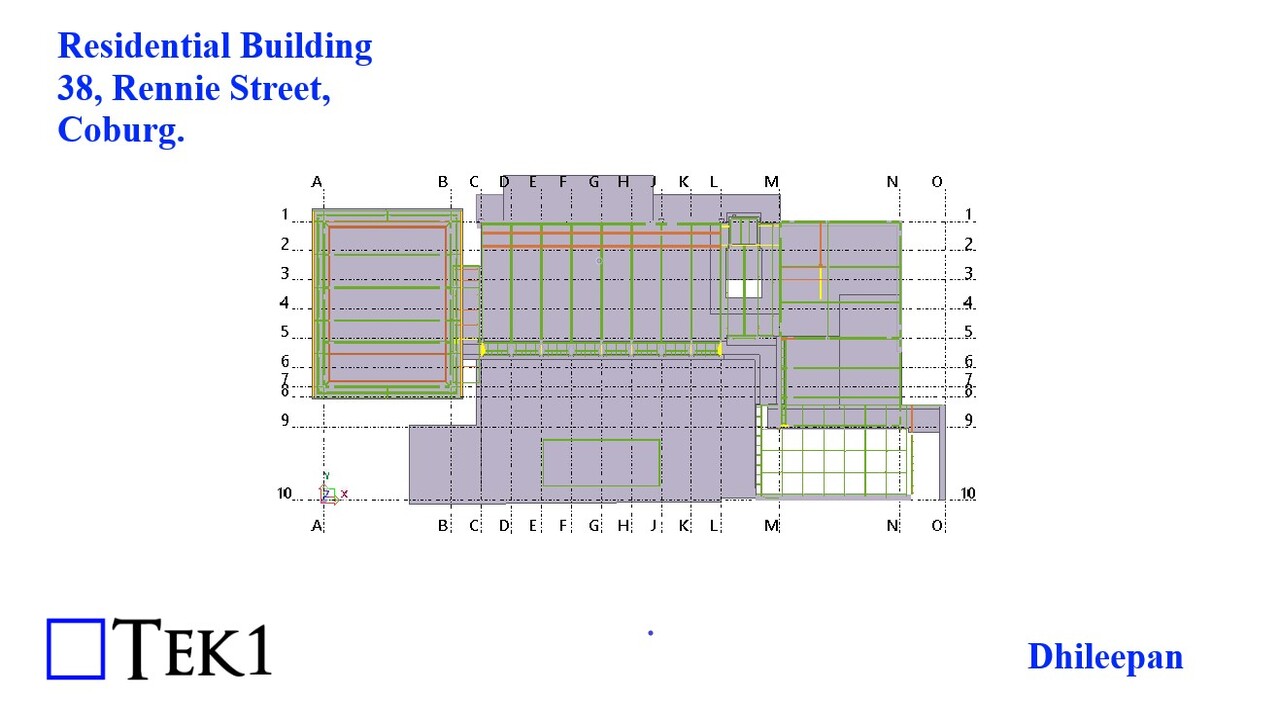
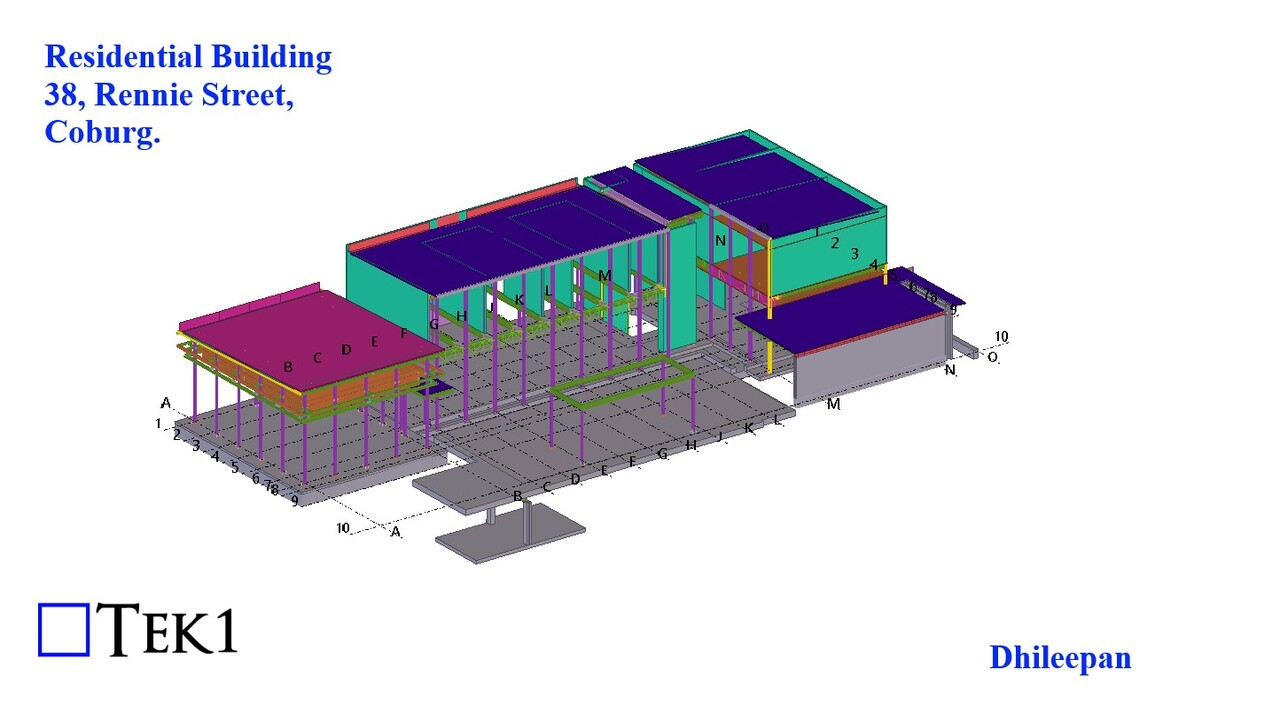
    Model Link: https://app32.connect.trimble.com/tc/api/2.0/s/AAfRyGm_8Ohs_CzeJlPCOFfrU4yiC3tAaTkZWGDnhEU4WPWI1wnhJrUB_-EWfnOo

  • Surveying: renting vs buying; ourselves vs out-sourcing

    This will give you an insight into our decision making process at Tek1.

    We are investigating the feasibility of purchasing Trimble surveying equipment. Total Station etc. For internal use only.

    * Cost of equipment: $100,000 + subscription software / maintenance.

    * Cost of renting: $500-800 / day

    We have $0 revenue coming from surveying, moreover we are not licensed surveyors. It will not be easy competing with professional surveyors. Unless we have a significant advantage in acquiring customers, it would not make a lot of sense competing with the professional surveyors.

    What would you do? Buy or purchase? Or use a professional?

    Given a choice of renting vs buying – we would rent – because:

    * we would need 125 days of rental utilisation ($100,000 / $800 per day) before it becomes and profitable to purchase this equipment vs renting:

    * prefer for Tek1 to be well capitalised by retaining cash – i.e. it is better for the cash to be in our pockets rather than Trimble’s.

    * This is a mutually exclusive decision: if we purchase the surveying equipment, that will limit our ability to get into some more profitable arenas.

    If we owned, we would have to maintain it. It could break, or get stolen etc.

    But even better than rolling our own: should we get a third-party surveyors

    • The benefit of rolling our own is that we will have intimate detail of all things pertaining to surveying – which will (potentially) allow us to deliver a better product. But it comes at a cost:
    • Cost: you’ll have to pay more for a contract surveyor – but then they take care of everything: machine, licenses, transport, and deliver a final output to you. Benefit is that you save time. And you don’t have to learn the nitty gritty. i.e. finding that menu options buried deep in the Total Station equipment. We can focus on what we’re good at, at let others focus on what they’re efficient at.
    • Cost: you will have to coordinate with them (vs coordinating internally. It’s tough to find a good one.
    • Hidden benefit: as a customer, you can “learn” some hidden tips your surveyor. Most will be happy to help, so long as you don’t burden them.

    Aside: Renting is similar to borrowing

    Imagine if I borrowed: $120,000 and repaid the loan over the course of a year.

    Cash flow from borrowing:

    • $120k – January
    • $120k – February
    • …etc.

    Now let’s look at the cost of renting at $120k / month but also getting ownership of the final product at the end of the period

    • $120k – January
    • $120k – February
    • etc

    You’ll notice that they look quite similar. You can think of renting as also borrowing money, and repaying – and if you rent short term, it’s like borrowing, repaying, and not getting an ownership interest in the underlying asset. If you can immediately end your rental, then it would be the equivalent of borrowing, purchasing an asset, and then reselling it when you no longer need it – with the rental provider doing all the work for you. i.e. it essentially allows you to take on debt, without explicitly declaring it on your balance sheet (all of this subject to the accounting rules and practices in your jurisdiction).

  • Why builders and fabricators should care about the legitimacy of supplier services?

    Dealing in Fenced Goods and Services

    It’s not uncommon for those receiving fabrication drawings to overlook the legitimacy of the products used by service providers. There seems to be a prevailing mindset of indifference, with the attitude being, “As long as the drawings are correct, I’m fine—I’m legally protected, and proving involvement with stolen goods is too challenging.”

    Similarly, many fabricators and builders consciously avoid probing into the legitimacy of the software used for services. The fear of inadvertently becoming complicit in any wrongdoing deters them from asking uncomfortable questions. However, this approach presents a couple of significant issues.

    1. It sets a concerning tone within your own business. If engaging in any form of dealing with stolen goods becomes an accepted part of your company philosophy, you inadvertently create an environment where “dealing in stolen goods is acceptable as long as we avoid problems.” This not only makes your business susceptible but also ingrains a risky culture among your staff.
    2. Secondly, this approach poses a broader threat to society. By turning a blind eye to the legitimacy of goods and services, you inadvertently contribute to a scenario where bad actors replace good ones.

    The moral compass guiding what can be stolen and how far one can go becomes unsettlingly subjective, lacking the high ethical standards needed to foster a thriving and reputable industry.

    It’s crucial for businesses to reassess their practices, placing a premium on integrity and ethical conduct to ensure the industry maintains its standards and safeguards against potential harm.

  • The fallacy of insurance in the building and construction industry – (Staff Memo)

    Clients often ask me: “do you have professional indemnity insurance” (PI Insurance)? The short answer is “yes” we do. It isn’t cheap: we pay over $20,000 per year in premiums – last year was about $27,000. But the long answer is, while we do have insurance: you cannot rely on it.

    Here’s why:

    • Insurance companies are not in the business of paying out. Their business model consists of collecting premiums (up front), re-investing those premiums, earning a return on the “float” as well as profiting from any claims that are not paid out. In order to minimise their costs, they are incentivised to fight claims.
    • The procedural / documentation issues: in getting a pay-out is very high – it is almost impossible for anyone to meet these requirements. If a claimant cannot access the insurer’s honey-pot, then you’re stuck without a paddle.
    • Subrogation: You’ll have to claim from me, I will be required to notify the insurance company, and then they will grab the steering wheel off me and takeover – i.e. “subrogation” occurs. Since the insurance company is the one who will be paying out, they must necessarily do this to safeguard their interests.
    • The costs of pursuing a claim are very high.
    • If there is a successful payout – such firms will be black-listed in the insurance market, they won’t be able to get insurance, consequently they may have to go out of business. The mere existence of a firm, lasting 15 years, is indicative of their quality.
    • At Tek1, we limit our liability.
    • Building and construction is usually collaborative endeavour. If a project goes wrong, everyone gets dragged into the fray. Most firms cannot afford to pay for the costs and mistakes of third parties.

    In summary, while we have insurance, both you and me cannot rely on it.

    The best protection is prevention: mitigate risk, and take care, and ensure all parties are equally vested to achieve the desired outcome.

  • You Need to Win Jobs at a Margin (Commercial Tips)

    There is no point being “a busy fool”. If you’re winning jobs at a loss, or at really unattractive margins – things are probably not going to go well for you.

  • Collect a deposit: (Commercial Tips)

    It is critically important that you collect a deposit:

    • So that your client is on the journey with you. i.e. you are both incentivised to reach the same outcome
    • So that you can pay your suppliers (on time).
    • So that you are not held to ransom.
    • So that you can actually do the job, to the standards which you are attaching your name / reputation to.
    • So that you don’t have to BS people – so that when you say you will pay, you can actually do so.