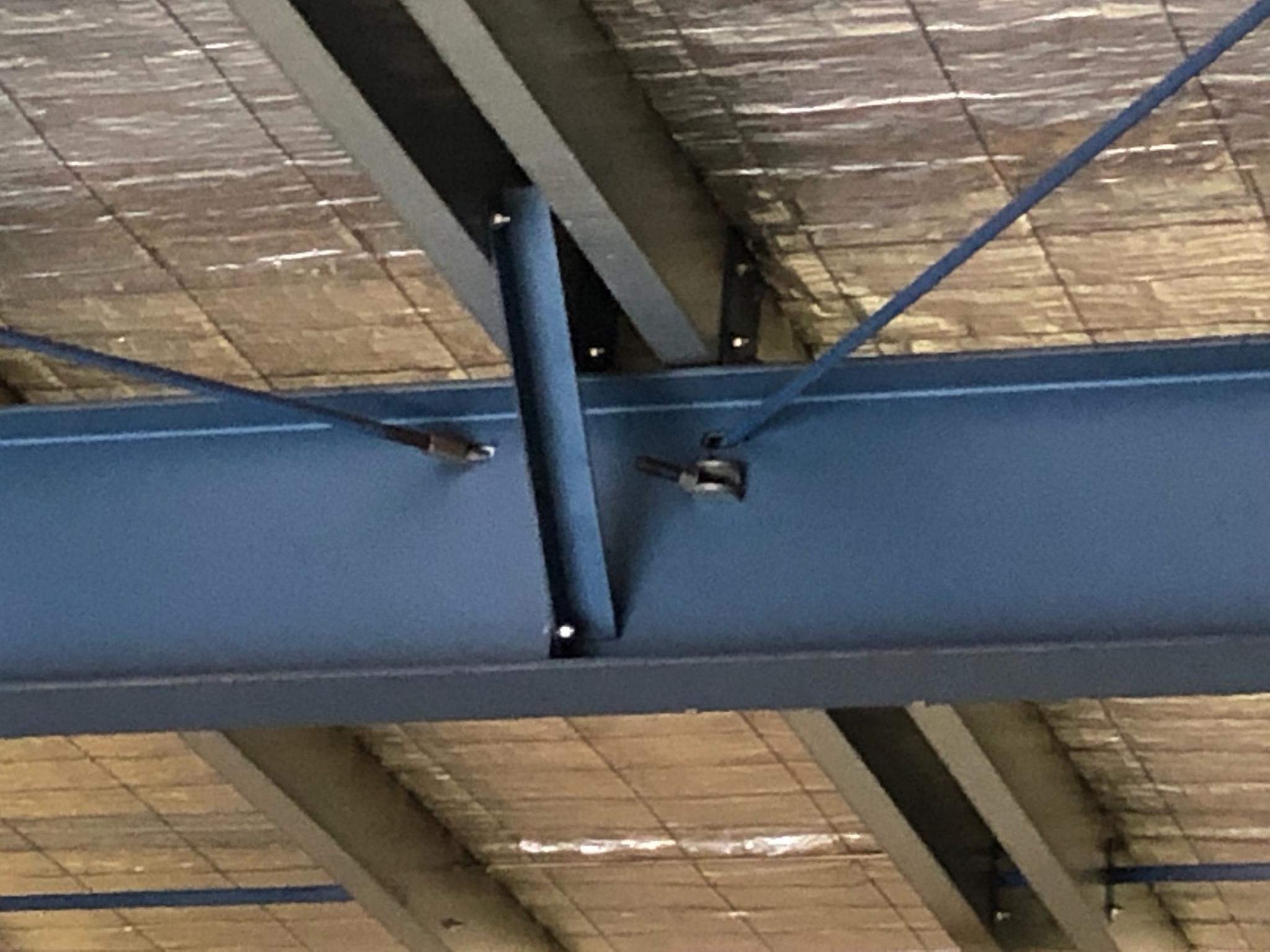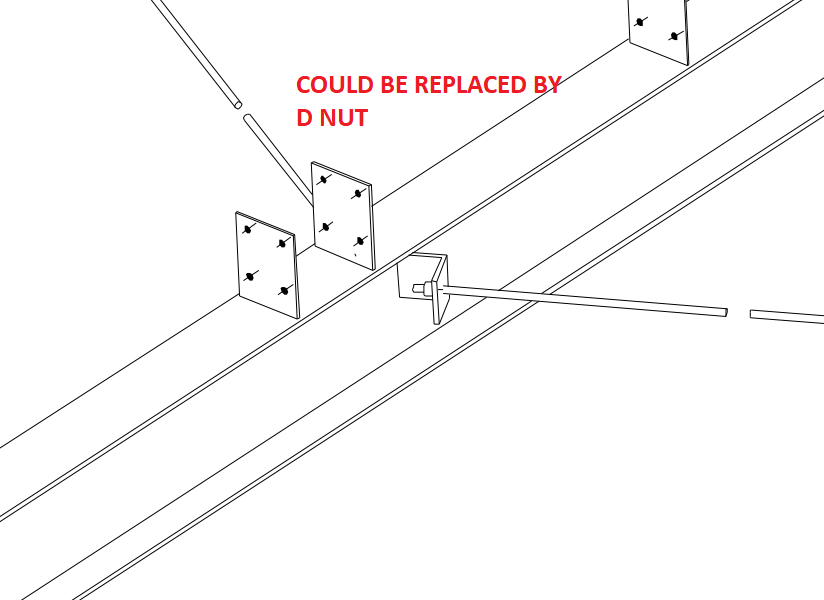
A lot of fabricators prefer D Nut bracing over cleat bracing because it is much simpler and cheaper. If the engineer has specified cleat bracing the detailer must investigate whether a D Nut bracing will be sufficient. If yes, then please RFI the engineer with D Nut bracing proposal. The fabricator could prefer this connection. Make sure the maximum angles of the D Nut is observed
Erection Feasibility must always be considered when creating shop drawings. Consider the diagram below:
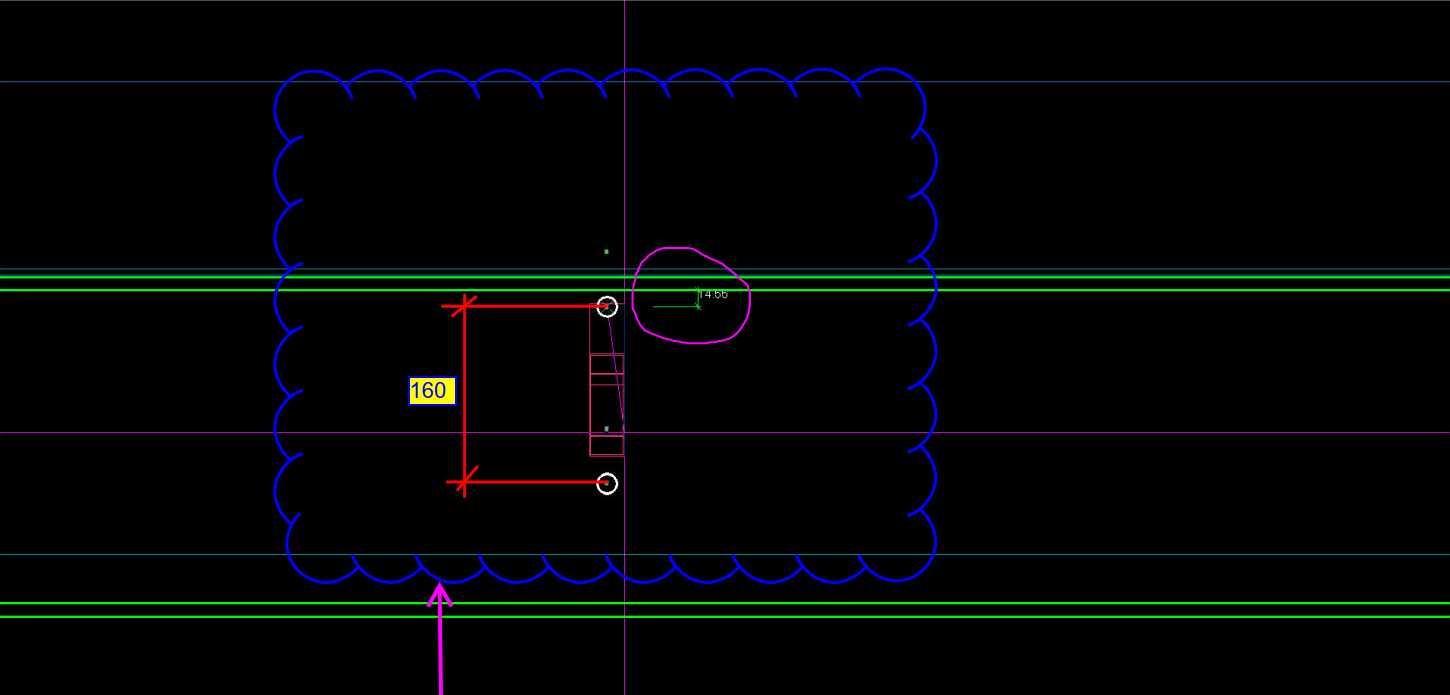
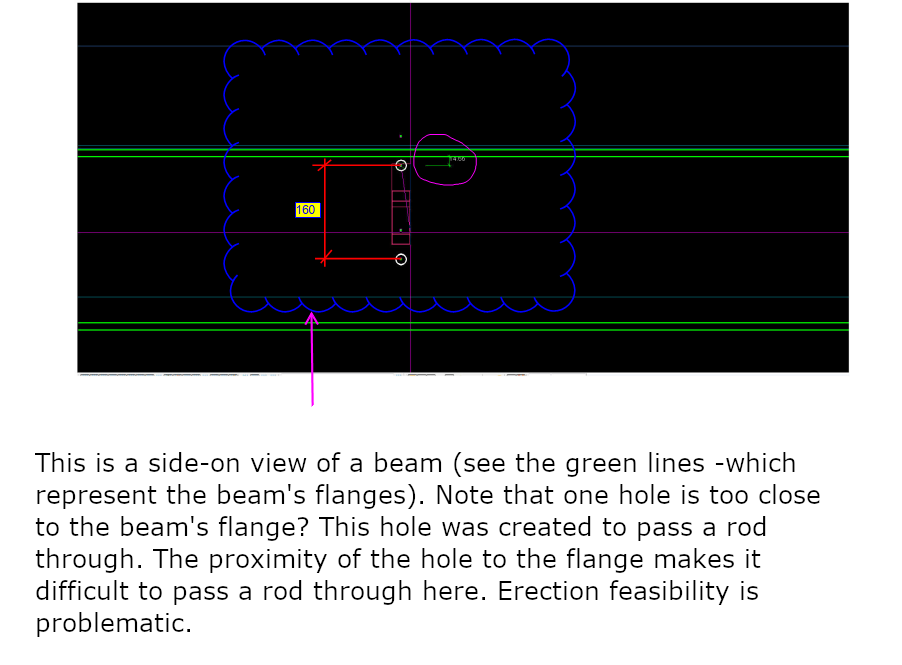
Can you spot the problem with this drawing? This is meant to be a side-on view of a beam. The green lines represent the flanges of the beam. The white circles represent holes to be drilled. What is the problem here? Consider the distances highlighted.
Pop-quiz: What is wrong with the above drawing?
(Scroll down for the answers)
The Answer:
Drilling a hole so close to the flange is not easy, neither will it be easy to pass a rod through when it is so close to the flange. You only have 14 mm till the edge of the flange. What if you used the standard pitch of 160 by route – but you’ve also got to consider erection feasibility!
Placing a hole so close to the flange will not work.
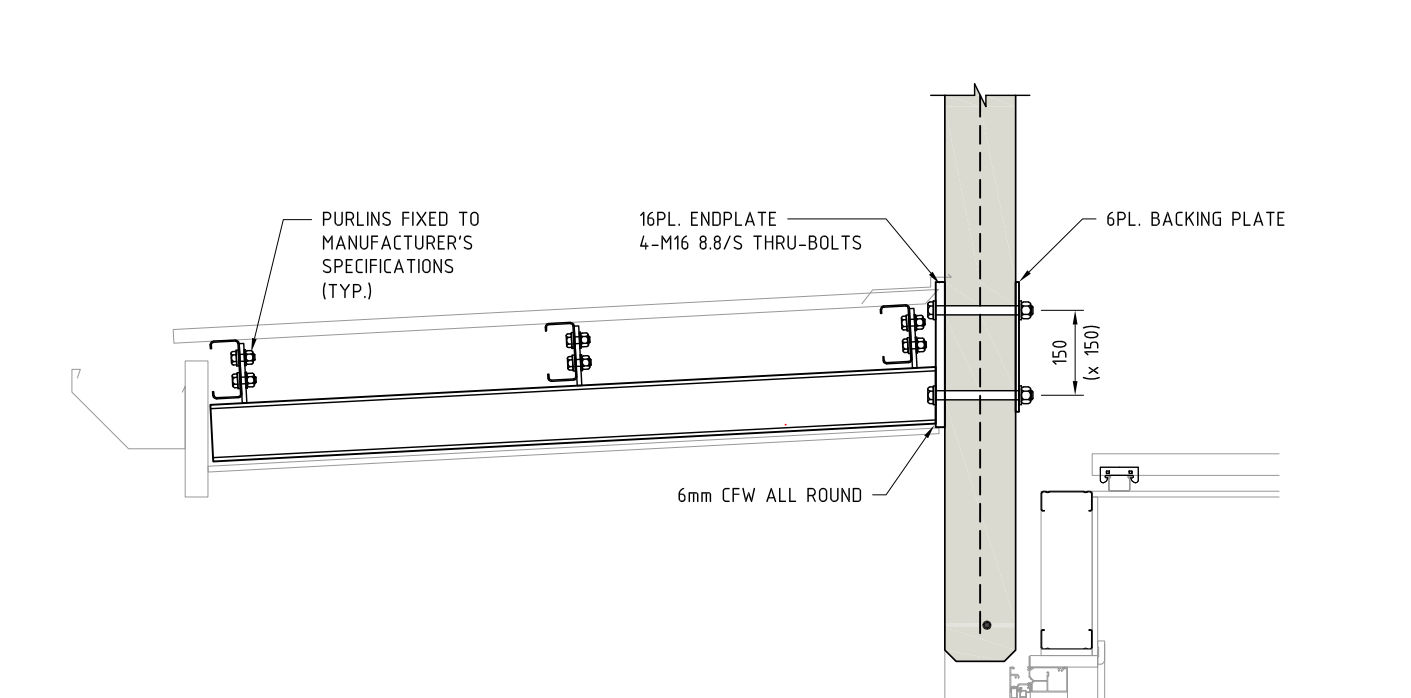
Consider the above drawing (Section View)? Have the purlins been placed correctly?
Have you ever considered a purlin’s orientation while detailing?
Pop-Quiz:
In the pic above, the structural engineer shows the purlin direction along the roof slope. Is this the correct way of orienting the purlin? i.e. Has the engineer made a mistake, and if so, why? (Answers below)
(Keep scrolling down…)
Answer:
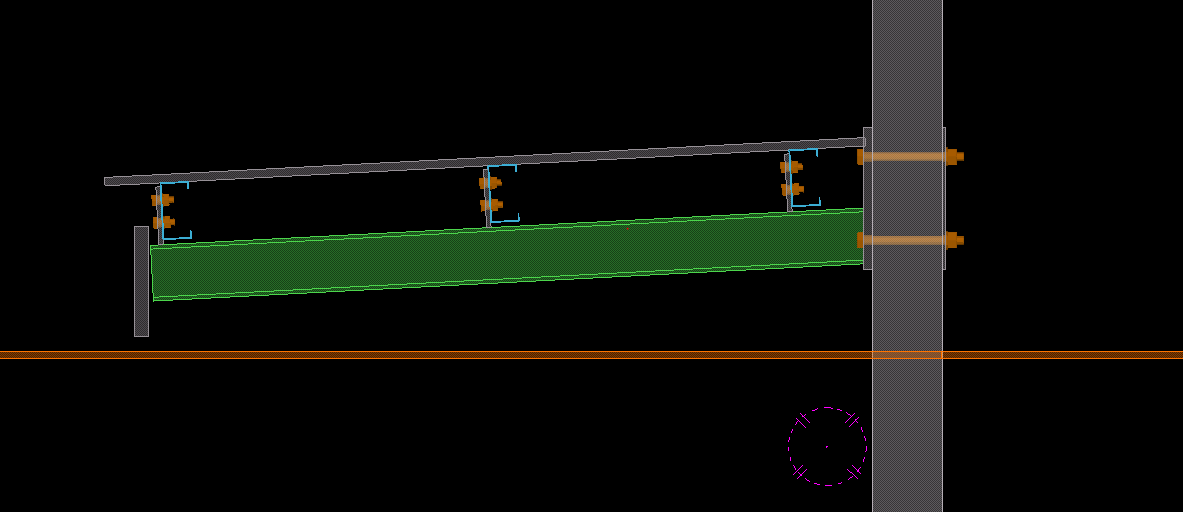
Definitely, this is an error on the structural drawing. Generally, detaliers have to consider a purlin’s orientation before placing it. Why? When the load applies on roof sheets , a twisting moment will occurs on the purlins. If we place the purlin direction along the roof slope then it will cause instability. So, the purlin direction should be always kept against the roof slope (as indicated in pic), even if the design indicates along the roof slope. Keep that in mind when you are detailing your next job. It’s a subtle but very important tip.
Notice how the purlins are oriented against the roof sheet?
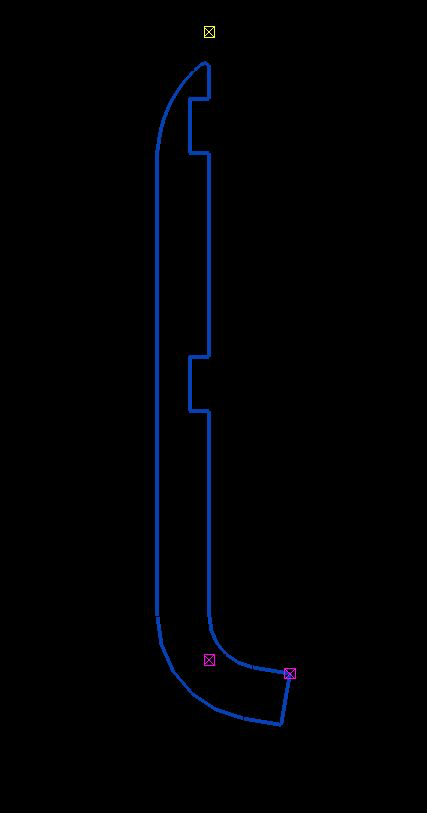
How to manufacture the T Bar is a question which frequently comes up.
The various options are
Make T-Bar from plates. (Involves welding plates together)
Cut from UB. (Might include wastage)
Buy Standard T-Bar. (May have its own constraints like minimum quantities)
Up until now we were detailing T bars as fabricated using T Plates. But now one of our clients has given a catalog from GALINTEL. Click on this link to go to their website.
Now whether a T bar should be option 1, 2 or 3 should a matter of preference of the fabricator irrespective of what is specified on the member schedule. Best course of actions is to RFI.
Have you ever fallen down a flight of stairs? I hope not! But from experience I can tell you that it’s not a very pleasant one. I slipped as I was walking down – I fell supine, hard, like a hammer on a nail, bang into the corner of the steps. The pain was absolutely numbing – I could walk for about three days, nor could I even roll over in bed for about that same period. Falling down stairs is a dangerous business – and if you’re in the business of designing or fabricating stairs – especially public access stairs, then you absolutely have to get it right. Because if you don’t, then it’s only a matter of time till someone falls. Luckily I was a young man, so I recovered pretty quickly. But if I was an invalid, a fall like that could be potentially life threatening!
Here is an example of a badly designed stair:
An example of a staircase which was not made according to AS specifications or perhaps any sort of specifications apart from the builder’s convenience I suppose. This type of shoddy workmanship will be the cause of many injuries and accidents. Designing structures according to the specifications mandated is absolutely essential.
The steps are not uniform – they vary in height and length. This is not safe if you are traversing it. It’s easy to misjudge. That’s why when we do the shop drawings for a flight of stairs we check that it’s uniform, that you don’t have too many stairs in a flight, that there’s adequate room, that a child cannot squeeze his/her head in between the treads, etc. I have ascended and descended these steps – and were it not for the handrails, it would be very dangerous. Don’t do steps like this. Here were the measurement from the bottom riser going up:
29 cm
20 cm
20 cm
18 cm
17.5 cm
15.5 cm
The risers vary too much!
Our staff are trained to ensure that their stairs comply with Australian Standards. We’re definitely not the cheapest, but we’ll know if we see a bad design – and knowing that information could save you a bundle.
How to avoid grating and chequred plate errors being wrong , due to the view being wrong.
We have a copped a few of these errors where the chquered plate (or grating) was drawn upside down.
How to counter measure: add orientation part cut on the plate
The way to counter measure this error is to put an orientation part cut on the plate. Make sure on the part drawing the full lines of the cut is shown. Cut will have to be on the top surface of the plate and must not penetrate to the other side.