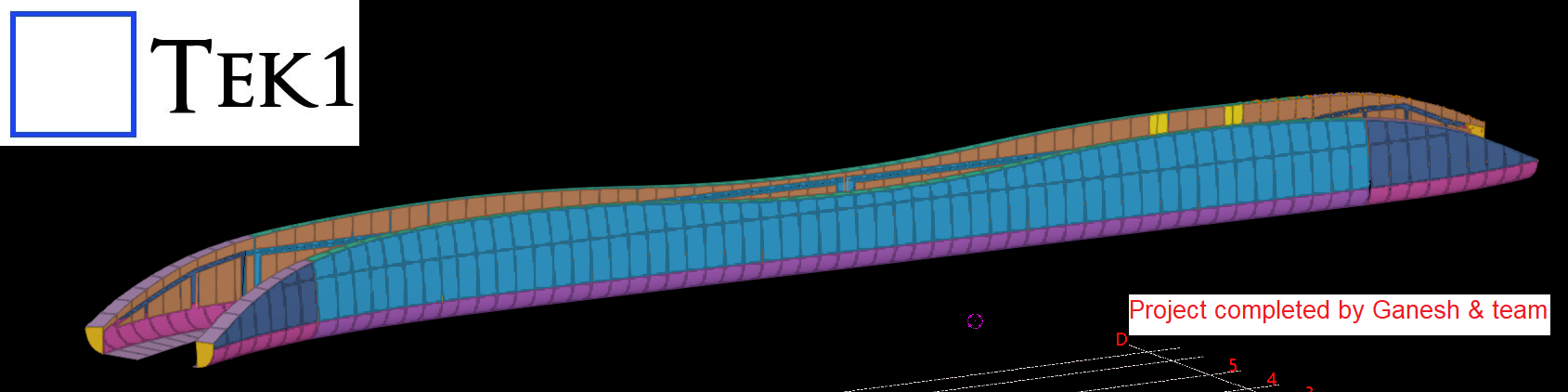
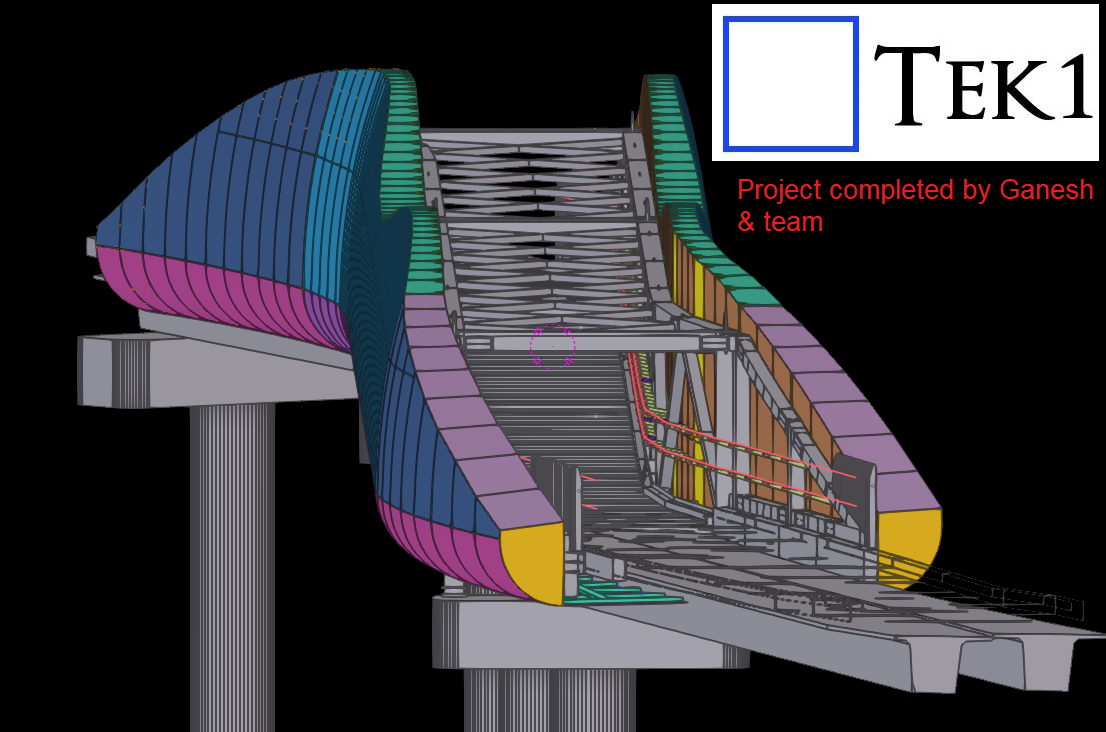
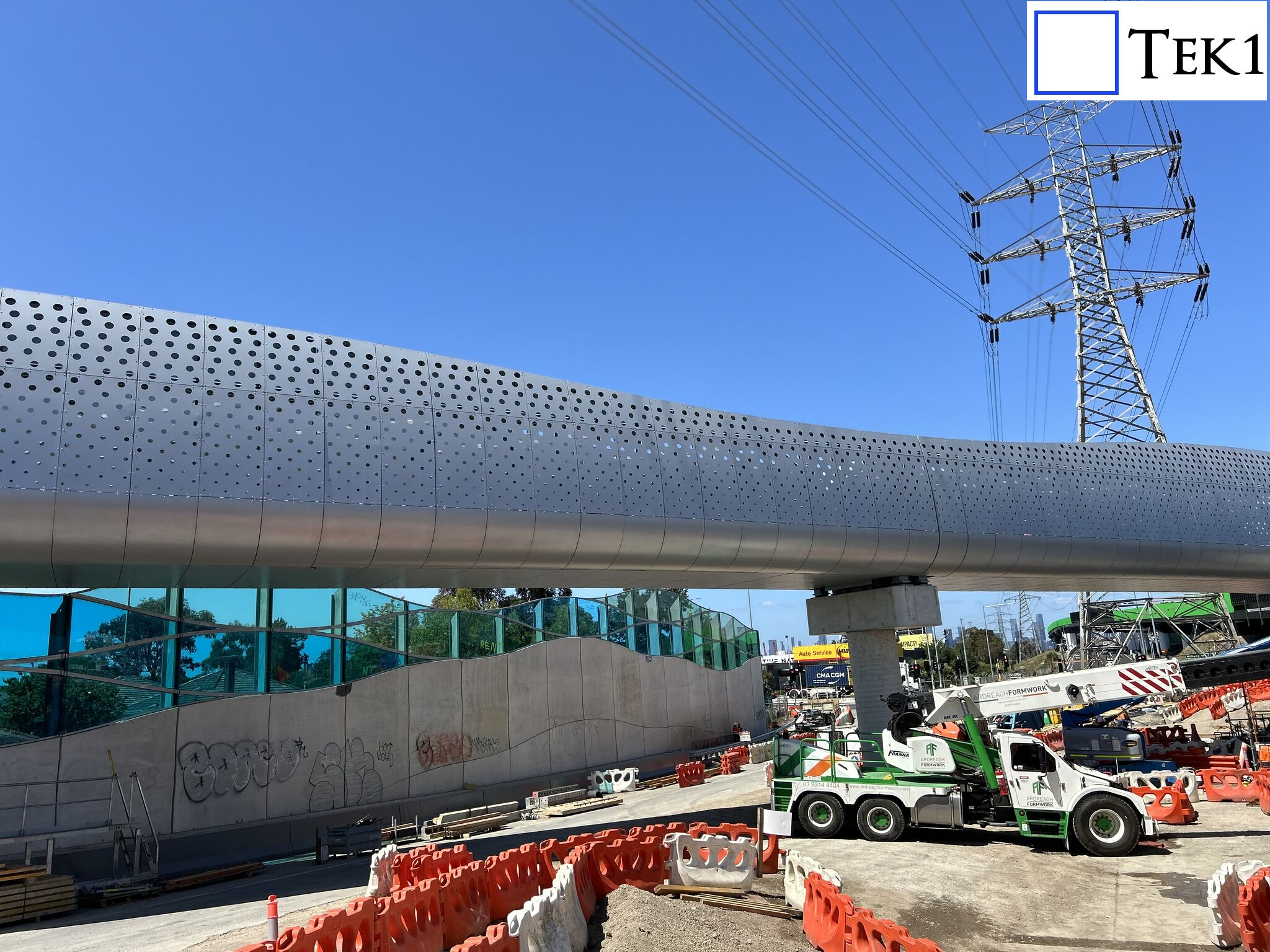
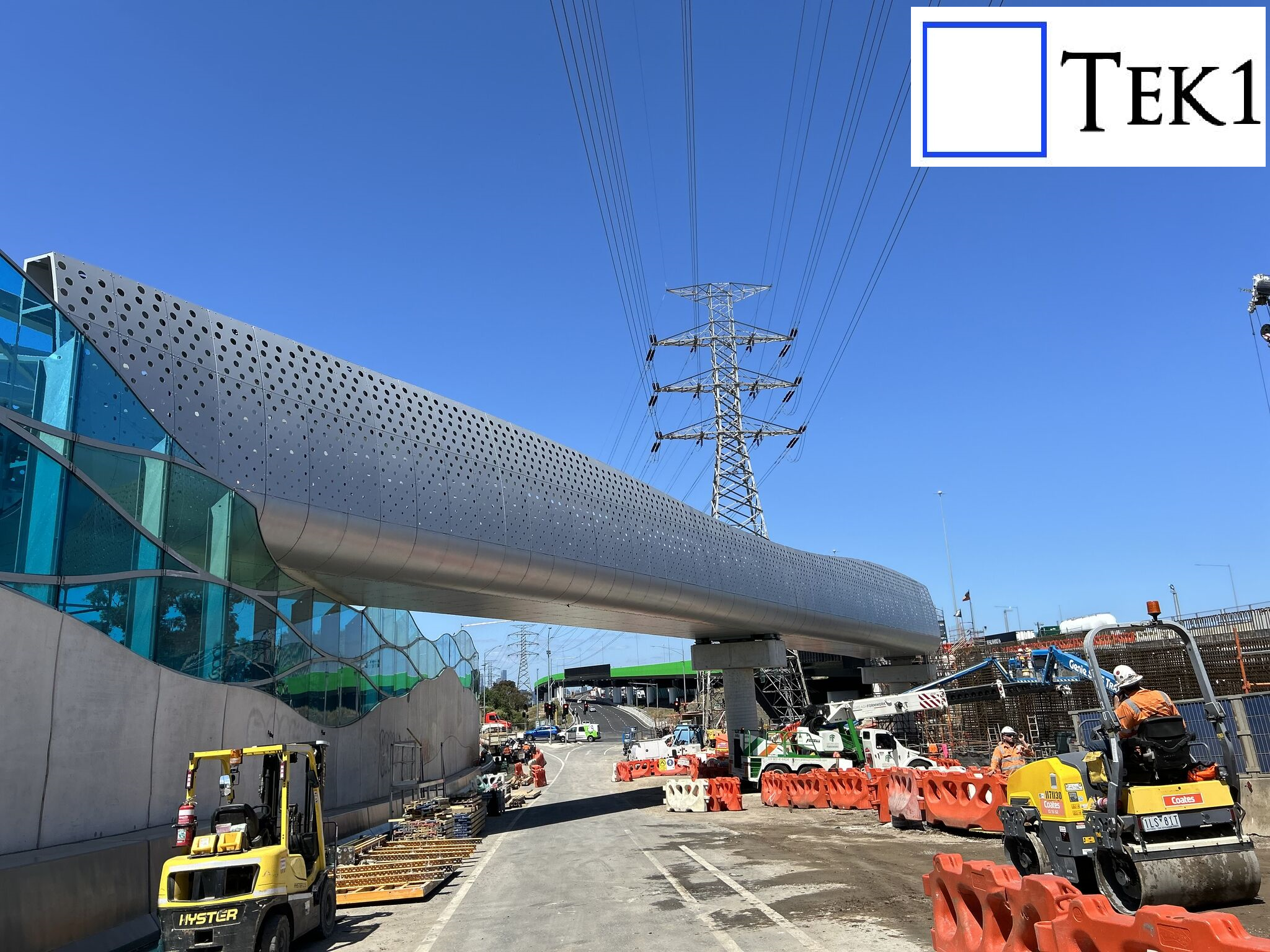
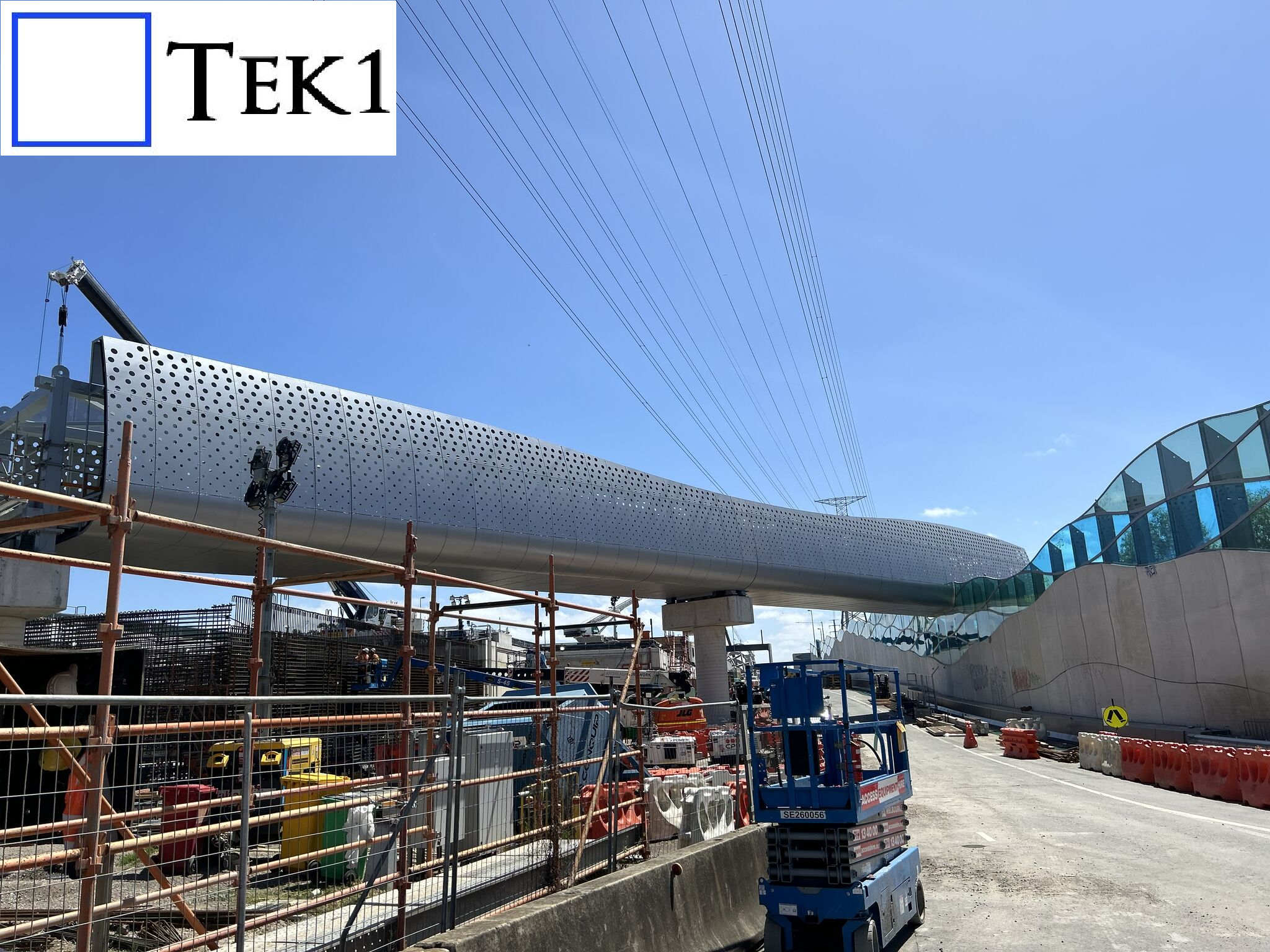
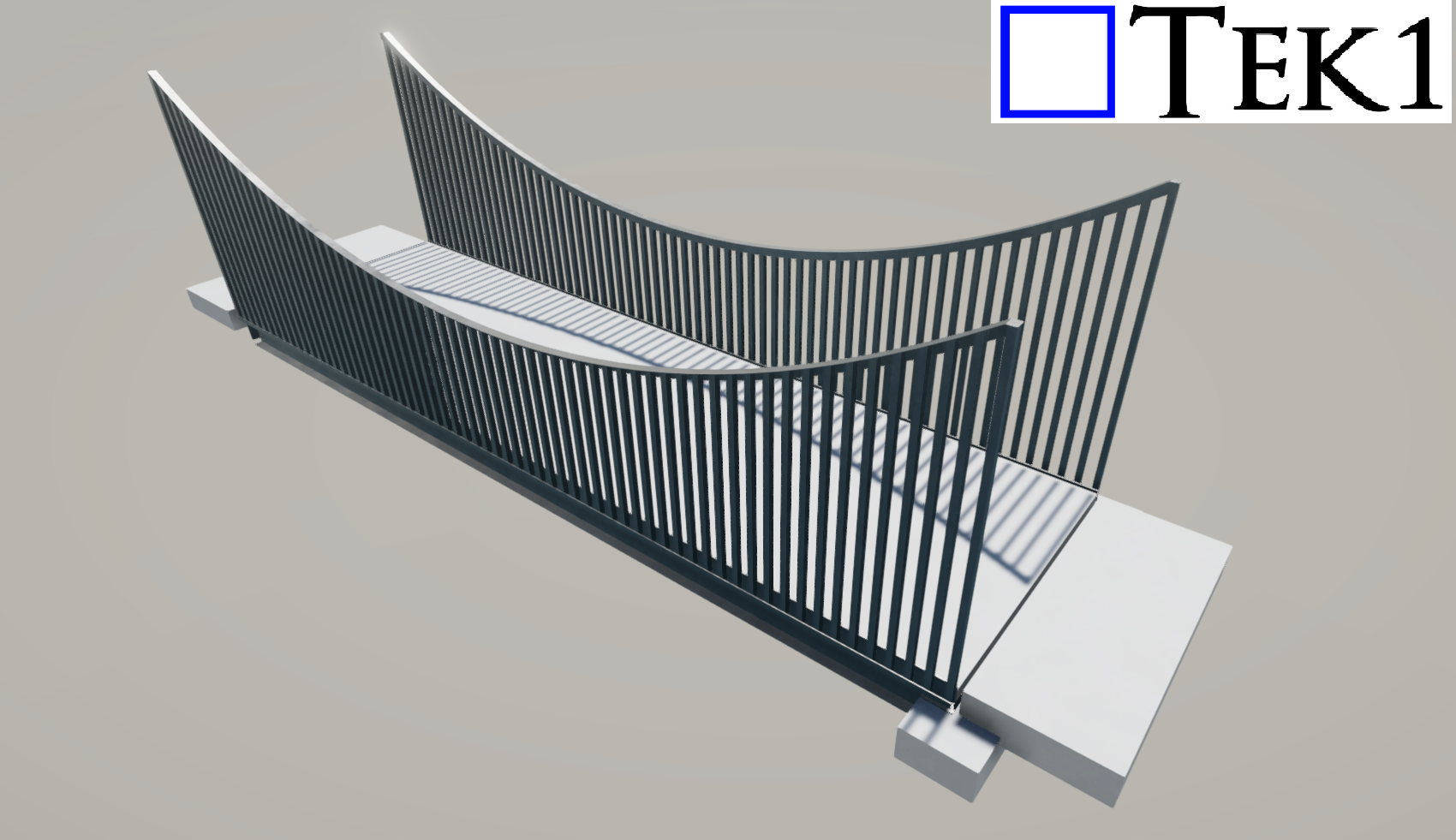
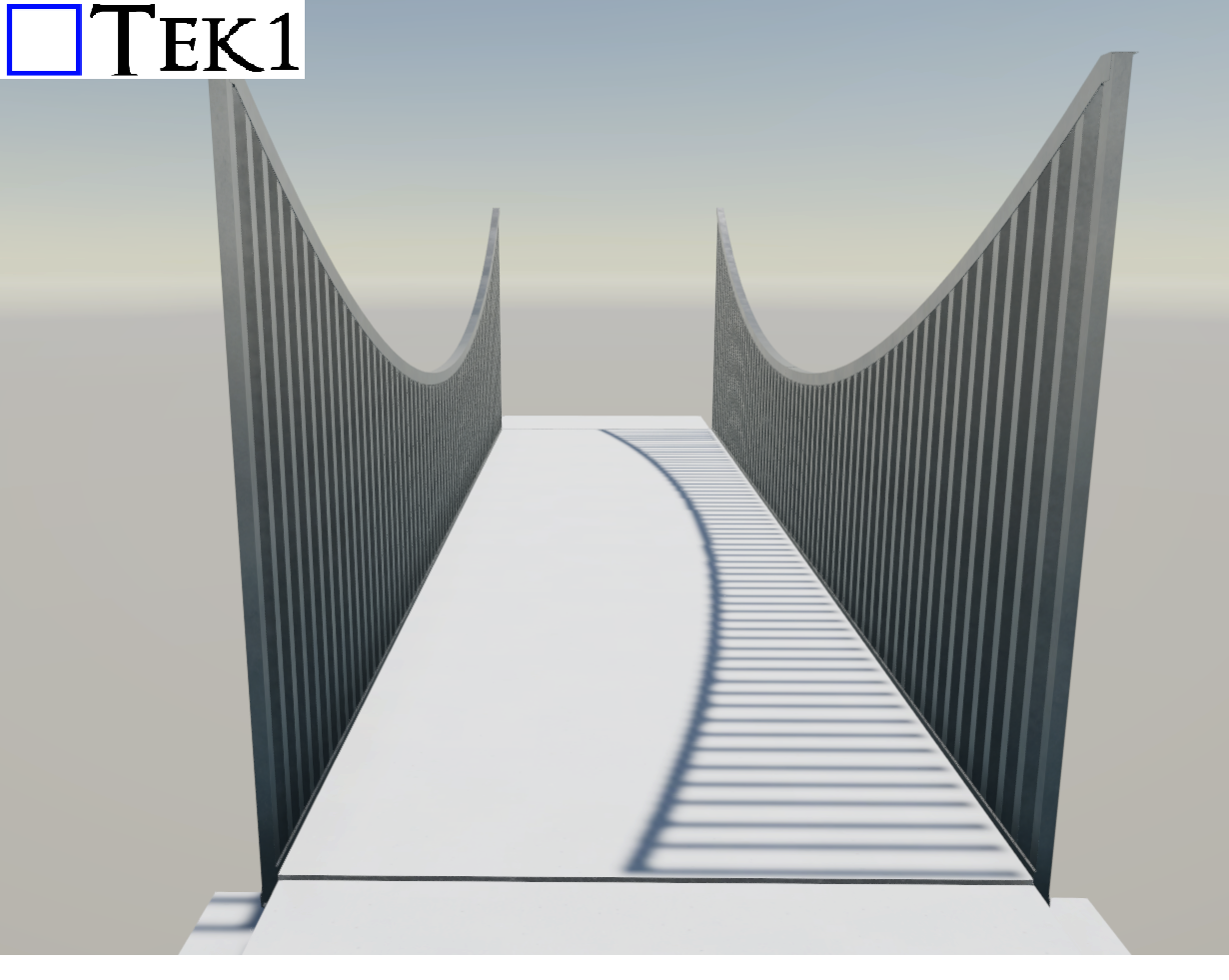
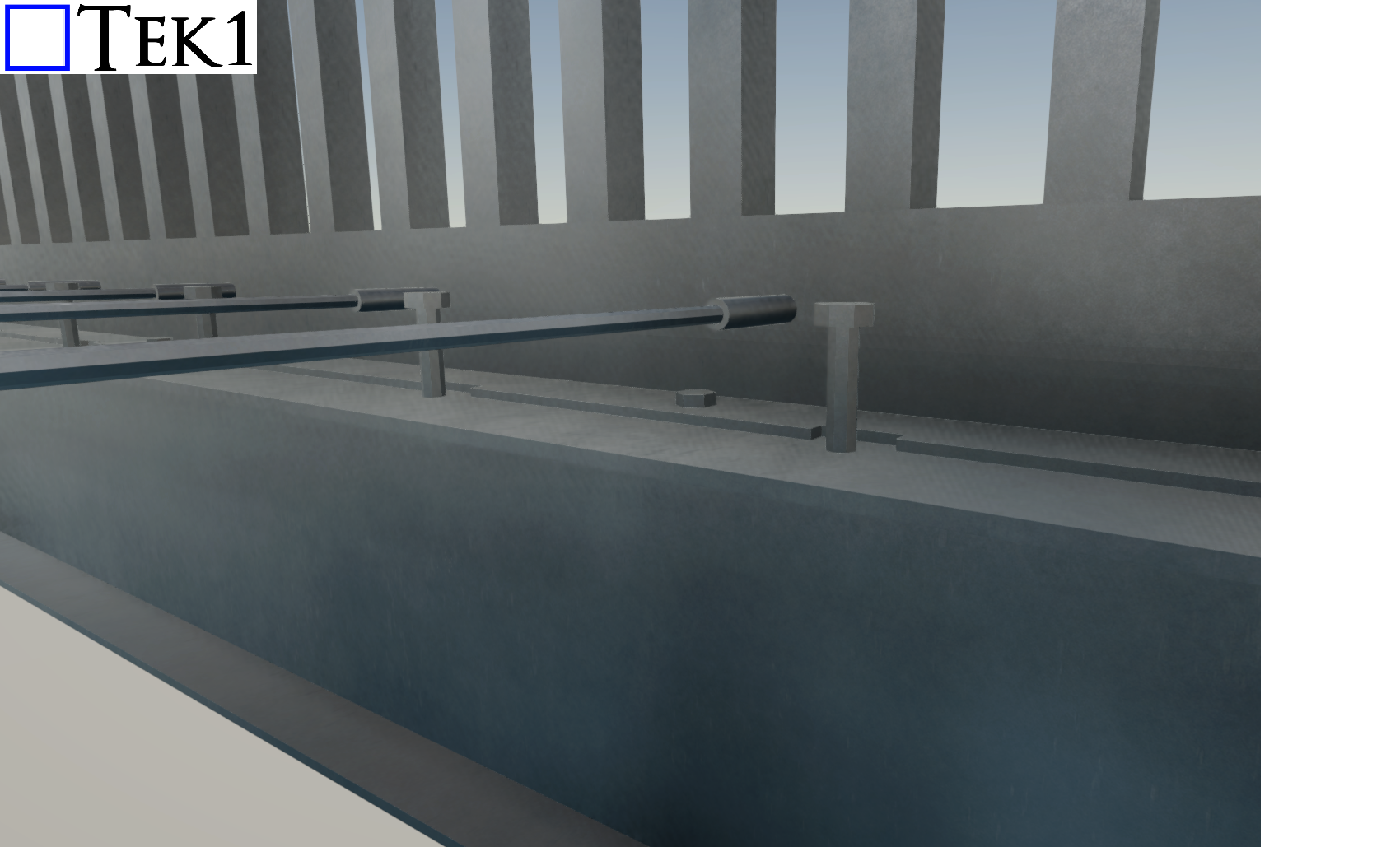
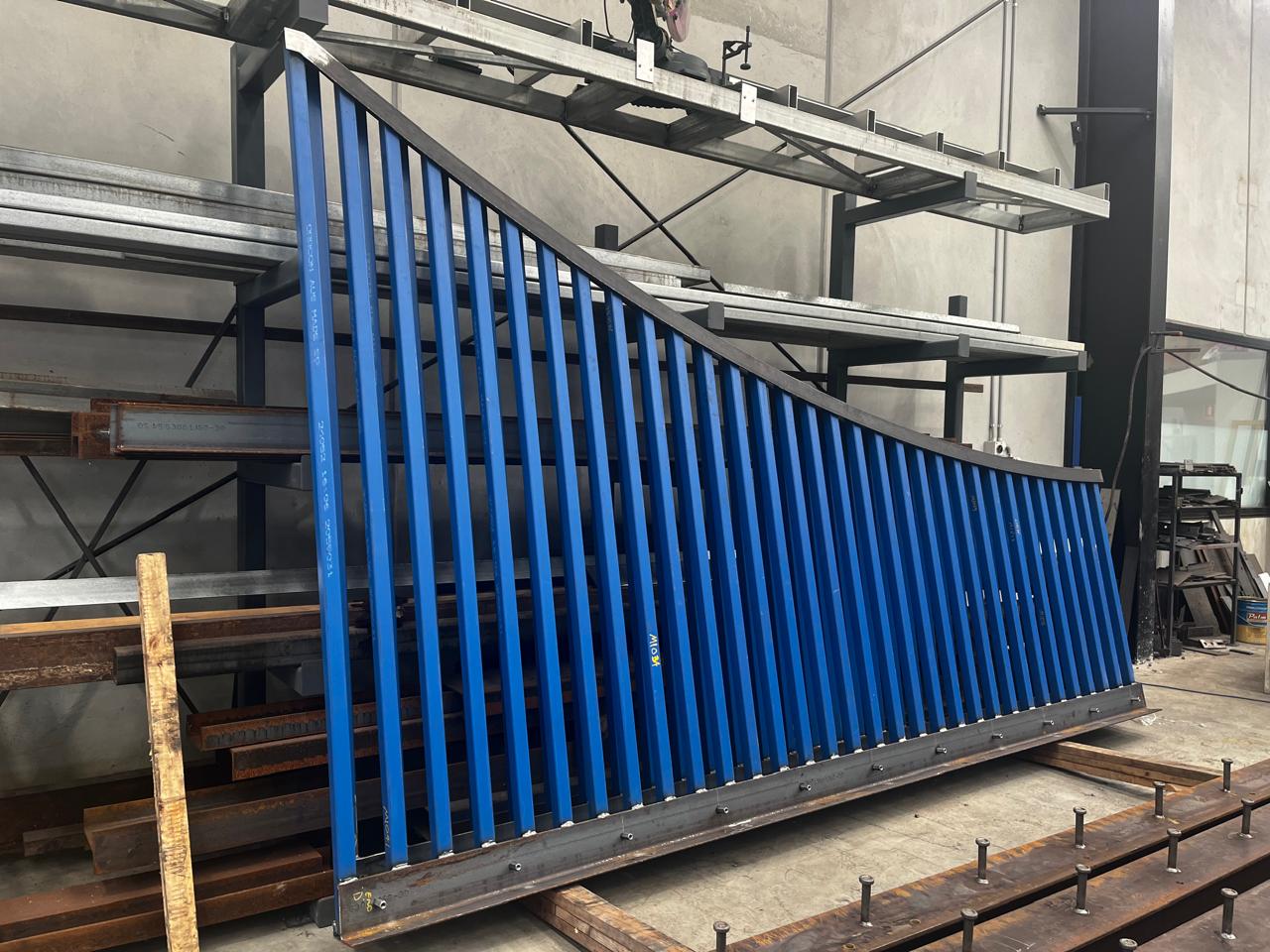
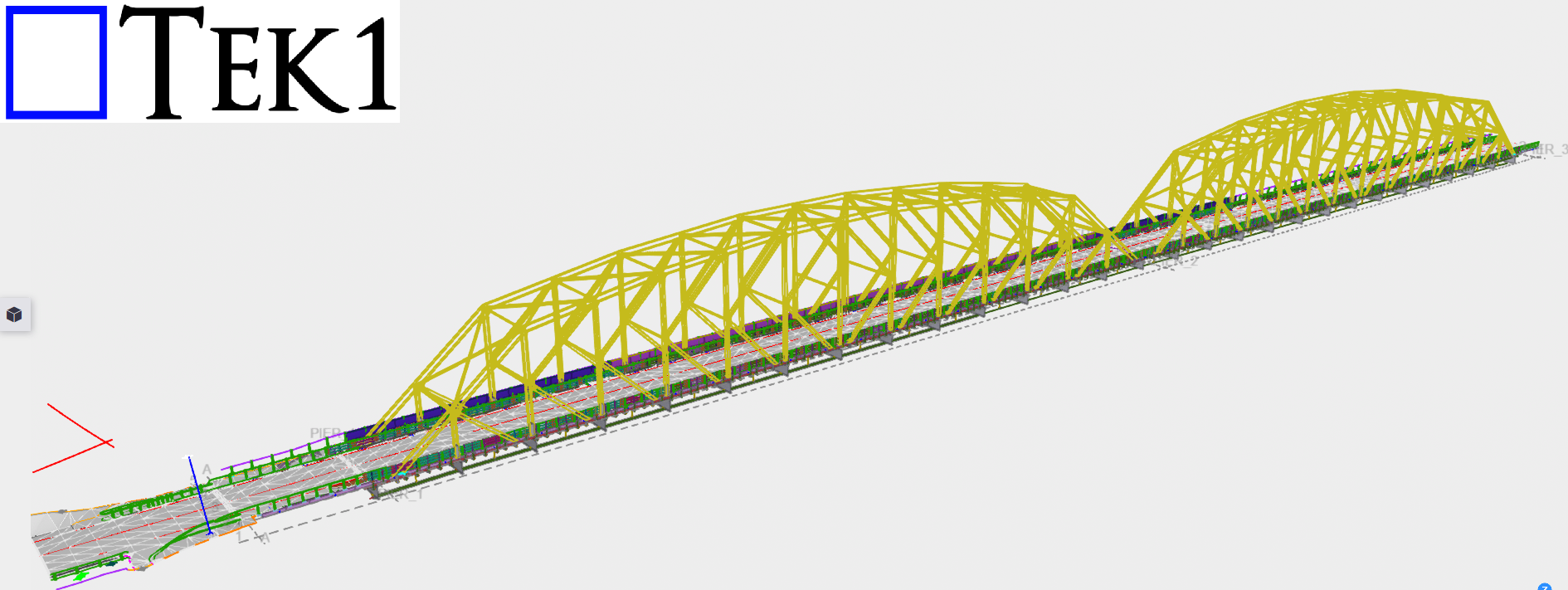
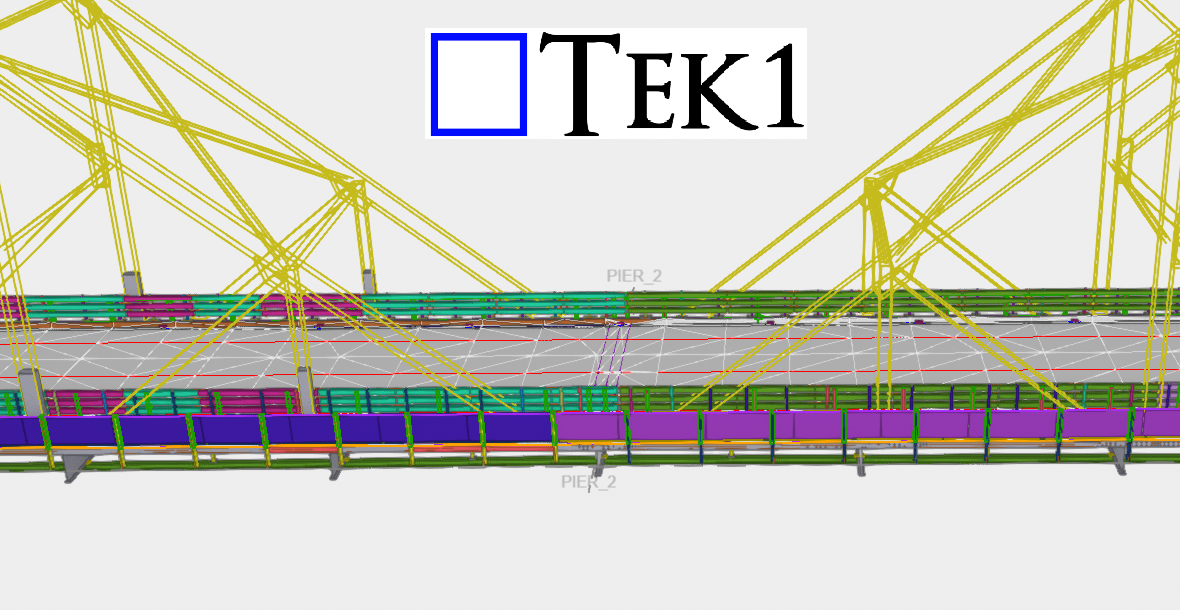
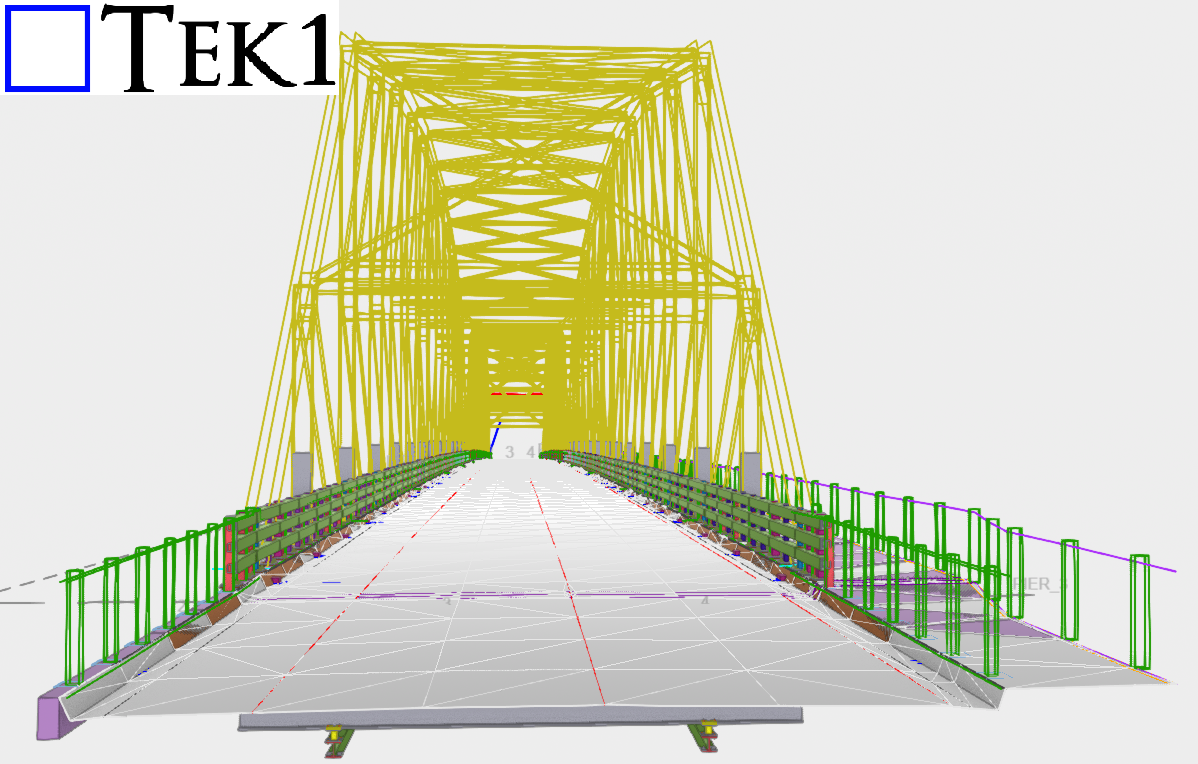
Tek1 recently completed a cladding project for a prominent organization in Australia. The project involved detailing cladding and its support system around a footbridge with unique challenges.
The footbridge featured curved ends, but these were not simple linear curves, making the design and detailing process particularly intricate.
Tek1 conducted numerous meetings with the client and engineers to finalize the cladding’s shape and ensure it met both aesthetic and structural requirements. This collaborative approach ensured the project’s success.
We hope you found our previous blogs on the Sydney Metro project insightful. If you missed them, check them out.
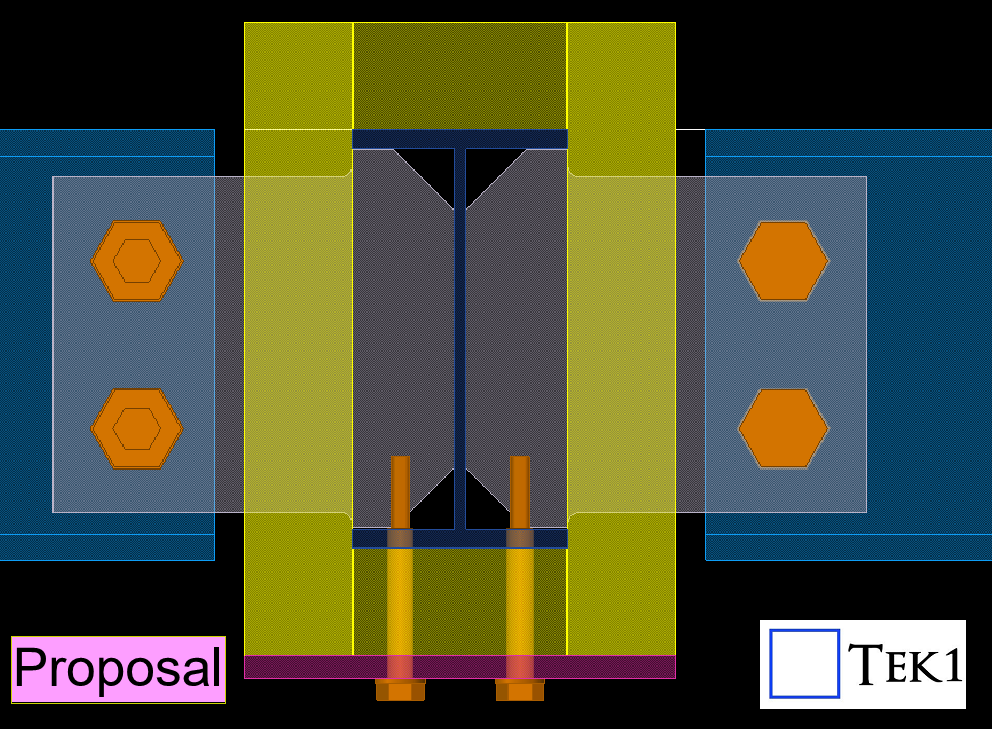
In this blog, I’d like to share another connection detail we proposed to the structural engineer on the Sydney Metro project
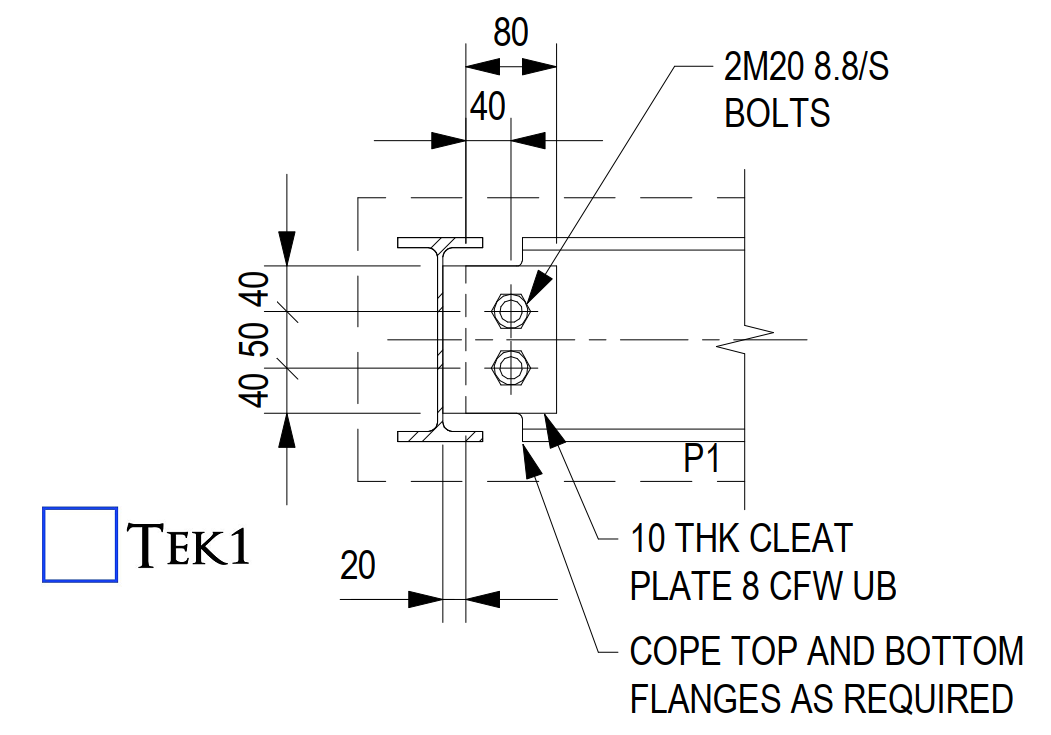
Since this is a metro project, fireproofing sheets are required on steel members as per the structural engineer’s specifications. However, the original connection details provided by the engineer were not feasible interms of installation of fireproofing sheets — they would make installing the fireproofing sheets difficult and time-consuming.
Please see the connection details below. These are the standard connection details typically used for the steel members.
However, applying these as-is may create difficulties during the installation of the fireproofing sheets.
We identified this issue early in the detailing stage and proposed alternate connection details that would allow easier installation of the fireproofing sheets without compromising the structural requirement.
The engineer reviewed our proposal, suggested a few adjustments like thickness changes, and then approved our updated connection details.
Catching these issues early during detailing avoids major headaches later for installers and saves valuable time on-site
Stay with TEK1 for more updates on this sydney metro project
In this blog, we’ll share about a connection detail that we proposed to the engineer.
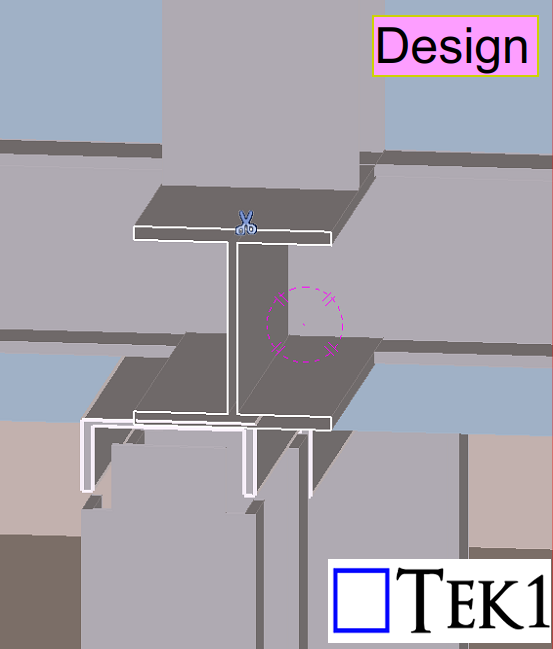
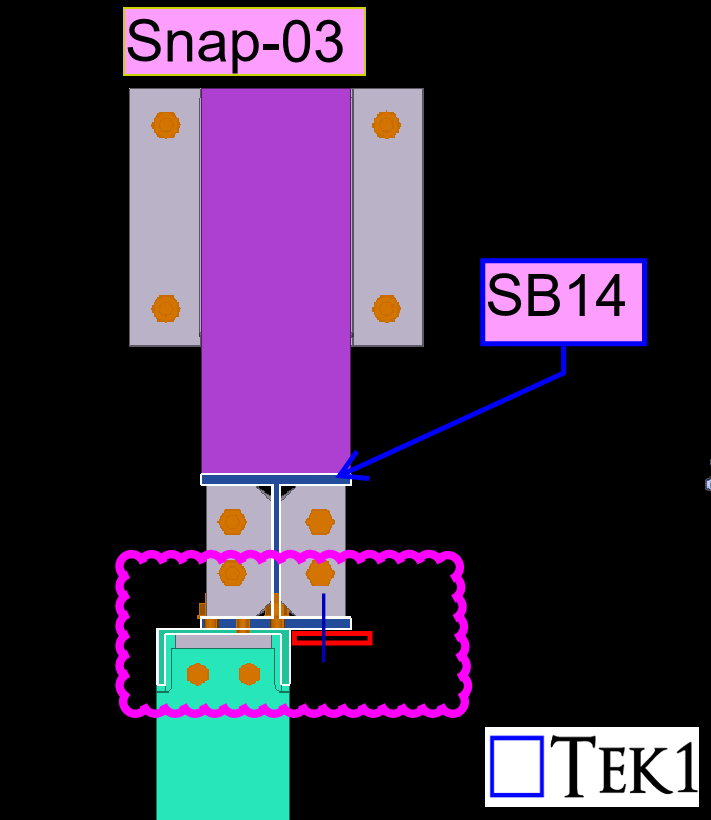
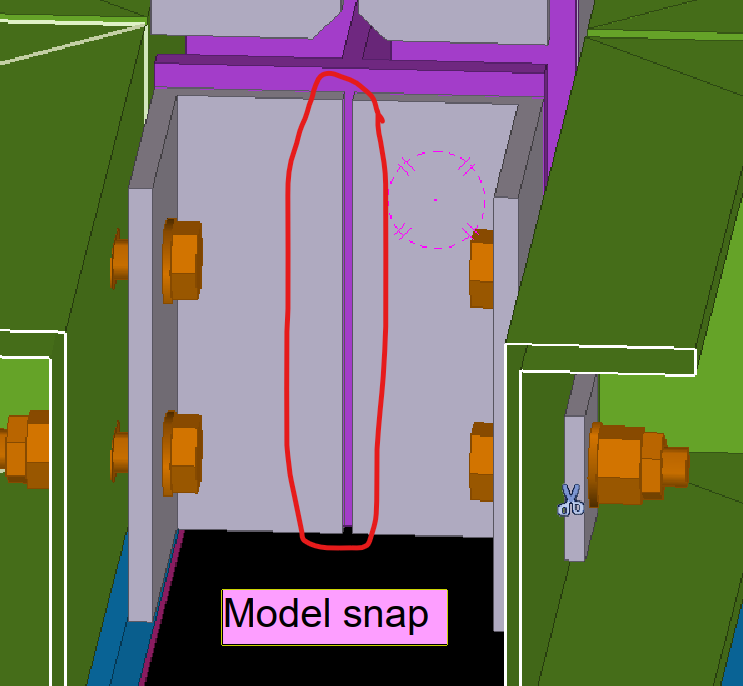
As per the design, a PFC beam needed to be supported by an I-beam above. However, in one location, the PFC beam was offset from the I-beam — and no connection detail was provided for this condition in the design drawings.
To address this, TEK1 proposed adding tab plates to connect the offset PFC beam securely. This solution maintained structural intent while resolving the missing detail.
The structural engineer reviewed our proposal and accepted it.See the below response from the engineer ‘Option shown in snap-03 accepted to maintain 2 bolts at each connection. Additional tab plate to be 80×10 FPBW to PFC. Bolt spacing to follow 140 gauge line of flange of SB14.‘
We go beyond drawings to ensure constructibility, reduce rework, and keep projects moving forward.Stay with TEK1 for more updates on steel detailing challenges and solutions in our upcoming blogs.
Here we are going to discuss about the member placement issue.
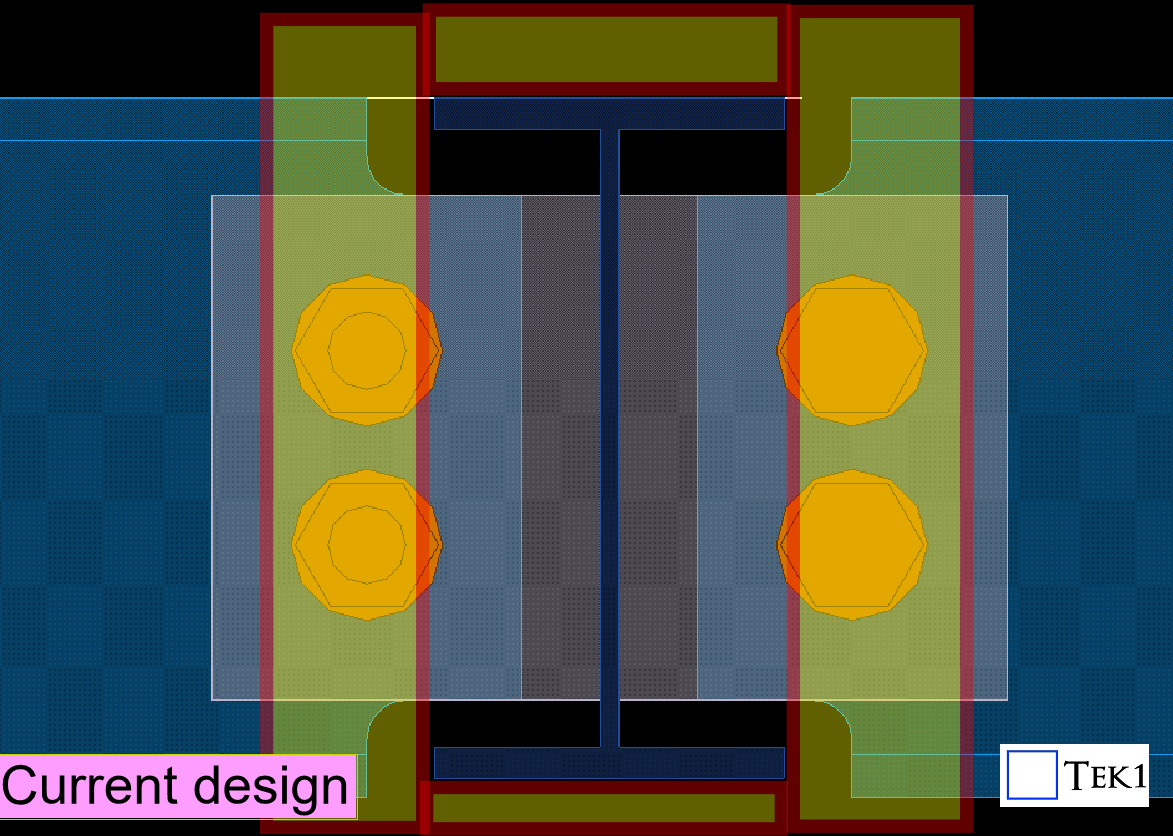
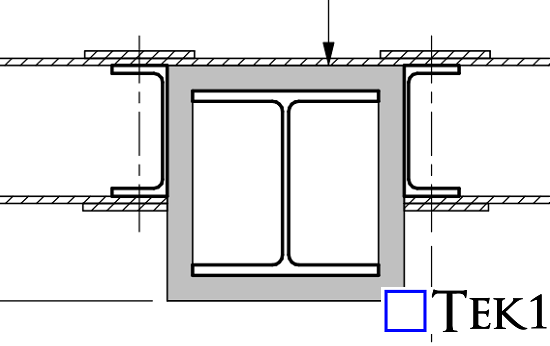
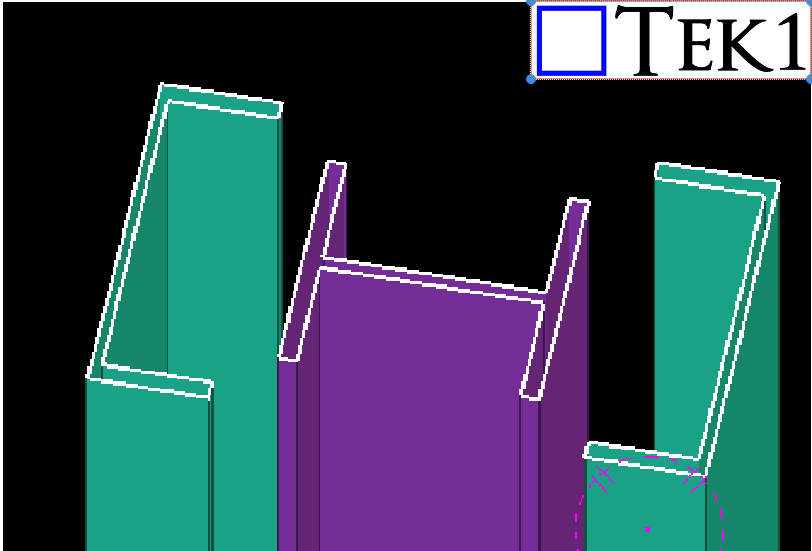
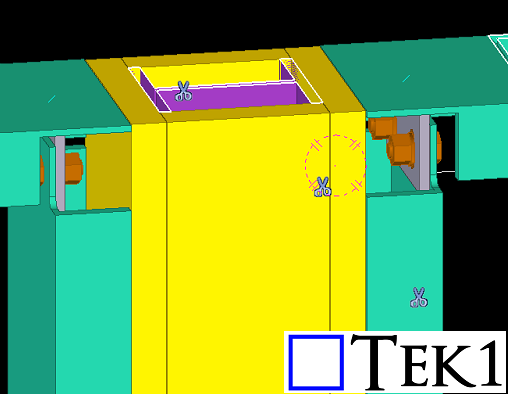
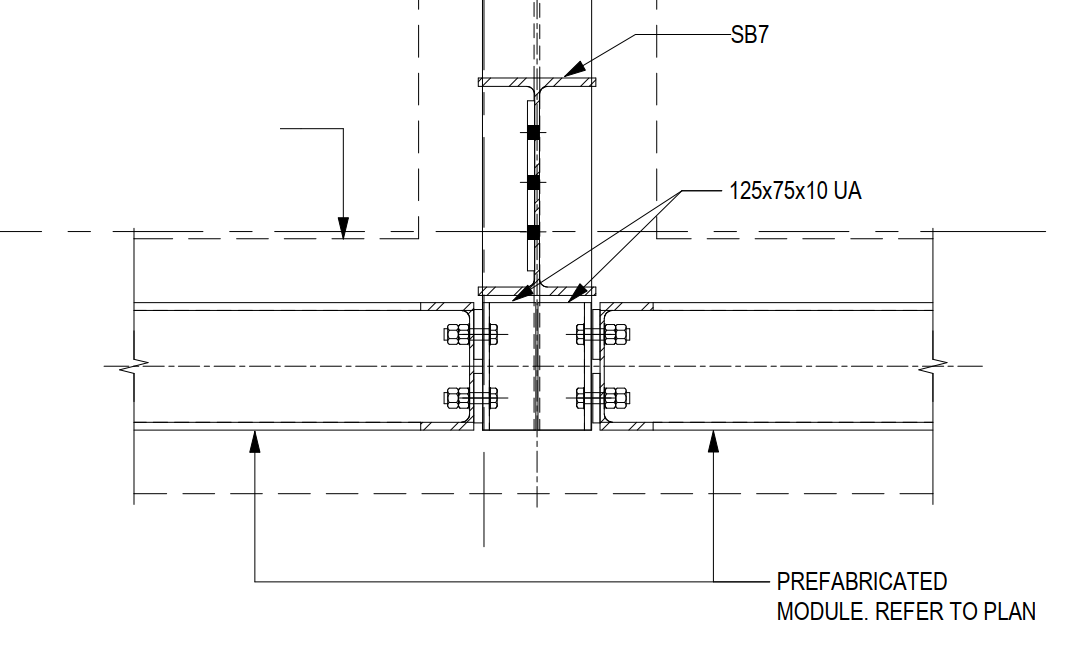
The design specified two PFCs on both sides of a column.Column was surrounded by fireproofing sheets. However, the PFC flanges clashed with the fireproofing sheets, making installation difficult. Additionally, the bolts connecting the PFCs would interfere with the fireproofing.
To resolve this, TEK1 planned a simple yet effective adjustment—changing the orientation of the PFCs. This allowed for seamless fireproofing installation without compromising the structural integrity.
If we have followed the design , then the erection team will have difficulties to provide the fireproofing sheets.By identifying and addressing potential clashes early in the detailing process, TEK1 saved significant time and costs for the client, ensuring a smooth execution on-site.
Stay with TEK1 for more updates on steel detailing challenges and solutions in our upcoming blogs.
TEK1 is currently engaged in steel detailing for the Sydney Metro project, working with a reputed organization in Australia. During the detailing process, we have encountered several design challenges. Here, we will share one such issue and how we resolved it.
The Issue
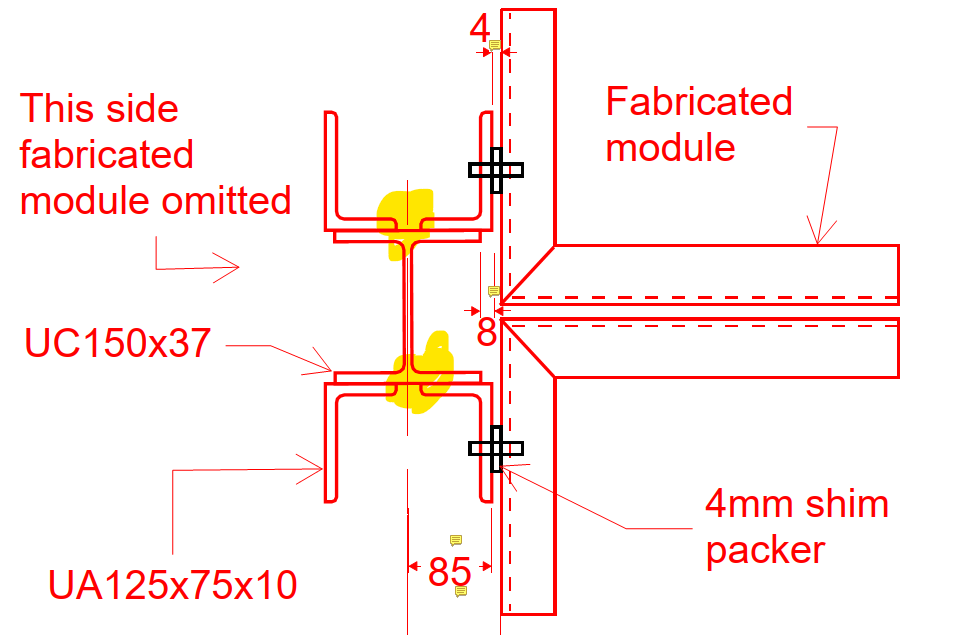
A design required two unequal angles welded to a small hanger with 10mm packer plates. This left insufficient weld space, making fabrication tough.
Recognizing this issue early, we raised a query with the concerned team. Our initial proposal was to cut both angles to create the required weld space.
After reviewing our concern, the team suggested an alternative solution that involved reducing the packer plate thickness from 10mm to 4mm. This adjustment allowed for a 6mm weld clearance on both sides without significantly affecting the design.
If this issue had gone unnoticed and we had followed the original design, it would have caused complications for both the fabricator and the designer. By identifying the problem early and addressing it proactively, we saved time and costs for the client.
Stay Tuned for More Insights
This is just one example of how TEK1 ensures seamless steel detailing by resolving design issues efficiently. Stay with TEK1 for more updates on steel detailing challenges and solutions in our upcoming blogs.
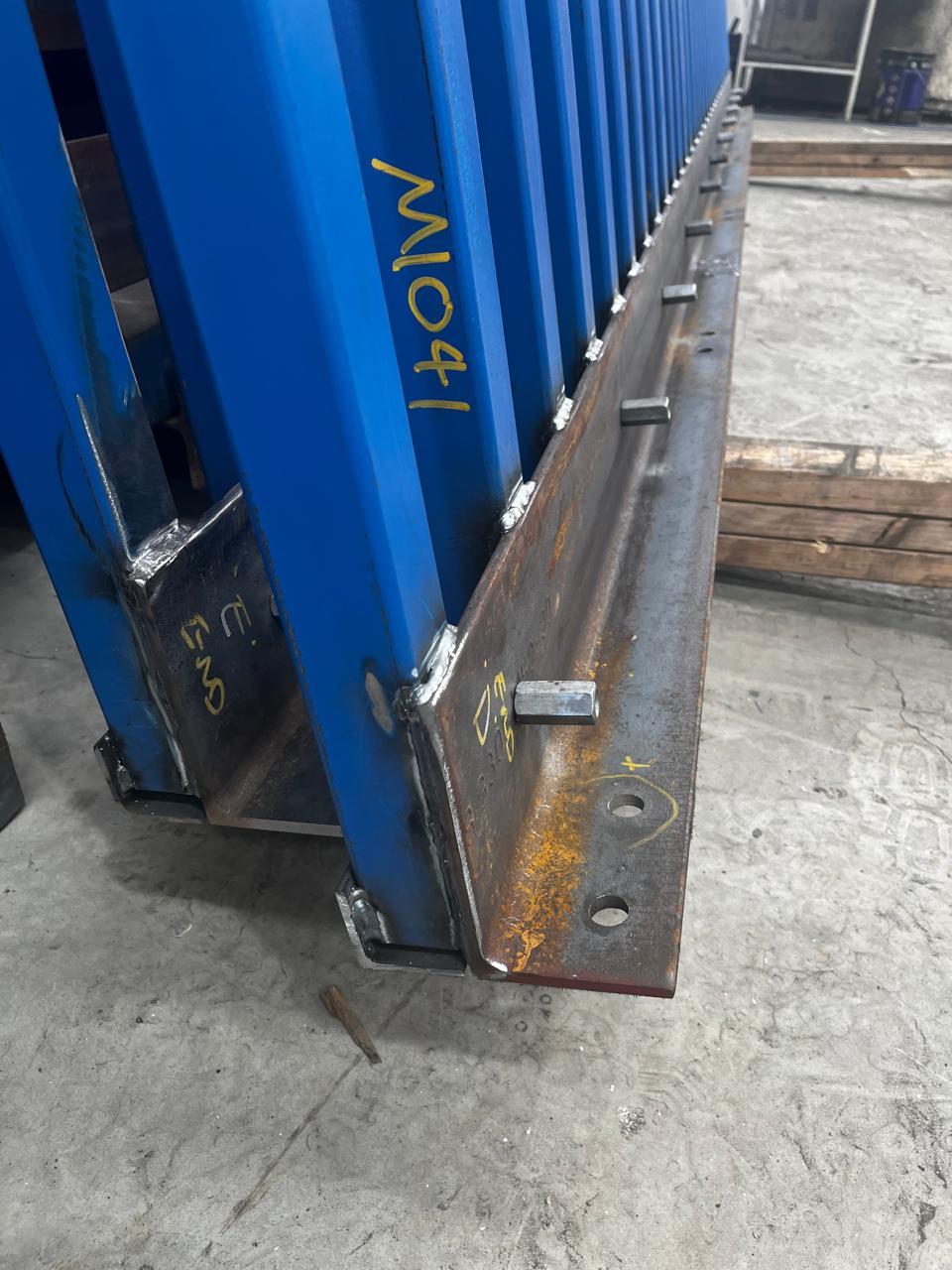
As a steel detailer, nothing compares to the satisfaction of seeing your detailed model come to life. I recently had the opportunity to witness the fabrication of one of my detailing projects in Australia. Balustrading for Foot Bridge
The detailing was executed seamlessly, with no challenges for the fabricator or erectors. It was fulfilling to see the effort and attention to detail pay off in real-world application.
Steel detailers play a crucial role in ensuring that connections between precast & steel are both practical and efficient. In this blog, I’ll share my experience with the challenges I faced in steel-to-precast connections.
Design
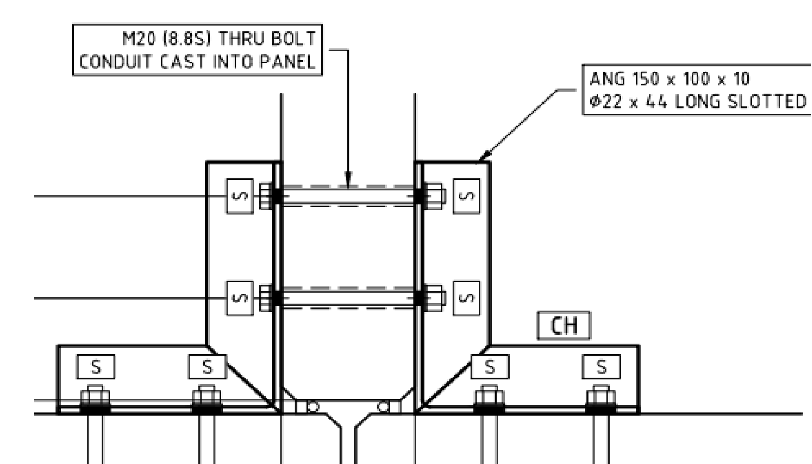
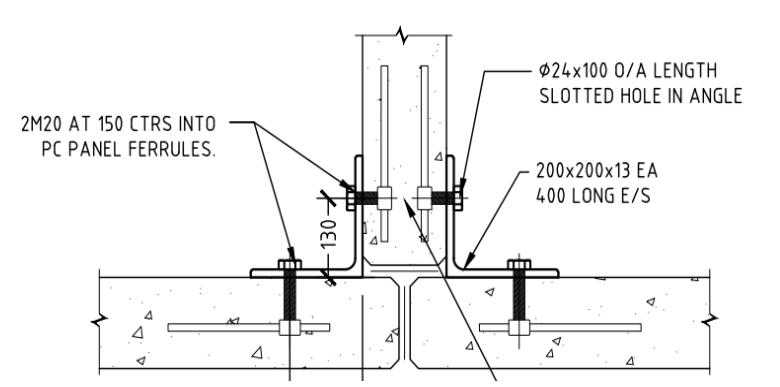
The design specified two ferrules on both sides of a precast wall. However, following this design may leads to clash between the ferrules.
The Proposed Solution
To address this, I suggested using a CHS (Circular Hollow Section) conduit. This approach would allow a single bolt to be used for both sides of the connection, ensuring proper alignment .(Providing ferrules at a different location will not be feasible as we do not have sufficient edge distance)
The Outcome
The structural engineer approved the proposal but recommended an alternative solution: double-ended ferrules. The query is now with the builder to decide which method suits their construction process best.
Key Takeaways
Understanding Precast Connections: Detailers should be aware of connection requirements and potential issues like concrete cover.
Collaboration is Key: Engaging with engineers and builders ensures practical solutions are implemented.
Flexibility Matters: Proposing alternatives opens the door to more efficient and cost-effective outcomes.
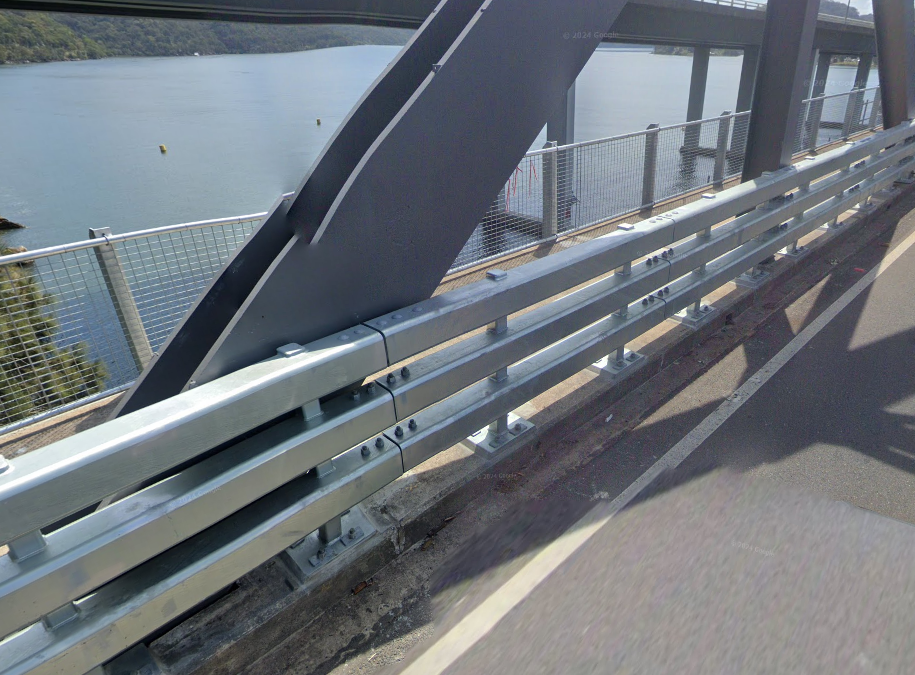
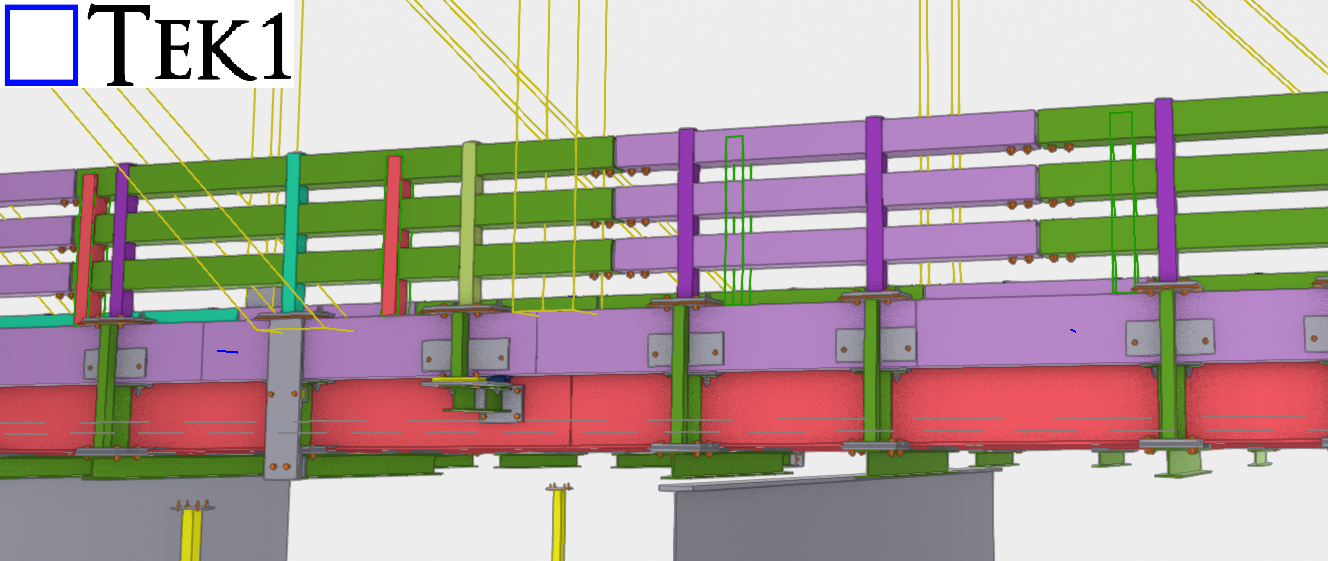
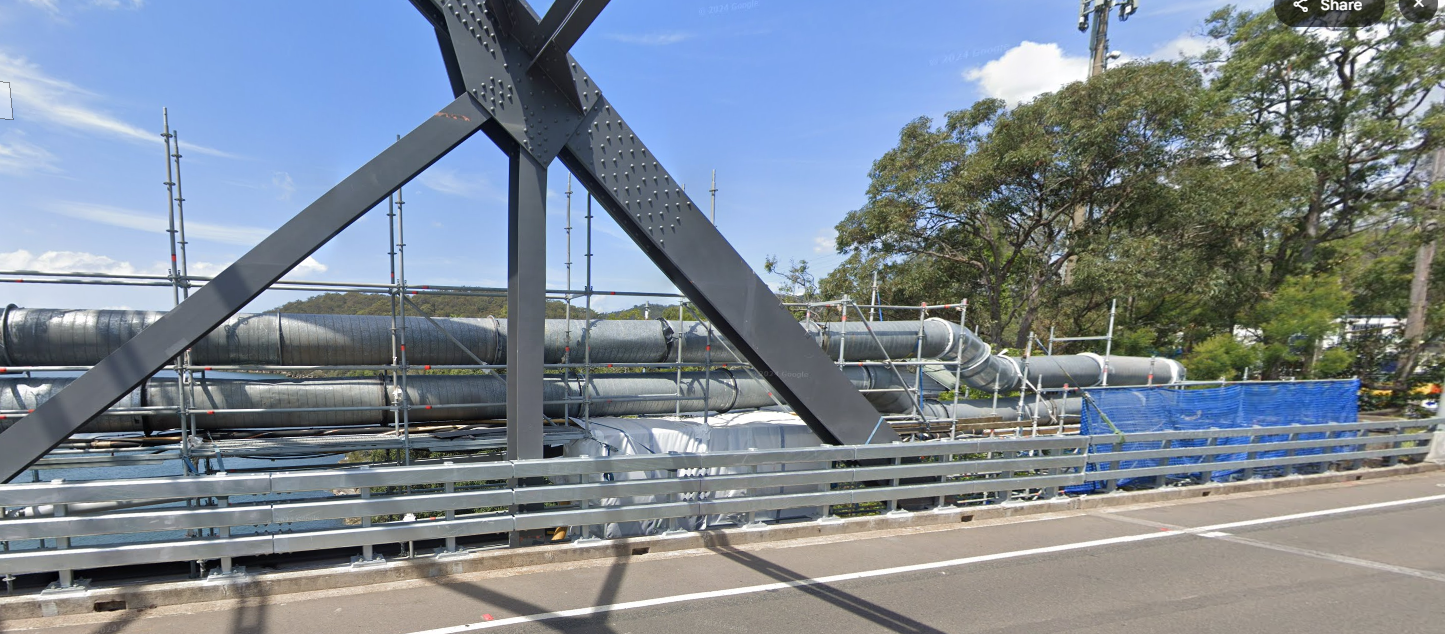
Tek1 recently completed a barrier replacement project for a renowned organization in Australia. This project, located near Sydney, involved replacing existing barriers with new ones, and it came with its unique challenges.
The task was to detail a new 536-meter-long barrier while ensuring the anchor holes for the new posts did not clash with the existing steel posts.
Aligning anchor holes without clashes presented difficulties in maintaining consistent linear post distances. This required precise planning and coordination.
Through multiple meetings with the client, we finalized the post locations that balanced structural integrity with practicality. This approach ensured the barrier was installed seamlessly without disrupting the existing infrastructure.
The result was a well-executed barrier replacement, meeting the client’s expectations and delivering a durable solution.
Bridging is commonly used to tie purlins together, and while structural engineers specify the type of bridging in the design, it’s up to the detailer to adapt it based on the purlin arrangement. In this blog, I’ll share how we handled a bridging connection scenario involving a concrete wall.
If you want to know ,more about bridigng. See our previous videos
Typically, bridging is tied to steel beams at one end. However, for this project, the client requested that the bridging be tied to a concrete wall instead, as there was no direct steel connection point available.
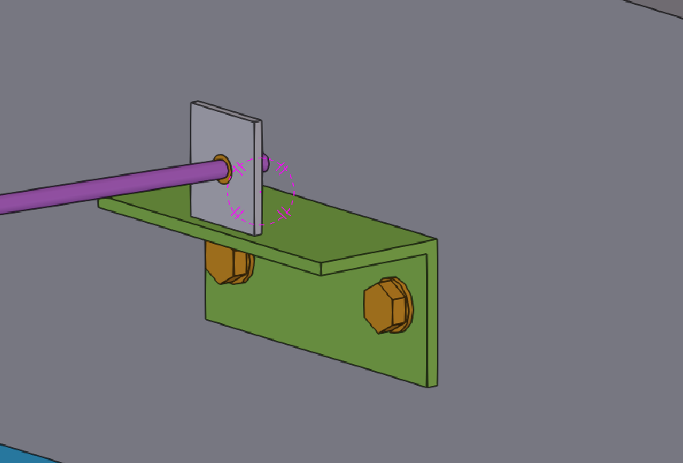
To meet the client’s request, we designed an additional support system: Equal Angle Support: An equal angle was anchored to the concrete wall using chemset bolts.
Welded Plate: A plate was welded on top of the angle to serve as the connection point for the bridging.
Bridging connections require careful consideration, especially when working with non-steel elements like concrete walls.