Author: admin

  • Grating Splitting

    Why use us for splitting floor plates?

      1. We are experts in splitting floor plates.
      2. Super fast turn around.
      3. Full check report.
      4. Output in Tekla or Autocad.
      5. You can utilize your Tekla license for more productive work.
      6. Cost effective.

    Inputs required

    1. Company name
    2. Job number
    3. Jobname
    4. Part start no
    5. Part name
    6. Grating specification
    7. Banded
    8. Maximum allowable unsupported
    9. Span if different from info on catalog
    10. Maxim width if different from catalog
    11. Panel to panel maximum gap
    12. Maximum cantilever length along load
    13. Bar direction
    14. Surface treatment
    15. Galvanized, painted etc
    16. Maximum allowable weight per panel
    17. Delivery date
    18. Estimated sq ft/sqm
    19. Nosing strip (if any)
    20. Is cross bar to be aligned?
    21. Welding instructions?
    22. Special instructions if any

    Deliverables

    1. Full set of Grating drawings with piece marks
    2. Over all plan with piece marks,
    3. Excel Check Report with data noted and issues identified, allowing you to easily verify the integrity of the drawings, highlighting:
      • Part Marks,
      • Grating specifications
      • Piece weight, Length and width checks, as well as checks against the grating direction and the maximum unsupported length/width, plus problematic panels highlighted.
  • Bubble Deck and Panel Detailing Tooling – AutoDimension Metal Curves

    Hi folks

    Demo of the Auto-dimension metal curve tool

    Auto Dimensioning Metal Curves from Tek1 on Vimeo.


    This post is a demonstration of the powerful tooling Tek1 has at its disposal. This will save you, the client: time and incorrect dimensions.

    This tool dimensions complex metal curves in a fraction of a second.  You can’t make a mistake – that is impossible because the computer does the heavy lifting. And it can’t take more than 10 seconds (maximum). Imagine dimensioning everything by hand. That would take forever!

    It allows our engineers and draftspeople to focus on the more important things: reading and interpreting drawings, and making good design decisions.

    with kind regards


    Ben

  • Bar Bending Schedules

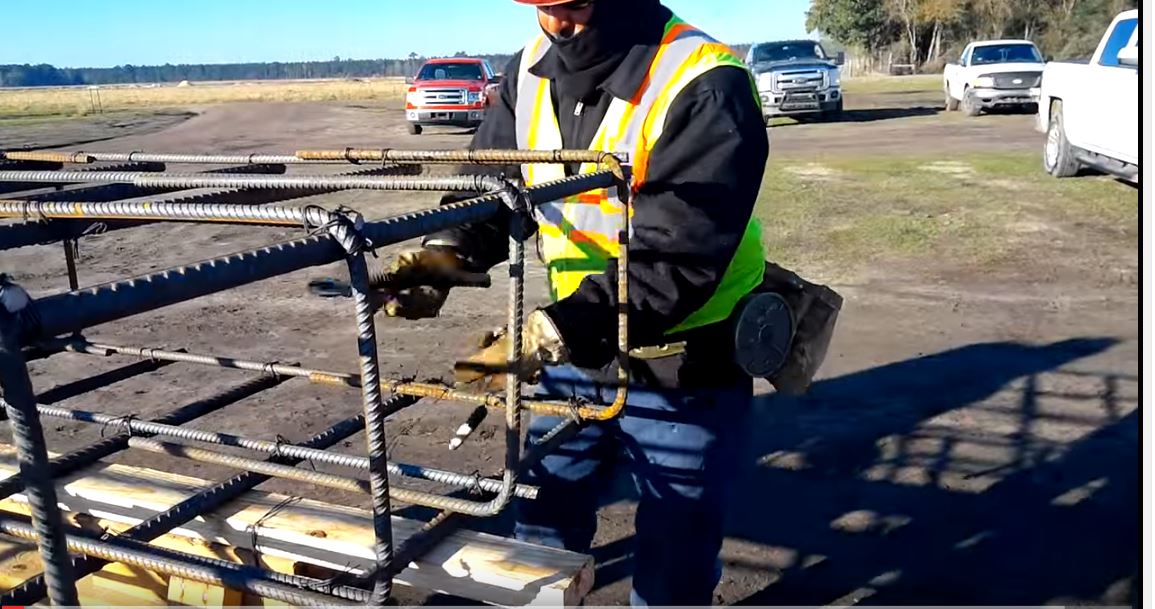
    We have aquired CADDs rebar cad software, which is arguably the best tool to detail rebar. CADSRC is used for producing bar bending schedules.

    WE provide the precise details on bends, shapes and lap splices to meet the requirement of your specific project.  Project Constructrability is tackled while detailing, issues are highlighted. Detailed drawings are provided for the rebars. The detailed drawings provided by our rebar detailers often help our contractors to visualize the structures.  In fact, with these detailed drawings, the task of iron workers are highly simplified, as they know where to place and thus reduces the cost of installation.

    • Foundation details
    • Bar Bending Schedules
    • Bar listing
    • Total rebar estimation
    • Footing Detailing
    • I/S beams and Columns
    • Bar Bending Schedules

    Our detailers have a long track record of iconic projects working with top-tier fabricators, general contractors, engineers, owners and EPCM firms, where:Rebar

    • Our  global workforce enables us to acommodate large projects and schedulecritical surges.
    • We take pride in our reputation for quality, error free and timely delivery on complex projects.
    • We have captive detailing capacity. If we are fully booked out, we will tell so.
    • Our detailing office not a sweat shop. Detailers have high morale and take pride in the work do.
    • Our man power turnoverRebar-2 is the lowest in the Industry

    Our services include rebar detailing and estimating,

    Bar lists and shop drawings can be emailed or delivered via our internal application to manage construction projects. Items can be queried by your field personnel from they tablets, or phones.

    QR Coded drg Nos makes it easy to access information about items and status.

    Deliverables

    • Field Placement/Shop Drawings
    • 2D and 3D Modelling of Rebar
    • Connection Sketches
    • Bar Listing in ASA Format
    • Instant Access to Projects via our Interal project management tool
    • Weight and/or Cost Change Tracking and Submitting via our custom tool
    • RFI Generation for Questions and tracking with our custom tool
    • DGN Files Available to Customer
  • HVAC DETAILING

    HVAC DETAILING

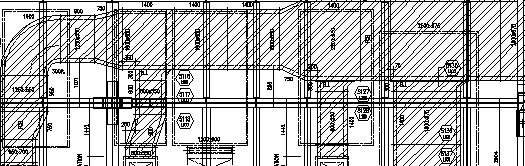
    We provide all phases of Mechanical, and Plumbing (MEP) and HVAC detaiing, drafting and modeling services. Our gathered expertise in all kinds MEP systems is streamlined to cater to Industrial, Residential, Hospital, Educational and Commercial sectors.

    Our MEP services include Wire frame 3d models when required, Shop and fabrication drawings, Isometric drawings, as built drawings, mark-up detailing,

    We provide MEP shop drawing which include Plumbing shop drawings, Duct shop drawing, Piping shop drawings,  MEP coordination drawings, etc.

    As built drawings are very important for the contractor to collect payments. We provide excellent and very competitive prices for as built drawings

    Co-ordination is the key to a successful MEP project.

    We co-ordinate with Navisworks, Tekla BIM Sight. Sketch up

    Excellent document management systems make sure that the project is fully tracable

    contact Us on koshy@tek1.com.au

  • How to obtain a small offset around a polyline? (AutoCAD .net API)

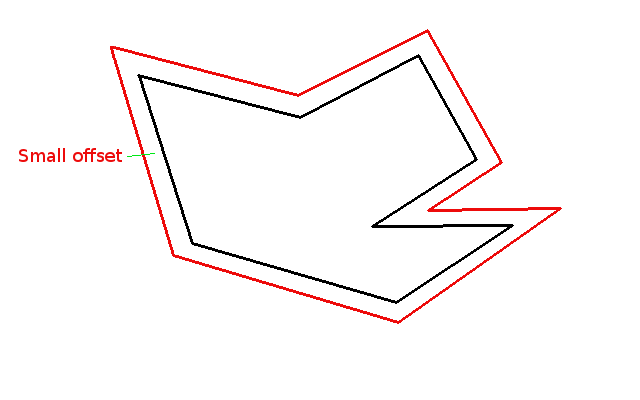
    smallOffset
    Shows a small offset around a panel. This would need to be created.


    Offsets from a panel are used extensively in detailing.

    Here’s how to do it – simple, no? See below:


    DBObjectCollection _offsetPolylines = polylineInstance.GetOffsetCurves(25);
         // offsets the polyline by 25 mm
         // the object collection should really have only one item in it: a polyline offseting the original by 25mm.
  • How to return a selection of Objects to the user (AutoCAD .net)

    Here’s the code:

    And that should select any objects that you want to select. You’ll have to put it in an array though. A handy hint which can save you a bit of grief.

  • Tek1 Now With SolidWorks Expertise

    Traditionally we have been a precast and steel operation. With a very strong and talented team, familiar with AutoCad (and many similarly related CAD systems), Tekla and also Catia and SolidWorks.

    Given Toyota’s Design facility is now defunct in Melbourne, we now have Tony on board, capable of handling anything pertaining to SolidWorks and Catia. We original met Tony in Toyota, and we know what he’s capable of. He brings to us a wealth of knowledge and expertise – one of the best in the world – and are absolutely delighted to have him on board.

    If it’s got to do with SolidWorks, he’s one of the best out there. Pick up the phone and we’ll give you a quote. And you can judge for yourself the quality of his work.

  • The importance of identifying the assumptions Behind Every Problem

    My estimable colleague Rafik Ben made a blog post concerning a problem.

    For reference, here it is: http://routetomastery.com/blog/2017/01/08/has-pair-with-some-problem/

    So what’s so good about Rafi’s problem?

    Well like most things in the world, the problem, is not the actual problem. When it comes to computer science, the *actual* problem lies in identifying or understanding it. And the assumptions one makes are no less important.

    Let’s see this in example:

    > A man and his son are driving in a car one day, when they get into a fatal accident. The man is killed instantly. The boy is knocked unconscious, but he is still alive. He is rushed to hospital, and will need immediate surgery. The doctor enters the emergency room, looks at the boy, and says…

    > “I can’t operate on this boy, he is my son.”

    > *How is this possible?*

    It’s one of those things where you either have the answer instantly or you will never get it. It’s because your underlying assumptions and expectations were hidden and/or incorrect. The thesis of this post is this: identify the assumptions inherent behind every problem. For in doing so, you will be more likely to solve it successfully.

    Assumptions area always inherent in a problem

    Every problem has its own assumptions. And these assumptions will drive very different solutions. For example, in the post Rafi made:

    • what if one assumes that the input into the “Pair with sum” function was a disorered list vs ordered list?
    • What if one assumed that the input contained invalid data?
    • Each assumption would in turn require it’s own unique solution. And those solutions might be drastically different. It should be remembered that not all solutions were created equal.

     Assumptions to consider when formulating algorithms

     Some assumptions which I feel are important when considering problems:

    1. What are the domain/range of the inputs and outputs? (e.g. positive or negative, above zero or less than 400)
    2. What are the characteristics of the inputs/outputs? (i.e. divisible by 2, integers only, irrational numbers?).
    3. The data structure(s) of the inputs/outputs?
    4. Can you think of a structure that will make your algorithm more efficient.
    5. Is near enough, good enough? What are the costs of inaccuracy? Can we later fix inaccuracies?
    6. Time limitations?
    7. Computational power limitations?
    8. Human factors:
    • Remember, algorithms are created for the user. You might have to compromise on efficiency and/or accuracy in order to meet this need.  For example: I am positively sure that Google can do a  lot better in its search results: but the boffins there are acutely aware that it’s bad business if the user is left waiting for a search result for more than a few seconds. Consequently, there are some compromises on accuracy in favor of speed. These factors are essential when considering a solution to a problem.

    Another human related issue: the problem must be understandable to the coder, and easily maintainable:

    1. Can you easily understand the problem by looking at it? Easily understood code makes maintenance a breeeze.
    2. What parts do you think will change?

    Summary

    Understand the problem and its assumptions, and you’re halfway there.

    Here is a gist basically listing the above:

    https://gist.github.com/BKSpurgeon/69f624f959e80a7842a2a319d797f120
  • Roof Modelling

    When you model the roof, pay attention to how the flashing will work.  In this video I am explaining, the roof flashing explaining the error in modelling.

    Few things to remember when modeling roof

    •  Roof need support everywhere.
    • Take care of roof slope and gutter requirements
    • Gutter will require 65 mm gap clear if the gutter support is to run under the gutter.
    • It is not necessary for the gutter support to run right through. Gutter support can stop at certain members and continue from the other side of members.
    • It should be possible to flash the roof to the design requirement. Do not model the roof in such a way that flashing is not possible